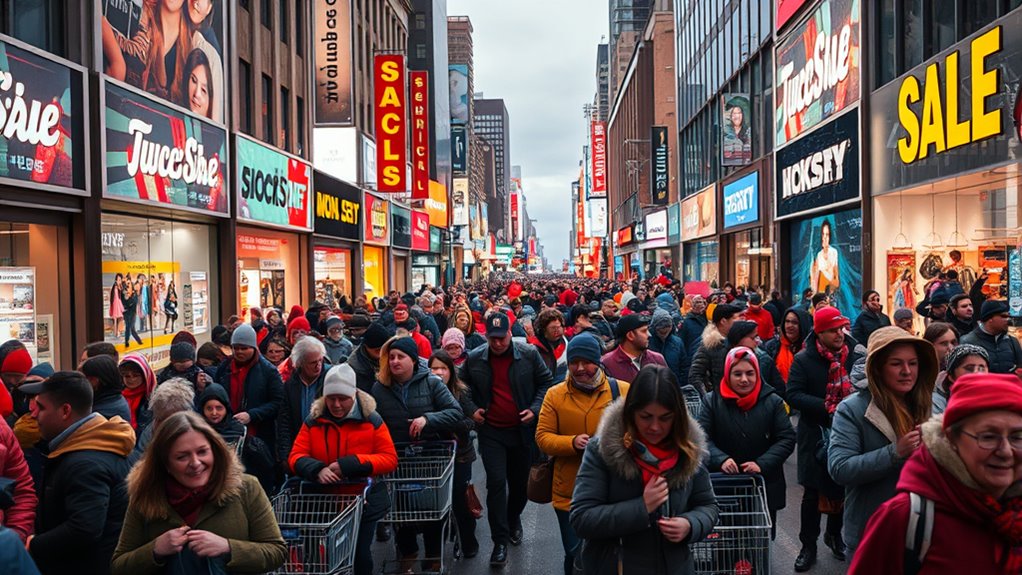

Black Friday has become a cultural phenomenon that turns ordinary shopping into a nationwide frenzy by tapping into your impulses with strategic marketing and psychological cues. Retailers craft campaigns highlighting limited-time deals, creating urgency and excitement that influence your decisions. The event is deeply embedded in traditions and community practices, blending shopping thrill with persuasive tactics. Want to understand how this event influences you and society? Keep exploring the behind-the-scenes forces shaping Black Friday.
Key Takeaways
- Black Friday is a cultural tradition that transforms ordinary shopping into a nationwide event driven by community and societal norms.
- Retailers craft marketing campaigns that embed excitement, scarcity, and exclusivity into the event’s cultural identity.
- The shopping frenzy is fueled by psychological triggers like limited-time offers, personalization, and the thrill of snagging deals.
- Social media, influencer endorsements, and in-store tactics reinforce Black Friday as a collective experience and cultural phenomenon.
- The event combines consumer psychology and persuasion science, fostering excitement, competition, and loyalty across communities.
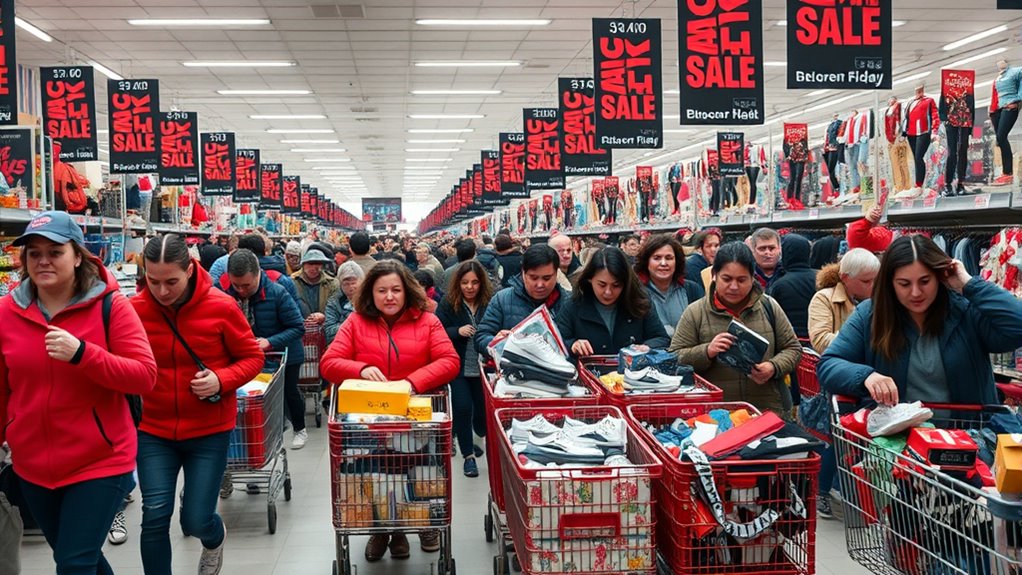
Have you ever wondered why Black Friday has become the biggest shopping event of the year? It’s not just about grabbing great deals; it’s a complex mix of consumer behavior and marketing strategies that turn ordinary shopping days into a nationwide frenzy. As a shopper, you’re influenced by a blend of psychological triggers, societal cues, and expertly crafted marketing tactics that push you to act quickly and decisively. Retailers know this well, and they design their campaigns to tap into your impulses, creating a sense of urgency and excitement that’s hard to resist.
Consumer behavior plays a pivotal role in shaping Black Friday’s success. You might start planning your purchases weeks in advance, driven by advertisements that highlight limited-time offers or exclusive discounts. Retailers analyze your habits, preferences, and past shopping patterns to tailor their promotions, making their deals appear more targeted and appealing. This personalization encourages you to spend more, often on items you hadn’t initially intended to buy. The thrill of snagging a deal creates a psychological reward, reinforcing future Black Friday participation and fostering brand loyalty. It’s a cycle where your desire for savings influences your shopping choices, and in turn, retailers use that knowledge to refine their marketing strategies year after year. Additionally, understanding financial success can help consumers make smarter purchasing decisions and avoid impulsive buys during these sales events.
Marketing strategies are at the heart of transforming Black Friday into a cultural phenomenon. Retailers employ a mix of tactics—eye-catching advertisements, social media campaigns, email alerts, and in-store displays—all designed to grab your attention. Limited stock announcements and countdown timers heighten the sense of scarcity, pushing you to make quick decisions. Many brands also leverage influencer marketing, where popular figures endorse their products, further convincing you that these deals are too good to miss. The strategic placement of sales and the use of words like “exclusive,” “doorbuster,” or “one-day only” create an environment of competition and urgency. These tactics don’t just influence your immediate shopping behavior; they embed Black Friday into the cultural fabric, making it a tradition in many households and communities.
In essence, Black Friday’s dominance relies on understanding your consumer behavior and exploiting marketing strategies that tap into your emotions and perceptions. It’s a carefully orchestrated event where the excitement of shopping meets the science of persuasion. As a result, you find yourself part of a larger cultural movement, one that combines the thrill of deals with the art of marketing. That’s why Black Friday isn’t just a day of sales; it’s a powerful cultural phenomenon that continues to grow, driven by your collective desire for savings and the clever tactics designed to fulfill that urge.
Frequently Asked Questions
How Did Black Friday Originate Historically?
Black Friday’s origins trace back to the 1950s and 1960s, where its historical roots lie in post-Thanksgiving shopping traditions. You might not realize, but it started as a term used by police in Philadelphia to describe the chaos of holiday crowds. Over time, retailers embraced it, turning it into a major shopping event that signals the start of the holiday season, transforming a local phrase into a nationwide phenomenon.
What Are the Environmental Impacts of Black Friday Shopping?
Imagine you’re in a world where shopping is as eco-friendly as a spaceship—Black Friday’s environmental impact is significant. Your shopping sprees generate massive waste, excessive packaging, and carbon emissions from transportation. To reduce this, opt for sustainable alternatives like local, eco-conscious brands and prioritize waste reduction. By making mindful choices, you help lessen pollution and conserve resources, turning Black Friday into an opportunity for responsible consumption rather than environmental harm.
How Do Retailers Determine Black Friday Discounts?
Retailers determine Black Friday discounts through strategic retail pricing and discount strategies aimed at maximizing sales and clearing inventory. They analyze previous sales data, competitor pricing, and current market trends to set attractive discounts. You’ll notice that they often offer deep cuts on popular items, balancing between attracting shoppers and maintaining profitability. These discount strategies are carefully planned to create urgency and boost foot traffic during the busy shopping event.
What Are the Psychological Effects of Black Friday Shopping?
You experience heightened consumer behavior during Black Friday, often driven by the thrill of impulse buying. The intense discounts and limited-time offers create a sense of urgency, making you more likely to make spontaneous purchases. This psychological effect can boost your excitement and satisfaction temporarily but might also lead to regret or financial strain afterward. The atmosphere encourages quick decisions, reinforcing the impulsive nature of Black Friday shopping.
How Is Black Friday Celebrated in Different Countries?
You’ll find that Black Friday is celebrated differently around the world through unique cultural traditions and shopping rituals. In the US, it kicks off holiday shopping with big sales and doorbusters, while in Canada, people enjoy similar sales but often combine them with Thanksgiving. In the UK, the focus is more on online deals, reflecting local shopping habits. Each country’s traditions shape how you participate in this global shopping event.
Conclusion
As you step into the whirlwind of Black Friday, remember it’s more than just a shopping spree—it’s a living, breathing carnival of commerce. The rush of flashing lights and shouted deals sweeps you into a storm of excitement, like a wild dance on a crowded floor. But beyond the chaos, it’s a reflection of our culture’s hunger for connection and discovery. Embrace the frenzy, and find the magic hidden within the chaos.