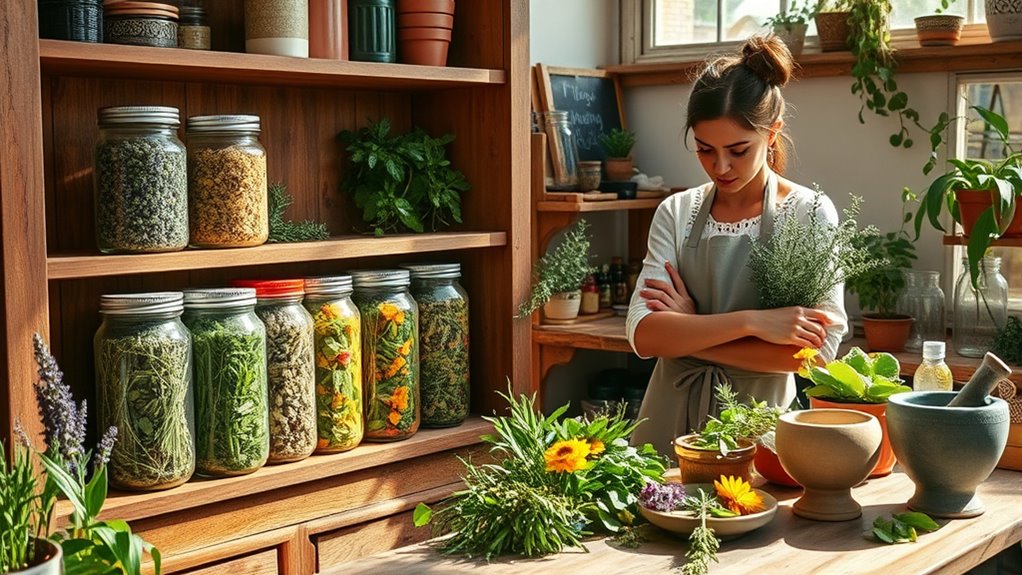

When starting out, avoid confusing toxic plants with safe ones, as misidentification can be dangerous. Pay attention to proper dosage and preparation to verify safety and effectiveness. Always use trusted sources to guide your choices, and consider your personal health conditions and allergies to prevent adverse reactions. Keep detailed records of your herbal practices to track what works. Stay cautious and informed—there’s more to uncover that can make your herbal journey safer and more successful.
Key Takeaways
- Properly identify plants using reliable sources to prevent toxic misidentification.
- Follow accurate dosage and preparation methods to ensure safety and effectiveness.
- Use verified, reputable information rather than untrusted or outdated sources.
- Consider personal health conditions and allergies before using herbal remedies.
- Keep detailed records of herbal practices to monitor effects and improve safety over time.
Overlooking Proper Identification of Plants

If you want to avoid dangerous mistakes, you must prioritize proper plant identification. Mistaking a toxic plant for a safe one can have serious health consequences. Take the time to learn key features—leaf shape, flower color, stem structure, and growth habits. Use reliable field guides or consult experienced herbalists to verify your findings. Never rely solely on photos or assumptions, especially when dealing with unfamiliar plants. Incorrect identification can lead to using the wrong herb or ingesting harmful substances. Always double-check your identification before harvesting. Remember, even seemingly harmless plants can be dangerous if misidentified. Being cautious and thorough ensures your herbal practice remains safe and effective. Proper identification is the foundation of responsible herbalism.
Ignoring the Importance of Dosage and Preparation
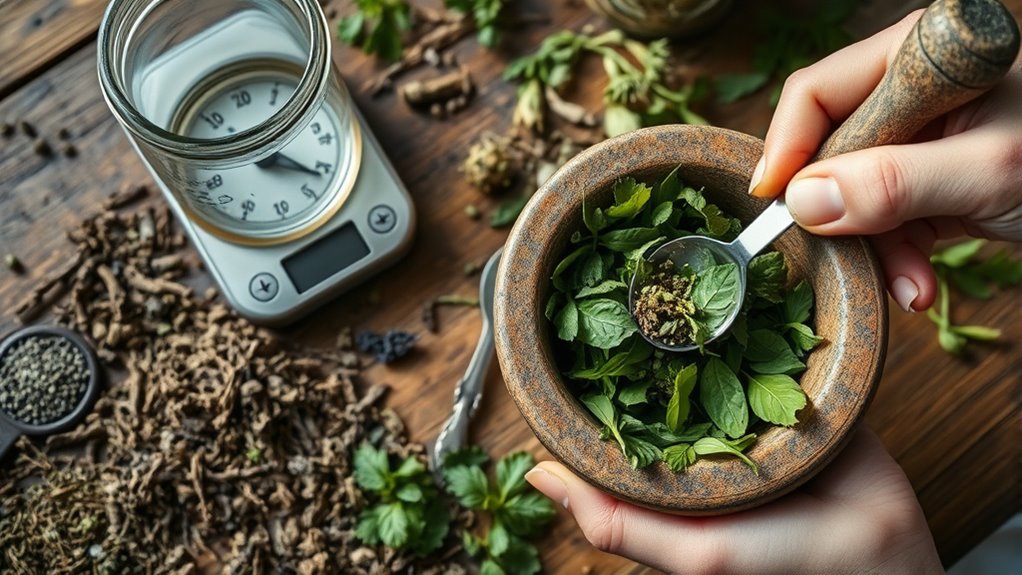
Neglecting proper dosage and preparation can substantially undermine your herbal practice and pose health risks. If you don’t measure doses accurately, you risk either ineffective treatment or adverse reactions. Overusing herbs can lead to toxicity, while underusing might render them useless. Proper preparation methods, like brewing teas, tincturing, or drying, are essential to *access* an herb’s full benefits. Skipping these steps can diminish potency or introduce contaminants. Always research recommended dosages and preparation techniques before use. Consistency is key—altering amounts or methods without understanding the effects can cause harm. Remember, herbs are potent medicines, and responsible handling ensures you gain their benefits safely. Paying attention to dosage and preparation is fundamental to practicing herbalism effectively and safely.
Relying on Inaccurate or Unverified Sources

Relying on inaccurate or unverified sources can lead you to make harmful or ineffective herbal choices. When you base your decisions on unreliable information, you risk selecting herbs that may interact negatively with medications or worsen existing health conditions. Unverified sources, like random internet posts or outdated books, often contain myths or incorrect data. Always check the credibility of your sources—prefer peer-reviewed research, reputable herbal medicine texts, or consultations with qualified herbalists. Remember that herbal medicine is complex, and what works for one person might not work for another. By verifying your information, you reduce the chance of adverse effects and increase your chances of success. Staying informed with accurate sources is essential for safe and effective herbal practice.
Neglecting Personal Health Conditions and Allergies
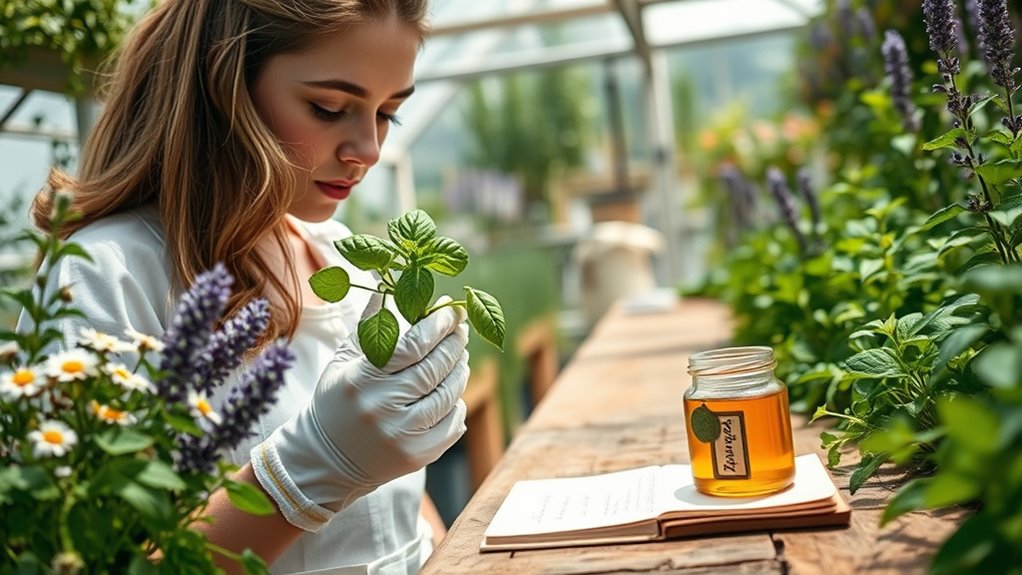
Ignoring your personal health conditions and allergies can lead to serious complications when using herbal remedies. If you don’t consider existing health issues, you risk worsening your condition or triggering adverse reactions. For instance, some herbs may interact negatively with medications or worsen conditions like hypertension or diabetes. Allergies can cause symptoms ranging from mild irritation to severe anaphylactic reactions if you’re not cautious. Before using any herbal remedy, you should carefully review your health history and consult a healthcare professional if needed. Pay attention to potential herb-drug interactions and avoid herbs known to cause allergic responses for you. Neglecting these considerations can undermine your health rather than improve it. Always prioritize your personal health conditions and allergies to ensure safe and effective herbal practice.
Failing to Record and Track Your Herbal Practices
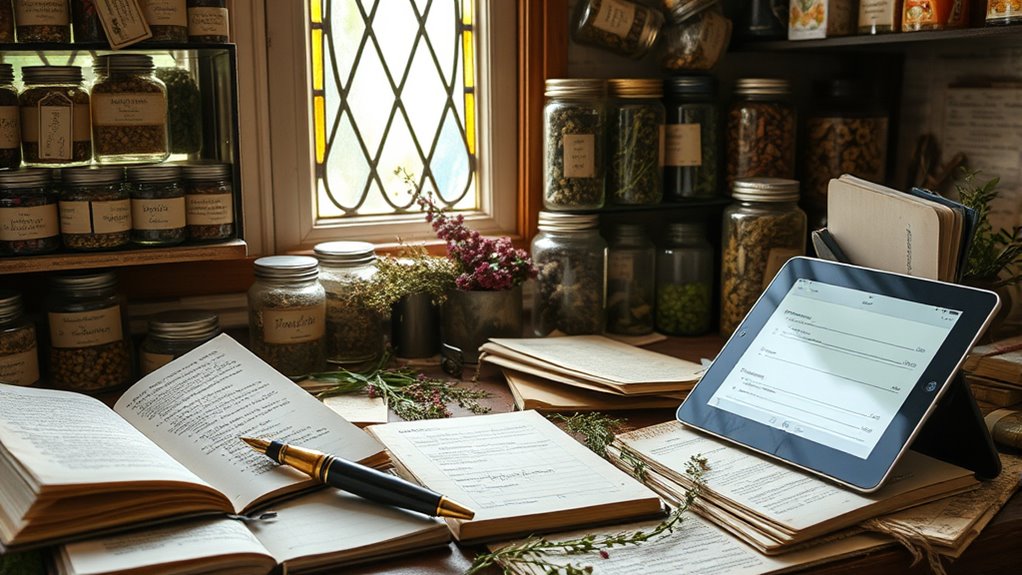
Keeping detailed records of your herbal practices is essential for understanding how different remedies affect your body and for making informed adjustments. When you track what herbs you use, dosages, and timing, you’ll notice patterns and identify what works best for you. Without proper documentation, it’s easy to forget which remedies helped or caused side effects, leading to repeated mistakes. Record your observations daily, including any physical or emotional changes, so you can evaluate progress over time. Tracking also helps you avoid potential interactions or overuse of certain herbs. Use a journal, digital app, or spreadsheet—whatever works best for you. Staying organized ensures your herbal journey remains safe, effective, and tailored to your unique needs.
Frequently Asked Questions
How Can I Ensure the Plants I Collect Are Non-Toxic?
You can guarantee plants are non-toxic by thoroughly identifying them through reputable field guides, consulting experienced herbalists, and cross-referencing multiple sources. Always test new plants cautiously, starting with small amounts, and observe for any adverse reactions. Avoid harvesting plants from polluted areas or unknown environments. If you’re unsure about a plant’s safety, it’s best to leave it alone or seek expert verification before using it in remedies.
What Are the Best Methods to Verify Herbal Information Sources?
You should verify herbal information sources by cross-referencing multiple reputable references like peer-reviewed journals, herbal textbooks, and respected herbalist websites. Always check the credentials and backgrounds of authors to guarantee credibility. Join herbalist communities or forums to get insights from experienced practitioners. Be cautious of anecdotal info and commercial sites promoting products. Staying diligent with your research helps you build a solid, safe foundation for your herbal practice.
How Do I Recognize Allergic Reactions to Herbs?
Think of your body as a sensitive garden that reacts to new plants. To recognize allergic reactions, watch for symptoms like itching, swelling, or difficulty breathing after trying an herb. If you notice these signs, stop using the herb immediately and consult a healthcare professional. Just as a gardener notices pests early, early detection helps prevent serious issues, ensuring your herbal practice remains safe and effective.
When Should I Consult a Healthcare Professional About Herbal Use?
You should consult a healthcare professional whenever you’re unsure about an herb’s safety, especially if you experience adverse reactions or are taking other medications. If you notice persistent or severe symptoms, like difficulty breathing, swelling, or intense allergic responses, seek help right away. It’s also wise to talk to a professional before starting new herbs, particularly if you’re pregnant, nursing, or have underlying health conditions.
What Are Effective Ways to Document My Herbal Practice Progress?
You should keep a detailed herbal journal to document your progress. Record the herbs you use, dosages, timing, and your body’s reactions. Take notes on any changes in symptoms or energy levels. Additionally, photograph your herbs and any preparations. Regularly review your entries to identify patterns and improvements. This practice helps you refine your techniques, track effectiveness, and communicate clearly with healthcare professionals when needed.
Conclusion
So, ironically, the biggest mistake you might make as a new herbalist is thinking you don’t need to double-check your sources or track your progress. While it’s tempting to rely on quick info or forget personal health nuances, skipping these steps can backfire. Remember, herbal mastery isn’t about luck; it’s about careful identification, accurate dosing, and diligent record-keeping. Don’t let avoidable mistakes turn your herbal journey into a costly lesson. Stay vigilant, and your plants will thank you.