Herbs like St. John’s Wort and SAMe can interact dangerously with antidepressants, increasing the risk of serotonin syndrome or reducing medication effectiveness. Caution is advised with herbs such as ginseng, ginkgo biloba, and licorice, as they may cause side effects or bleeding issues. Always consult your healthcare provider before combining herbs with antidepressants, and stay aware of potential adverse reactions. To verify your safety, explore more about which herbs are safe and which to avoid.
Key Takeaways
- Consult your healthcare provider before combining herbs with antidepressants to prevent interactions like serotonin syndrome.
- Avoid St. John’s Wort, as it can reduce antidepressant effectiveness and cause dangerous serotonin increases.
- Use herbs like lavender and Rhodiola cautiously; they are generally safer but still consult your doctor first.
- Be aware of herbs such as ginseng, ginkgo, and garlic that may increase bleeding risk or affect blood pressure when combined with medications.
- Monitor for adverse reactions and report any unusual symptoms or mood changes to your healthcare professional immediately.
Common Herbs for Mood Enhancement and Their Effects
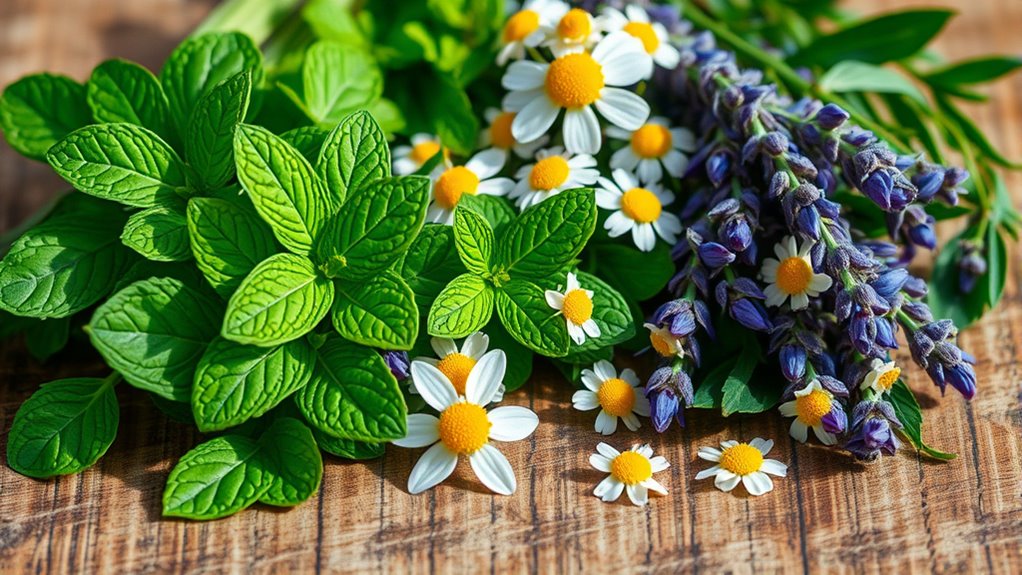
Many herbs have been traditionally used to boost mood and alleviate symptoms of depression. St. John’s Wort is one of the most well-known, often used to support mental health. It may help improve mild to moderate depression by increasing serotonin levels in the brain. Rhodiola rosea is another popular herb, believed to reduce fatigue and enhance emotional resilience. Lavender, commonly used in aromatherapy, can promote relaxation and reduce anxiety, indirectly uplifting your mood. Saffron has shown promise in some studies for improving mood and energy levels. While these herbs may offer benefits, they don’t replace professional treatment and can have interactions with medications. Always approach herbal remedies with caution and consult a healthcare provider before adding them to your routine.
Herbal Supplements That May Interact With Antidepressants

While herbal supplements can support mood and overall mental health, it’s important to recognize that some may interact negatively with antidepressant medications. For example, St. John’s Wort is well-known for reducing depression symptoms but can cause dangerous serotonin syndrome when combined with SSRIs or SNRIs. Similarly, SAMe might increase serotonin levels excessively, leading to adverse effects. Ginseng and ginkgo biloba can also affect blood clotting and may increase bleeding risk, especially if you’re on antidepressants that thin the blood. Licorice root can raise blood pressure and cause electrolyte imbalances, complicating medication management. Always consult your healthcare provider before adding any herbal supplement to your routine, especially if you’re on antidepressants, to avoid potentially harmful interactions.
Herbs to Use With Caution When Taking Medication
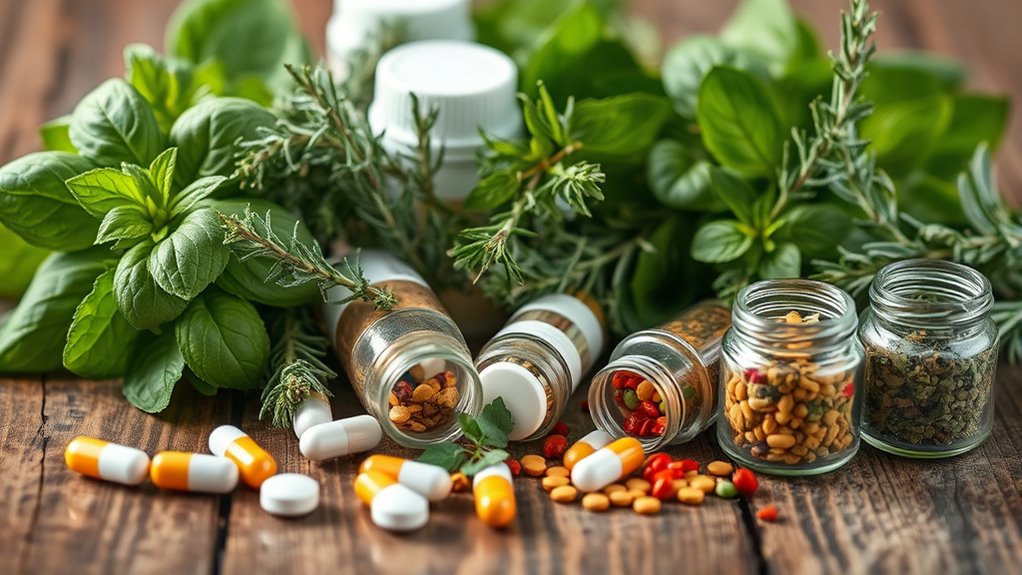
Certain herbs can interact with medications and should be used with caution, as they may alter drug effects or cause adverse reactions. For example, ginseng, St. John’s Wort, garlic, ginkgo biloba, and echinacea can impact how your antidepressants work or increase bleeding risk. You need to be aware of these potential interactions to avoid compromising your treatment.
| Herb | Potential Effect | Cautionary Note |
|---|---|---|
| Ginseng | May increase blood pressure | Use cautiously if hypertensive |
| St. John’s Wort | Reduces medication effectiveness | Avoid if on antidepressants |
| Garlic | Bleeding risk | Use with care if on blood thinners |
| Ginkgo biloba | Increased bleeding risk | Not recommended during therapy |
| Echinacea | Immune system effects | Watch for allergic reactions |
Recognizing Signs of Adverse Herbal Reactions
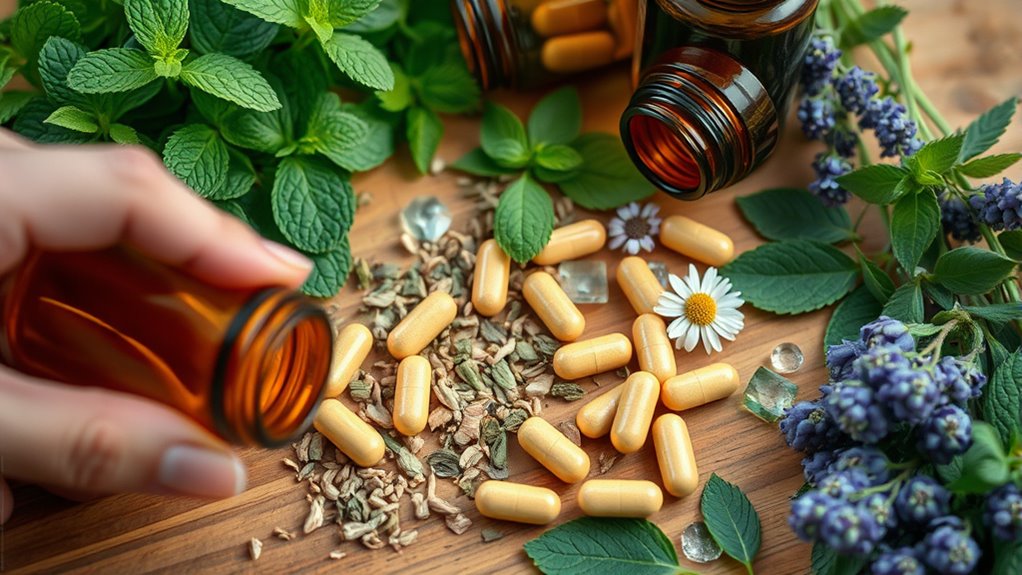
You should stay alert for any unusual physical symptoms like rashes, dizziness, or stomach upset, as these can indicate an adverse herbal reaction. Watch for mood swings, irritability, or sudden behavior changes that seem out of character. Recognizing these signs early helps you seek prompt medical advice and prevent more serious issues.
Unusual Physical Symptoms
Recognizing unusual physical symptoms is essential when using herbal remedies alongside antidepressants, as these signs can indicate adverse reactions. You might notice unexplained headaches, dizziness, or nausea that seem out of the ordinary. Skin reactions like rashes, itching, or swelling can also be warning signs. Changes in your bowel habits or persistent fatigue may signal your body is struggling to adjust. Unusual bleeding or bruising could indicate blood clotting issues. Pay attention to chest pain or shortness of breath, which can be serious. These symptoms aren’t typical and require prompt medical attention. By staying alert to these physical signs, you can catch adverse reactions early and prevent complications, ensuring your safety while exploring herbal options alongside your medication.
Mood and Behavior Changes
Changes in mood and behavior can signal that your body is reacting adversely to herbal remedies taken with antidepressants. You might notice sudden irritability, anxiety, or mood swings that weren’t present before. Some herbs can amplify the effects of antidepressants, leading to agitation or restlessness. Conversely, you may feel unusually lethargic or detached, suggesting a negative interaction. Pay attention to any drastic changes in your emotional state, especially if they develop quickly or worsen over time. These signs can indicate that the combination of herbs and antidepressants isn’t safe for you. If you notice any of these behavioral shifts, it’s important to consult your healthcare provider promptly. Recognizing these signs early helps prevent more severe reactions and ensures your treatment remains safe.
Guidelines for Integrating Herbs Safely With Prescribed Treatments

Integrating herbs safely with prescribed antidepressant treatments requires careful consideration and consultation with healthcare professionals. To do this effectively, follow these guidelines:
- Always inform your healthcare provider about any herbs you’re considering or currently using, so they can monitor for interactions.
- Stick to recommended dosages and avoid self-medicating, as herbs can have potent effects and side effects.
- Keep a detailed record of herbal products and medications you take, so your provider can identify potential conflicts or adverse reactions.
Consulting Healthcare Professionals Before Using Herbal Remedies

Consulting healthcare professionals before using herbal remedies is essential to guarantee safety and effectiveness. Your healthcare provider can assess potential interactions between herbs and your current medications, including antidepressants. They can also identify underlying health conditions that herbs might affect or worsen. Without professional guidance, you risk adverse reactions, reduced medication efficacy, or unexpected side effects. A healthcare professional can recommend the right herbs, dosages, and methods suited to your specific needs. Always disclose any herbal supplements you’re considering, even if they seem harmless. This open communication helps prevent dangerous interactions and ensures your treatment plan remains safe. Remember, self-medicating with herbs without professional input can jeopardize your health. Consulting experts is a critical step toward safely exploring herbal options for your mental health.
Frequently Asked Questions
Can Herbs Completely Replace Antidepressant Medications Safely?
Herbs can’t completely substitute antidepressant medications safely for everyone. While some herbs may support mood, they often lack the robust evidence and consistency that prescription meds provide. If you’re considering switching or adding herbs, talk to your healthcare provider first. They can help you weigh the risks and benefits, monitor your progress, and ensure you don’t experience harmful interactions or setbacks in managing your mental health.
Are There Specific Herbs Recommended for Depression During Pregnancy?
Like a delicate flower in a storm, your pregnancy demands gentle care. You should avoid herbs for depression during pregnancy unless approved by your healthcare provider. Some herbs, such as St. John’s Wort or ginseng, can pose risks to your baby and may interact with medications. Always consult your doctor before trying any herbal remedies, ensuring both your health and your baby’s safety are prioritized.
How Long Should I Wait After Starting Herbs to See Effects?
You should typically wait about 2 to 4 weeks to notice effects from herbal remedies. However, this can vary depending on the herb, your body, and the severity of your symptoms. Keep track of any changes, and if you don’t see improvement within a month or experience side effects, consult your healthcare provider. Patience and communication with your doctor are key to safely managing your treatment.
Can Herbal Remedies Cause Dependency or Withdrawal Symptoms?
Herbal remedies can cause dependency or withdrawal symptoms, especially if used long-term or in high doses. You might develop a physical or psychological reliance, making it hard to stop. To avoid this, always follow dosage instructions and consult your healthcare provider before starting or stopping herbs. Monitoring your response helps prevent adverse effects. If you notice withdrawal symptoms, seek medical advice promptly to ensure safe management.
Are There Age-Specific Precautions for Using Herbs With Antidepressants?
Yes, age-specific precautions matter when combining herbs with antidepressants. If you’re younger or older, your body processes herbs differently, increasing the risk of interactions or side effects. Always consult your healthcare provider before adding herbal remedies, especially if you’re under 18 or over 65. They can guide you on safe options and proper dosages, helping you avoid complications and ensuring your treatment remains effective and safe.
Conclusion
So, before you start turning your kitchen into a pharmacy, remember: mixing herbs and antidepressants isn’t a DIY project. Sure, a little lavender might soothe your nerves, but a dash of St. John’s Wort could send your meds on a wild rollercoaster. Play it safe, chat with your healthcare pro, and avoid becoming the star of a herbal horror story. After all, your brain’s happiness isn’t worth playing herbal roulette!