Comfrey salves and poultices have been used for centuries as natural remedies for pain and tissue healing. They work by reducing inflammation, soothing injuries, and promoting skin regeneration through compounds like allantoin and rosmarinic acid. You can prepare homemade versions using fresh or dried leaves infused in oils or as poultices, but it’s important to follow safety guidelines. If you want to explore how to safely benefit from these traditional remedies, keep exploring further.
Key Takeaways
- Comfrey salves and poultices have been used historically across cultures to promote tissue repair and reduce inflammation.
- They contain healing compounds like allantoin and rosmarinic acid that stimulate cell growth and soothe pain.
- Proper preparation involves infusing fresh or dried leaves in carrier oils or creating topical pastes.
- Topical comfrey remedies support healing for cuts, bruises, and strains when applied correctly on intact skin.
- Safety precautions include avoiding use on broken skin, conducting patch tests, and using remedies in moderation to prevent toxicity.

Organic Comfrey Muscle & Joint Salve 4 oz – Natural Relief by OrganHerb
High-Quality Organic Comfrey Salve for Pain Management
As an affiliate, we earn on qualifying purchases.
As an affiliate, we earn on qualifying purchases.
The Historical Roots of Comfrey in Herbal Medicine
Comfrey has been a valued herbal remedy for centuries, dating back to ancient civilizations. Its medicinal history is rich and deeply rooted in herbal traditions across cultures. In traditional European medicine, comfrey was prized for its healing properties, especially for wounds and fractures. Native tribes and herbalists used it extensively in poultices and salves, believing it accelerated tissue repair. Throughout history, herbal traditions recognized comfrey’s ability to soothe inflammation and promote recovery. Its use persisted through the ages because of its proven effectiveness. Modern herbal medicine continues to explore its traditional uses, emphasizing the importance of understanding its historical applications. Additionally, the tradition of topical application has contributed to its enduring popularity. Recognizing the medicinal history of comfrey helps appreciate why it remains a popular choice for topical healing, grounded in centuries of herbal wisdom.
homemade comfrey poultice kit
As an affiliate, we earn on qualifying purchases.
As an affiliate, we earn on qualifying purchases.
How Comfrey Works to Alleviate Pain and Promote Healing
When you apply comfrey, you introduce powerful healing compounds that work directly on your skin. It naturally reduces inflammation, helping ease pain and swelling. Plus, it stimulates tissue regrowth, speeding up the healing process. Self Watering Plant Pots are a great example of innovations that support plant health by maintaining optimal moisture levels, similar to how comfrey promotes tissue regeneration. Essential oils can also be incorporated into topical treatments to enhance their soothing and healing effects. Additionally, understanding ethical hacking principles can help develop safe, effective herbal formulations that protect sensitive skin. Incorporating safe ingredients is essential to ensure the treatment remains gentle and effective for topical use. Emphasizing the importance of space organization can also streamline your herbal remedy preparation area, making your healing routines more efficient.
Contains Healing Compounds
Because of its rich array of active compounds, comfrey has powerful healing properties that can help reduce inflammation and ease pain. Its key ingredients, like allantoin, rosmarinic acid, and mucilage, work together to promote tissue repair and soothe irritated skin. When you understand comfrey cultivation and herbal extraction techniques, you can maximize these benefits. Herbal extraction methods are essential for extracting the full spectrum of active compounds effectively. The table below highlights some of these compounds and their effects:
| Compound | Benefits |
|---|---|
| Allantoin | Stimulates cell growth, speeds healing |
| Rosmarinic acid | Reduces inflammation, antioxidant |
| Mucilage | Moisturizes, soothes skin |
| Choline | Supports tissue regeneration |
| Tannins | Astringent, tightens tissue |
These healing compounds make comfrey a potent natural remedy for topical pain relief. Additionally, understanding proper herbal extraction methods can enhance the potency of the salves and poultices, especially when considering active compound preservation. Exploring extraction techniques can help ensure maximum benefit from the plant’s active ingredients. For example, employing cold extraction methods can help preserve delicate phytochemicals that may degrade under heat.
Reduces Inflammation Naturally
The powerful healing compounds in comfrey directly target inflammation, helping to reduce swelling and discomfort. Its herbal synergy works to calm irritated tissues and promote natural pain management. When you apply comfrey salves or poultices, you support your body’s ability to soothe inflamed areas without relying solely on synthetic medications. The active compounds, like allantoin and rosmarinic acid, help block inflammatory responses and encourage your body’s healing processes. This makes comfrey an effective choice for reducing inflammation from injuries, strains, or chronic conditions. By incorporating comfrey into your pain management routine, you harness its natural anti-inflammatory properties to promote comfort and facilitate recovery. Its ability to address inflammation at its source helps you feel relief faster and supports ongoing tissue health. Additionally, understanding ventilation considerations can enhance the effectiveness of topical treatments by ensuring proper healing environments. Proper application techniques can further optimize healing outcomes and minimize potential skin irritation, especially when combined with adequate skin preparation to improve absorption and reduce irritation risks. Moreover, incorporating AI-driven insights into your skincare routine can help tailor treatments to your specific needs, maximizing healing potential. Recognizing regulatory guidelines can also ensure that your use of comfrey products remains safe and compliant with health standards.
Stimulates Tissue Regrowth
Comfrey contains compounds like allantoin that directly stimulate cell growth and tissue regeneration. When you apply comfrey topically, these compounds promote the formation of new tissue, speeding up healing. This plant’s role in herbal folklore highlights its reputation as a healer, with traditional uses spanning centuries. The secret lies in its ability to boost collagen production and encourage the regeneration of damaged skin and tissues. For centuries, people cultivated comfrey for its medicinal properties, recognizing its power to support recovery from injuries. By stimulating tissue regrowth, comfrey not only alleviates pain but also helps restore damaged areas more quickly. Its long history in plant cultivation and herbal folklore underscores its importance as a natural remedy for supporting your body’s healing processes. Additionally, modern research supports its exfoliation benefits, which can further enhance skin repair and regeneration. Herbal healing traditions have long celebrated comfrey’s ability to accelerate recovery and reduce discomfort, reinforcing its valued place in natural medicine.

SSF Organics- Comfrey Topical Recovery Ointment- Advanced Healing for Skin, Joints, and Muscles. Natural and Plastic Free.
Comfrey (also known as trauma plant) is rich in allantoin, a compound which comes packed with natural chemicals…
As an affiliate, we earn on qualifying purchases.
As an affiliate, we earn on qualifying purchases.
Preparing Your Own Comfrey Salves and Poultices at Home
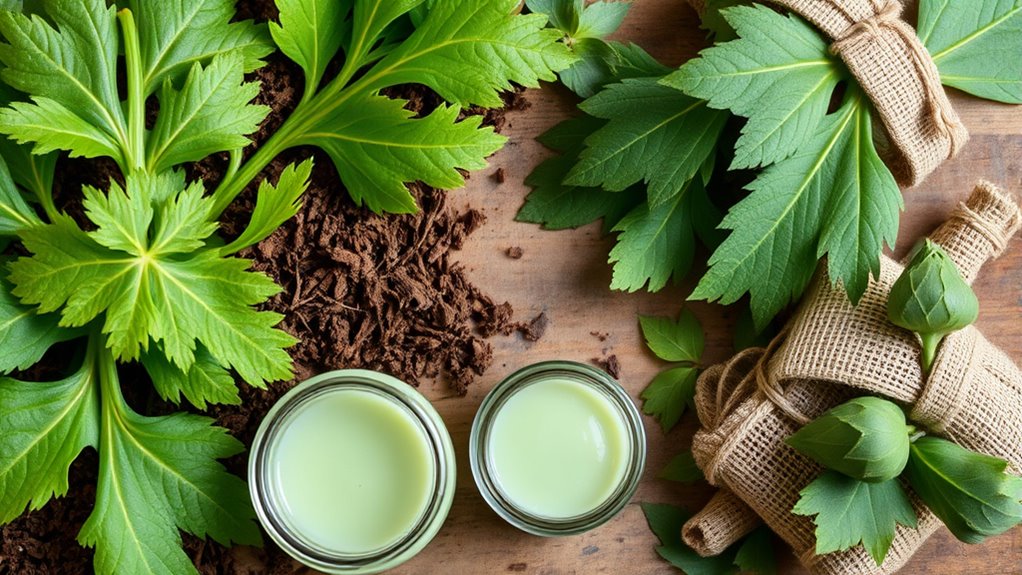
To make effective comfrey salves and poultices at home, you need to start with high-quality leaves. Carefully select fresh, healthy comfrey leaves free from damage or disease. Then, follow a clear, step-by-step process to prepare your herbal remedy safely and effectively. Proper preparation methods are essential to ensure maximum potency and safety of your topical treatment. Additionally, using herbal extraction techniques can help you preserve the beneficial compounds in the comfrey leaves for more effective remedies. Engaging in proper storage practices also helps maintain the quality and efficacy of your herbal preparations over time.
Selecting Quality Comfrey Leaves
Selecting high-quality comfrey leaves is vital for making effective salves and poultices at home. When plant harvesting, choose fresh, vibrant leaves free of blemishes, mold, or damage. The leaves should be large, soft, and deeply green, indicating peak potency. Proper herbal storage is essential; once harvested, dry the leaves in a cool, dark, well-ventilated area if you plan to store them long-term, or keep fresh leaves refrigerated if used soon. Make sure they are kept away from direct sunlight and moisture to preserve their medicinal properties. Avoid leaves that are yellowed, wilted, or showing signs of decay, as these won’t provide the desired healing benefits. High-quality leaves are your foundation for effective, safe, and potent topical remedies.
Step-by-Step Preparation Process
Creating your own comfrey salves and poultices at home is a straightforward process that allows you to harness the plant’s healing properties effectively. Start by herbal extraction, soaking fresh or dried comfrey leaves in a carrier oil like olive or coconut oil for several weeks. This draws out the beneficial compounds. Once infused, strain the mixture to remove plant material. For salves, gently heat the infused oil and blend it with beeswax until melted, then pour into containers to cool. Poultices can be made by wrapping fresh leaves in cloth or creating a paste from dried leaves and water. Proper storage techniques are essential; keep salves in airtight jars in a cool, dark place and refrigerate if needed. This guarantees your remedies stay potent and safe to use.

Organic Botanicals Pure Organic Comfrey Leaf Infused Oil – Skin Care for Joints, Back, Muscles, Fractures, Bruises, and Minor Wounds, Natural Herbal Body Massage Oil, Certified Organic (2 oz)
Comfrey Leaf Oil – Organic comfey leaves are infused for a month or more into organic sunflower (helianthus…
As an affiliate, we earn on qualifying purchases.
As an affiliate, we earn on qualifying purchases.
Benefits of Using Comfrey-Based Topicals for Skin and Muscle Ailments

Comfrey-based topicals are renowned for their ability to support skin healing and ease muscle discomfort. They contain compounds that promote tissue regeneration, helping cuts, bruises, and strains recover faster. Many users find relief from soreness and inflammation when applying comfrey poultices or salves directly to affected areas. However, you should be conscious of comfrey toxicity risks, especially if used excessively or on broken skin, as it can cause liver issues if absorbed internally. Additionally, herbal contraindications exist for those with pre-existing liver conditions or during pregnancy. While topical use is generally safe when applied correctly, it’s essential to follow guidelines and avoid overuse to prevent potential adverse effects linked to comfrey toxicity. This ensures you benefit from its healing properties safely.
Safety Guidelines and Precautions When Using Comfrey Remedies
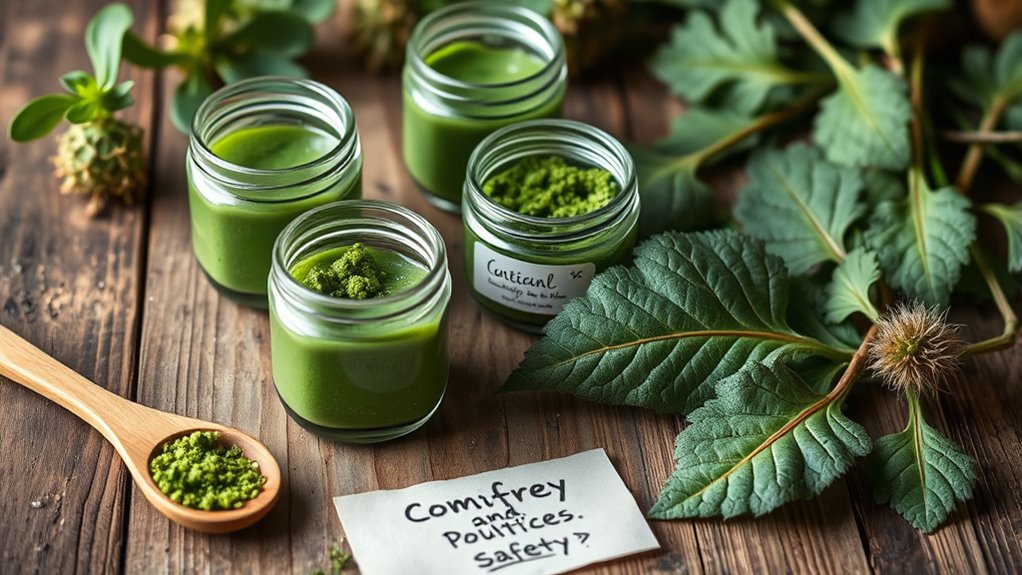
To use comfrey remedies safely, it’s important to follow specific guidelines and precautions. Always adhere to dosage guidelines to prevent overuse, as excessive application can cause adverse effects. Use comfrey topicals only on intact skin, avoiding open wounds or broken skin to reduce risks of absorption of harmful compounds. Be aware of allergic reactions; if you notice redness, itching, or swelling, discontinue use immediately. Conduct a patch test before applying a new comfrey product to check for sensitivities. Consult a healthcare professional if you’re pregnant, breastfeeding, or have pre-existing health conditions. Remember, internal use is not recommended without medical supervision. Following these precautions helps you enjoy the benefits of comfrey safely and minimizes potential health risks.
Comparing Commercial Comfrey Products to Homemade Treatments
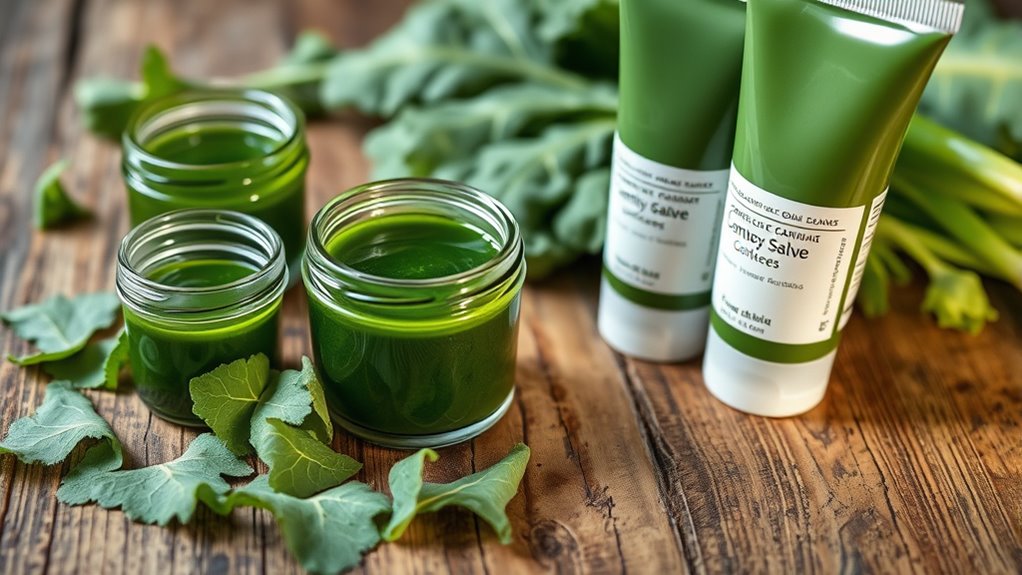
When choosing between commercial comfrey products and homemade treatments, it’s important to understand their differences in quality, safety, and effectiveness. Commercial options often undergo testing for purity and consistency, but they may contain additives or preservatives. Homemade treatments give you control over ingredients, but you must be cautious of comfrey toxicity, which can occur if the plant is used improperly. An herbal supplement comparison reveals that store-bought products are typically standardized, yet some may still pose risks if misused. Conversely, homemade salves or poultices can be effective if prepared correctly, but they also require careful attention to dosage and application. Always weigh the benefits and risks carefully to ensure safe, effective pain relief using comfrey.
Integrating Comfrey Topicals Into Your Natural Healing Routine
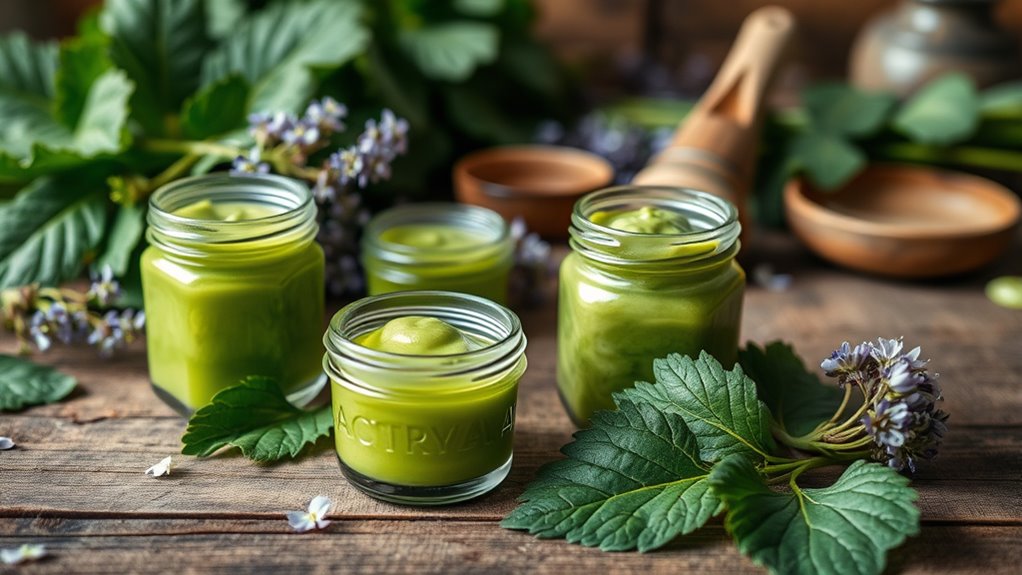
Incorporating comfrey topicals into your natural healing routine can enhance your approach to managing pain and inflammation. To do this effectively, explore various comfrey application methods, such as salves, poultices, or compresses, depending on your needs. Consistency is key—apply the remedy after activity or as discomfort arises. Proper herbal remedy storage is essential; keep your comfrey preparations in airtight containers, away from direct sunlight and moisture to maintain potency and safety. Always clean the affected area before application, and use clean tools to avoid contamination. By integrating these methods thoughtfully, you can maximize healing benefits while preserving the quality of your comfrey products. This routine supports a holistic approach to natural pain relief.
Frequently Asked Questions
Are There Any Known Allergic Reactions to Comfrey Topical Applications?
You should be aware that allergic reactions to comfrey topical applications are possible, especially if you have sensitive skin. Skin sensitivity varies from person to person, and some individuals may experience redness, itching, or swelling after applying comfrey products. To reduce risks, do a patch test first by applying a small amount to your skin and waiting 24 hours. If any allergic reactions occur, discontinue use immediately.
Can Comfrey Salves Be Used on Open Wounds Safely?
Think of your skin as a fragile gateway, inviting healing but wary of harm. You shouldn’t use comfrey salves on open wounds, as it can interfere with wound healing and skin absorption. Applying it directly to broken skin may cause irritation or adverse reactions. Instead, trust it for minor bruises or surface pains, and always consult a healthcare professional before using on open wounds to guarantee safety.
How Long Should I Wait Before Reapplying Comfrey Poultices?
You should wait at least 24 hours before reapplying a comfrey poultice, allowing your skin to breathe and recover. Stick to recommended reapplication frequency to prevent irritation, and keep the poultice duration around 15-20 minutes to avoid skin sensitivity. Always listen to your body; if you notice discomfort or redness, give your skin more time before reapplying. Regular, cautious use maximizes benefits and minimizes risks.
Is Comfrey Suitable for Children or Pregnant Women?
You should generally avoid using comfrey on children or during pregnancy due to safety concerns. Children safety is a priority, and comfrey contains compounds that could be harmful if absorbed in large amounts. Pregnancy precautions are also recommended, as it may cause uterine contractions or other issues. Always consult a healthcare provider before applying comfrey to children or pregnant women to guarantee safety and appropriate use.
What Are the Signs of Adverse Effects From Comfrey Topicals?
If you notice redness, itching, or swelling after applying comfrey topicals, it’s a red flag waving for skin irritation. Be alert for symptoms like rash or blistering, which may suggest an allergic reaction. More seriously, persistent use can risk liver toxicity if absorbed through broken skin. Always stop using if adverse effects appear, and consult a healthcare professional to avoid potential complications.
Conclusion
Embracing comfrey salves and poultices connects you to a time when herbal remedies were treasured treasures, like a secret passed down through generations. By making and using these natural remedies, you honor that legacy and take control of your healing journey. Remember, though, to respect its power and follow safety guidelines. With patience and care, you can harness the gentle strength of this ancient herb to soothe your body and soul, just as your ancestors did long ago.