

For natural toothache relief, try applying clove oil directly to the affected area; it acts as a powerful numbing agent. You can also rinse with warm saltwater to reduce inflammation and promote healing. Drinking herbal teas like chamomile or peppermint offers soothing effects, while ginger and turmeric support anti-inflammatory benefits. These herbal alternatives are easy, affordable, and effective options you can use at home—if you want to learn more, keep exploring your natural remedies.
Key Takeaways
- Natural remedies like clove oil, peppermint oil, and ginger can numb pain and reduce inflammation effectively.
- Herbal teas such as chamomile, peppermint, and licorice root soothe irritated tissues and promote healing.
- Saltwater rinses help disinfect the mouth and ease discomfort without chemicals.
- Turmeric’s anti-inflammatory properties support pain relief through pastes, teas, or supplements.
- Always consult a dentist if pain persists, and use herbal treatments in moderation to avoid irritation.
Clove Oil: Nature’s Dental Anesthetic

Have you ever wondered how a simple spice can help soothe a toothache? Clove oil has been used for centuries as a natural remedy for dental pain. Its main component, eugenol, acts as a powerful numbing agent, blocking nerve signals and reducing pain. You can apply a small amount directly to the affected tooth using a cotton ball or swab. Be careful not to use too much, as it can cause irritation or a burning sensation. Clove oil is also known for its antibacterial properties, helping to fight infection in the mouth. This natural remedy is convenient, affordable, and easy to use, making it a popular choice when you’re seeking quick relief from toothache discomfort without reaching for synthetic medications.
Turmeric: An Anti-Inflammatory Powerhouse

Turmeric is known for its strong anti-inflammatory properties that can help reduce toothache pain. You can use it as a natural pain relief by making simple pastes or teas at home. Its easy preparation methods make it a convenient option for soothing dental discomfort.
Anti-Inflammatory Benefits
Because inflammation often underlies toothache pain, incorporating turmeric into your diet can provide significant relief. Its active compound, curcumin, has powerful anti-inflammatory properties that help reduce swelling and irritation in the gums and jaw. By lowering inflammation, turmeric can help ease discomfort and prevent further tissue damage. You might consider adding turmeric to your meals, drinking turmeric tea, or taking supplements as directed. Consuming it regularly supports your body’s natural inflammation response and promotes healing. Keep in mind, turmeric’s benefits extend beyond pain relief, contributing to overall oral health. Incorporating this spice into your routine can be a simple, effective way to address inflammation without relying solely on synthetic remedies.
- Contains curcumin, a potent anti-inflammatory agent
- Reduces swelling and tissue irritation
- Supports natural healing processes
- Easy to add to various dishes and drinks
Natural Pain Relief
Building on turmeric’s anti-inflammatory benefits, it also serves as a natural pain reliever for toothache discomfort. Its active compound, curcumin, interacts with pain receptors, helping to reduce the sensation of pain. When you apply turmeric paste or take supplements, you may notice a decrease in throbbing or sharp pain. Unlike synthetic painkillers, turmeric offers a gentle, herbal alternative that can be used regularly without harsh side effects. You might find that incorporating turmeric into your routine eases pain without the need for numbing gels. Keep in mind, consistency is key, and combining turmeric with other natural remedies can enhance its effectiveness. Using turmeric for pain relief offers a holistic approach that targets inflammation and alleviates discomfort simultaneously.
Easy Preparation Methods
Preparing turmeric for toothache relief is simple and versatile, making it easy to incorporate into your routine. You can create a paste by mixing turmeric powder with a small amount of water or coconut oil until it forms a thick consistency. Applying this directly to the affected area helps reduce inflammation and soothe pain. Alternatively, you can prepare a warm turmeric rinse by simmering a teaspoon of turmeric in water for a few minutes, then letting it cool before swishing in your mouth. For added benefits, blending turmeric with other herbs like ginger or clove can enhance its effectiveness. Remember to rinse thoroughly afterward to prevent staining or residue buildup. These straightforward methods make turmeric a convenient herbal remedy for quick, natural toothache relief.
Saltwater Rinse: A Simple Healing Solution

A saltwater rinse acts as a soothing oral antiseptic that can help ease your toothache. It also reduces swelling and pain, making you more comfortable quickly. Plus, it promotes natural healing without any harsh chemicals.
Soothing Oral Antiseptic
When you’re dealing with a toothache, rinsing your mouth with a warm saltwater solution can provide quick relief. Saltwater acts as a natural antiseptic, helping to reduce bacteria and soothe irritated tissues. It also promotes healing by drawing out fluids from swollen areas, decreasing discomfort. To make this remedy, dissolve about half a teaspoon of salt in a cup of warm water. Swish the solution around your mouth for 30 seconds, focusing on the affected area, then spit it out. Repeat this process a few times daily to maintain oral hygiene and ease pain. This simple method is safe, inexpensive, and effective for calming oral discomfort and supporting your body’s natural healing process.
- Reduces bacteria and inflammation
- Promotes tissue healing
- Eases discomfort quickly
- Supports overall oral health
Reduces Swelling and Pain
Using a warm saltwater rinse not only helps keep your mouth clean but also targets swelling and pain directly. The salt reduces inflammation, easing discomfort quickly. Imagine soothing relief as the salty solution gently surrounds your sore area, pulling out irritants and reducing swelling. Visualize the rinse as a calming wave washing over the ache, calming nerves and easing pain. Here’s what you might picture:
| Saltwater Rinse | Impact |
|---|---|
| Warm Solution | Soothes inflamed tissue |
| Gentle Swirl | Removes debris |
| Contact Duration | Provides lasting relief |
| Repeated Use | Continues to reduce swelling |
This simple act can bring immediate comfort, making your toothache more manageable.
Promotes Healing Naturally
Because saltwater naturally promotes tissue regeneration, rinsing with it can accelerate your mouth’s healing process after a toothache. It helps reduce bacteria, prevents infection, and soothes inflamed tissues. When you rinse, you create an environment that encourages your body’s natural repair mechanisms. This simple remedy can also decrease discomfort and prevent further complications. To maximize benefits, use warm saltwater and rinse for 30 seconds, repeating several times a day. Not only does it promote healing, but it also helps maintain oral hygiene during recovery. Incorporate this easy step into your routine to support faster healing and reduce the risk of infection. Remember, consistent rinsing can make a significant difference in your recovery process.
Peppermint Oil: Cooling Relief for Tooth Pain
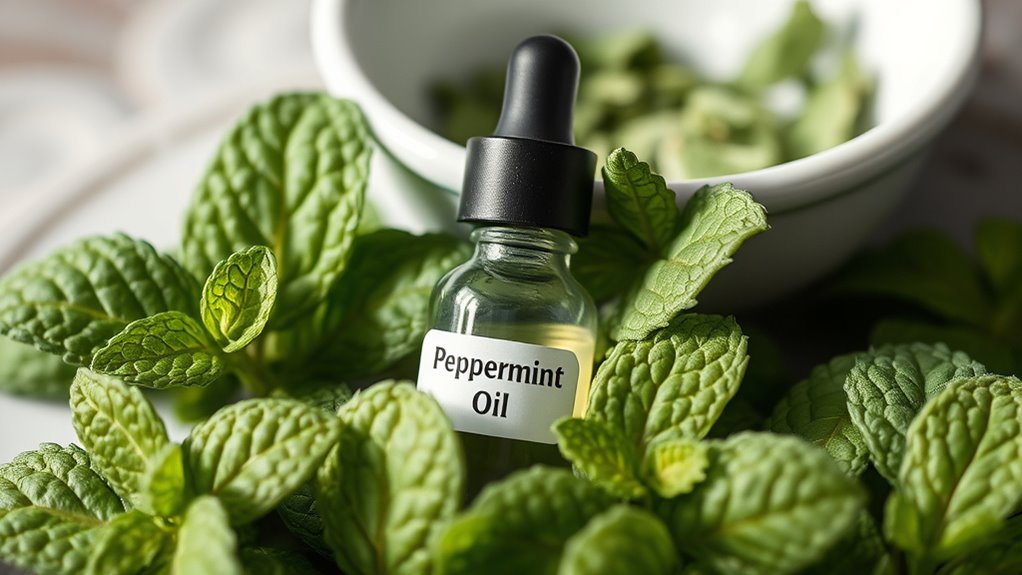
Peppermint oil is a popular natural remedy for soothing toothache pain due to its cooling sensation and soothing properties. When applied, it helps numb the affected area, providing quick relief from throbbing discomfort. Its natural cooling effect can reduce inflammation and ease soreness, making it a handy option when you need fast relief. To use, dilute a few drops of peppermint oil in a carrier oil like coconut or olive oil. Apply it gently to your sore tooth or gums with a cotton swab. Be careful not to swallow or ingest large amounts, as concentrated peppermint oil can cause irritation. This simple, natural remedy offers a revitalizing alternative to chemical-based numbing gels, helping you manage pain while supporting your oral health.
Ginger: Traditional Remedy for Dental Discomfort

Ginger has long been valued as a natural remedy for dental discomfort due to its anti-inflammatory and analgesic properties. You can use fresh ginger root by slicing it thinly and applying it directly to the affected area, or make a paste by mixing grated ginger with a little water. Its compounds help reduce swelling and numb pain, providing relief without chemicals. Incorporate ginger into your diet to help prevent future discomfort. Remember, ginger’s natural anti-inflammatory effects can soothe sore gums and ease toothache. Use it consistently but cautiously, as excessive use may cause irritation. Always consult your dentist if pain persists. Ginger offers a simple, herbal alternative to chemical numbing gels, supporting oral health naturally.
Herbal Teas: Soothing Sips for Oral Health

Herbal teas have long been prized for their soothing effects on oral health, offering a gentle remedy for toothaches and gum irritation. Sipping warm herbal teas can help reduce inflammation and calm irritated tissues. Chamomile is known for its anti-inflammatory and antimicrobial properties, making it excellent for soothing gums. Peppermint tea provides a cooling effect that can temporarily relieve pain and freshen your breath. Licorice root tea contains compounds that may promote healing and fight bacteria. Here’s a quick guide:
| Herb | Benefits |
|---|---|
| Chamomile | Anti-inflammatory, calming |
| Peppermint | Pain relief, breath freshening |
| Licorice Root | Healing, antibacterial |
| Clove | Numbs and reduces pain |
| Sage | Antiseptic, soothing |
Frequently Asked Questions
Are Herbal Remedies Safe for Children With Toothaches?
Herbal remedies can be safe for children if used correctly and with proper guidance. You should always consult a pediatrician or a healthcare professional before trying any herbal treatments for a child’s toothache. Avoid giving herbs that aren’t specifically recommended for children, and guarantee the remedies are prepared properly. Keep an eye on your child for any allergic reactions or side effects, and discontinue use if any adverse symptoms occur.
How Quickly Do Herbal Treatments Typically Relieve Tooth Pain?
Herbal helpers hop to the rescue pretty promptly, usually easing your pain within 15 to 30 minutes. When you apply herbal remedies like clove oil or rinse with chamomile, you might notice a noticeable numbness or relief fairly quickly. However, everyone’s experience varies, so patience is key. Consistent, cautious application can help you combat discomfort comfortably while waiting for professional dental help if needed.
Can Herbal Alternatives Replace Professional Dental Care?
Herbal alternatives can’t fully replace professional dental care, especially for serious issues. While herbs like clove or turmeric can temporarily soothe pain, they don’t treat underlying problems like infections or cavities. You should see a dentist for proper diagnosis and treatment. Relying solely on herbal remedies might delay necessary care, worsening your condition. Use herbs as a complementary measure, but prioritize professional help for lasting relief and oral health.
Are There Any Side Effects From Using Herbal Toothache Remedies?
Yes, herbal remedies can cause side effects, but they’re usually mild—think temporary mouth tingling or allergic reactions. Sometimes, herbs like clove or peppermint might irritate your gums or cause sensitivity if used excessively. You might also experience stomach upset if ingested improperly. Always test a small amount first and consult with a healthcare professional to avoid any unexpected, dramatic reactions that could turn your soothing remedy into a problem.
How Often Should Herbal Treatments Be Applied for Best Results?
You should apply herbal treatments every few hours, typically 3 to 4 times daily, to see the best results. Make sure to follow the specific instructions for each remedy, as some may require more or less frequent application. Consistency is key, so don’t skip doses. If your toothache persists beyond a few days or worsens, consult a dentist instead of relying solely on herbal remedies.
Conclusion
Remember, a stitch in time saves nine—don’t wait until your toothache worsens. These herbal remedies can offer quick, natural relief when you need it most. From clove oil to herbal teas, you have many options to soothe pain without harsh chemicals. Keep these remedies handy and act promptly. Your smile deserves gentle, effective care—sometimes, nature knows best. Trust these herbal alternatives to help you get through dental discomfort smoothly.