
Krampusnacht, celebrated on December 5th, highlights the dark folklore of Krampus, a half-goat, half-demon figure rooted in Alpine traditions. As a counterpart to Saint Nicholas, Krampus punishes naughty children with chains, whips, and sacks, embodying winter chaos. These festivities feature vibrant processions with costumes that showcase horns, fur, and menacing faces. If you keep exploring, you’ll uncover the rich history and cultural significance behind this intriguing legend.

Get oils, diffusers and self-care delivered free with Prime
- Fast, free delivery on millions of items
- Prime Video, Amazon Music and more included
- Member-only deals all year
Key Takeaways
- Krampusnacht is celebrated on December 5th, featuring parades and rituals honoring the mythological figure Krampus.
- Originating from Alpine folklore, Krampus is a half-goat, half-demon creature symbolizing chaotic winter forces.
- Traditional costumes depict Krampus with horns, chains, fur, and menacing facial features to evoke fear and awe.
- The folklore highlights Krampus as Saint Nicholas’ dark companion, punishing naughty children and reinforcing social morals.
- Modern celebrations blend myth and community spirit, preserving the cultural significance of Krampus folklore through festivals.
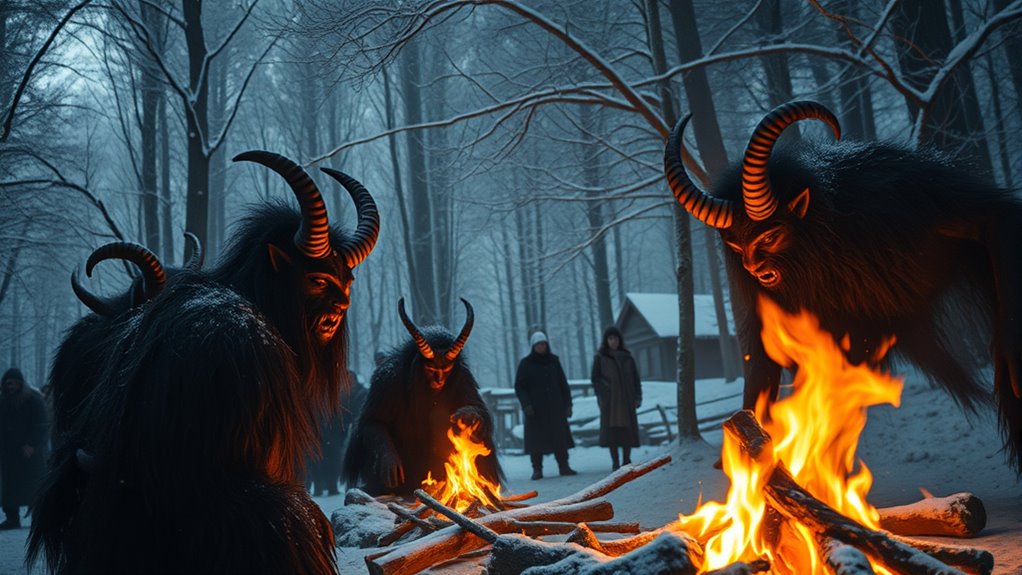
Krampusnacht, celebrated on the night of December 5th, is a unique and eerie tradition rooted in Alpine folklore. As you prepare for this night, you’re participating in a centuries-old customs that have been passed down through generations. The folklore origins of Krampus date back to pre-Christian times, blending pagan beliefs with Christian influences. Originally, the figure of Krampus was seen as a dark companion to Saint Nicholas, embodying the chaotic and wild aspects of winter. In many regions, Krampus traditions involve elaborate parades and rituals where people dress up as the fearsome creature, complete with horns, fur, and chains. These traditions serve as both a warning and a celebration, reminding communities of the importance of good behavior while also honoring ancient beliefs about winter spirits.
When you observe Krampusnacht, you’ll notice that the folklore origins of Krampus are deeply intertwined with local stories and legends. In some tales, Krampus is described as a half-goat, half-demon figure who punishes naughty children by whipping them or dragging them away in a sack. The folklore highlights the duality of Saint Nicholas and Krampus: one rewarding good children, the other punishing the misbehaving. The traditions often involve people donning costumes that mimic Krampus’s fearsome appearance, with bells and chains adding to the unsettling atmosphere. These Krampus costumes are crafted with attention to detail, emphasizing the creature’s intimidating horns, shaggy fur, and menacing face. The purpose isn’t just fright; it’s a theatrical enactment rooted in storytelling that has persisted for centuries.
Throughout the centuries, these Krampus traditions have served as a way to reinforce social norms and encourage good behavior during the festive season. The folklore origins suggest that in ancient times, communities used the fearsome figure of Krampus to scare children into behaving well. Today, the tradition has evolved into lively festivals and parades that celebrate this dark folkloric figure. Despite its spooky reputation, Krampusnacht remains a fun and culturally significant event, blending myth, history, and community spirit. You might find yourself captivated by the haunting costumes and lively processions, all rooted in a tradition that reflects the complex relationship between humans, nature, and the supernatural.
In embracing Krampus, you’re not just witnessing a holiday spectacle—you’re experiencing a piece of folklore that has stood the test of time, connecting past beliefs with present celebrations. Additionally, the cultural significance of Krampusnacht highlights how folklore can serve both as entertainment and social commentary, reinforcing moral values through mythological storytelling.
Top picks for "krampusnacht explor folklore"
As an affiliate, we earn on qualifying purchases.
Frequently Asked Questions
When Did the Tradition of Krampusnacht Originate?
The tradition of Krampusnacht originated in the 17th century, rooted in folklore from the Alpine regions. You can trace its history and origins back to pre-Christian pagan practices, where Krampus served as a counterpart to Saint Nicholas. Over time, this folkloric figure became part of local customs, with people celebrating Krampusnacht on December 5th or 6th. You’ll find that its roots reflect a mix of myth, legend, and cultural evolution.
Are There Regional Variations of Krampus Folklore Across Europe?
You’ll find Krampus folklore swirling with regional dialects and vibrant variations across Europe. From Austria’s mischievous, horned devil to Italy’s more playful versions, each area dresses up Krampus differently, reflecting local folklore and traditions. These regional dialects influence stories, chants, and customs, making Krampus a chameleon of sorts—adapting to local humor, fears, and cultural quirks. So, your Krampus experience depends heavily on where you’re celebrating.
How Is Krampus Portrayed in Modern Popular Culture?
You see Krampus in modern popular culture as a terrifying yet fascinating figure, often featured in movies and TV specials. People love showcasing Krampus costume trends, with elaborate, spooky costumes at events and festivals. In movies, Krampus is portrayed as a menacing, horned creature that punishes naughty kids, blending horror and humor. This modern take keeps the folklore alive, making Krampus a popular, iconic symbol of holiday mischief.
What Are Common Krampusnacht Celebrations Today?
Imagine a night where shadows dance and spirits come alive—Krampusnacht celebrations today invite you to join lively community parades and costume competitions. You’ll see people dressed as Krampus, complete with horns and chains, adding a playful yet eerie atmosphere. These festivities often feature singing, storytelling, and mischievous pranks, creating a spirited environment. It’s a vibrant way to honor tradition, blending folklore with fun, and keeping the legend alive for all ages.
Is There a Connection Between Krampus and Other Mythological Creatures?
Yes, there are mythological parallels between Krampus and other creatures, reflecting shared themes of punishment and protection. You’ll notice creature symbolism in figures like the Scandinavian trolls or the European black dogs, which embody warnings or chaos. These mythological parallels help you understand how different cultures use creature symbolism to convey moral lessons or societal fears, connecting Krampus to a broader tradition of mythic figures that embody darker aspects of folklore.
Conclusion
As you step into the shadowed world of Krampusnacht, you’re swept into a swirling dance of light and darkness. The legend whispers like wind through twisted branches, reminding you that even in the coldest nights, the wild spirit of folklore stirs beneath the surface. Embrace the mystery, for in the heart of Krampus’ tale lies a mirror to our own fears and desires—an eternal dance between good and evil echoing through time.
Halloween Picks
halloween
As an affiliate, we earn on qualifying purchases.