
TL;DR

Get oils, diffusers and self-care delivered free — and shop member deals
- Fast, free delivery on millions of items
- Access to Prime Big Deal Days deals on October 6–7
- Prime Video, Amazon Music and more included
A multicenter study of 506 adults receiving physician-led home care in Tokyo and Ibaraki found that 94.7% had at least two chronic conditions. Patients with four or more conditions were more likely to have an emergency home visit than those with two or three, though the study does not establish that multimorbidity causes such visits.
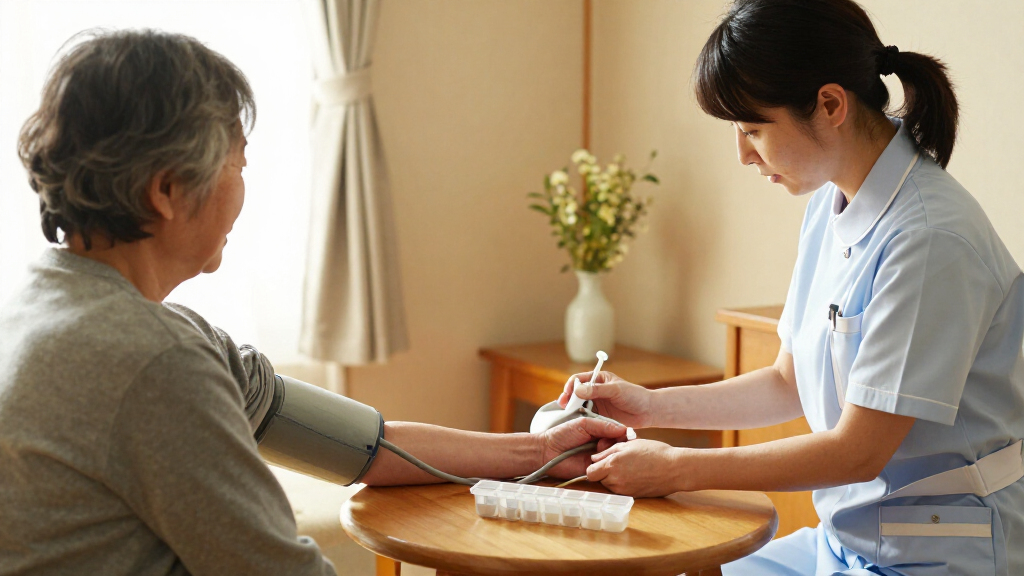
A study of 506 adults receiving physician-led home care in Tokyo and Ibaraki Prefecture found that 94.7% had at least two chronic conditions, while patients with larger numbers of conditions were more likely to need an emergency home visit. Published in the Journal of General and Family Medicine, the research describes a health-care group that can be difficult to study because patients may have trouble attending clinics or hospitals.
The researchers, led by Gen Nakayama of the University of Tsukuba, reviewed medical records from patients receiving home care through medical facilities in Tokyo and Ibaraki Prefecture. They counted each patient’s chronic conditions and examined whether the number was associated with an emergency home visit: an unscheduled physician visit requested after a sudden change in the patient’s condition.
Multimorbidity was defined as having two or more chronic conditions. More than half of the patients, 57.1%, had four or more conditions. Across the study group, 13.2% had required at least one emergency home visit during the previous month.
When the team grouped patients by condition count, those with four or five conditions were significantly more likely to have an emergency home visit than those with two or three. The association was strongest among patients with six or more conditions. The report does not provide an absolute emergency-visit rate for each group in the supplied material, so the size of the difference cannot be stated here.
Condition Counts May Guide Home-Care Planning
The findings point to a practical way care teams might flag patients for closer attention: the number of chronic conditions recorded in a medical file. If the association is useful in routine care, clinicians could use such counts alongside their assessment of a patient’s overall health when considering follow-up and planning for sudden changes.
That matters for home-care services because the patients in the study receive medical care at home rather than routinely visiting a clinic or hospital. The study suggests that a large share of this group lives with multiple chronic conditions, and that higher counts are associated with more unscheduled visits. It does not show that counting conditions alone can predict an individual emergency, or that a particular care plan would prevent one.
For health services, the results may help frame questions about how to allocate monitoring and support as Japan’s population ages and more older adults receive care at home. The research is an observational analysis of one patient group, however, not an evaluation of a new intervention or a nationwide estimate.
As an affiliate, we earn on qualifying purchases.
Study Focused on Two Japanese Prefectures
Home-based medical care in the report refers to physicians regularly visiting patients who have difficulty going to clinics or hospitals. The researchers said multimorbidity is known to be common among home-care patients, but that its prevalence in this population had been assessed in relatively few studies.
To address that gap, the team examined records from 506 patients at facilities in Tokyo and Ibaraki Prefecture. The study, titled “Multimorbidity Among Patients Receiving Home Care in Japan: Prevalence, Levels, and Association With Emergency Home Visits,” appeared in the Journal of General and Family Medicine in 2026. Its DOI is 10.1002/jgf2.70170.
The study’s emergency-visit measure covered the month before the assessment, while the condition count represented each patient’s recorded chronic conditions. These figures describe the people in the study and should not automatically be treated as rates for all people receiving home care in Japan.
“The study found that 94.7% of patients had multimorbidity, defined as the presence of two or more chronic conditions.”
— Study authors, as summarized by Medical Xpress
As an affiliate, we earn on qualifying purchases.
Limits of the Patient Records
The results show an association, not cause and effect. They do not establish that having more chronic conditions caused emergency visits, or that a high condition count can reliably predict when a particular patient’s health will change.
The available report does not give the detailed patient demographics, the names or types of conditions counted, the exact emergency-visit rates within each condition-count group, or the statistical estimates behind the comparison. It also does not state whether the findings apply to patients outside the participating facilities or to home-care populations elsewhere in Japan. Those details would be needed to judge how broadly the results can be applied.
As an affiliate, we earn on qualifying purchases.
Further Research on Risk and Care
The published study establishes a prevalence estimate and reports an association for its participating patients; the source material does not announce a follow-up study or a change to Japanese home-care policy. Further research could test whether the relationship holds across a wider range of facilities and patient groups, and whether condition counts add useful information beyond clinicians’ other assessments.
For now, the reported result is a potential aid to care planning and risk assessment, not a stand-alone clinical rule. Any decision to change monitoring or visit schedules would require consideration of a patient’s circumstances and evidence beyond this study.
As an affiliate, we earn on qualifying purchases.
Key Questions
What does multimorbidity mean in this study?
It means having two or more chronic conditions. Researchers counted each participant’s chronic conditions using medical-record information.
How many patients took part?
The study included 506 adults receiving physician-led home care through medical facilities in Tokyo and Ibaraki Prefecture.
How common were emergency home visits?
Overall, 13.2% of participants had at least one emergency home visit in the month before the assessment. The source material does not provide the rate for each condition-count group.
Does the study show that multiple conditions cause emergencies?
No. It found that patients with higher condition counts were more likely to have emergency visits, but the reported association does not establish that multimorbidity caused those visits.
Can the findings be applied to all Japanese home-care patients?
That is not established. The study included patients at facilities in two prefectures; the supplied report does not show whether the results represent the entire country’s home-care population.
Source: rss
Evergreen bestsellers Picks
bestsellers
As an affiliate, we earn on qualifying purchases.