TL;DR

Get oils, diffusers and self-care delivered free with Prime
- Fast, free delivery on millions of items
- Prime Video, Amazon Music and more included
- Member-only deals all year
Leaders from Trilogy Health Services and Signature HealthCARE described AI and predictive-monitoring systems used to flag health risks, prevent falls and organize clinical documentation. They reported reductions in hospitalizations and falls at participating facilities, but the figures were shared by company executives and independent verification details were not provided.
Trilogy Health Services and Signature HealthCARE are using AI-enabled monitoring and analytics to flag residents who may need attention, reduce falls and organize records for audits, executives said at SNN’s ReThink conference in Philadelphia this week. The operators reported improved outcomes in some participating facilities, while stressing that technology must ease caregivers’ work rather than add steps.
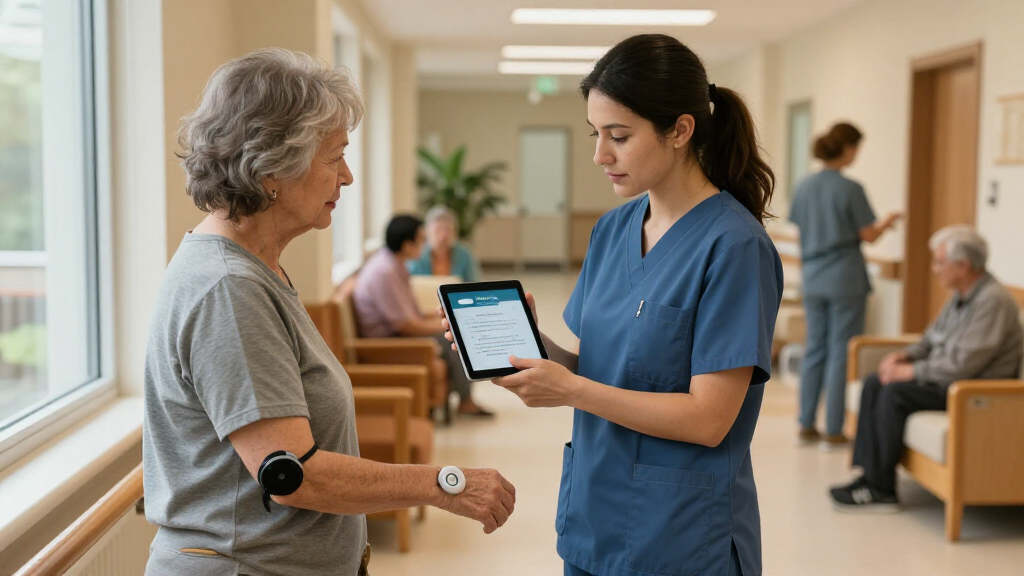
Trilogy’s senior vice president and chief nursing officer, Rhonda Dempsey, said the company uses predictive analytics and a wearable device to monitor about 300 high-risk residents. The device tracks vital signs around the clock. If a resident’s temperature rises two degrees above their baseline and stays elevated for about an hour, it alerts a nurse to assess the resident and contact a practitioner. Dempsey said the system has helped reduce hospitalizations by 60%; the report did not provide a comparison period or an independent evaluation of that figure.
At Signature HealthCARE, chief nursing officer Barbara Revelette described a fall-prevention system initially installed in four facilities and later expanded to 20 buildings. The CareAI system detects resident movement and sends notifications to staff. Revelette said clinical teams recorded an 80% decrease in falls in buildings using the technology; the source did not specify the measurement period or comparison baseline.
Signature also uses a virtual sitter program combining ambient monitoring, AI and live staff. Revelette said a sitter in Louisville can monitor residents in other states, alert nurses when a resident appears to be getting out of bed and communicate with residents or staff. The system can monitor eight to 10 residents virtually, according to Revelette. Signature is also using AI-supported tools to identify missing documentation and bring information together in dashboards for review by auditors.
Monitoring Residents and Supporting Staff
The systems described are intended to help staff respond earlier to potential changes in residents’ conditions and reduce the time spent on routine monitoring or assembling records. For nursing homes, those functions touch two persistent operational demands: resident safety and the workload involved in documenting care.
The reported results are company figures, not independently verified findings in the source material. They also apply to the facilities using the systems, not necessarily to all nursing homes. The outcomes matter to residents and families, but any judgment of effectiveness would need details such as study periods, resident counts, comparison methods and costs.
Both executives framed staff adoption and privacy as practical conditions for using the tools. Dempsey said technology should take tasks away from caregivers and directly support their work. She also warned that staff may turn to unapproved tools if employers do not provide workable alternatives, potentially creating privacy and HIPAA risks.
AI fall detection system for nursing homes
As an affiliate, we earn on qualifying purchases.
As an affiliate, we earn on qualifying purchases.
How the Operators Use AI
Trilogy, based in Louisville, operates more than 140 senior living communities. Signature HealthCARE, also based in Louisville, operates 69 locations across five states. The executives discussed their organizations’ clinical technology during a panel at the ReThink conference, an industry event held in Philadelphia.
Trilogy’s approach, as Dempsey described it, is to identify signs of a possible health problem before a resident needs hospital care. Signature’s projects include movement alerts and a live remote-sitter service. Revelette said Signature received a state grant in Tennessee for fall-prevention technology and automatic documentation of activities of daily living. The report does not specify the grant amount or its terms.
The companies also described AI as one part of a broader operational setup, rather than a replacement for clinical staff. Signature’s virtual sitters are live personnel who respond to alerts and contact nurses; Dempsey described Trilogy’s alerts as prompts for a nurse to assess a resident and call a practitioner.
“When their temperature goes up two degrees above their baseline and sustains for about an hour, the nurse gets the alert, goes down and assesses the resident, and calls the practitioner.”
— Rhonda Dempsey, Trilogy Health Services’ senior vice president and chief nursing officer
resident health monitoring wearable device
As an affiliate, we earn on qualifying purchases.
As an affiliate, we earn on qualifying purchases.
Questions Behind the Outcome Figures
The presentation did not include the measurement periods, baselines or methods behind the reported 60% reduction in hospitalizations at Trilogy or 80% decrease in falls at Signature’s participating buildings. It is also unclear how much of each result can be attributed to the technology rather than other changes in staffing, practice or resident mix.
The source did not give costs, staffing effects or details on how alerts are reviewed when a live caregiver is unavailable. It also did not describe the privacy safeguards, data-retention rules or consent process for resident monitoring. Signature said the program continues to gain features, but did not provide a timetable or a complete account of planned additions.
virtual sitter AI monitoring system
As an affiliate, we earn on qualifying purchases.
As an affiliate, we earn on qualifying purchases.
Further Rollout and Program Evaluation
Signature has expanded its fall-prevention system from four facilities to 20 and said it is continuing to add capabilities to its virtual sitter program. Revelette did not announce a schedule for further expansion. Trilogy said its wearable system is currently used by about 300 residents and is reviewed weekly.
The companies did not announce new rollout dates or publish evaluation plans at the conference. Further information on outcomes, costs, privacy practices and the systems’ effects on caregiver workload would help assess how well the programs perform beyond the executives’ reported results.
electronic health record audit tools
As an affiliate, we earn on qualifying purchases.
As an affiliate, we earn on qualifying purchases.
Key Questions
What AI tools are Trilogy and Signature using?
Trilogy uses predictive analytics and a wearable device that can alert nurses to a sustained temperature rise in high-risk residents. Signature uses movement detection for fall prevention, a live virtual-sitter service and AI-supported documentation tools.
How many residents does Trilogy monitor with its wearable system?
Dempsey said the device was being used for about 300 residents and that the company tracks the program weekly.
What fall reduction did Signature report?
Revelette reported an 80% decrease in falls in buildings where the fall-prevention AI was implemented. The source did not state the measurement period or comparison baseline.
Are virtual sitters fully automated?
No. Revelette described Signature’s virtual sitters as live staff supported by AI and ambient monitoring. They can contact residents or alert nurses when a resident may be trying to get out of bed.
Have the reported results been independently verified?
The conference account attributed the outcome figures to the company executives and did not cite independent verification, study methods or comparison data.
Source: rss
Halloween Picks
halloween
As an affiliate, we earn on qualifying purchases.