
TL;DR
Researchers reported that a sphingolipid measured in exhaled breath condensate distinguished idiopathic pulmonary fibrosis from fibrotic hypersensitivity pneumonitis in a study presented at the CHEST meeting. The finding is preliminary: relatively few participants provided breath samples, the test needs external validation, and the method is not widely available.
Researchers reported that a lipid measured in exhaled breath condensate could help distinguish idiopathic pulmonary fibrosis (IPF) from fibrotic hypersensitivity pneumonitis, two lung diseases that can resemble each other in advanced stages. The preliminary study, presented at the CHEST meeting in Phoenix, found promising predictive accuracy, but the approach has not yet been validated externally or established as a routine clinical test.

Get oils, diffusers and self-care delivered free with Prime
- Fast, free delivery on millions of items
- Prime Video, Amazon Music and more included
- Member-only deals all year
The study examined sphingomyelin C24:0 in breath condensate. According to findings presented by Jon Mullholand, MD, of Virginia Commonwealth University, the marker correctly predicted fibrotic hypersensitivity pneumonitis in 80% of cases and IPF in 85.7%. Its area under the receiver operating characteristic curve, a measure of how well a test separates groups, was 0.897.
A blood marker, plasma dihydrosphingosine, had a more modest predictive performance on its own, with an AUC of 0.737. Adding it to the breath marker produced an AUC of 0.906, a small change from the breath test alone, the reported results showed. The study included blood samples from 101 people: 28 healthy controls, 33 people with IPF and 40 with fibrotic hypersensitivity pneumonitis. Breath samples were available from only 10 controls, 21 IPF patients and 18 patients with fibrotic hypersensitivity pneumonitis.
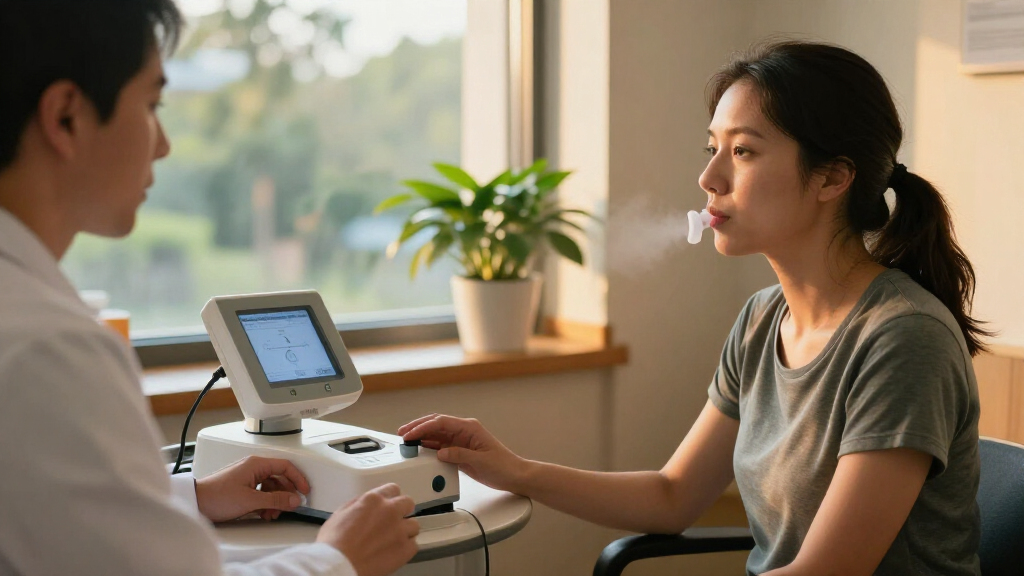
Breath condensate is collected by cooling exhaled air so moisture forms a sample that can be tested. Mullholand said the method may reflect the local environment in the lungs, while blood measurements can reflect broader changes across the body. The study reported different patterns in the two sample types, but the results do not establish why the lipid levels differ or whether the marker can guide treatment decisions.
Why Distinguishing These Lung Diseases Matters
IPF and fibrotic hypersensitivity pneumonitis can share symptoms, imaging findings and pathology features, particularly in late-stage disease, Mullholand said. Yet the conditions differ in management and prognosis. A reliable way to tell them apart could help clinicians make more informed diagnostic and treatment decisions, since an incorrect classification may affect care and patient outcomes.
The study is not evidence that the breath test improves outcomes or should replace existing diagnostic assessment. Its potential significance is that it offers a noninvasive marker for further testing in a difficult diagnostic setting. If larger studies confirm its performance, it might contribute to the evidence clinicians use when evaluating patients whose results are hard to interpret.
Products Worth Considering

Hyperice Hypervolt Go 3 Percussion Massage Gun
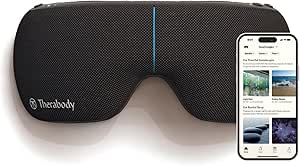
Therabody SmartGoggles 2nd Gen Heated Eye and Temple Massager

Oura Ring 5 Smart Ring, Silver, Size 7
As an affiliate, we earn on qualifying purchases.
How Breath Sampling Fits the Research
Sphingolipids are involved in processes related to inflammation and fibrosis, and earlier research has reported altered sphingolipids in IPF. The current study compared lipid measurements in blood and breath condensate across healthy controls and people with the two fibrotic conditions. The sample counts differ by method: all 101 participants provided blood, while 49 provided breath condensate.
Mullholand said breath-condensate research had declined around a decade ago partly because collection and analysis can be challenging. Collection takes roughly 15 to 20 minutes, and may be difficult for people with severe lung impairment. He also described the assay as variable. The source report says plasma sphingolipid testing is not a common assay and that many U.S. laboratories do not accept exhaled breath condensate for analysis.
“There’s a diagnostic challenge when we’re trying to differentiate these [two conditions] at end-stage disease, as they can have overlapping clinical presentations as well as imaging features, even pathologic slides.”
— Jon Mullholand, MD, Virginia Commonwealth University
Limits of the Early Breath-Test Results
The findings remain preliminary. The source report provides no external validation results, and fewer than half of the study participants supplied breath samples. It is not clear how the test would perform in a larger, independent group or among patients whose diagnoses are especially uncertain. The reported accuracy figures also do not show whether the test can reliably guide care in everyday clinical settings.
Availability is another unresolved issue: the breath assay is not accepted for analysis by many U.S. laboratories, according to Mullholand, and plasma sphingolipid testing is not commonly available. The report does not specify a timeline for validation, regulatory review or clinical adoption. It also remains unknown whether the observed lipid differences reflect a disease mechanism, a consequence of disease, or another factor.
External Validation Is the Next Test
Mullholand said external validation is needed before the findings can support clinical use. That work would need to test the marker in an independent patient group and clarify how consistently breath samples can be collected and analyzed. Researchers may also investigate the biological role of the sphingolipids and whether the patterns relate to the disease process.
Until those steps are reported, the breath test should be viewed as a research finding, not an available diagnostic service or a replacement for current evaluation. The source report did not identify a date for the next study or say when the assay might be offered in clinical practice.
Key Questions
What did the breath test measure?
It measured sphingomyelin C24:0 in exhaled breath condensate, a sample made by cooling moisture from a person’s breath.
Which conditions did the study compare?
The study assessed whether the marker could distinguish idiopathic pulmonary fibrosis from fibrotic hypersensitivity pneumonitis, as well as including healthy controls.
How accurate was the reported result?
The marker correctly predicted fibrotic hypersensitivity pneumonitis in 80% of cases and IPF in 85.7% in this study. Its reported AUC was 0.897. These are study results, not a guarantee of performance in other patient groups.
Can patients get this test now?
The report says the breath-condensate assay is not accepted for analysis by many U.S. laboratories. External validation and wider laboratory availability are still needed before routine clinical use can be assessed.
Source: rss