
When combining herbs with medications, it’s essential to understand potential herb-drug interactions that can reduce effectiveness or cause side effects. Always talk to your healthcare provider before adding herbs to your routine, especially if you’re on medications like blood thinners or antidepressants. Pay attention to dosage and duration, and report any unusual symptoms promptly. Knowing how herbs can impact your treatment helps keep you safe; explore further to learn more about safe practices.
Key Takeaways
- Always consult healthcare providers before combining herbs with medications to prevent harmful interactions.
- Be aware that herbs can alter drug effectiveness or increase side effects, especially with blood thinners or antidepressants.
- Follow recommended dosages and durations for herbal supplements to avoid adverse health effects.
- Monitor for unusual symptoms and report any adverse reactions promptly to your healthcare provider.
- Keep a detailed list of all herbs and medications used to help healthcare professionals assess potential interactions.
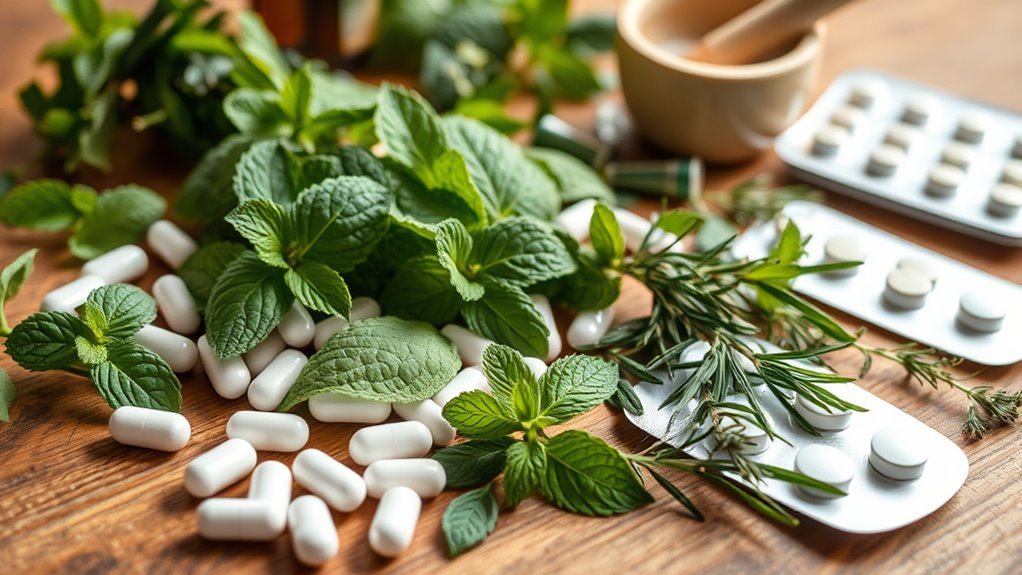
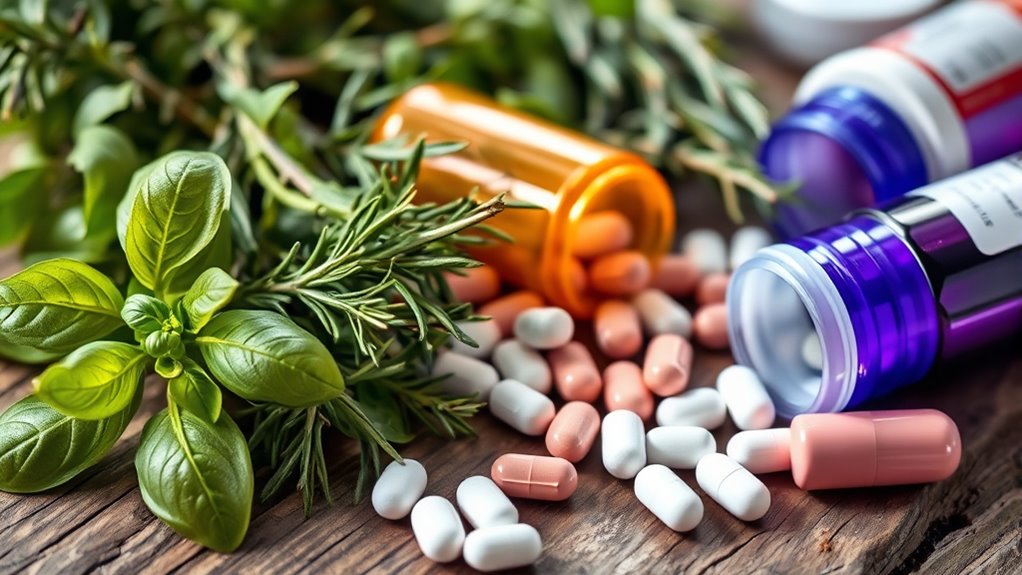
Combining herbs and medications can offer benefits, but it also carries risks if not done carefully. Herb drug interactions are a key concern because certain herbs can alter how your medications work, sometimes reducing their effectiveness or increasing the risk of side effects. For example, some herbs like ginseng or St. John’s Wort can interfere with prescription drugs for depression or blood pressure, leading to unpredictable results. That’s why understanding potential interactions is essential before adding herbs to your routine, especially if you’re taking medications regularly.
Herb-drug interactions can reduce effectiveness or cause side effects; consult your healthcare provider first.
Safety precautions involve more than just knowing about interactions; they also include consulting your healthcare provider before starting any herbal supplement. Your doctor can review your current medications, identify possible herb drug interactions, and advise on safe combinations. Keep in mind that herbs are potent and can influence how your body processes drugs through mechanisms like altering liver enzymes or affecting blood clotting. For instance, garlic and ginkgo can thin your blood, increasing bleeding risk when combined with anticoagulants. Recognizing these risks helps you avoid unnecessary complications.
Always be cautious about the dosage and duration when using herbs. Even natural products can cause adverse effects if taken excessively or for prolonged periods. Read labels carefully, follow recommended doses, and don’t assume that “natural” always means safe. Some herbs have active compounds that can interact with medications or cause side effects, especially if you have underlying health conditions. For example, kava might soothe anxiety but can also harm your liver if combined with certain medications or used in high doses.
Monitoring your body’s response is another crucial safety measure. If you start a new herbal supplement, watch out for unusual symptoms like dizziness, stomach upset, or allergic reactions. Report these to your healthcare provider promptly. Keep a list of all supplements and medications you’re using, and share this information during medical visits. This transparency helps your healthcare team spot potential herb drug interactions early and adjust your treatment plan accordingly.
Additionally, understanding how health and wellness practices can influence medication effectiveness is vital for safe self-care.
Top picks for "combin herb medication"
Open Amazon search results for this keyword.
As an affiliate, we earn on qualifying purchases.
Frequently Asked Questions
Can Herbs Replace Prescribed Medications Safely?
You might wonder if herbs can substitute prescribed medications safely. While some herbs have proven herbal efficacy, they aren’t guaranteed to treat your condition effectively or safely on their own. Relying solely on herbs could lead to medication dependence or worsening symptoms. Always consult your healthcare provider before making any changes, as they can help ensure your safety and determine the best treatment plan for your needs.
Are There Specific Herbs That Interact Dangerously With Certain Drugs?
You’re asking if certain herbs can cause dangerous interactions with drugs. The truth is, some herbs, like St. John’s Wort or ginseng, can lead to herb toxicity or interfere with natural remedies. It’s a case of mixing oil and water if you don’t know what you’re doing, so always consult your healthcare provider before combining herbs and medications. Staying informed helps you avoid risky interactions that could harm your health.
How Do I Identify Harmful Herb-Drug Interactions?
To identify harmful herb interactions, you need to stay informed about potential herb interaction risks and prioritize drug safety. Always read labels and consult with your healthcare provider before combining herbs with medications. Watch for unusual side effects or changes in effectiveness, and keep a detailed list of all herbs and drugs you take. This proactive approach helps you prevent adverse reactions and guarantees safer, more effective treatment.
Should I Inform My Doctor About All Herbal Supplements?
You should definitely inform your doctor about all herbal supplements you’re taking. This is essential for herbal safety and ensuring your healthcare provider can monitor potential interactions. By disclosing your supplement use, you help prevent adverse effects and medication conflicts. Always be honest and thorough with your supplement disclosure, so your doctor can give you the best advice and adjust your treatment plan if needed.
Are Herbal Interactions Different for Children or Pregnant Women?
You should know that herbal interactions can differ for children and pregnant women, requiring pediatric caution and awareness of pregnancy risks. Herbs may affect a child’s developing body differently and could interfere with medications or cause adverse effects. During pregnancy, some herbs might pose risks to the baby or increase complications. Always consult your healthcare provider before using herbs if you’re pregnant or caring for a child to guarantee safety and avoid harmful interactions.
Conclusion
Remember, combining herbs and medications is a tightrope walk—you need to know what you’re doing. Always consult your healthcare provider before mixing them, because even natural remedies can cause a ripple effect you didn’t see coming. Think of it as steering a ship through choppy waters; a little guidance can make all the difference. Stay informed, stay cautious, and you’ll keep your health sailing smoothly without hitting any unexpected storms.