

TL;DR

Get oils, diffusers and self-care delivered free with Prime
- Fast, free delivery on millions of items
- Prime Video, Amazon Music and more included
- Member-only deals all year
A UCLA-led study found that adults whose brain scans looked older than their actual age tended to perform worse on some memory and thinking tests and report more depressive symptoms. In one of three study groups, brain-age estimates were also associated with particular gut bacteria and metabolic compounds; the findings show associations, not that gut microbes cause brain aging.
A study led by UCLA Health researchers found that adults whose brains appeared older than their chronological age tended to score worse on tests of working memory and executive function and report more depressive symptoms, echoing findings from brain scans linked to faster brain aging. In one of the study’s three groups, older-appearing brains were also associated with specific gut bacteria and metabolic compounds, a finding that may help researchers investigate brain health earlier in life but does not show that gut microbes cause the changes.
The study, published in eBioMedicine, analyzed brain scans from nearly 1,500 adults across three separate groups. Researchers used a method that measures how brain regions communicate while a person is resting, then trained a computer model to estimate age from those patterns. They compared each estimate with the participant’s actual age; the difference was labeled the Brain Aging Index.
Across all three groups, a higher index—meaning a brain estimated to be older than the participant’s chronological age—was generally linked with weaker performance on working-memory and executive-function tests. These abilities support holding information in mind, focusing, planning and organizing. Participants with higher index scores also reported more symptoms of depression. The researchers noted that patterns repeatedly involved brain regions associated with memory and self-referential thought.
For one group, the team also analyzed stool samples. A higher Brain Aging Index was associated with particular gut bacteria and several metabolic byproducts, including certain fat molecules, a cholesterol-related compound and lower levels of estetrol, a hormone. The study linked these signals to pathways involving immune activity, blood-vessel function, communication between brain cells and cellular energy production. The gut analysis was limited to that group, and the reported relationships do not establish cause and effect.
Early Signals, Not a Diagnosis
The findings add to research into whether signs associated with brain aging can be detected before people experience clear problems with memory or thinking. The study examined generally healthy adults as well as drawing on earlier research that had often focused on older people or those with neurological conditions. Linking brain-scan patterns to cognitive and mood measures, and then to gut-related signals in one group, gives researchers avenues to test in future work.
For readers, the results are not a clinical test or a forecast of an individual’s future health. The study does not show that changing gut bacteria would improve cognition, mood or brain aging. Its importance is in identifying associations that could guide research into possible biological pathways and, eventually, ways to assess risk earlier.
Products Worth Considering

Hyperice Normatec Elite Wireless Compression Boots Recovery – Standard Size

Levoit Eleva 300X HEPA Air Purifier for Home and Bedroom
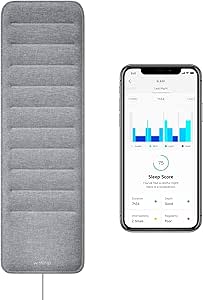
Withings Sleep Under-Mattress Sleep Tracking Pad
As an affiliate, we earn on qualifying purchases.
How Researchers Estimated Brain Age
Brain age is an estimate derived from biological measurements, not a person’s actual age or a diagnosis. In this study, the estimate came from patterns of communication among brain regions measured in scans taken while participants were at rest. A difference between estimated and chronological age formed the study’s Brain Aging Index.
Previous research has associated an older-appearing brain with poorer memory and thinking skills and with mood changes, but much of that work focused on older adults or people with existing neurological conditions. The UCLA team asked whether similar patterns could be seen among younger, generally healthy adults. Senior author Dr. Arpana Church is co-director of the Goodman-Luskin Microbiome Center at UCLA Health.
Cause and Individual Risk Remain Unknown
The results establish associations, not causation. They do not show whether gut bacteria or their byproducts influence brain aging, whether brain-related changes affect the gut, or whether other factors contribute to both. The gut findings came from one of the three groups, and the source report does not specify enough detail to determine how well those associations apply to other populations.
It is also unclear whether the Brain Aging Index can predict later cognitive or mood-related decline for an individual, or whether the observed links remain over time. The report provides no evidence that stool testing or brain scans from this study are ready for routine screening, and no treatment or dietary change was tested.
Testing the Links Over Time
Further research would need to test whether the reported gut and brain-age associations can be reproduced in other groups and followed over time. Studies could examine whether the signals predict later changes in cognition or mood, and whether they reflect a causal pathway rather than correlated biology. Church said the work may eventually help researchers identify people at greater risk earlier and explore whether gut health could support brain health, but those possibilities remain questions for future studies.
Key Questions
What did the study find?
Across three groups, adults with higher Brain Aging Index scores generally performed worse on working-memory and executive-function tests and reported more depressive symptoms. In one group, the index was also associated with particular gut bacteria and metabolic compounds.
Does gut bacteria cause the brain to age faster?
The study does not establish that. It found associations between brain-age estimates and gut-related signals in one group, but it cannot show which changes came first or whether one caused the other.
What is the Brain Aging Index?
Researchers estimated participants’ ages from patterns of communication among brain regions in resting-state scans. The Brain Aging Index was the difference between that estimate and each participant’s chronological age.
Can people use these findings to assess their own risk?
No individual screening method or treatment was validated in the reported study. The findings are research results, not a diagnosis or a prediction of a person’s future cognitive or mood health.
Source: rss