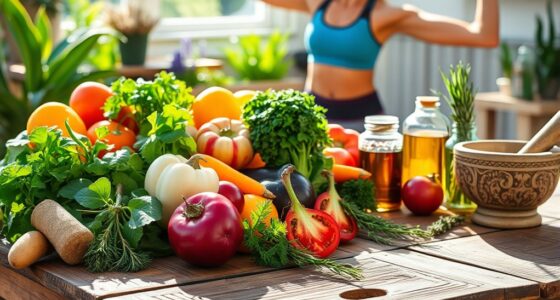
In your 30s and 40s, your bone health starts to decline more quickly if you don’t take action. Bone remodeling shifts, leading to faster loss than new growth, so staying proactive is key. Focus on calcium-rich foods, stay active with weight-bearing exercises, and keep your vitamin D levels up to help your bones stay strong. Staying hydrated also supports your bone structure. If you want tips to protect your bones now and in the future, keep going.

Get oils, diffusers and self-care delivered free with Prime
- Fast, free delivery on millions of items
- Prime Video, Amazon Music and more included
- Member-only deals all year
Key Takeaways
- Bone density decline accelerates, making early proactive measures essential to prevent osteoporosis later.
- Maintaining adequate calcium intake through diet supports strong bones during these decades.
- Regular weight-bearing and resistance exercises help preserve and enhance bone strength.
- Proper hydration aids nutrient absorption and reduces inflammation linked to bone loss.
- Ensuring sufficient vitamin D levels is vital for calcium absorption and overall bone health.
As you enter your 30s and 40s, it’s essential to prioritize your bone health before the natural decline begins to accelerate. During this period, your bones are still relatively strong, but the process of bone remodeling starts to shift. You begin to lose bone density at a slightly faster rate than you build it, which means taking proactive steps now can make a significant difference later in life. One of the most effective ways to support your bones is by ensuring adequate calcium intake. Calcium is the fundamental mineral that keeps your bones strong and healthy. You should aim to include calcium-rich foods like dairy products, leafy greens, almonds, and fortified foods in your daily diet. If you find it challenging to meet your calcium needs through food alone, consider talking to your healthcare provider about supplements, but always prioritize natural sources first.
Alongside proper calcium intake, engaging in weight-bearing exercises plays a crucial role in maintaining bone density. Activities like walking, jogging, dancing, or resistance training put stress on your bones, signaling your body to strengthen them. Consistent weight-bearing exercise not only helps preserve existing bone mass but can also stimulate new bone growth. It’s important to incorporate these exercises into your routine at least a few times a week to see the benefits. Additionally, staying hydrated helps your body better absorb nutrients vital for bone health, supporting overall strength and resilience. Proper hydration can also aid in reducing inflammation, which is linked to bone loss and other health issues. Incorporating adequate vitamin D** into your routine is also vital, as it enhances calcium absorption and promotes healthy bone formation. The combination of proper nutrition and physical activity creates a powerful defense against osteoporosis and other bone-related issues** as you age.
calcium supplements for bone health
As an affiliate, we earn on qualifying purchases.
As an affiliate, we earn on qualifying purchases.
Frequently Asked Questions
How Can I Tell if I Have Early Signs of Osteoporosis?
You might notice early signs of osteoporosis if you experience frequent fractures, back pain, or a loss of height over time. Menopause symptoms can also signal increased risk, as hormone changes affect bone density. To stay ahead, get regular check-ups, consider calcium supplements, and discuss bone density testing with your doctor. These steps help catch early signs and keep your bones strong as you age.
Are There Specific Foods That Boost Bone Density?
You can boost your bone density by eating calcium-rich foods like dairy, leafy greens, and fortified products. Incorporate vitamin D sources such as fatty fish, egg yolks, or get sunlight exposure to help your body absorb calcium effectively. These nutrients work together to strengthen your bones, so make them a regular part of your diet. Staying consistent with these foods can help maintain healthy bones as you age.
Can Exercise Prevent Bone Loss During These Decades?
Yes, exercise can prevent bone loss during your 30s and 40s. Strength training is especially effective because it stimulates bone growth and maintains density. Combine this with adequate calcium intake through diet or supplements to maximize benefits. Regular, weight-bearing activities like lifting weights or resistance exercises make your bones stronger, helping you avoid osteoporosis later in life. Stay consistent to protect your bones during these vital decades.
How Does Alcohol Consumption Affect My Bone Health?
Sure, indulge in that drink — just don’t expect your bones to thank you. Alcohol impact on your bones is real; it accelerates bone weakening by messing with calcium absorption and hormone balance. So, while a cocktail might boost your mood, it’s silently sabotaging your skeletal strength. Remember, a night out shouldn’t turn into a lifetime of weaker bones, so sip wisely and keep your structure sturdy.
When Should I Start Getting Bone Density Scans?
You should start getting bone density scans around age 65, or earlier if you have risk factors like genetic issues or hormonal changes. If your family has osteoporosis or you experience early menopause, your doctor might recommend scans sooner. Regular testing helps catch bone loss early, so you can take steps to strengthen your bones. Stay proactive about your health, especially if genetic factors or hormonal shifts are affecting your bone strength.
weight-bearing exercise equipment
As an affiliate, we earn on qualifying purchases.
As an affiliate, we earn on qualifying purchases.
Conclusion
By your 30s and 40s, your bones start to gradually lose density, making it essential to stay proactive. Did you know that after age 30, you lose about 1% of bone mass each year? Staying active, eating calcium-rich foods, and avoiding smoking can help slow this process. Prioritizing your bone health now sets the foundation for stronger bones later in life, reducing the risk of fractures and osteoporosis. Take action today for a healthier, more resilient tomorrow.
As an affiliate, we earn on qualifying purchases.
As an affiliate, we earn on qualifying purchases.
Halloween Picks
halloween
As an affiliate, we earn on qualifying purchases.