During Hanukkah, you celebrate each night by lighting candles in a menorah, symbolizing hope and the miracle of oil lasting eight days. You can spin a dreidel, a traditional game representing resilience, while enjoying treats like gelt. Families gather to share stories, sing songs, and enjoy festive decorations that honor light and faith. These joyful customs strengthen your connection to heritage and remind you of enduring spirit—if you want to explore more, keep going to discover additional traditions and their meanings.
Key Takeaways
- Hanukkah is celebrated by lighting a menorah with one new candle each night, commemorating the miracle of oil lasting eight days.
- The dreidel game, featuring Hebrew letters, symbolizes perseverance and is played with treats like chocolate coins.
- Each evening, blessings are recited before lighting the candles, emphasizing hope and the triumph of light over darkness.
- Decorations often incorporate natural materials and symbols of light, fostering a warm, festive atmosphere.
- Family and community gatherings, along with traditional foods and activities, strengthen cultural heritage and shared celebration.
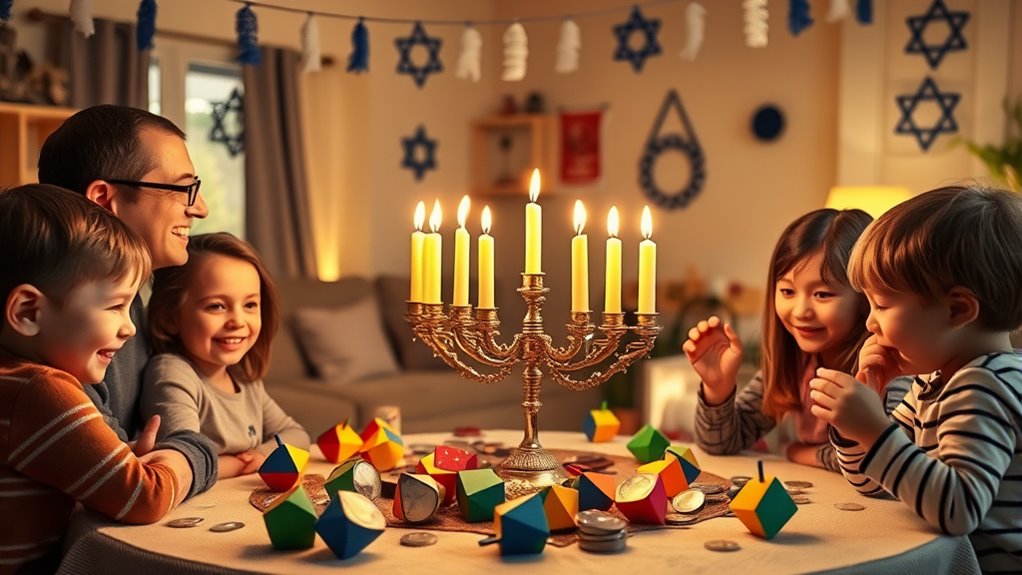
Hanukkah, also known as the Festival of Lights, is celebrated by lighting candles each night to commemorate the miracle of the oil that lasted eight days. As you observe this tradition, you’ll notice the vibrant glow of the menorah, with a new candle added each evening. But Hanukkah isn’t just about lighting candles; it also involves engaging activities like dreidel spinning and oil lamp lighting that deepen your connection to the holiday’s history.
Celebrate Hanukkah by lighting candles, spinning dreidels, and honoring a historic miracle of light and resilience.
When you spin the dreidel, a four-sided spinning top, you participate in a game rooted in tradition. Each side bears a Hebrew letter—Nun, Gimel, Hei, and Shin—that determines how much you win or give up in the game. The act of spinning the dreidel brings families together, often around a table filled with gelt (chocolate coins) or other treats. This game symbolizes resilience and the cleverness of the Jewish people during times of persecution. As you flick the dreidel with your hand, you’re partaking in a centuries-old tradition that reminds you of the importance of hope and perseverance.
The lighting of the oil lamp, or menorah, is central to Hanukkah’s celebration. You’ll notice that the menorah has nine branches: eight for each night of Hanukkah and a shamash, used to light the other candles. Each evening, you’ll light a new candle on the menorah, starting from the right and moving to the left, symbolizing the increasing light and joy each night. This act of oil lamp lighting commemorates the miracle of the small amount of oil that lasted eight days, which you honor by shining light in your home and heart. It’s common to say blessings before lighting each candle, connecting you to generations before, who did the same in times of hardship. Incorporating natural materials into your Hanukkah decorations can enhance the festive atmosphere and honor the tradition of light.
Throughout Hanukkah, these traditions—dreidel spinning and oil lamp lighting—serve as meaningful reminders of faith, resilience, and celebration. You’ll find that lighting the menorah creates a warm, inviting atmosphere that brings your family and community together. The simple act of spinning the dreidel brings joy and a sense of history, while lighting the candles symbolizes hope and the triumph of light over darkness. By engaging in these customs, you actively participate in a rich cultural heritage that celebrates the miracle and the enduring spirit of Hanukkah.
Frequently Asked Questions
How Did Hanukkah Become a Widely Celebrated Holiday?
You might not know that Hanukkah became widely celebrated because of its historical origins, which highlight the miracle of the oil, and the resilience of Jewish identity. Over time, modern adaptations like gift-giving, menorah lighting, and festive foods helped spread the holiday’s popularity beyond its initial community. These traditions evolved to make Hanukkah more accessible and meaningful, turning it into a joyful, widely recognized celebration across many cultures today.
Are Hanukkah Traditions the Same Worldwide?
Think of Hanukkah traditions as a colorful tapestry, each thread reflecting different cultural variations and culinary differences. While lighting the menorah and playing dreidel are common worldwide, you’ll notice unique customs and foods in each community. You might enjoy latkes in one place and sufganiyot in another. These differences make Hanukkah a vibrant celebration, showing how diverse traditions come together to honor a shared history.
What Is the Significance of the Dreidel Game?
The dreidel game holds great significance as a symbol of Jewish resilience and faith. Its spinning game strategies teach patience and focus, while the dreidel’s symbolism reminds you of the miracle during Hanukkah. When you spin the dreidel, it connects you to tradition and history. Playing the game celebrates cultural heritage, reinforces faith, and brings people together in joyful remembrance of the miracle of the oil lasting eight days.
How Do Different Jewish Communities Celebrate Hanukkah?
You’ll find that different Jewish communities celebrate Hanukkah in unique ways, often emphasizing community gatherings and Jewish culinary traditions. Some communities light menorahs together at synagogues or public spaces, while others host family dinners featuring traditional foods like latkes and sufganiyot. These celebrations foster a sense of unity, allowing everyone to share stories, songs, and customs that honor the holiday’s history and bring people closer during these festive nights.
Are There Any Modern Hanukkah Customs Emerging Today?
You’ll notice modern Hanukkah customs emerging today, especially through social media, where people share creative ideas like fusion foods blending traditional dishes with contemporary flavors. Many celebrate by hosting themed parties, lighting menorahs in unique settings, or creating digital menorah displays. These new customs help connect communities, making Hanukkah more inclusive and vibrant, while blending tradition with innovation to keep the celebration fresh and engaging for everyone.
Conclusion
As the candles flicker and the night whispers its ancient song, you become part of a timeless dance of light and hope. Each tradition weaves a thread into the fabric of Hanukkah, shining brighter with every passing night. Embrace these rituals, let their glow warm your heart, and carry their spirit forward. In this eight-night symphony, you find not just celebration, but a luminous reminder that even in darkness, hope ignites and endures.