During Kwanzaa, you celebrate each day by focusing on one of its seven principles—such as unity, self-determination, and collective work—by lighting a candle on the kinara and reflecting on its meaning. You can honor these values through rituals like sharing traditional foods, creating symbols, and engaging with community stories. Each day offers a chance to grow closer to your roots and values—if you keep exploring, you’ll find ways to deepen your observance.
Key Takeaways
- Each day of Kwanzaa focuses on one of the seven principles, such as Umoja (Unity) and Kujichagulia (Self-Determination).
- Light a specific candle on the kinara daily to reflect on the corresponding principle.
- Incorporate traditional foods and symbols like mkeka and crops to enhance cultural significance.
- Engage in communal activities, discussions, and reflections to deepen understanding of each principle.
- Conclude Kwanzaa with a communal feast and meaningful sharing to celebrate unity and cultural pride.
Are you looking to celebrate Kwanzaa and want to understand its traditions and significance? Kwanzaa is a vibrant celebration that emphasizes unity, cultural pride, and community. At its core, it’s about honoring African heritage while fostering a sense of togetherness. The cultural significance of Kwanzaa lies in its ability to reconnect people with their roots and promote values that strengthen families and communities. During this week-long holiday, you’ll observe various rituals, including lighting candles, sharing meals, and reflecting on principles that guide personal and collective growth.
One key aspect of Kwanzaa is the use of traditional foods, which play an important role in the celebration. These foods aren’t just about nourishment—they symbolize abundance, gratitude, and cultural heritage. When preparing for Kwanzaa, consider dishes that reflect African traditions or foods that hold personal or community significance. For example, dishes like jollof rice, collard greens, sweet potatoes, and plantains are often included because they are staples in many African and African-American households. Sharing these foods during the celebration creates a sense of connection to ancestors and cultural history. It’s also a way to educate younger generations about their culinary roots and the importance of community sharing.
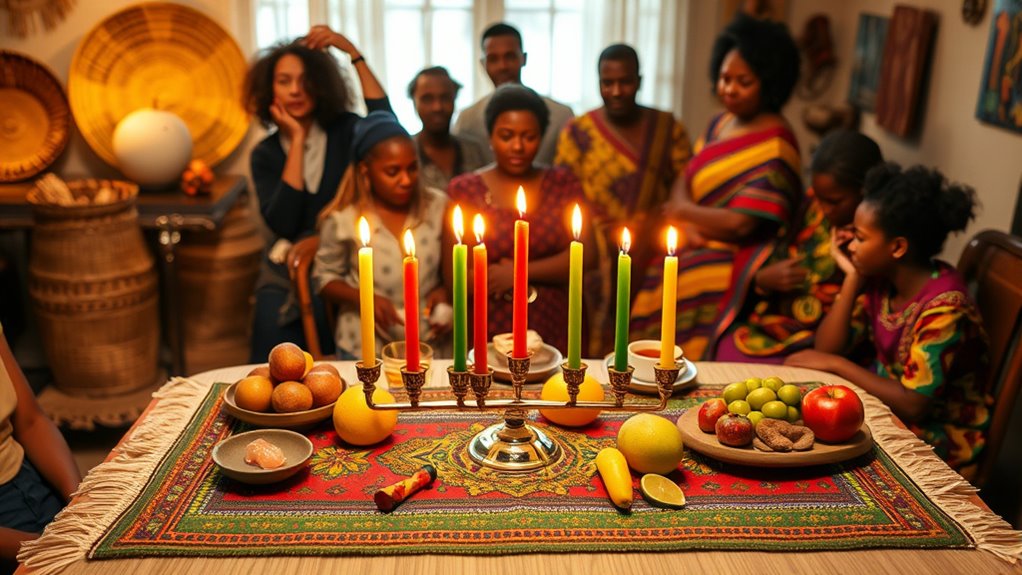
In addition to food, the setting of a Kwanzaa celebration often involves creating a kinara, a candleholder that holds seven candles representing the principles of Kwanzaa. Each day, you’ll light a candle and reflect on its corresponding principle, such as unity or self-determination. The act of lighting candles and sharing traditional foods fosters a communal atmosphere and reinforces the cultural significance of the holiday. You might also include symbols like the mkeka (straw mat), crops, and unity cups to deepen your understanding and appreciation of the traditions. These elements serve as tangible reminders of the values Kwanzaa promotes, making the celebration meaningful and educational.
The celebration isn’t just about observing rituals; it’s about actively engaging with your culture and values. Whether you’re gathering with family, friends, or community members, sharing traditional foods and reflecting on their significance helps strengthen bonds and keep cultural traditions alive. By understanding and honoring these customs, you can fully embrace the spirit of Kwanzaa and pass its importance on to future generations. This holiday offers a powerful opportunity to celebrate your heritage, promote unity, and inspire a collective sense of pride rooted in history and shared cultural significance.
Frequently Asked Questions
How Did Kwanzaa Originate and Who Founded It?
You’ll find that Kwanzaa originated in 1966, founded by Dr. Maulana Karenga to celebrate African cultural roots and promote unity among African Americans. He created it during a time of social upheaval to reconnect people with their heritage, emphasizing principles like unity and self-determination. The founding history reflects a conscious effort to honor African traditions and foster community pride, making Kwanzaa a meaningful cultural observance.
Can Non-African Americans Participate in Kwanzaa Celebrations?
Absolutely, non-African Americans can participate in Kwanzaa celebrations. Interfaith participation and cultural appreciation foster unity and understanding, enriching everyone’s experience. You don’t need to be part of the African American community to honor the principles of Kwanzaa, like unity and self-determination. Embracing these values through respectful involvement shows your commitment to learning and celebrating diverse cultures, helping build stronger, more inclusive communities.
Are There Specific Foods Associated With Each Day?
You can definitely enjoy traditional foods and cultural dishes during Kwanzaa. Each day often features specific foods that reflect African heritage, such as collard greens, sweet potatoes, or rice dishes. These traditional foods symbolize abundance, gratitude, and community. Incorporating these into your celebrations helps honor the cultural significance of Kwanzaa, whether you’re participating or simply observing. Sharing these dishes fosters connection and appreciation for African traditions and values.
How Can Schools Incorporate Kwanzaa Into Their Curriculum?
Imagine your classroom as a vibrant tapestry, woven with diverse threads of culture. You can incorporate Kwanzaa through cultural integration by designing classroom activities like storytelling, art projects, and discussions around its principles. Invite guest speakers, celebrate with traditional music, and create a Kwanzaa corner. This approach transforms learning into a celebration of unity, empowering students to embrace heritage and understand the richness of cultural traditions.
What Are Common Symbols Used During Kwanzaa?
You’ll notice that common symbols during Kwanzaa include the kinara, which holds seven candles representing the principles, and the mkeka, a traditional woven mat symbolizing unity. You might also see crops like maize, signifying harvest, and unity cups called kinara, used in rituals. These traditional decorations and cultural symbolism help deepen your understanding of the celebration, emphasizing community, history, and cultural pride.
Conclusion
As you celebrate Kwanzaa, remember it’s about more than just honoring traditions—it’s about strengthening your community and embracing your roots. By observing each principle with intention, you help keep the spirit alive for generations to come. Will you choose to make this Kwanzaa a meaningful reminder of unity, purpose, and heritage? Celebrate fully, reflect deeply, and carry the lessons forward—because your participation can truly make a difference.