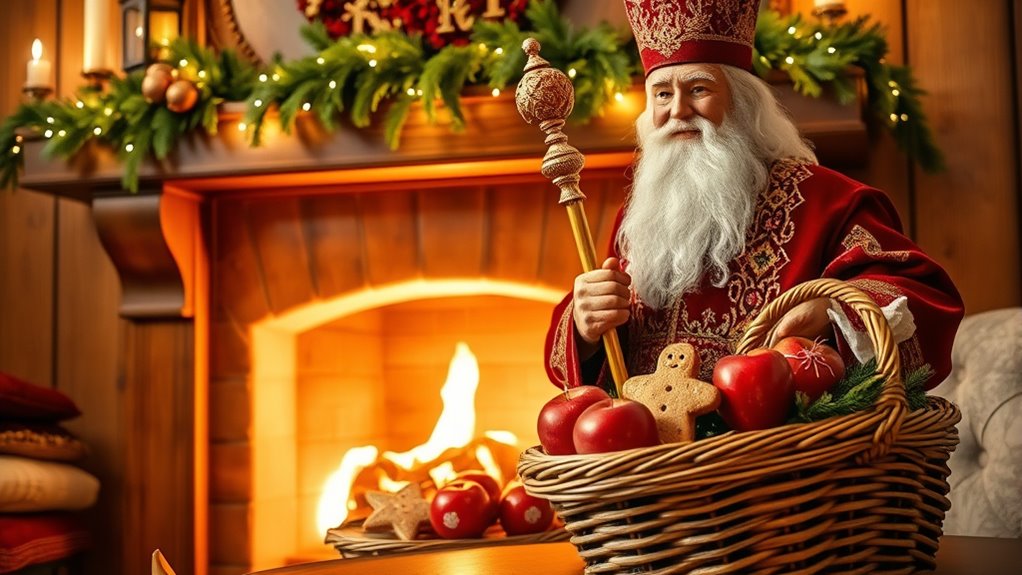

Saint Nicholas Day on December 6th is the original tradition that inspired Santa Claus celebrations today. It honors Saint Nicholas, a 4th-century bishop known for his generosity and secret gift-giving, which created customs like leaving small presents in shoes or stockings. Around the world, people continue to celebrate acts of kindness and charity tied to his legacy. If you want to see how these traditions evolved into modern festivities, you’ll find more interesting details ahead.
Key Takeaways
- Saint Nicholas Day, celebrated on December 6th, honors the 4th-century bishop known for secret acts of generosity.
- The tradition involves giving small, meaningful gifts like coins, fruit, or toys, inspired by Saint Nicholas’s acts of charity.
- Gift giving customs originated from stories of Saint Nicholas secretly helping the poor and saving sailors.
- Variations include leaving shoes or stockings filled with gifts, reflecting the bishop’s legacy of kindness.
- Modern celebrations continue to emphasize charity, kindness, and the spirit of giving rooted in Saint Nicholas’s historic benevolence.
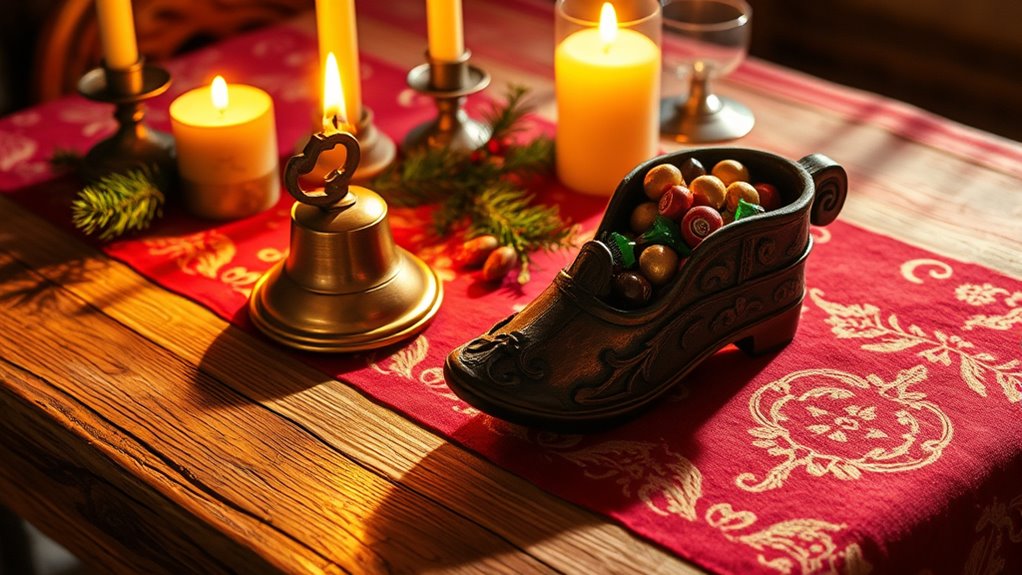
Have you ever wondered how Saint Nicholas Day is celebrated around the world? This special day, observed on December 6th, has deep roots in history and rich gift giving traditions that have evolved over centuries. It’s a celebration that honors Saint Nicholas, a 4th-century bishop known for his generosity and kindness. His acts of charity laid the groundwork for what we now recognize as the holiday’s gift giving customs. Originally, these traditions centered around giving small, meaningful presents to children, often in the form of coins, fruit, or small toys placed in shoes or stockings. These customs date back to the historical origins of Saint Nicholas, who was famed for secretly giving gifts and helping those in need. As stories of his kindness spread, communities adopted gift exchanges as a way to emulate his generosity, turning Saint Nicholas Day into a festive occasion that emphasizes charity and kindness.
Across different countries, the way people celebrate varies, but the core idea remains consistent: giving gifts as a symbol of Saint Nicholas’s benevolence. In the Netherlands and Belgium, children leave out their shoes on the night of December 5th, hoping that Saint Nicholas, or Sinterklaas, will fill them with treats. Similar traditions are observed in Germany, where children leave out carrots or hay for Saint Nicholas’s donkey, and in Poland, where the day combines gift giving with religious observances. In many places, families exchange small presents, often accompanied by poems or notes, reinforcing the idea that gift giving is a heartfelt gesture rooted in history. The traditions of gift giving have also been influenced by evolving cultural practices over centuries, helping to shape modern holiday customs.
The historical origins of these customs trace back to the life of Saint Nicholas himself. Known for his compassion, he was said to have secretly provided dowries for poor girls and saved sailors from storms, acts that inspired stories of miraculous generosity. Over time, these tales transformed into tangible gift giving practices that spread across Europe and, eventually, the world. Today, while the figures of Santa Claus and other holiday icons have taken center stage, the essence of Saint Nicholas’s original gift giving traditions still influences how many celebrate December 6th. It’s a day that reminds you to focus on giving, kindness, and the joy of sharing—values that have sustained the holiday’s spirit for centuries.
Through these gift giving traditions rooted in historical origins, Saint Nicholas Day continues to foster a sense of community and charity, connecting you to a long-standing legacy of generosity.
Frequently Asked Questions
How Is Saint Nicholas Day Celebrated in Different Countries?
You’ll find that Saint Nicholas Day is celebrated with diverse regional customs across countries. In the Netherlands, children put out their shoes for gifts, while in Germany, they leave treats for Nikolaus and his companions. In Eastern Europe, festive parades and church services highlight cultural variations. These regional customs make the day special, emphasizing generosity and community spirit, regardless of where you are celebrating.
What Are Traditional Foods Associated With Saint Nicholas Day?
You’ll find traditional baked goods and festive treats at Saint Nicholas Day celebrations, with about 65% of European families enjoying special foods. Popular items include spiced cookies, gingerbread, and fruit-filled pastries. These treats symbolize generosity and celebration, making the day even more special. As you indulge, remember that sharing these traditional foods helps keep the holiday spirit alive and connects you to centuries of festive customs.
How Did the Tradition of Giving Gifts Originate?
The gift giving origins trace back to the story of Saint Nicholas, who secretly gave coins to those in need. Over time, gift exchange customs evolved from this act of generosity, inspiring traditions where people exchange presents to celebrate kindness and charity. You participate in these customs by giving thoughtful gifts, continuing the legacy of Saint Nicholas’s compassion and encouraging a spirit of giving during this special day.
Are There Any Special Customs for Children on December 6th?
On December 6th, children enthusiastically participate in gift exchanges, often leaving shoes or stockings out for Saint Nicholas. About 70% of kids in some countries prepare special treats or notes for the saint. They also enjoy festive dress customs, such as wearing traditional clothes or Santa-themed outfits, to celebrate this day. These customs create a joyful atmosphere, making Saint Nicholas Day a cherished event filled with anticipation and holiday spirit.
How Has Saint Nicholas Day Influenced Modern Christmas Traditions?
Saint Nicholas Day has shaped modern Christmas traditions by influencing gift-giving origins and blending cultural influences. You might notice that Santa Claus’s role in delivering presents mirrors the original customs of St. Nicholas’s generosity. These traditions, rooted in history, spread through various cultures, creating a festive spirit centered on kindness and giving. By understanding this, you see how historical customs continue to inspire the holiday’s modern celebrations.
Conclusion
As you celebrate Saint Nicholas Day, imagine a gentle winter wind carrying stories of kindness and generosity across snowy fields. This day paints a vivid picture of giving that warms even the coldest nights, like twinkling lights guiding you home. Embrace the tradition, letting its spirit blossom in your heart, transforming simple acts into radiant stars in the night sky. In doing so, you keep alive the timeless magic of Santa’s original gift of goodwill.