
Yule, rooted in ancient pagan winter solstice celebrations, laid the groundwork for many Christmas traditions you know today. It marked the shortest day of the year and symbolized rebirth, with symbols like evergreen trees and the Yule log representing resilience and renewal. Customs such as lights, feasts, and community merriment originated from these practices. Understanding these roots reveals how ancient customs transformed into modern holiday symbols—if you keep exploring, you’ll discover more fascinating connections.
Key Takeaways
- Yule originated from ancient pagan winter solstice celebrations marking rebirth and the return of the sun.
- Evergreen trees and the Yule log symbolized eternal life and resilience during the darkest winter days.
- Yule customs like lighting candles and feasting fostered community hope and celebration amid winter darkness.
- Many pagan Yule symbols and traditions were incorporated into Christmas practices as Christianity spread.
- Themes of renewal, hope, and light in Yule traditions underpin many modern Christmas customs.
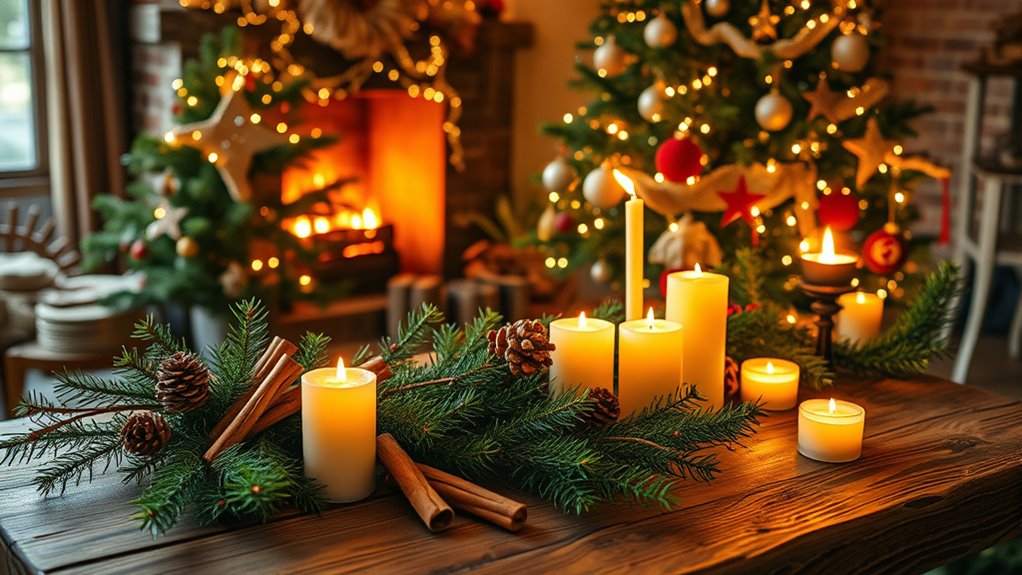
Have you ever wondered where many Christmas traditions actually come from? If so, you’ll find it fascinating that a lot of what we associate with the holiday has roots in ancient pagan practices. One of the key elements is Yule symbolism, which played a central role in winter solstice celebrations long before Christmas was even a thing. The winter solstice marks the shortest day and longest night of the year, usually around December 21st or 22nd, and ancient peoples saw it as a time of rebirth and renewal. They believed that after the longest night, the sun would return, bringing longer days and warmer seasons. To honor this shift, they held festivals and rituals that celebrated the sun’s return, which eventually merged into what we now call Yule.
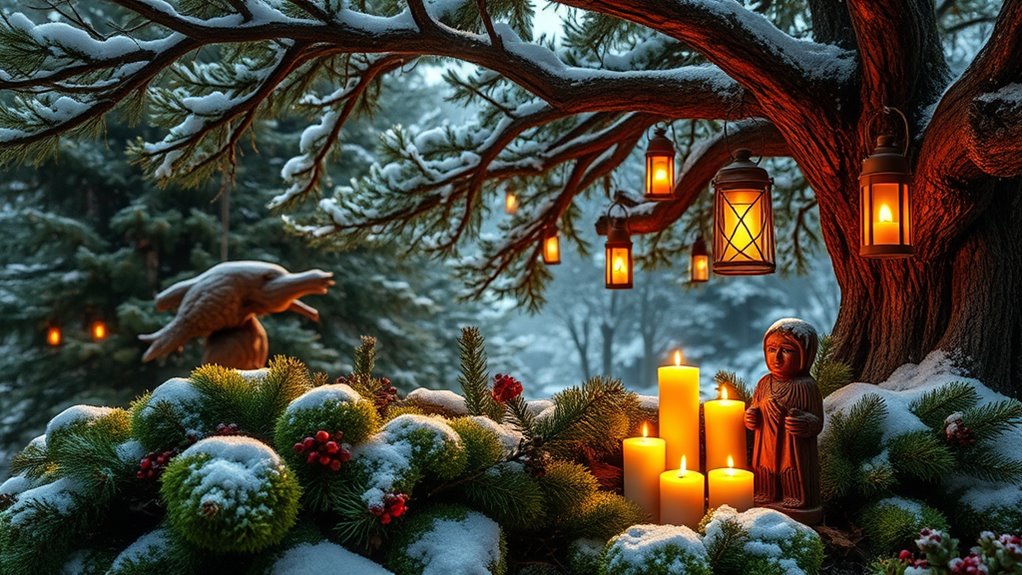
During these winter solstice celebrations, many symbols emerged that still influence Christmas today. For instance, the evergreen tree was considered sacred because it remained green throughout the winter, symbolizing eternal life and resilience. People would bring sprigs of evergreen into their homes, decorating them with berries, lights, and ornaments—precursors to our modern Christmas trees. The Yule log, another prominent symbol, was a large wooden log burned throughout the festival. It represented the sun and its return, providing warmth and light during the darkest days. The ashes from the log were believed to hold protective powers, and some traditions suggest that the last piece of the Yule log was kept as a lucky charm for the coming year. Additionally, Yule traditions often included specific rituals and symbols that reinforced themes of renewal and hope.
Many of these customs were intertwined with the idea of celebrating life in the dead of winter. The use of candles and lights during Yule symbolized hope and the return of light, reinforcing the notion that darkness would eventually give way to brighter days. These practices often involved feasts, singing, and merriment, creating a sense of community and shared hope. Over centuries, as Christianity spread, many of these pagan traditions subtly shifted and integrated into Christmas festivities. Instead of focusing solely on the winter solstice, they became part of a holiday that celebrates the birth of Christ, but their roots are deeply embedded in ancient Yule symbolism and winter solstice celebrations.
Frequently Asked Questions
How Did Yule Influence Modern Christmas Commercialism?
Yule origins heavily influence modern commercialization by shaping Christmas symbols like the decorated tree, gift-giving, and feasts. You’ll notice how these traditions, rooted in ancient Yule celebrations, are now central to holiday advertising and sales campaigns. The emphasis on material goods and festive displays directly stems from Yule’s joyful, communal spirit, making it a key driver behind the commercialized nature of today’s Christmas season.
Are Yule Traditions Celebrated Worldwide Today?
Yule traditions, rooted in the Pagan winter solstice, are celebrated worldwide, like a flame that refuses to be extinguished. You’ll find echoes of the Yule festival origins in Christmas customs across different cultures, from Norway’s Yule log to Germany’s decorated trees. While not everyone observes them explicitly, these customs have woven into global holiday celebrations, making Yule’s influence a timeless thread in the fabric of winter festivities.
What Are the Main Symbols of Yule?
You see that the main symbols of Yule include the Yule log, which you might burn to symbolize warmth and renewal, and mistletoe traditions, where you share kisses beneath it to promote love and peace. Other symbols include evergreen trees representing eternal life, holly with its bright berries, and candles that symbolize light overcoming darkness. These symbols connect you to ancient pagan practices and modern festive celebrations alike.
How Did Yule Evolve Into Contemporary Holiday Practices?
You might be surprised to learn how Yule history transformed into today’s holiday customs, shaping everything from gift-giving to festive feasts. Over centuries, seasonal customs evolved as Christianity integrated Yule traditions, blending pagan symbols with new religious meanings. This fusion created a holiday that celebrates warmth, light, and cheer, making Yule’s ancient roots the foundation for the vibrant, joyful Christmas we cherish now.
Are There Any Yule Rituals Still Performed Today?
Yes, you can still perform Yule rituals today. Many people light a Yule fire to symbolize warmth and renewal, and some hang mistletoe to promote love and friendship. These customs connect you to ancient traditions, celebrating the winter solstice. By embracing these rituals, you honor the roots of Yule and bring a bit of pagan history into your modern holiday practices.
Conclusion
As you celebrate Christmas today, remember that many traditions, from the Yule log to mistletoe, have deep pagan roots dating back thousands of years—long before the invention of the smartphone. These customs, like ancient rituals, connect you to a time when people honored nature and the changing seasons. So, next time you hang a stocking or light a candle, you’re participating in a timeless celebration that’s as old as the dinosaurs, just with a bit more holiday cheer.