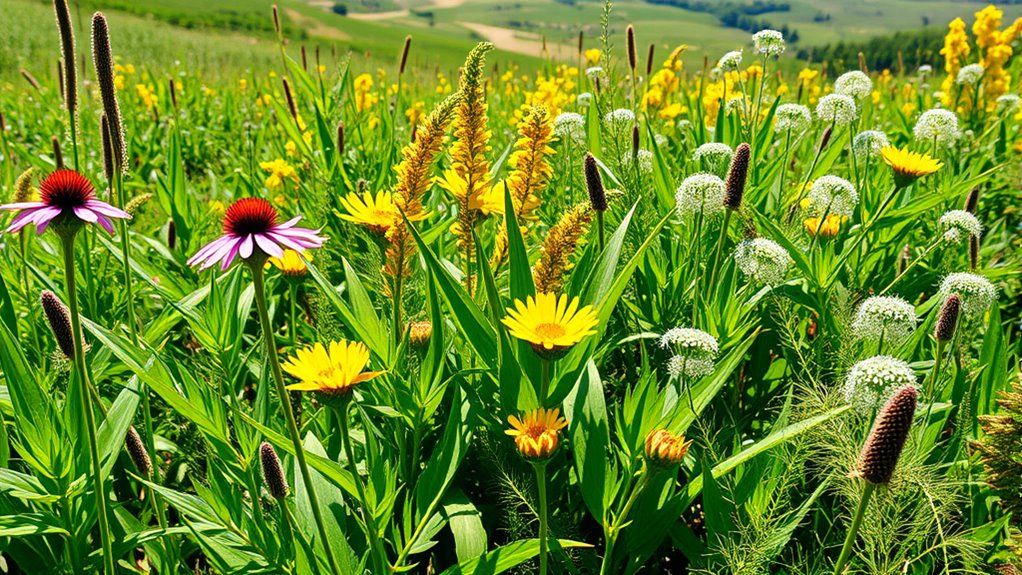
To identify medicinal plants in the wild, start by carefully observing their features like leaf shape, flower color, and texture, then compare them to detailed field guides. Pay attention to their habitat and growth patterns, which can help confirm your ID. Use tools like magnifiers and color charts for accuracy, and always double-check for toxic look-alikes before harvesting. For a safer, more effective foraging process, continue exploring proven techniques and safety tips.

Get oils, diffusers and self-care delivered free — and shop member deals
- Fast, free delivery on millions of items
- Access to Prime Big Deal Days deals on October 6–7
- Prime Video, Amazon Music and more included
Key Takeaways
- Examine plant features like leaf shape, flower color, and stem texture to accurately identify medicinal herbs in their natural habitat.
- Use field guides, illustrations, magnifying tools, and color charts to compare and confirm plant characteristics.
- Recognize environmental cues and seasonal timing, such as flowering periods, to harvest herbs at their peak potency.
- Be aware of toxic look-alikes by studying specific traits and consulting reliable resources before harvesting.
- Practice sustainable foraging by verifying plant identity, avoiding unknown species, and consulting experts when unsure.
Recognizing Common Medicinal Plants in Nature

When you’re out in nature, recognizing common medicinal plants can greatly enhance your herbal knowledge. Start by observing leaves, stems, flowers, and overall plant shape. Many medicinal plants have distinctive features, such as the rounded leaves of plantain or the bright yellow flowers of St. John’s Wort. Smell is also a useful clue; mint has a strong, invigorating scent, while yarrow emits a mild aroma. Keep an eye on plant habitat, as some herbs prefer moist areas, while others thrive in dry, rocky soil. Familiarizing yourself with these visual and environmental cues helps you confidently identify plants in the wild. Remember, always verify your findings through multiple traits before using any plant medicinally. This cautious approach keeps you safe and enhances your herbal journey.
Key Features for Plant Identification

To identify plants accurately, pay close attention to leaf shape and texture, as these features vary widely among species. Observe the flower color and structure, which can be distinctive markers for identification. Combining these details helps you distinguish similar plants and recognize them in the wild.
Leaf Shape and Texture
Have you ever noticed how the shape and texture of a leaf can reveal a plant’s identity? Leaf shape varies widely, from broad and ovate to narrow and lance-shaped, helping you distinguish species. Texture adds another layer—smooth, leathery, fuzzy, or ridged—indicating adaptation and classification. Recognizing these features can prevent misidentification in the wild. Use the table below to compare common leaf shapes and textures:
| Shape | Texture |
|---|---|
| Ovate | Smooth |
| Lanceolate | Fuzzy |
| Cordate | Leathery |
Flower Color and Structure
Flower color and structure are essential clues for identifying plants in the wild. They reveal critical details that distinguish species and guide your identification process. Here are key features to observe:
- Color Variations: Note the hue, intensity, and patterns on the petals, as these are often species-specific.
- Flower Shape: Observe the overall form—bowl-shaped, tubular, or star-like—to narrow down possibilities.
- Petal Arrangement: Check how petals are organized—singular, in clusters, or in whorls—to differentiate similar species.
- Flower Size: Measure the bloom’s diameter, which can be a distinguishing trait among closely related plants.
Pay attention to these details to improve your identification accuracy in the wild.
Understanding Plant Habitats and Growth Patterns
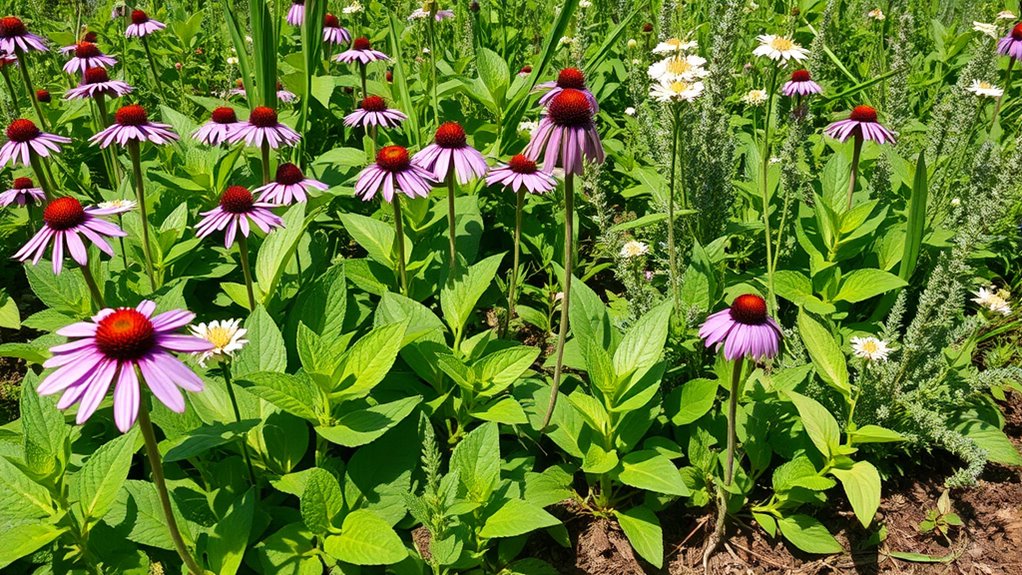
Understanding plant habitats and growth patterns is essential for identifying and supporting medicinal herbs in the wild. You should observe where plants thrive, such as moist forests, dry rocky slopes, or open meadows. Each habitat offers specific conditions like soil type, sunlight, and moisture levels, which influence growth. Recognize growth patterns like bushy, upright, or creeping forms, and note how plants spread or reproduce. Some herbs flourish in shade, while others prefer full sun. Understanding these traits helps you locate plants more efficiently and avoid mistaken identity. By paying attention to the environment and growth habits, you gain insight into a plant’s needs and health, making your wild harvesting more effective and sustainable. This knowledge ensures you pick the right plants at the right places.
Seasonal Variations and Timing for Harvesting

Knowing when to harvest herbs depends on their ideal seasons and growth stages. You’ll get the best quality by timing your harvests according to their natural cycles. Paying attention to these factors ensures your herbs are at their peak potency and flavor.
Optimal Harvest Seasons
Have you ever wondered when the best time to harvest your herbs is? The critical harvest season varies depending on the plant and its active compounds. Timing is essential to guarantee potency and flavor. Here are key considerations:
- Flowering Stage: Many herbs are best harvested just before or during flowering when active ingredients peak.
- Morning Hours: Harvest in the morning after dew evaporates but before the sun’s heat causes moisture loss.
- Seasonal Peaks: Aim for late spring or early summer for most perennials, ensuring plants are fully mature.
- Weather Conditions: Avoid harvesting after heavy rain or drought, which can affect the plant’s quality and safety.
Plant Growth Cycles
Plant growth cycles are deeply influenced by seasonal changes, which determine the ideal timing for harvesting your herbs. Understanding these cycles helps you maximize medicinal potency and guarantee healthy plant development. Most herbs have specific growth phases: germination, vegetative, flowering, and seed set. Harvesting during the vegetative stage often yields the highest concentration of medicinal compounds, while harvesting at flowering can enhance flavor and potency. It’s essential to observe your plants’ natural rhythms and adapt your harvesting schedule accordingly. For example, spring and early summer are prime times for many herbs to reach peak growth, while late summer or fall may be better for seed collection. Staying attuned to seasonal variations ensures you harvest at the right moment, preserving the plant’s medicinal qualities.
Tools and Techniques for Accurate Identification

Accurate identification of herbs relies on a combination of reliable tools and keen observation techniques. You need to familiarize yourself with key features and use precise methods to distinguish similar species. Here are essential tools and techniques:
- Field Guides and Identification Books: Use detailed illustrations and descriptions to compare plant features.
- Magnifying Glass: Examine minute details like leaf veins, trichomes, and glandular dots.
- Color Charts: Match flower and leaf colors for accurate identification, especially in changing seasons.
- Plant Morphology Observation: Study leaf shape, arrangement, stem texture, and flower structure closely in natural habitat.
Combining these tools with attentive observation increases your accuracy and confidence in identifying medicinal plants correctly.
Safe Harvesting Practices and Ethical Foraging
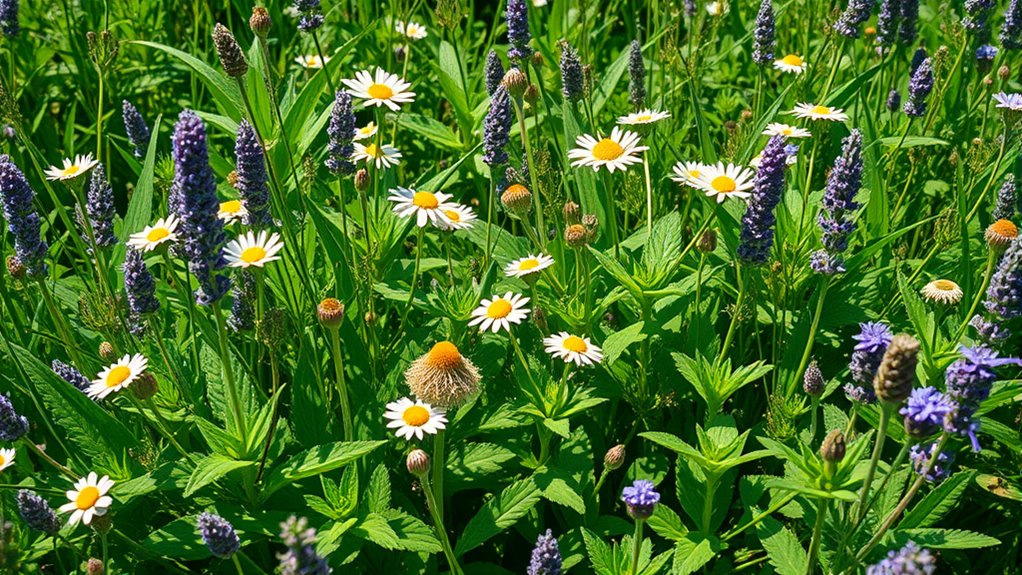
Practicing safe harvesting and ethical foraging guarantees you safeguard both the plants and the ecosystems they thrive in. Always harvest sustainably by taking only what you need, leaving enough behind to allow the plant to regenerate. Use clean tools to avoid spreading disease and make clean cuts to minimize damage. Be mindful of your surroundings, avoiding protected or endangered species, and respect private property. Stay on established paths to prevent trampling other plants and habitats. Avoid overharvesting from a single area, and consider planting or cultivating herbs to reduce wild collection pressure. Never harvest herbs from polluted areas or near roads, as they may contain harmful chemicals. By following these practices, you ensure that wild medicinal plants remain available for future generations.
Preparing and Using Wild-Harvested Herbs

Once you’ve harvested your herbs responsibly, the next step is to prepare them properly for use. Proper processing maximizes their medicinal qualities and safety. First, clean your herbs thoroughly to remove dirt, insects, and debris. Second, dry them if necessary, using air or low heat to preserve active compounds. Third, store herbs in airtight containers away from light and moisture to maintain potency. Fourth, when ready to use, prepare your herbs by steeping, infusing, or decocting, depending on the plant and intended remedy. Proper preparation guarantees you get the maximum benefit from your wild-harvested herbs. Staying attentive to cleanliness and storage preserves their medicinal qualities and reduces the risk of contamination, making your herbal practice both effective and safe.
Staying Safe: Avoiding Toxic and Look-Alike Plants

To stay safe while foraging, it’s *essential* to learn how to identify toxic plants and look-alikes that can easily be mistaken for useful herbs. Many edible plants have toxic look-alikes, so don’t rely solely on general appearance. Always double-check key features like leaf shape, flower color, and stem texture. Use a reliable field guide or app to confirm your identification before harvesting. Be wary of plants with similar scents or textures that might be misleading. If you’re unsure about a plant’s safety, it’s best to leave it alone. Remember, a small mistake can lead to serious poisoning. When in doubt, consult an expert or experienced forager. Staying cautious helps you enjoy wild herbs safely without risking your health.
Frequently Asked Questions
How Can I Differentiate Between Similar-Looking Medicinal Plants?
To differentiate similar-looking medicinal plants, pay close attention to their leaves, flowers, and stems. Observe the shape, size, and color carefully, and note any unique markings or textures. Use a reliable plant identification guide or app to compare details, and check for distinct scent or taste if safe. Always verify your findings with multiple sources before using any plant medicinally, as many look alike but may have different properties.
Are There Any Legal Restrictions on Wild Plant Foraging?
Yes, there are legal restrictions on wild plant foraging. You need to check local laws, as some areas prohibit harvesting certain plants to protect ecosystems or endangered species. Always obtain permission from landowners or authorities before foraging on private or protected land. Follow regulations to avoid fines or legal trouble. Respect nature by only collecting what you need and leaving the environment intact for others and future foragers.
What Are Common Mistakes Beginners Make When Identifying Plants?
You often mistake similar plants for the real deal, which can be dangerous. You might rush your identification without verifying all features, like leaf shape, flower color, or habitat. Overconfidence can lead to errors, so you should double-check your findings and consult multiple sources. Remember, never consume a plant unless you’re 100% sure of its identity. Taking your time and being cautious helps prevent mistakes and ensures safe foraging.
How Do Weather Conditions Affect Plant Potency and Safety?
Weather conditions are like a secret recipe, influencing a plant’s potency and safety. When it’s sunny and warm, plants often concentrate their medicinal compounds, making them stronger. Conversely, heavy rain can dilute these substances, reducing effectiveness. Extreme weather, like frost or drought, can stress plants and produce unpredictable effects. Pay close attention to recent weather patterns, as they directly impact the quality and safety of your foraged herbs.
Can I Use Dried Wild Herbs Safely for Medicinal Purposes?
Yes, you can use dried wild herbs safely for medicinal purposes if you properly identify, harvest, and dry them. Confirm the herbs are free from contamination, mold, and pests. Use a clean, dry space to preserve their potency. Always verify the plant’s identity with a reliable guide or expert, and start with small doses to monitor your body’s response. Proper preparation and knowledge are key to safe use.
Conclusion
Now that you’re armed with this herbal field guide, you’re like a seasoned explorer charting a lush, hidden jungle. Trust your keen eye and gentle touch to uncover nature’s treasures without disturbing their delicate balance. Remember, each plant is a whisper from the earth—listen carefully, harvest responsibly, and let your journey into wild healing be a dance of respect and discovery. Your adventure awaits, full of life’s quiet, powerful magic.
Halloween Picks
halloween
As an affiliate, we earn on qualifying purchases.