Modern herbal mentorships blend traditional hands-on apprenticeships, community learning, online guidance, and ecological practices to help you connect deeply with plants. You can work directly with experienced herbalists, participate in local plant gatherings, or explore virtual mentorship programs that fit your schedule. Gardens, wildcrafting, and sustainable cultivation also offer immersive experiences. Embracing cultural traditions and ecological ethics enrich your skills, and exploring these paths now opens new ways to grow your herbal knowledge.

Get oils, diffusers and self-care delivered free — and shop member deals
- Fast, free delivery on millions of items
- Access to Prime Big Deal Days deals on October 6–7
- Prime Video, Amazon Music and more included
Key Takeaways
- Modern herbal mentorship includes virtual platforms offering personalized guidance, interactive learning, and peer support for flexible self-directed study.
- Hands-on apprenticeships in gardens, wildcrafting, and community projects foster experiential learning and ecological awareness.
- Community-based herbal gatherings and collaborative projects promote knowledge sharing, cultural exchange, and sustainable harvesting practices.
- Integrating cultural traditions and ethical practices ensures respect for indigenous knowledge, ecosystems, and sustainable stewardship.
- Combining scientific methods with oral traditions preserves herbal heritage while adapting to contemporary educational models.
As an affiliate, we earn on qualifying purchases.
Exploring Traditional Herbal Apprenticeships in Contemporary Settings

Although modern herbalism often emphasizes scientific knowledge, many practitioners still value traditional apprenticeships for hands-on learning. You might find that working directly with experienced herbalists offers insights you can’t get from books alone. During these apprenticeships, you observe plant identification, preparation techniques, and herbal formulations firsthand. You learn by doing, gaining practical skills that build confidence and deepen your understanding of plant properties. These relationships often involve mentorship, where seasoned herbalists share their wisdom, stories, and cultural practices. Such immersive experiences foster a sense of community and respect for traditional methods. Even in contemporary settings, apprenticeships remain crucial for preserving herbal knowledge and ensuring that practical, experiential learning continues to thrive alongside scientific approaches.
As an affiliate, we earn on qualifying purchases.
Community-Supported Herbalism and Shared Learning Spaces

Community-supported herbalism brings people together through local herb gatherings and shared plant projects. These spaces foster collaboration and hands-on learning, making herbal knowledge more accessible. By sharing resources and experiences, you can deepen your understanding and build stronger connections within your herbal community.
Local Herb Gatherings
Local herb gatherings serve as vibrant hubs where herbalists and enthusiasts come together to share knowledge, exchange tips, and learn from each other’s experiences. These gatherings often take place in community gardens, parks, or dedicated spaces, fostering a sense of connection and shared purpose. You’ll find seasoned herbalists offering demonstrations, while beginners ask questions and gain confidence. Participating regularly helps you deepen your understanding of local plants, their uses, and sustainable harvesting practices. These events also promote collective learning, where everyone’s insights contribute to the group’s growth. By engaging in local herb gatherings, you build relationships, expand your network, and stay motivated on your herbal journey. It’s a hands-on, communal approach that nurtures both your skills and your connection to nature.
Collaborative Plant Projects
Participating in collaborative plant projects expands your herbal learning beyond individual efforts by fostering shared responsibility and collective knowledge. When you join community-supported herbalism initiatives, you work alongside others to cultivate, harvest, and process herbs, gaining hands-on experience from diverse perspectives. These projects often involve communal gardens, foraging groups, or herbal workshops that encourage open dialogue and mentorship. By sharing tasks and insights, you deepen your understanding of plant identification, harvesting ethics, and preparation techniques. Collaborative efforts also expose you to different cultural approaches and traditional practices. Engaging in these projects builds trust, strengthens relationships, and creates a supportive environment for growth. Ultimately, working together accelerates your herbal skills while reinforcing the communal spirit at the heart of herbal mentorship.
Shared Herbal Resources
Have you ever wondered how sharing herbal resources can enhance your learning and practice? When you participate in community-supported herbalism, you gain access to a diverse array of plants, seeds, and knowledge that you might not find alone. Shared learning spaces, like herbal co-ops or community gardens, foster collaboration and skill exchange. You can swap herbs, grow together, and learn from others’ experiences, saving costs and expanding your understanding. These resources also create a sense of connection, strengthening your relationship with local ecosystems and fellow herbalists. By pooling resources, you reduce waste and build resilience in your herbal practice. Ultimately, shared herbal resources open doors to collective growth, deepen your knowledge, and help you become a more resourceful and confident herbal apprentice.
community herbal gathering tools
As an affiliate, we earn on qualifying purchases.
As an affiliate, we earn on qualifying purchases.
Online Mentorship Programs for Virtual Herbal Training

Online mentorship programs have become a popular way to learn herbalism from experienced practitioners, offering flexibility and accessibility that traditional in-person classes often can’t match. With virtual platforms, you can connect with mentors worldwide, fitting lessons into your schedule and location. These programs typically include video calls, interactive assignments, and resource sharing, creating an all-encompassing learning environment. You can ask questions in real-time, receive personalized feedback, and deepen your understanding of herbs and plant medicine. Many programs also provide community forums or group chats, fostering peer support and shared insights. While you miss out on hands-on practice in a physical garden, online mentorship offers valuable guidance, expert knowledge, and a flexible structure that adapts to your needs, making herbal learning more achievable than ever.
online herbal mentorship program
As an affiliate, we earn on qualifying purchases.
As an affiliate, we earn on qualifying purchases.
Apprenticing Through Local Herbal Gardens and Botanical Spaces

Why not deepen your herbal knowledge by apprenticing directly at local gardens and botanical spaces? These places offer hands-on experience with a variety of medicinal plants, allowing you to observe their growth cycles, harvest methods, and maintenance. You’ll learn from garden staff or mentors who are passionate about herbalism, gaining practical skills that go beyond textbooks. Spending time in these spaces helps you develop an intuitive understanding of plant behaviors and ecosystems. Many botanical gardens host workshops or volunteer programs, making it easier to connect with experienced herbalists. This direct engagement fosters a deeper appreciation for plant relationships and sustainable practices. Apprenticing in local gardens truly immerses you in the living world of herbs, enriching your knowledge through active participation.
Participating in Wildcrafting and Foraging Expeditions

As you join wildcrafting and foraging trips, it is crucial to practice ethical harvesting to protect plant populations. Learning to identify edible plants confidently guarantees you gather safely and responsibly. Paying attention to these points helps you develop respect for nature and hone your herbal skills.
Ethical Foraging Practices
Participating in wildcrafting and foraging expeditions requires a strong sense of ethical responsibility to guarantee the sustainability of natural resources. You must respect plant populations by harvesting only what you need and avoiding overharvesting. Always gather from healthy, abundant areas, and steer clear of protected or endangered species. Leave enough plant material behind so the population can regenerate naturally. Be mindful of the ecosystem; avoid disturbing wildlife or damaging habitats. Obtain permission when required, especially on private land. Practice good stewardship by minimizing your impact and practicing sustainable harvesting methods. Remember, your role is to support the health of the environment, not exploit it. Ethical foraging ensures that future generations can also benefit from the wild plants you collect today.
Identifying Edible Plants
Before heading out into the wild, mastering how to accurately identify edible plants is essential. You need to learn key characteristics such as leaf shape, color, smell, and growth patterns. Use reliable field guides and attend hands-on workshops with experienced foragers to develop your skills. Pay attention to habitat, as certain plants grow only in specific environments. Always verify your findings before consuming anything, as many edible plants have toxic look-alikes. Practice careful observation and take notes or photos for later reference. Start with common, easily recognizable plants like wild berries, dandelions, or chickweed. Over time, your confidence and knowledge will grow, making wildcrafting a safe and rewarding experience. Remember, patience and caution are fundamental on every foraging expedition.
Apprenticeship Models in Indigenous and Cultural Herbal Traditions

Many indigenous and cultural herbal traditions rely on apprenticeship models to transmit knowledge and skills across generations. You might find yourself learning directly from elders or experienced practitioners, immersing yourself in hands-on experience rather than classroom settings. These models often involve living closely with the community, participating in daily plant gathering, preparation, and ceremonial use. The focus is on oral transmission, storytelling, and observation, emphasizing respect for nature and cultural context. As an apprentice, you’re expected to demonstrate humility, patience, and a willingness to learn through practice rather than theory alone. These traditional models prioritize relationship-building and community involvement, ensuring that herbal knowledge stays rooted in cultural values and ecological understanding. Ultimately, this approach deepens your connection to both plants and the community’s heritage.
Building Personalized Mentorship Relationships With Herbal Practitioners
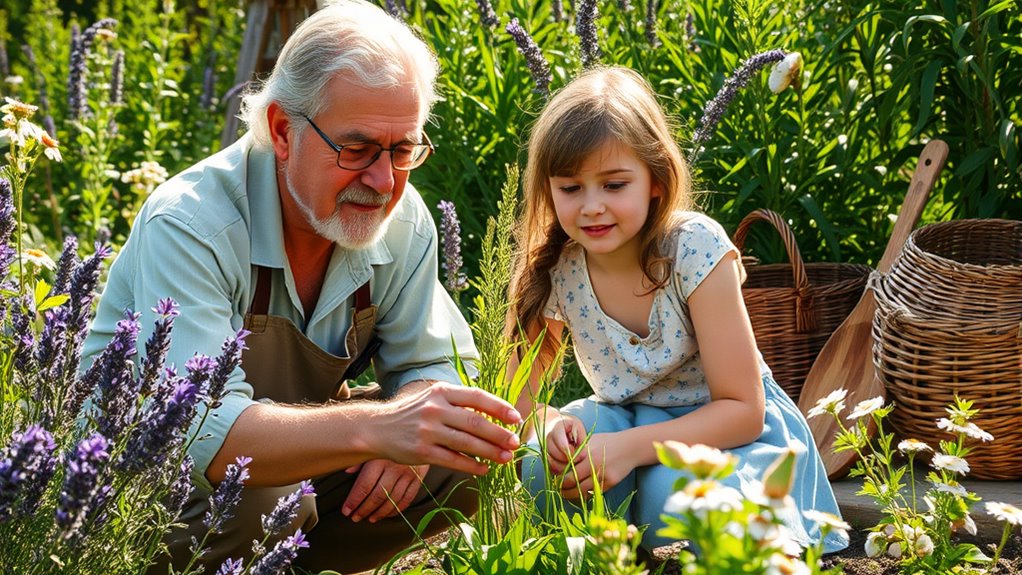
Building a personalized mentorship relationship with an herbal practitioner starts with establishing genuine connection and trust. You should approach practitioners with respect, showing sincere interest in their work and knowledge. Ask thoughtful questions and listen actively, demonstrating your commitment to learning. Be clear about your goals and what you hope to gain from the mentorship, whether it’s hands-on herbal preparation, plant identification, or deeper understanding of herbal healing. Respect their time and boundaries, and be patient as trust develops naturally. Offer to assist with their projects or daily tasks, showing your willingness to contribute. Cultivating this relationship takes time and consistency, but it creates a foundation for meaningful guidance and shared growth in your herbal journey.
Incorporating Permaculture and Sustainable Plant Cultivation Into Learning Paths

Integrating permaculture principles and sustainable plant cultivation into your herbal learning journey transforms your understanding of herbalism into a practice rooted in environmental respect and resourcefulness. You begin by observing local ecosystems, learning how plants naturally grow and interact. This approach encourages you to design gardens that mimic nature, boosting resilience and reducing inputs. By practicing composting, water conservation, and soil health management, you deepen your connection to sustainable methods. These techniques help you cultivate herbs responsibly, minimizing environmental impact. Incorporating permaculture fosters a mindset of stewardship, emphasizing that herbalism is not just about harvesting but also about nurturing ecosystems. This holistic perspective enriches your skills, making your herbal practice more sustainable, ethical, and aligned with the rhythms of nature.
Workshops, Retreats, and Short-Term Herbal Immersive Experiences

Participating in workshops and retreats creates immersive learning environments where you can develop hands-on herbal skills. These experiences also foster a deeper connection with nature, enriching your understanding of plant relationships. By engaging directly, you gain practical knowledge that sharpens your herbal practice and mentorship journey.
Immersive Learning Environments
Immersive learning environments like workshops, retreats, and short-term herbal experiences offer a hands-on approach that accelerates your understanding of herbalism. These settings immerse you directly in plant identification, preparation techniques, and traditional practices, providing practical knowledge that books alone can’t deliver. By participating actively, you develop intuition and confidence in working with herbs in real-world contexts. You’ll connect with experienced mentors and fellow learners, creating a supportive community that enhances your growth. These immersive experiences often explore local flora, fostering a deep appreciation for your environment’s medicinal plants. They also inspire curiosity and a sense of discovery, making herbalism feel accessible and engaging. Overall, these environments serve as powerful catalysts for your herbal journey, grounding theory in tangible, memorable practice.
Practical Skill Development
Engaging in workshops, retreats, and short-term herbal immersions provides an effective way to develop practical herbal skills quickly and confidently. These immersive experiences allow you to gain hands-on knowledge, experiment with plant preparations, and refine techniques under expert guidance. During these sessions, you’ll learn how to identify, harvest, and process herbs safely and effectively. The focused environment fosters active learning, helping you build muscle memory and deepen your understanding of herbal applications. Additionally, these experiences often encourage peer collaboration, offering diverse perspectives and feedback that accelerate your growth. By participating in intensive, skill-focused settings, you develop confidence and competence that serve as a solid foundation for your ongoing herbal journey. These short-term immersions are invaluable for turning theory into tangible, practical expertise.
Connection With Nature
When you attend workshops, retreats, and short-term herbal immersions, you deepen your connection with nature in a meaningful way. These experiences immerse you directly in the natural world, allowing you to observe plants in their habitats and understand their rhythms. You become more attuned to the subtle cues of the environment—listening to bird songs, feeling the earth beneath your feet, and noticing seasonal changes. This hands-on approach fosters a sense of reverence and appreciation for the land. As you learn from experienced mentors, your relationship with nature transforms from intellectual knowledge to embodied understanding. These immersive experiences remind you that herbalism is rooted in a respectful, reciprocal relationship with the earth, strengthening your commitment to sustainable and mindful herbal practices.
Developing Self-Directed Herbal Studies With Guided Support

Developing self-directed herbal studies can be both empowering and rewarding, especially when supported by guided mentorship. You take charge of your learning, setting your own pace and choosing topics that resonate with your interests. A mentor provides structure, feedback, and resources, helping you avoid common pitfalls and deepen your understanding. You might start with foundational herbs, then gradually explore more complex plant medicine techniques. Regular check-ins with your mentor keep you accountable and allow for personalized guidance. This approach fosters confidence, independence, and a deeper connection to plants. It also encourages critical thinking and experimentation within a safe, supportive environment. Ultimately, guided self-study helps you develop a meaningful, sustainable herbal practice rooted in both knowledge and personal experience.
Frequently Asked Questions
How Do I Find Reputable Herbal Mentors in My Area?
To find reputable herbal mentors nearby, start by asking at local herb shops, gardens, or natural health centers for recommendations. Attend herbal fairs, workshops, and community events to network with experienced practitioners. Join online herbal forums or social media groups focused on your area. Look for mentors with verified credentials, positive reviews, and a genuine passion for teaching. Trust your intuition and don’t hesitate to reach out directly.
What Costs Are Typically Involved in Herbal Apprenticeship Programs?
You might be surprised, but herbal apprenticeship costs vary widely, often ranging from free exchanges to several thousand dollars. Some programs ask for tuition, supplies, or living expenses, while others trade work or herbal products for mentorship. You could also find scholarships or sliding-scale fees. Be prepared to invest in books, materials, and time. Always clarify costs upfront to guarantee the program fits your budget and goals.
How Can Beginners Start Practicing Wildcrafting Safely?
To practice wildcrafting safely, you should start by learning to identify plants accurately through reputable guides or courses. Always harvest responsibly by taking only what you need and leaving enough for the ecosystem. Carry a field guide, wear protective clothing, and avoid contaminated areas. Seek mentorship from experienced foragers, and never consume wild plants unless you’re 100% certain of their safety. Practice mindfulness and respect nature throughout your wildcrafting journey.
Are There Age Restrictions for Participating in Herbal Mentorships?
You can usually participate in herbal mentorships regardless of age, but some programs may have age restrictions, especially for minors. Picture yourself walking through a forest, learning plant identification and traditional uses—these experiences are often open to teens and adults alike. Always check with the specific mentor or program to confirm age requirements. With enthusiasm and curiosity, you can start your herbal journey at any age and grow your skills naturally.
How Long Does a Typical Herbal Apprenticeship Last?
A typical herbal apprenticeship lasts anywhere from six months to two years, depending on the program’s depth and your commitment. During this time, you’ll immerse yourself in hands-on learning, gaining practical skills in plant identification, preparation, and holistic healing methods. You should expect a flexible schedule that evolves with your progress, allowing you to deepen your understanding gradually while building a strong foundation in herbal medicine.
Conclusion
By exploring diverse mentorship paths, you can deepen your herbal knowledge and connect more meaningfully with nature. Did you know that over 70% of herbal apprentices report increased confidence and well-being through hands-on learning? Whether through community gardens, online programs, or wildcrafting, embracing these modern approaches helps you grow as a herbalist and steward of the environment. Start your journey today and discover how nature can truly teach you.
Fall Picks
fall essentials
As an affiliate, we earn on qualifying purchases.