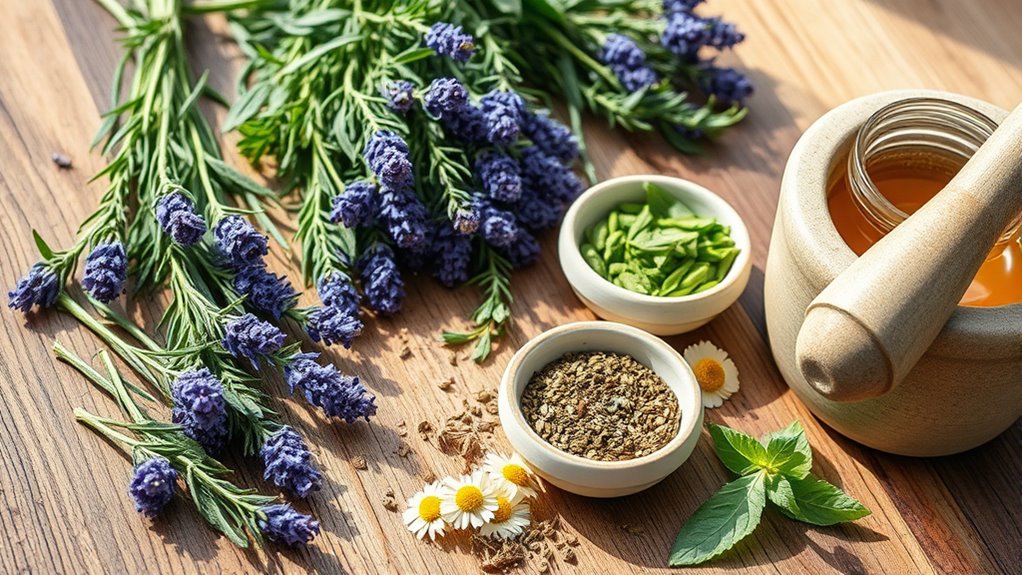

Start your day with a calming or energizing herbal tea to set a mindful tone. Incorporate herbal infusions into your skincare routine for a glowing complexion and soothing comfort. Wind down with herbal teas or essential oils in your evening rituals to promote relaxation and restful sleep. Add fresh herbs to your meals for flavor and wellness, and consider building a small herbal apothecary at home. Explore more ways to create healing daily rituals in the sections ahead.
Key Takeaways
- Start your day with a mindful herbal tea ritual, choosing calming or energizing herbs like chamomile or peppermint.
- Incorporate herbal infusions into skincare routines to nourish and soothe skin with antioxidants and anti-inflammatory properties.
- Use herbal teas and essential oils in evening routines to promote relaxation and improve sleep quality.
- Add healing herbs to daily cooking, enhancing flavor while supporting digestion and overall wellness.
- Create a personal herbal apothecary with dried herbs and tools for easy access and consistent self-care practices.
Morning Herbal Teas to Start the Day
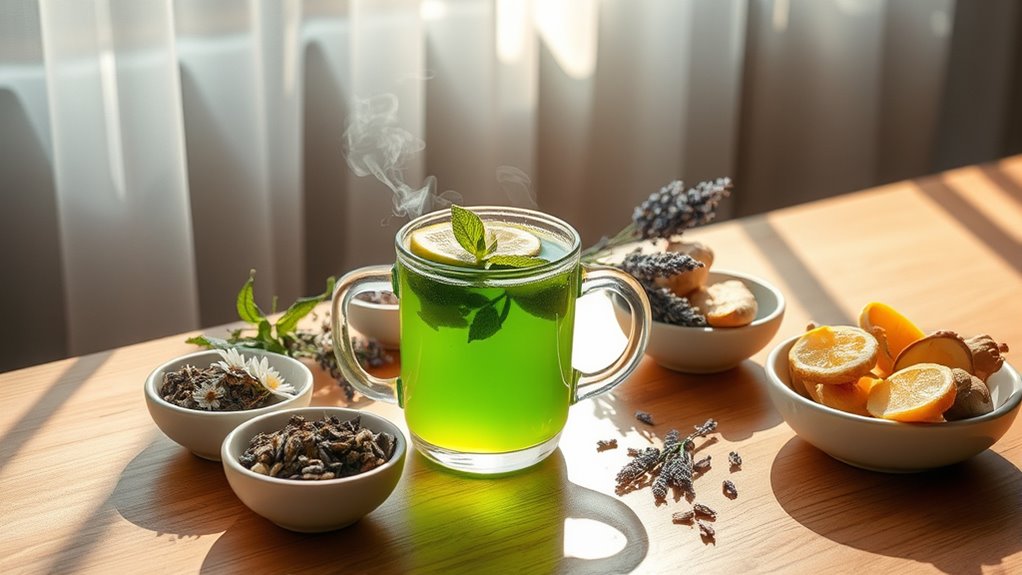
Starting your day with a cup of morning herbal tea can set a calming and invigorating tone. As you sip, you activate a gentle ritual that awakens your senses and grounds your mind. Choose herbs like chamomile for relaxation or peppermint for a revitalizing boost. Preparing your tea becomes a mindful act, allowing you to pause before the day’s demands. The warmth of the tea soothes your body, while its natural flavors energize your spirit. Drinking herbal tea in the morning can also improve digestion and hydrate you after a night’s rest. This simple ritual helps you start with intention, fostering a sense of calm and focus that carries through your day. Incorporate your favorite herbs to craft a personalized morning routine that nurtures your well-being.
Nourishing Skincare With Herbal Infusions
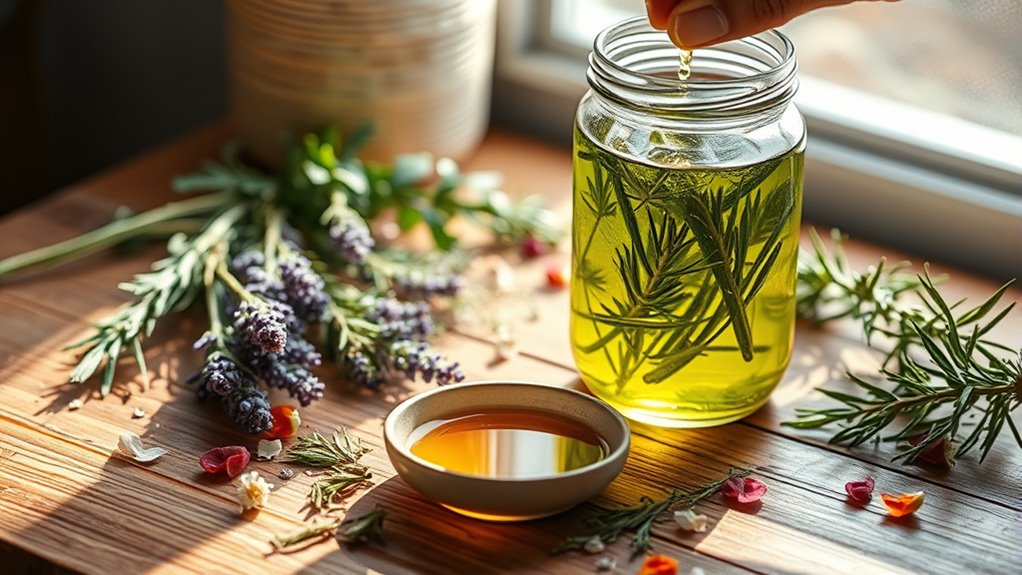
Herbal infusions offer a natural and effective way to nourish your skin, providing essential nutrients and calming properties that support healthy, radiant skin. By infusing herbs like chamomile, calendula, or rose petals into oils or toners, you deliver antioxidants and anti-inflammatory compounds directly to your skin. These infusions can help soothe irritation, reduce redness, and improve elasticity. To create a nourishing herbal infusion, steep dried herbs in carrier oils like jojoba or almond for several hours or days, then strain and apply. You can also make herbal water sprays by steeping herbs in boiling water, cooling, and storing in a spray bottle. Regular use of herbal-infused skincare enhances your skin’s natural glow while promoting overall skin health.
Evening Rituals for Relaxation and Sleep

Creating a calming evening routine sets the stage for restful sleep and overall relaxation. Incorporate soothing herbal practices to unwind and prepare your body for rest. You might enjoy sipping on herbal teas like chamomile or lavender, which promote calmness. Using essential oils such as chamomile or valerian in a diffuser can create a tranquil atmosphere. Gentle activities like meditation or light stretching infused with calming herbs help ease tension. To deepen your relaxation, consider:
Create a calming evening with herbal teas, essential oils, and gentle stretches to promote restful sleep.
- Drinking a warm herbal tea blend before bed
- Diffusing calming essential oils in your bedroom
- Practicing mindful breathing with herbal-infused aromatics
These rituals signal to your body that it’s time to unwind, making it easier to fall asleep and enjoy restorative rest.
Incorporating Herbs Into Your Cooking Routine
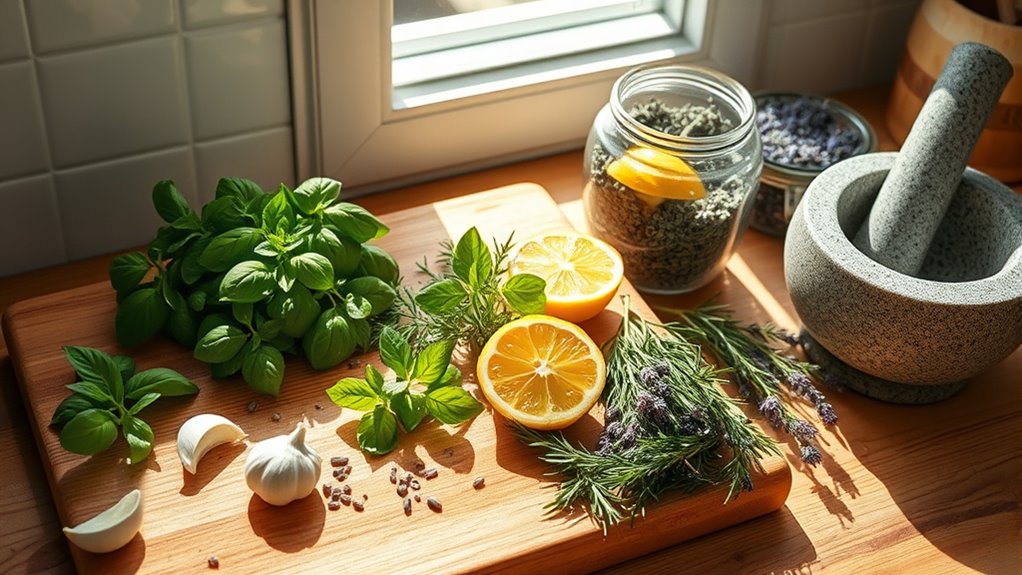
Incorporating herbs into your cooking not only enhances flavor but also offers health benefits that support your well-being. Fresh herbs like basil, rosemary, and thyme can boost your immune system and improve digestion. Add herbs early in cooking to develop depth or sprinkle fresh herbs at the end for a bright finish. Experiment with herbs in salads, soups, stews, and marinades to naturally incorporate their healing properties into your meals. By doing so, you turn everyday dishes into nourishing rituals. Here’s a quick guide to some popular herbs and their benefits:
| Herb | Benefit |
|---|---|
| Basil | Anti-inflammatory, digestion |
| Rosemary | Brain health, circulation |
| Mint | Digestive aid, fresh breath |
| Thyme | Respiratory health, immunity |
Creating a Personal Herbal Apothecary at Home
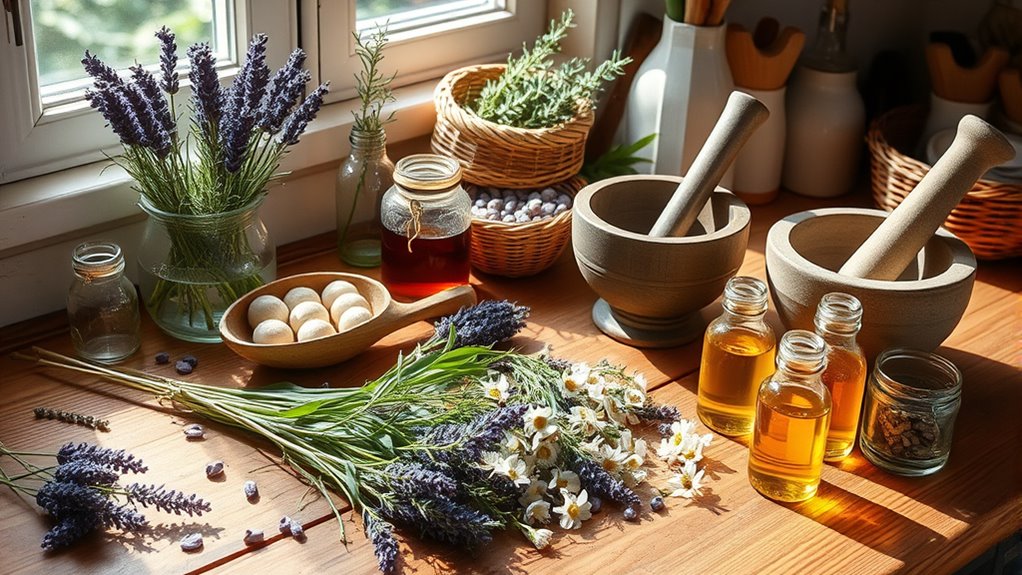
Transforming your kitchen into a personal herbal apothecary allows you to harness the healing power of plants daily. Start by selecting versatile herbs like chamomile, peppermint, and lavender, which support relaxation and digestion. Stock small jars or containers to store dried herbs, labeling each for easy access. Incorporate simple habits like harvesting fresh herbs from your garden or buying quality dried herbs to keep your supplies stocked. Consider investing in essential tools such as a mortar and pestle, tea infusers, and storage jars to keep your herbs fresh. Creating your herbal space not only simplifies self-care routines but also deepens your connection with nature’s healing gifts. With a well-stocked apothecary, you’re ready to craft teas, tinctures, and salves whenever needs arise.
Frequently Asked Questions
Are There Any Herbs I Should Avoid Due to Allergies?
Yes, you should avoid herbs if you have allergies to certain plants. For example, if you’re allergic to ragweed, avoid chamomile, echinacea, and marigold, as they can trigger reactions. Always test a small amount first and consult your healthcare provider before adding new herbs to your routine, especially if you have known allergies. Being cautious helps prevent adverse reactions and keeps your self-care safe and beneficial.
How Do I Ensure the Herbs I Use Are Pesticide-Free?
Prioritize pesticide-free produce by purchasing from reputable sources that label their herbs as organic. Look for certifications like USDA Organic, which guarantee minimal chemical use. You can also grow your own herbs at home, controlling every step of the process. Washing herbs thoroughly under cold water helps remove surface residues. If possible, choose local farmers’ markets where you can ask about growing practices directly.
Can Herbal Remedies Replace Conventional Medical Treatments?
Herbal remedies can complement conventional treatments but shouldn’t replace them without your healthcare provider’s guidance. While herbs can support your health and ease mild symptoms, serious conditions require professional medical care. Always consult your doctor before making changes to your treatment plan, especially if you’re on medication or have chronic issues. Combining herbs with conventional medicine can be effective, but safety and proper diagnosis are key.
How Long Do Herbal Infusions Typically Last Before Spoiling?
Herbal infusions usually last about 24 to 48 hours before spoiling, like a delicate flower wilting in the sun. To keep them fresh, store your infusions in the refrigerator in airtight containers. If you notice any off smells, cloudiness, or mold, it’s time to toss them out. Always use your senses to judge freshness, and when in doubt, it’s better to brew a fresh batch.
What Are the Best Storage Methods for Dried Herbs at Home?
You should store dried herbs in airtight containers, like glass jars with tight-fitting lids, to maintain their potency. Keep them in a cool, dark place away from direct sunlight and humidity, which can cause spoilage. Label each jar with the herb’s name and purchase date to track freshness. Avoid storing herbs near heat sources or in the fridge, as temperature fluctuations can degrade their quality over time.
Conclusion
Embracing herbal self-care is like tending a gentle garden within you, where each ritual plants seeds of wellness and harmony. As you weave herbs into your mornings, evenings, and meals, you nurture a sacred rhythm that blooms with energy. Let these daily practices be your guiding stars, illuminating your path to balance. With each sip, touch, and taste, you cultivate a sanctuary of healing—your personal oasis blooming with nature’s quiet, potent magic.