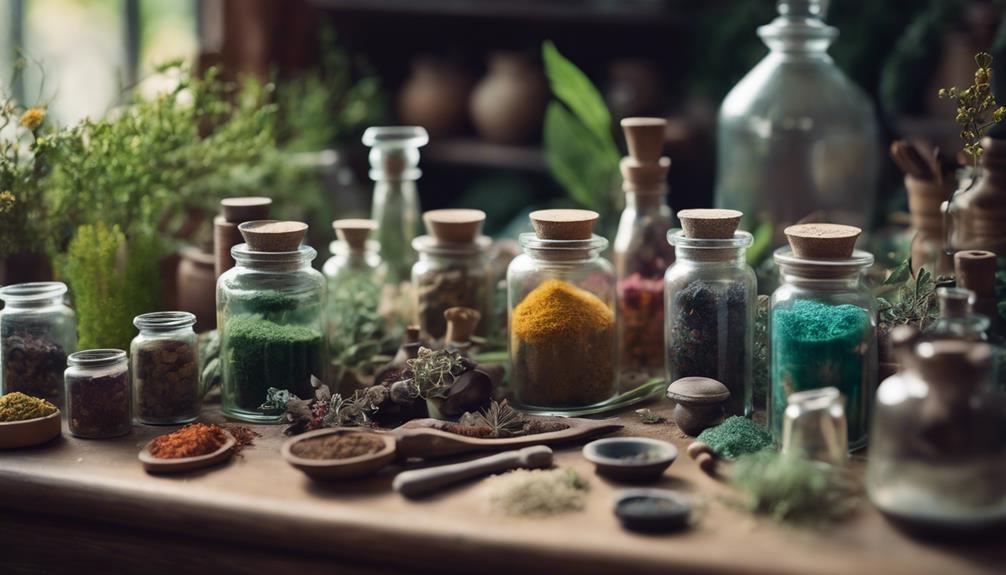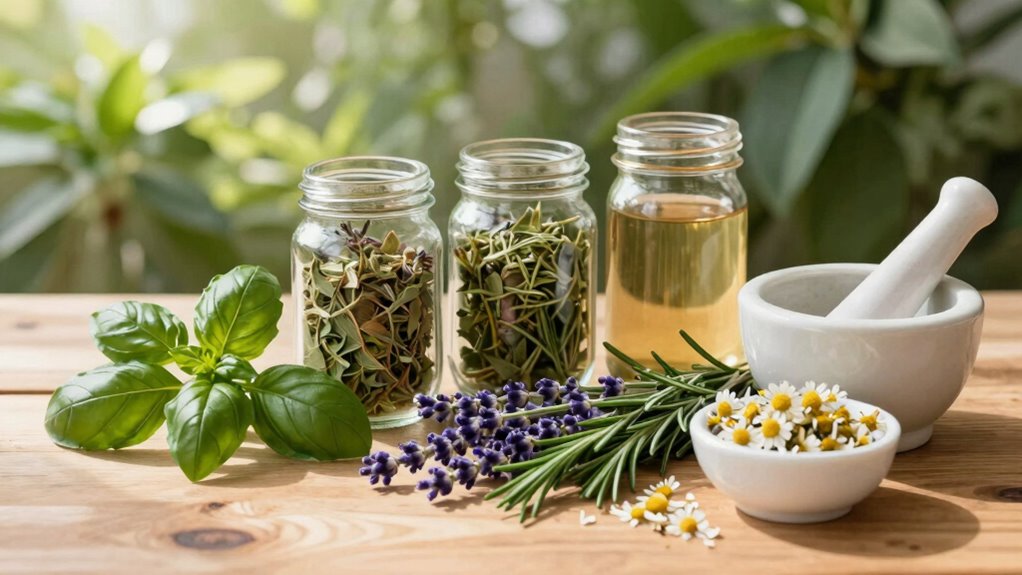

Starting with herbalism can boost your daily wellness easily. You can make simple herbal teas with herbs like chamomile or peppermint to soothe digestion and reduce stress, or create tinctures to support immunity and sleep. Keep things straightforward—no fancy equipment needed—just explore herbs that match your needs and keep a journal of effects. Incorporating these small practices into your routine can deepen your connection with nature and promote ongoing health benefits. Keep exploring to discover more ways to harness herbal healing.

Get oils, diffusers and self-care delivered free with Prime
- Fast, free delivery on millions of items
- Prime Video, Amazon Music and more included
- Member-only deals all year
Key Takeaways
- Start with simple herbal teas like chamomile or peppermint to soothe digestion and reduce stress daily.
- Prepare tinctures for long-term immune support and sleep benefits using alcohol or glycerin extracts.
- Keep a journal to track how different herbs impact your wellness and customize your routine.
- Incorporate biodiversity and sustainable practices to enhance herb potency and support environmental health.
- Gradually integrate herbal practices into daily life to build a sustainable, natural approach to overall wellness.

Are you curious about how to start your journey into herbalism? Diving into herbalism is an exciting way to take control of your health and enhance your daily wellness routine. You don’t need to be an expert to begin; even small steps can make a big difference. One of the easiest ways to incorporate herbs into your day is through herbal teas. These simple infusions allow you to enjoy the benefits of herbs like chamomile, peppermint, or ginger, which can help soothe digestion, reduce stress, or boost your immune system. To make herbal tea, just steep a handful of fresh or dried herbs in hot water for about five to ten minutes. It’s a straightforward, calming ritual that introduces you to the natural world of plants and their healing properties.
If you’re ready to expand your herbal toolkit, consider learning tincture preparation. Tinctures are concentrated herbal extracts made by soaking herbs in alcohol or glycerin, which preserves their medicinal qualities. Preparing tinctures at home isn’t complicated, and it gives you a potent way to harness herbal benefits for longer-term use. You start by choosing herbs suited to your health goals—like echinacea for immune support or valerian for sleep. Fill a jar with chopped herbs, cover them with alcohol or glycerin, and store the mixture in a cool, dark place for several weeks, shaking it periodically. Once ready, strain the liquid into a dropper bottle. Tinctures are convenient because you can take them in small doses, adjusting the strength as needed. Over time, tincture preparation becomes a rewarding process, and having your own herbal remedies on hand makes daily wellness more accessible.
Getting started with herbalism doesn’t require a lot of equipment or prior knowledge. Begin by exploring herbs that resonate with your health needs and preferences. Keep a journal to track how each herb makes you feel, and experiment with different preparations. Herbal tea is a gentle entry point, offering a soothing experience while familiarizing you with various herbs. Tincture preparation, on the other hand, introduces you to more advanced herbal medicine, giving you a powerful tool for maintaining wellness during times of need. As you continue, you’ll discover how these simple practices become part of your daily routine, fostering a deeper connection with nature and your body’s innate healing abilities. Incorporating biodiversity into your herbal practice can enhance the variety and potency of the herbs you use. Creating diverse plant environments can support the growth of a wider range of herbs with unique healing properties. Additionally, understanding the importance of plant diversity can help you select herbs that are more resilient and sustainable to cultivate in your own space. Developing an awareness of ecosystem health can further deepen your understanding of how sustainable practices support herbal medicine practices. With patience and curiosity, you’ll find that herbalism is a practical, enriching way to support your health every day.
As an affiliate, we earn on qualifying purchases.
Frequently Asked Questions
Can Herbal Remedies Replace Conventional Medicine Entirely?
Herbal remedies can’t replace conventional medicine entirely, especially for serious conditions. You might incorporate herbal cultivation and traditional practices to support your health and boost wellness, but always consult healthcare professionals for diagnosis and treatment. While herbs can complement your healthcare routine, they shouldn’t be relied on solely for major illnesses. Use herbalism as a supportive tool alongside conventional medicine to enhance overall wellbeing safely.
How Do I Identify Safe and Toxic Herbs?
Think of herb safety like walking a tightrope—you need balance and awareness. To identify safe and toxic herbs, consult reputable guides and trusted herbalists. Learn toxic herb identification by understanding their symptoms and dangerous plant parts. Always verify plant species before use, and avoid wild harvesting unless you’re certain. Remember, even safe herbs can cause reactions if misused. When in doubt, ask an expert to guarantee your daily wellness journey stays safe.
Are There Any Side Effects From Common Herbal Remedies?
Herbal remedies can cause herbal side effects, especially if you’re not careful. Common issues include allergic reactions, digestive upset, or interactions with medications. To avoid problems, learn toxic herb identification and stick to safe, well-known herbs. Always start with small doses, and consult a healthcare professional if you experience adverse effects. Being cautious helps guarantee your herbal journey supports your wellness safely and effectively.
How Long Does It Take to See Benefits From Herbalism?
You might notice benefits from herbalism within a few days to weeks, depending on the herbal preparation and your body’s response. For example, if you start drinking chamomile tea for relaxation, you may feel calmer within a week. Proper herbal storage guarantees potency, so follow storage instructions on labels. Consistency is key—stick with your herbal routine to see steady improvements in your daily wellness over time.
Can I Use Herbs Alongside Prescription Medications?
You can use herbs alongside prescription medications, but you should consult your healthcare provider first. When preparing herbal remedies, use proper herbal preparations to guarantee safety and effectiveness. Store herbs correctly to maintain their potency, and always inform your doctor about any herbal supplements you’re taking. This way, you avoid potential interactions and ensure your wellness routine supports your prescribed treatments.
As an affiliate, we earn on qualifying purchases.
Conclusion
As you set out on your herbalism journey, remember that each herb is a tiny chapter in the story of your wellness. Like a skilled gardener tending to delicate plants, you nurture your health with patience and care. With time, you’ll see your knowledge bloom into a vibrant garden of natural remedies. Trust in this gradual process, and soon you’ll find yourself flourishing—rooted in nature’s timeless wisdom, thriving in harmony with your body.
As an affiliate, we earn on qualifying purchases.
As an affiliate, we earn on qualifying purchases.
Halloween Picks
halloween
As an affiliate, we earn on qualifying purchases.