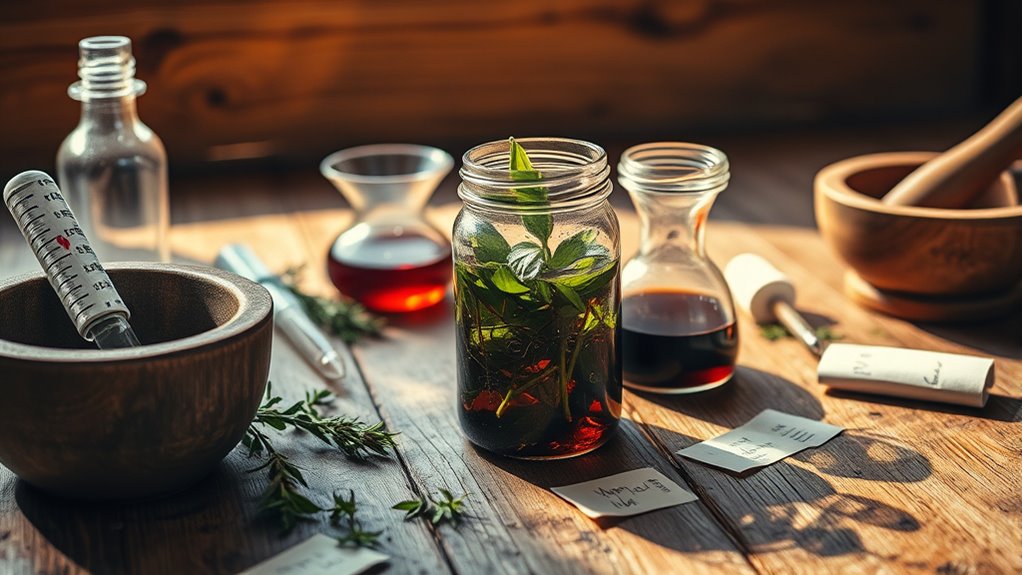

To make DIY tinctures, start by choosing fresh, high-quality herbs and properly drying or preparing them. Fill a clean jar with herbs, cover them with high-proof alcohol like vodka, and shake regularly in a cool, dark place for 2 to 6 weeks. Strain out the plant material and store the liquid in dark glass bottles. Continue exploring the detailed steps to guarantee you craft effective herbal extracts.

Get oils, diffusers and self-care delivered free — and shop member deals
- Fast, free delivery on millions of items
- Access to Prime Big Deal Days deals on October 6–7
- Prime Video, Amazon Music and more included
Key Takeaways
- Select fresh, high-quality herbs, wash and chop them to enhance extraction efficiency.
- Submerge herbs completely in a suitable solvent like vodka or grain alcohol in a clean jar.
- Store the jar in a cool, dark place, shaking daily, and let the mixture steep for 2-6 weeks.
- Strain the herbal material using a fine mesh or cheesecloth to obtain clear tincture.
- Transfer the liquid to dark bottles, label, and store in a cool, dark area for maximum potency.
As an affiliate, we earn on qualifying purchases.
Selecting and Preparing Your Herbs
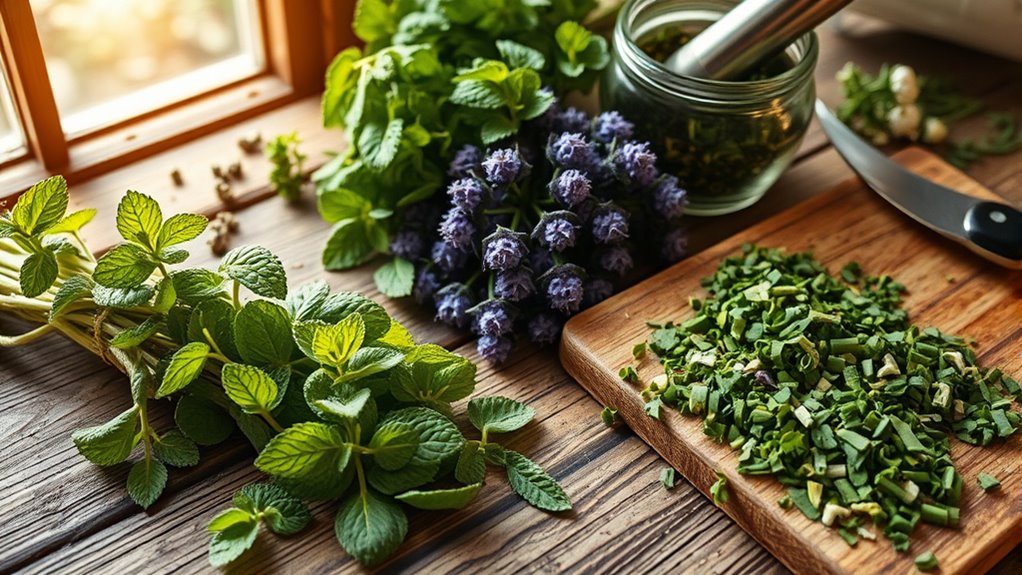
Choosing the right herbs is essential for making effective tinctures. You want fresh, high-quality herbs that are free from pesticides or contaminants. Start by selecting herbs known for their medicinal properties and guarantee they’re properly dried if you’re using dried herbs. When preparing your herbs, wash them gently to remove dirt and debris, then chop or crush them to release their active compounds. This increases the surface area, allowing the solvent to extract more nutrients. Remove any stems, seeds, or parts that aren’t useful for your tincture. Proper preparation ensures you maximize the herbal potency and achieve a more effective extract. Keep your herbs stored in a cool, dark place until you’re ready to combine them with your chosen solvent.
As an affiliate, we earn on qualifying purchases.
Choosing the Right Alcohol or Solvent
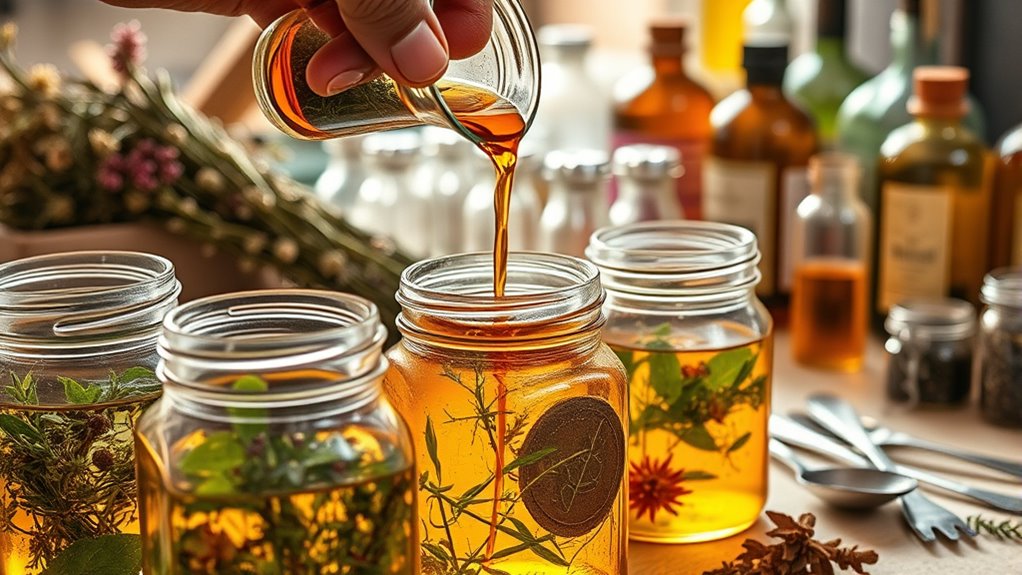
Selecting the appropriate alcohol or solvent is essential to extracting the desired medicinal properties from your herbs. The right choice impacts potency, flavor, and safety. For most tinctures, high-proof alcohol like vodka (at least 80 proof) works well because it dissolves both water-soluble and fat-soluble compounds. For herbs with delicate flavors or medicinal qualities, consider grain alcohol or Everclear. If you prefer a non-alcoholic option, glycerin or vinegar can be used, though they may be less efficient.
| Alcohol/Solvent | Best For |
|---|---|
| Vodka, Grain Alcohol | Potent, versatile tinctures |
| Glycerin, Vinegar | Non-alcoholic, gentle, for sensitive herbs |
cheesecloth for herbal tinctures
As an affiliate, we earn on qualifying purchases.
As an affiliate, we earn on qualifying purchases.
Combining Herbs and Solvent for Extraction
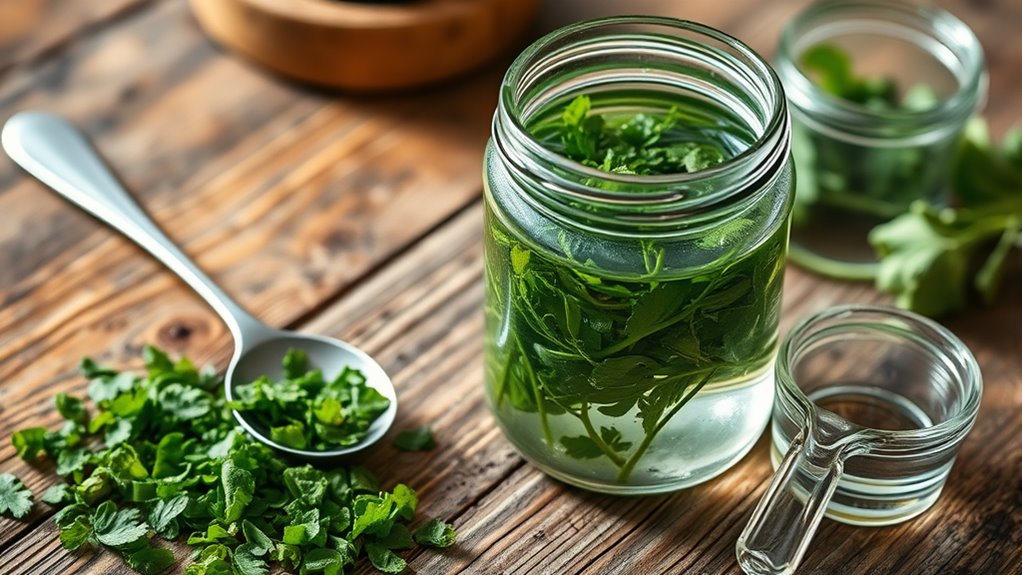
Once you’ve picked the right solvent, it’s time to combine it with your herbs to begin the extraction process. Place your herbs in a clean jar, then pour the solvent over them, ensuring they’re fully submerged. Gently shake the jar to mix everything evenly. This helps maximize contact between the herbs and solvent, guaranteeing efficient extraction of active compounds. Keep the jar in a cool, dark place, and avoid disturbing it during this time. Remember, the quality of your herbs and solvent directly impacts your tincture’s potency. To optimize extraction, consider chopping herbs finely, using enough solvent to cover all plant material, and labeling your jar clearly. Regular agitation during the process helps ensure a thorough extraction.
dark glass bottles for herbal extracts
As an affiliate, we earn on qualifying purchases.
As an affiliate, we earn on qualifying purchases.
Allowing the Tincture to Mature

After you’ve combined your herbs and solvent, it’s essential to let the tincture mature properly. During this time, the alcohol extracts active compounds from the herbs, intensifying the flavor and potency. Store your jar in a cool, dark place to protect it from light and temperature fluctuations that could degrade the extract. Shake the jar gently once a day to help the herbs release their properties evenly. The maturation process typically lasts from two to six weeks, depending on the herbs used and your desired strength. Patience is key here, as longer steeping usually results in a more potent tincture. Avoid opening the jar too often, as exposure to air can compromise the extraction process.
Straining and Storing Your Tincture

When the tincture has finished maturing, it’s time to strain out the herbs to separate the liquid extract from the plant material. Use a fine mesh strainer or cheesecloth to pour the mixture into a clean jar or bowl, ensuring you catch all plant debris. Gently press or squeeze the herbs to extract as much liquid as possible. Once strained, transfer the tincture into dark glass bottles to protect it from light. Store your tincture in a cool, dark place to preserve potency and extend shelf life. Proper storage prevents degradation and maintains effectiveness. Remember to label your bottles with the date and herb used, so you can keep track of freshness and potency over time.
- Use dark glass bottles for storage
- Keep tincture in a cool, dark area
- Label bottles with date and herb
- Avoid exposure to heat and sunlight
Frequently Asked Questions
How Long Does Homemade Tincture Last Before It Loses Potency?
Your homemade tincture typically stays potent for about 1 to 5 years if stored properly. Keep it in a dark, airtight container, away from direct sunlight and heat. Over time, alcohol or glycerin may evaporate, reducing effectiveness. Regularly check for changes in color, smell, or clarity, and discard it if you notice any mold or off-odor. Proper storage guarantees your tincture remains effective longer.
Can I Use Honey or Glycerin Instead of Alcohol?
Think of your tincture as a delicate dance—substituting honey or glycerin for alcohol changes the rhythm. Yes, you can use honey or glycerin, but keep in mind they’re less potent solvents. Honey adds sweetness but may limit extraction efficiency, while glycerin is gentler but might not preserve herbs as long. Your tincture’s shelf life shortens, and potency could diminish faster than with alcohol. Adjust expectations accordingly.
What Are Common Mistakes to Avoid During Extraction?
You should avoid rushing the extraction process or using too little alcohol, as this can weaken the tincture’s potency. Make sure you’re using high-quality herbs, and thoroughly chop or grind them to maximize surface area. Keep the jar sealed and stored in a cool, dark place, and don’t forget to shake it regularly. Overlooking these details can lead to weak or ineffective herbal extracts.
How Do I Dosage Homemade Tinctures Safely?
You should start small and follow recommended dosages to guarantee safety. Always label your tinctures clearly and keep track of how much you take daily. Use a dropper for precise measurements, and consult a healthcare professional if you’re unsure about dosage, especially if you’re pregnant, nursing, or on medication. Remember, natural doesn’t always mean safe—start low, go slow, and listen to your body.
Are There Herbs That Shouldn’T Be Tinctured at Home?
Yes, some herbs shouldn’t be tinctured at home because they can be toxic or require special handling. For example, plants like deadly nightshade (belladonna), digitalis, and certain mushrooms contain potent compounds that can be dangerous if misused. Always research herbs thoroughly and consult a professional before attempting to tincture plants with known toxicity or complex preparation needs. When in doubt, seek expert advice to guarantee safety.
Conclusion
Now that you know how to make your own tinctures, you’re stepping into a world of natural healing. Did you know that herbal tinctures can retain potency for up to five years when stored properly? That means your homemade extracts can be a long-lasting, potent addition to your wellness routine. With just a few simple steps, you’re harnessing the power of herbs to support your health—so start experimenting and enjoy the benefits of your DIY creations!
Fall Picks
fall essentials
As an affiliate, we earn on qualifying purchases.