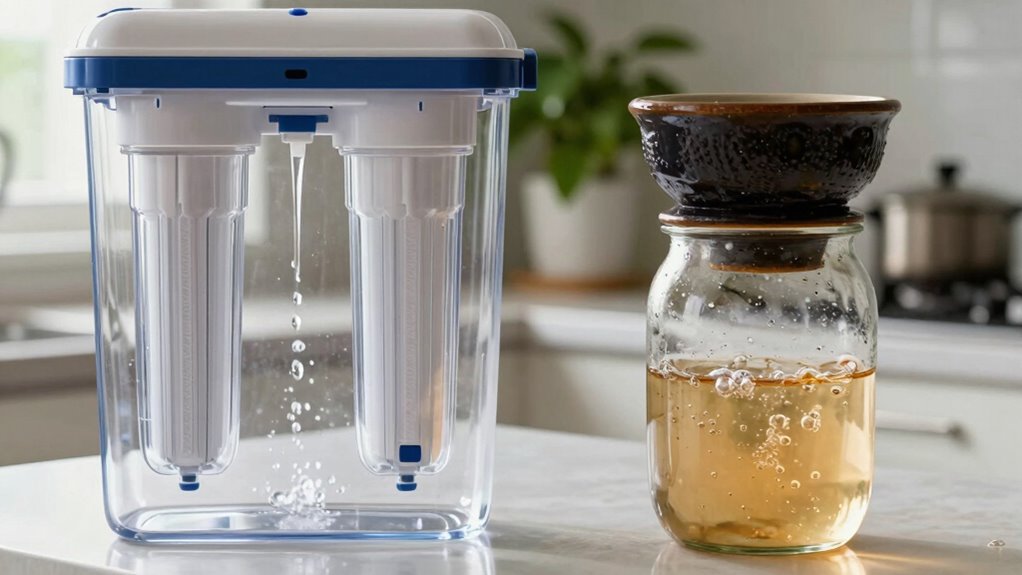

If you’re focused on wellness, consider your priorities: reverse osmosis offers high purity by removing most contaminants, ensuring clean water but stripping away beneficial minerals. Gravity filters, on the other hand, keep more natural minerals intact and improve taste, which supports overall health and enjoyment. Your choice depends on whether you value maximum filtration or mineral retention. To find out which system best suits your lifestyle and health goals, there’s more to explore below.
Key Takeaways
- Reverse osmosis provides higher water purity, ideal for removing contaminants harmful to health in wellness routines.
- Gravity filters retain more natural minerals, enhancing taste and supporting mineral intake for overall wellness.
- Reverse osmosis may require mineral re-addition post-filtration, affecting convenience in daily wellness practices.
- Gravity filters are simpler, energy-efficient, and suitable for maintaining mineral content in a sustainable lifestyle.
- Choose reverse osmosis for maximum purification; opt for gravity filters for mineral retention and ease of use.
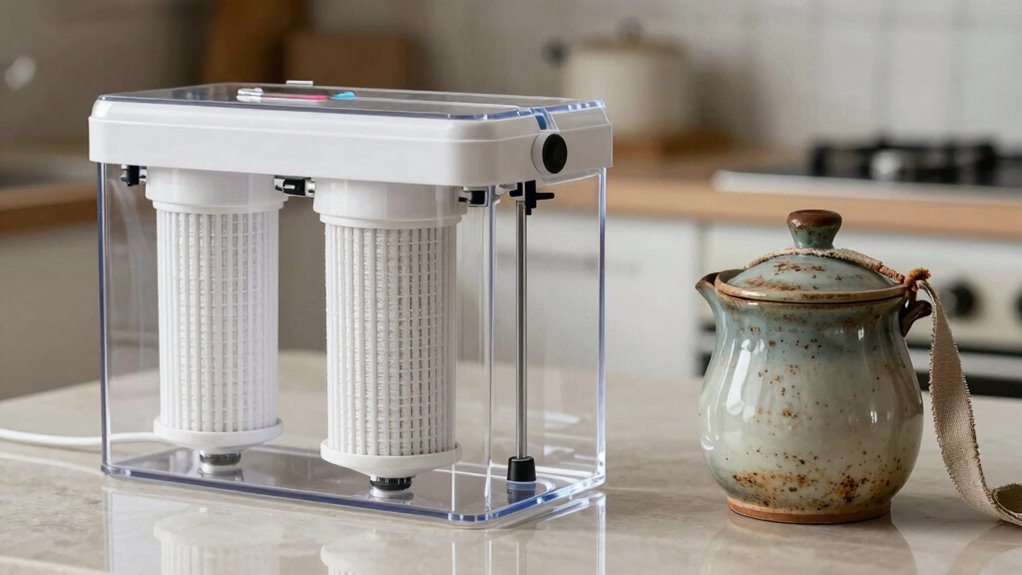
When choosing a water filtration system, understanding the differences between reverse osmosis and gravity filters is essential. Both options aim to improve water quality, but they do so through distinct processes that affect water mineralization and filtration efficiency. Reverse osmosis systems work by forcing water through a semi-permeable membrane, effectively removing contaminants, dissolved solids, and impurities. This process results in very pure water but also strips away beneficial minerals like calcium and magnesium, which can impact water mineralization. If maintaining mineral content is important for your wellness routine, you might find this aspect less appealing unless you add minerals back into the water later. Additionally, reverse osmosis systems are known for their filtration efficiency, removing a broad spectrum of contaminants with high precision. This advanced filtration process makes it a reliable choice for ensuring the water is free from harmful substances. The process also typically involves a water wastage component, which might be a concern for environmentally conscious users.
Gravity filters, on the other hand, rely on gravity to pull water through a filter medium—usually activated carbon or ceramic. These filters excel at reducing chlorine, sediments, and some bacteria, but they generally don’t remove as many dissolved solids as reverse osmosis systems do. Because of this, the filtration efficiency of gravity filters may be lower for certain contaminants, but they tend to preserve more of the natural minerals in your water, which many wellness enthusiasts prefer. This preservation can make the water taste better and potentially provide some health benefits associated with mineral intake. Moreover, gravity filters often require less technical maintenance and are more energy-efficient, making them suitable for off-grid or low-resource settings.
In terms of filtration efficiency, reverse osmosis is often considered superior for removing a wide range of impurities, including heavy metals, nitrates, and pesticides. Its thorough filtration process makes it a popular choice for those who want the highest water purity. However, this efficiency comes with the drawback that it can be slower and more wasteful—producing wastewater during the filtration process. Gravity filters are more straightforward and often more affordable, but they might not provide the same level of contaminant removal. They’re ideal if you want a simple, maintenance-friendly system that still significantly improves water quality but doesn’t necessarily eliminate every possible impurity.
When integrating these systems into your wellness routine, think about what matters most: Do you prioritize maximum filtration efficiency and water purity, or do you prefer to retain more natural minerals and keep things simple? Reverse osmosis might suit you if you’re focused on removing almost all contaminants, especially in areas with questionable tap water. Gravity filters are better if you’re aiming for a balanced approach—improving taste and safety while maintaining water mineralization. Ultimately, your choice depends on your health goals, water source, and lifestyle preferences, but understanding these key differences ensures you select the system that fits your wellness routine best.

iSpring RCC7AK, NSF Certified, 75 GPD, Alkaline 6-Stage Reverse Osmosis System, pH+ Remineralization RO Water Filter System Under Sink, Patented Top-Mounted Faucet Design for Easy Installation
PATENTED DESIGN – The top-mounted fastener allows for easy countertop installation entirely from above, eliminating the hassle of…
As an affiliate, we earn on qualifying purchases.
As an affiliate, we earn on qualifying purchases.
Frequently Asked Questions
Which Filter Type Is More Energy-Efficient?
Gravity filters are more energy-efficient because they rely on natural filtration without electricity, making them ideal for water purification in off-grid settings. Reverse osmosis systems, on the other hand, use pumps and electricity, which increases energy consumption. When considering filter maintenance, gravity filters generally require less upkeep, helping you save both energy and time. Choose a gravity filter if energy efficiency is your priority for a sustainable wellness routine.
How Long Do Reverse Osmosis Filters Typically Last?
Reverse osmosis filters typically last 6 to 12 months, depending on your water quality and usage. To guarantee peak water purification, you need to stay on top of filter maintenance by replacing them regularly. This not only keeps your system functioning effectively but also preserves the quality of your drinking water. Keep an eye on your filter’s lifespan, and don’t delay replacements to maintain the best hydration for your wellness routine.
Can Gravity Filters Remove Heavy Metals?
Gravity filters can’t effectively remove heavy metals, as their filtration effectiveness mainly targets sediments, bacteria, and some contaminants. If heavy metal removal is a priority for your wellness routine, considering reverse osmosis systems is better because they use multiple stages of filtration, including specialized filters that target heavy metals. Relying solely on gravity filters won’t give you the complete protection you need against heavy metal contamination.
Are There Health Risks Associated With Either Filter?
Did you know that contaminated water causes over 500,000 deaths annually? Both reverse osmosis and gravity filters are safe when used properly, but they can pose health risks if not maintained. Reverse osmosis filters can alter pH balance, potentially making water more acidic, while gravity filters might not remove all microbes. Regular cleaning and choosing the right filter help guarantee microbial safety and protect your health.
Which Filter Is Easier to Install at Home?
You’ll find gravity filters easier to install at home because they involve minimal setup and don’t require plumbing skills. With simple assembly and straightforward instructions, they offer better user convenience. Reverse osmosis systems, on the other hand, often need more complex installation, including connecting to your water supply and under-sink setup. If you prioritize quick, hassle-free installation, a gravity filter is the better choice for your wellness routine.

Waterdrop Gravity Water Filter Straw, Camping Water Filtration System, Water Purifier Survival for Travel, Backpacking and Emergency Preparedness, 1.5 gal Bag, 5 Stage Filtration, Pack of 2
5-Stage Efficient Filtration: With adoption of premium-quality 0.1 um ultrafiltration membrane and other raw materials, the Water Filter…
As an affiliate, we earn on qualifying purchases.
As an affiliate, we earn on qualifying purchases.
Conclusion
Choosing between reverse osmosis and gravity filters depends on your wellness goals. While reverse osmosis offers ultra-purified water, it’s like a high-tech gadget—powerful, but maybe overkill for everyday hydration. Gravity filters, on the other hand, are simple and reliable, like your favorite pair of sneakers—comfortable and easy to use. So, whether you seek perfection or practicality, both can fit into your routine, each bringing their unique benefits to your wellness journey.

Waterdrop MNR35 Remineralization Filter, 1/4" Quick Connect Mineral Filter for Reverse Osmosis System, Restore Essential Minerals for RO System, RO Mineral, Under Sink Water Filtration
𝐓𝐡𝐢𝐬 𝐑𝐎 𝐫𝐞𝐦𝐢𝐧𝐞𝐫𝐚𝐥𝐢𝐳𝐚𝐭𝐢𝐨𝐧 𝐟𝐢𝐥𝐭𝐞𝐫 𝐢𝐬 𝐚𝐛𝐥𝐞 𝐭𝐨 𝐥𝐚𝐬𝐭 𝟗-𝟏𝟐 𝐦𝐨𝐧𝐭𝐡𝐬, for better filtration, suggest to replace after 9…
As an affiliate, we earn on qualifying purchases.
As an affiliate, we earn on qualifying purchases.
iSpring RCC7AK, NSF Certified, 75 GPD, Alkaline 6-Stage Reverse Osmosis System, pH+ Remineralization RO Water Filter System Under Sink, Patented Top-Mounted Faucet Design for Easy Installation
PATENTED DESIGN – The top-mounted fastener allows for easy countertop installation entirely from above, eliminating the hassle of…
As an affiliate, we earn on qualifying purchases.
As an affiliate, we earn on qualifying purchases.