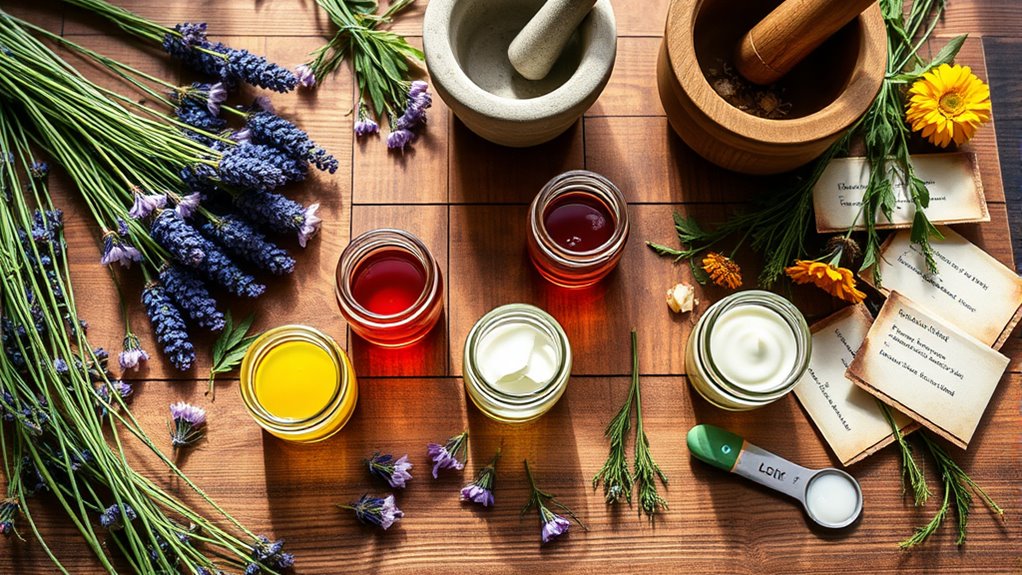

To make your own tinctures and salves, start by carefully harvesting herbs at their peak, using sharp tools to avoid damage. Dry herbs in a cool, dark place, then store them in airtight containers to keep their potency. When ready to use, infuse herbs into alcohol or create salves with oils and beeswax, following proper storage practices. With these steps, you’ll produce effective remedies—keep exploring to get all the details on each process.
Listen free for 30 days with Audible
Thousands of audiobooks and originals — cancel anytime.
As an affiliate, we earn on qualifying purchases.
Key Takeaways
- Harvest herbs at their peak potency using sharp tools, ensuring they’re healthy and free from damage or contamination.
- Properly dry herbs in a well-ventilated, shady area, then store in airtight, labeled glass jars away from sunlight.
- Use high-quality alcohol or carrier oils to macerate herbs, extracting their medicinal properties for tinctures or salves.
- Prepare salves by infusing herbs into oils, then mixing with beeswax and pouring into containers for solid remedies.
- Label all homemade remedies with date and ingredients, and store in a cool, dark place to maintain potency and extend shelf life.
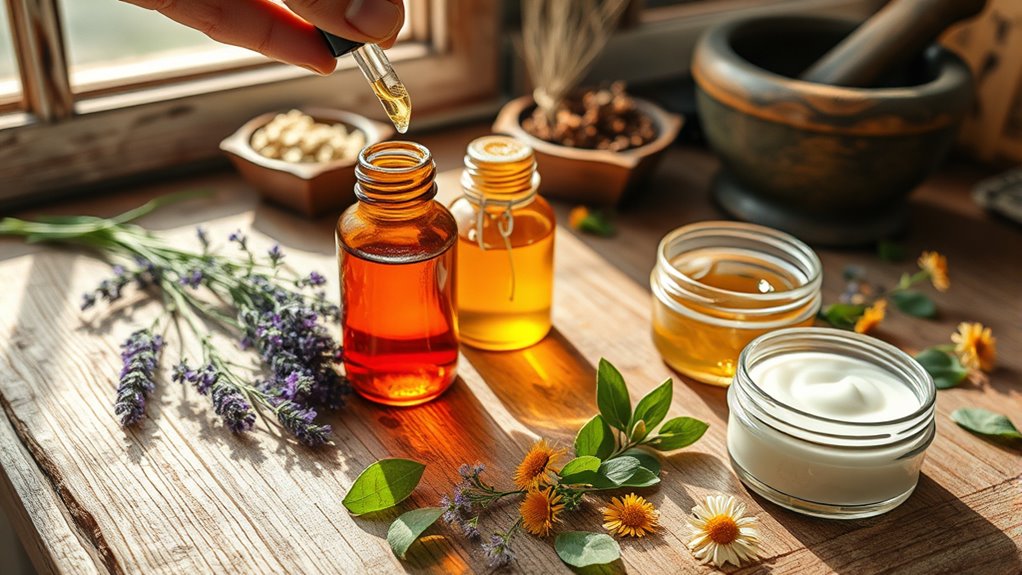
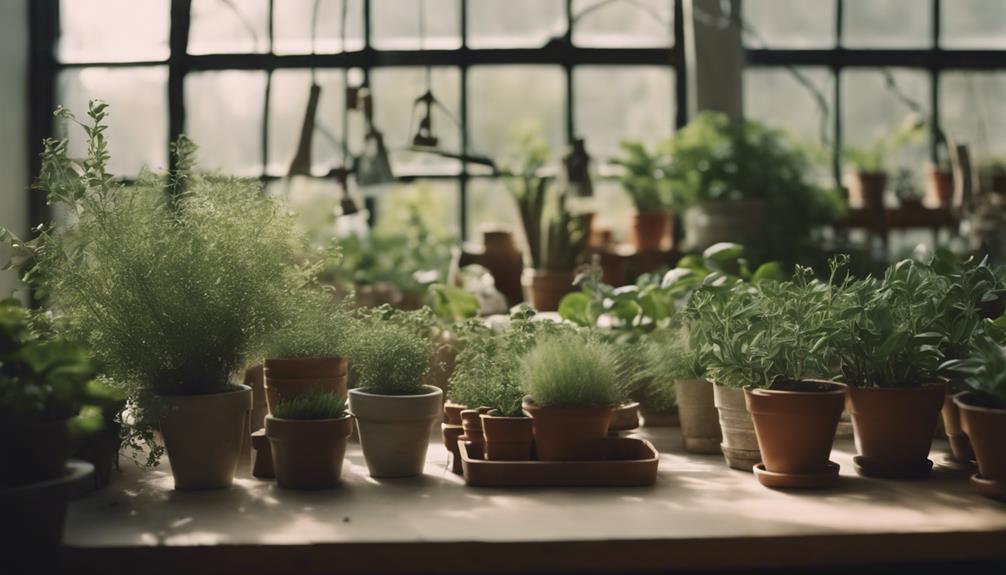
Creating your own herbal remedies at home is a simple and rewarding way to support your health naturally. When you start crafting tinctures and salves, it all begins with herbal harvesting. You want to pick your herbs at the right time—usually when they’re at their peak potency, which often means just before they flower or when their leaves are lush and vibrant. Use sharp scissors or garden shears to gather your herbs carefully, avoiding any contaminated or damaged parts. This ensures you get the most medicinal benefits from your harvest. Once you’ve collected your herbs, it’s essential to handle them properly and follow correct storage techniques to preserve their potency. Proper storage keeps your herbs fresh and potent for future use, whether you plan to make tinctures, infusions, or salves.
After harvesting, dry your herbs in a well-ventilated, shady spot. Avoid direct sunlight, which can degrade the active compounds. Spread the herbs out in a single layer on a clean screen or paper, turning them regularly so they dry evenly. This process can take several days, but ensuring thorough drying prevents mold and spoilage. Once fully dried, it’s time to store your herbs. Transfer them into airtight containers, preferably glass jars with tight-fitting lids, and label each with the herb’s name and harvest date. Store these jars in a cool, dark place—away from sunlight, heat, and humidity. Proper storage not only maintains the herbs’ freshness but also protects their medicinal qualities until you’re ready to use them for making tinctures or salves.
Additionally, understanding the shelf life of dried herbs can help you plan your herbal remedies better and ensure their effectiveness over time. When it comes to herbal harvesting, timing is everything. Harvesting too early might mean less potent herbs, while waiting too long could result in diminished medicinal properties. Pay attention to the plant’s growth cycle, and harvest when the herbs are at their peak. Once stored properly, your herbs will be ready for extraction—whether you’re infusing them into alcohol for tinctures or blending them into oils for salves.
Frequently Asked Questions
How Long Do Homemade Tinctures and Salves Last?
Your homemade tinctures typically last 1 to 5 years, while salves stay good for about 1 to 2 years. For the best shelf life, store them in dark, airtight containers away from direct sunlight and heat. Proper storage tips help preserve their potency. Always check for changes in smell, color, or texture before use, and label your remedies with the date made to track their freshness.
Which Herbs Are Best for Beginners?
If you’re new to herbal remedies, start with herbs known for herb safety like chamomile, lavender, and peppermint. These are gentle, easy to work with, and perfect for beginners’ kit. Always research herbs before use and follow dosage guidelines. Using simple, safe herbs helps you build confidence and guarantees a positive experience as you learn to make your own tinctures and salves.
Can I Use Store-Bought Herbs for Remedies?
You can use store-bought herbs for remedies, but pay attention to herb quality. Choose fresh, organic herbs whenever possible, as preservatives in remedies can affect potency. Always read labels carefully to avoid added chemicals or preservatives that might interfere with your remedy’s effectiveness. High-quality herbs verify your tinctures and salves work better and are safer to use, making your DIY herbal remedies more beneficial and reliable.
Are Homemade Remedies as Effective as Store-Bought?
Think of homemade remedies like a chef’s secret sauce—fresh, personalized, and potent. While store-bought options offer consistent herbal potency, your DIY remedies can be just as effective if you use high-quality herbs and proper techniques. You control ingredients, ensuring freshness. With care, your homemade tinctures and salves can match store-bought consistency and deliver powerful healing benefits, making your efforts both rewarding and effective.
How Should I Store My Herbal Preparations?
You should store your herbal preparations in a cool, dark place to preserve potency. First, make sure you’ve dried herbs thoroughly to prevent mold; proper herb drying extends shelf life. Choose an airtight container, like glass jars or dark bottles, to protect from light and moisture. Label each container clearly with the date, so you know when to use or replace the herbs. Proper storage keeps your remedies fresh and effective longer.
Conclusion
Now that you’ve learned to make your own tinctures and salves, you’ll find that nature often provides exactly what you need, right when you need it. Sometimes, a simple herb from your garden becomes the perfect remedy just in time, reminding you that DIY herbal remedies aren’t just about health—they’re about reconnecting with the healing power of nature. So, keep experimenting, and who knows? Your next favorite cure might be just a homemade blend away.
Labor Day sales Picks
labor day deals
As an affiliate, we earn on qualifying purchases.