Transform your everyday herbs into a powerful herbal apothecary by growing, harvesting, and preserving them for year-round use. Incorporate fresh herbs into your meals, make teas and infusions, and craft natural remedies or skincare products at home. Practice safe herb use and explore traditional practices from different cultures. If you want to discover simple tips to build your herbal collection and access their full potential, there’s plenty more to explore to turn your kitchen into a herbal haven.
Key Takeaways
- Grow and harvest common kitchen herbs like basil, mint, rosemary, thyme, and parsley for fresh culinary and medicinal use.
- Preserve herbs through drying, freezing, or infusing to maintain their potency year-round.
- Incorporate herbs into daily meals, teas, and infusions for health benefits and enhanced flavor.
- Create homemade herbal remedies, tinctures, and infusions safely using proper techniques and storage.
- Organize and maintain an herbal apothecary with labeled, stored herbs for easy access and ongoing wellness support.
indoor herb garden kit
As an affiliate, we earn on qualifying purchases.
As an affiliate, we earn on qualifying purchases.
Identifying Common Kitchen Herbs and Their Benefits
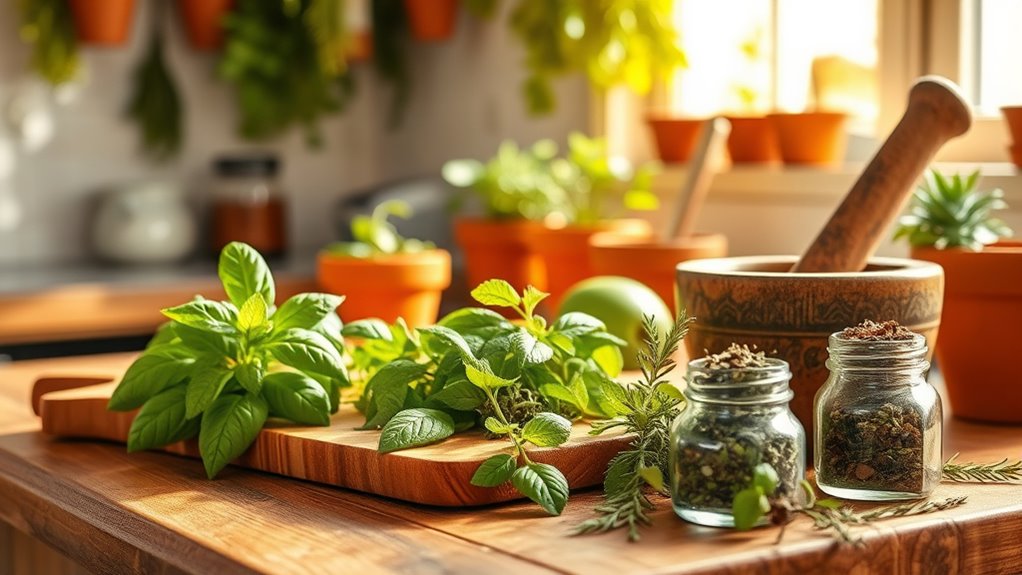
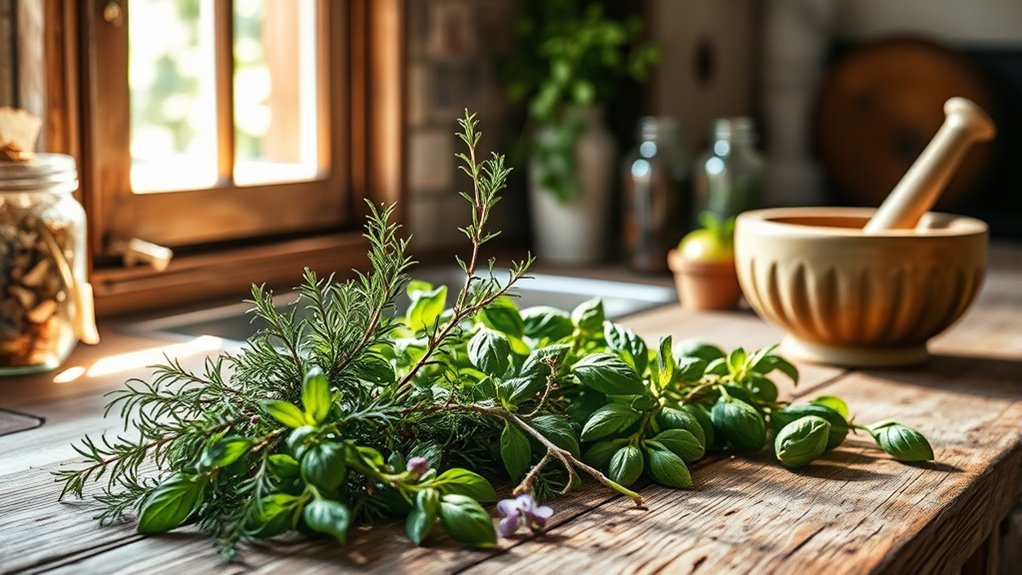
Have you ever wondered how to quickly identify common kitchen herbs and understand their health benefits? Recognizing herbs like basil, mint, rosemary, thyme, and parsley is easier than you think. Basil has broad, bright green leaves with a sweet aroma, perfect for salads and pasta. Mint features jagged leaves and a invigorating scent, often used to soothe digestion. Rosemary has needle-like, fragrant leaves, boosting memory and circulation. Thyme presents tiny, oval leaves with a pungent flavor that fights coughs and boosts immunity. Parsley has flat or curly leaves and is rich in vitamins, supporting your immune system. Learning these visual cues and scents helps you select herbs confidently, making your kitchen both flavorful and health-conscious.
herbal drying rack
As an affiliate, we earn on qualifying purchases.
As an affiliate, we earn on qualifying purchases.
Growing Your Own Herb Garden Indoors and Outdoors

Creating your own herb garden, whether indoors or outdoors, is a rewarding way to guarantee fresh herbs at your fingertips. For indoor gardening, choose a sunny windowsill or set up grow lights to make certain your herbs get enough light. Use well-draining pots with quality soil, and water regularly but avoid overwatering. Popular indoor herbs include basil, mint, and parsley. Outdoors, select a spot with ample sunlight and good soil drainage. Raised beds or containers work well if your yard has limited space. Plant herbs like thyme, rosemary, and chives, which thrive outdoors. Remember, regardless of location, proper care and consistent watering promote healthy growth. With some planning, you can enjoy fresh herbs year-round, straight from your garden to your kitchen.
herbal tincture making kit
As an affiliate, we earn on qualifying purchases.
As an affiliate, we earn on qualifying purchases.
Harvesting and Preserving Herbs for Year-Round Use
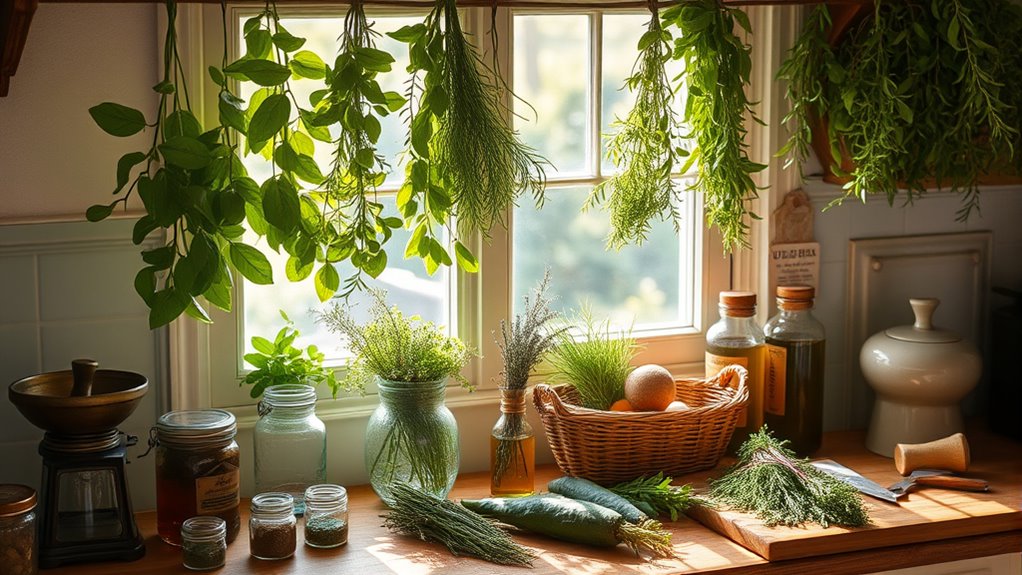
Knowing the right time to harvest your herbs guarantees they’re at their peak flavor and potency. Once you’ve collected your herbs, choosing the best preservation methods helps you enjoy them year-round. Let’s explore how to time your harvest and preserve your herbs effectively.
Optimal Harvest Timing
Timing is crucial when harvesting herbs to guarantee they retain maximum flavor and potency. The best time is usually in the morning after dew has dried, but before the sun gets too hot. For most herbs, harvest just before flowering for peak essential oils. Pay attention to the plant’s growth stage and environment — sunny days bring richer flavors. To help you decide, here’s a quick guide:
| Herb | Best Harvest Time | Signs of Readiness |
|---|---|---|
| Basil | Just before flowering | Bright, fragrant leaves |
| Mint | Before flowering | Lush, vibrant stems |
| Rosemary | When woody stems form | Aromatic, needle-like leaves |
Timing guarantees your herbs are flavorful and potent, perfect for your home apothecary.
Preserving Techniques for Herbs
Once you’ve harvested your herbs at their peak, preserving them properly guarantees you can enjoy their flavors and benefits year-round. To do this, start by cleaning the herbs gently to remove dirt and insects. You can dry herbs by hanging small bunches upside down in a well-ventilated, dark space until fully dried, which preserves their potency. Alternatively, freeze herbs in ice cube trays with a little water or olive oil for quick use in cooking. For herbs like rosemary and thyme, consider making herb-infused oils or vinegars. Store dried herbs in airtight containers away from sunlight to maintain their aroma. Proper preservation ensures your herbs stay flavorful and potent, making your home remedies and recipes more enjoyable throughout the year.
herbal infusion jars
As an affiliate, we earn on qualifying purchases.
As an affiliate, we earn on qualifying purchases.
Making Herbal Teas and Infusions at Home
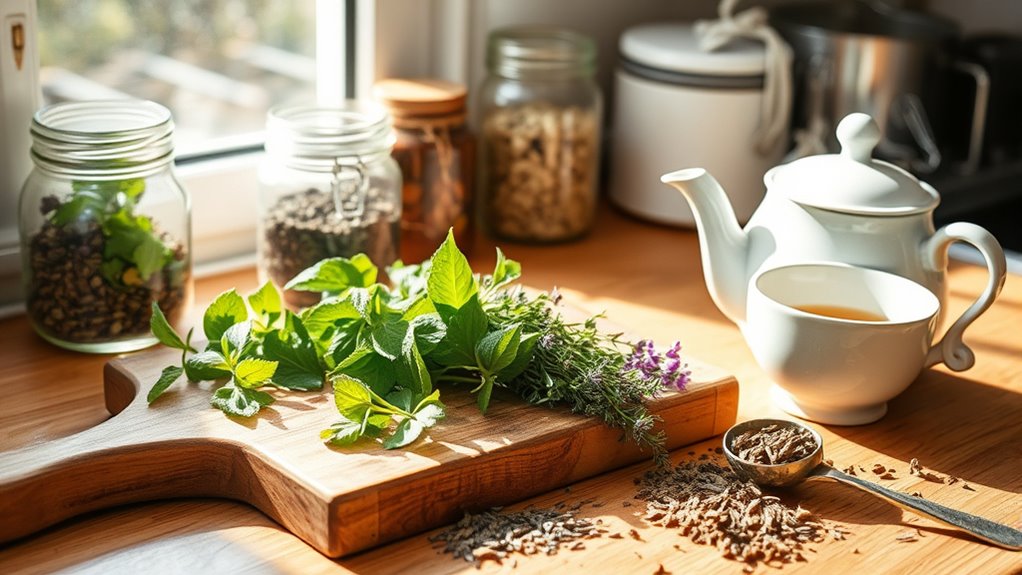
Start by choosing fresh herbs that suit your taste, ensuring they’re aromatic and healthy. Use proper steeping techniques, like controlling water temperature and steeping time, to reveal the best flavors. You can enhance your teas naturally with ingredients like honey, lemon, or spices for a personalized touch.
Selecting Fresh Herbs
How do you choose the best fresh herbs for your homemade teas and infusions? First, look for vibrant, fragrant herbs with bright green leaves and no signs of wilting or discoloration. Freshness directly impacts flavor and potency. Next, consider the herb’s aroma; it should smell lively and appealing. Finally, inspect the stems and leaves for any damage or pests. To ensure quality, follow these tips:
- Pick herbs with firm, unblemished leaves and sturdy stems.
- Smell the herbs to confirm a strong, fresh aroma.
- Avoid herbs with yellowing leaves or visible pests.
Choosing fresh herbs carefully guarantees your teas are flavorful, aromatic, and beneficial, elevating your herbal experience at home.
Proper Steeping Techniques
After selecting fresh herbs with vibrant aroma and healthy leaves, the next step is to steep them properly to reveal their full flavor and benefits. Use clean, heat-resistant teapots or mugs, and add herbs directly or in a tea infuser. Pour hot water—ideally just below boiling—over the herbs. Let them steep for the recommended time to extract maximum flavor and nutrients. Here’s a quick guide:
| Herb Type | Steeping Time |
|---|---|
| Delicate herbs | 3-5 minutes |
| Hardy herbs | 7-10 minutes |
| Roots/Twigs | 10-15 minutes |
Adjust steeping time based on your taste preference, but avoid overdoing it to prevent bitterness. Proper steeping unlocks herbal richness effortlessly.
Enhancing Flavors Naturally
To naturally enhance the flavor of your herbal teas and infusions, you can combine herbs and other natural ingredients to create vibrant, aromatic blends. Start with fresh herbs like mint, basil, or lemongrass for brightness. Add natural sweeteners such as honey, agave nectar, or dried fruits to bring depth. Incorporate spices like cinnamon, ginger, or cardamom for warmth and complexity.
Here are three ways to elevate your blends:
- Mix herbal leaves with citrus peels for a zesty twist.
- Infuse with a small piece of fresh ginger or a cinnamon stick during steeping.
- Use natural sweeteners sparingly to balance bitterness and enhance aroma.
Experimenting with these options helps you craft personalized, flavorful teas at home.
Creating Natural Remedies and Tinctures With Kitchen Herbs
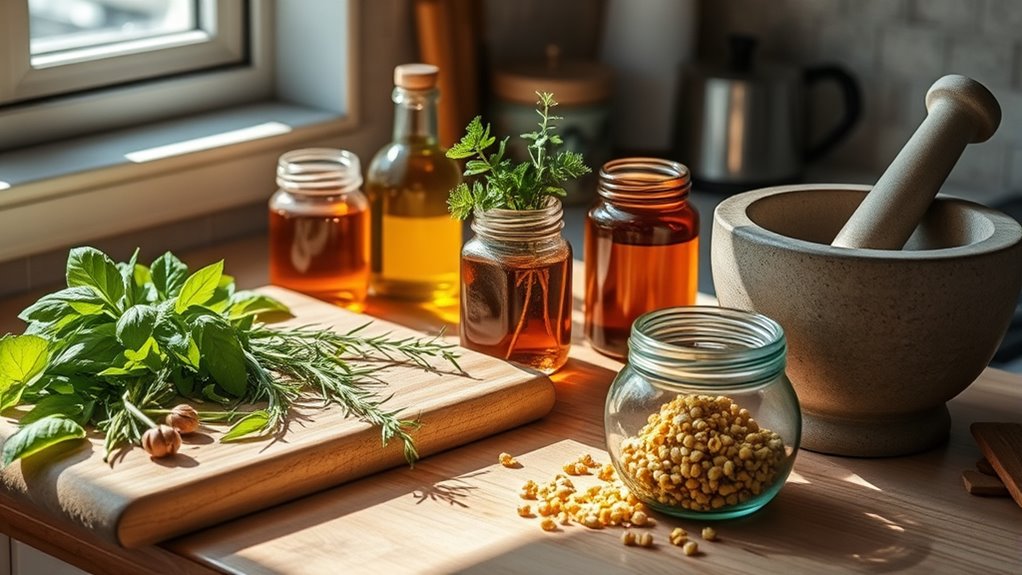
Creating natural remedies and tinctures with kitchen herbs is a simple and effective way to harness the healing power of your everyday ingredients. Start by selecting herbs like basil, thyme, or chamomile, which have known medicinal properties. To make a tincture, chop fresh herbs and place them in a clean jar, covering them with high-proof alcohol like vodka. Seal tightly and store in a dark, cool place for 2-4 weeks, shaking occasionally. Strain the mixture and transfer the liquid to dropper bottles. These tinctures can be used to support immunity, soothe digestion, or ease minor ailments. Creating your own remedies allows you to customize doses and avoid synthetic additives, making herbal healing accessible and straightforward right from your kitchen.
Incorporating Herbs Into Daily Cooking for Wellness
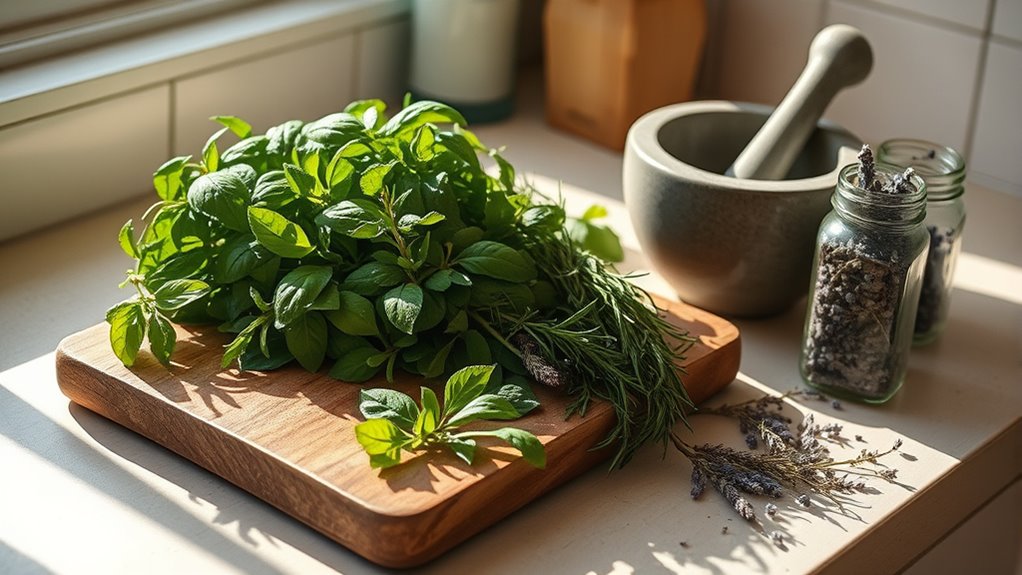
Adding herbs to your daily meals is an easy way to boost your wellness routine. You can create flavorful, herb-infused dishes that support your health with simple tips for regular use. Let’s explore how small changes can make a big difference in your cooking and well-being.
Herb-Infused Dishes for Health
Incorporating herbs into your daily cooking can substantially boost your overall wellness while enhancing flavor. Herb-infused dishes not only taste better but also deliver health benefits. To get started, consider these simple ideas:
- Add fresh basil to your salads for anti-inflammatory properties.
- Use rosemary in roasted vegetables to support digestion.
- Stir thyme into soups for immune-boosting antioxidants.
These small changes make your meals more nutritious without extra effort. You can also experiment with herbs like mint in smoothies or cilantro in rice dishes. The key is to incorporate herbs naturally into your recipes so they complement flavors and maximize health benefits. Regularly including herbs in your cooking transforms everyday meals into powerful, wellness-promoting dishes.
Simple Tips for Daily Herb Use
To make herbs a seamless part of your daily routine, start by keeping fresh herbs within easy reach—like on your kitchen counter or in a nearby herb jar. This simple step encourages regular use and keeps herbs visible, reminding you to incorporate them into meals. Chop herbs like basil, cilantro, or parsley to sprinkle over salads, soups, or eggs. Add a sprig of rosemary or thyme to roasted vegetables for extra flavor and wellness benefits. Incorporate herbs into your morning smoothies or teas for an extra boost. Dried herbs work well for seasoning stews or marinades if fresh isn’t available. The key is consistency—small daily additions can elevate your dishes and support your overall health without extra effort.
Safe Practices and Precautions in Herb Usage

While herbs can enhance your health and well-being, using them safely is essential to avoid adverse effects. First, always consult a healthcare professional before adding new herbs, especially if you’re pregnant, nursing, or on medication. Second, start with small doses to see how your body reacts. Third, be aware of potential allergies by doing a patch test or starting with a small amount. Additionally, avoid using herbs that are unfamiliar or unverified for safety. Keep herbs out of children’s reach, and store them properly in labeled containers. Remember, natural doesn’t always mean safe. Following these precautions helps you enjoy the benefits of herbs without risking your health. Stay informed and prioritize safety in your herbal journey.
DIY Herbal Skincare and Beauty Products
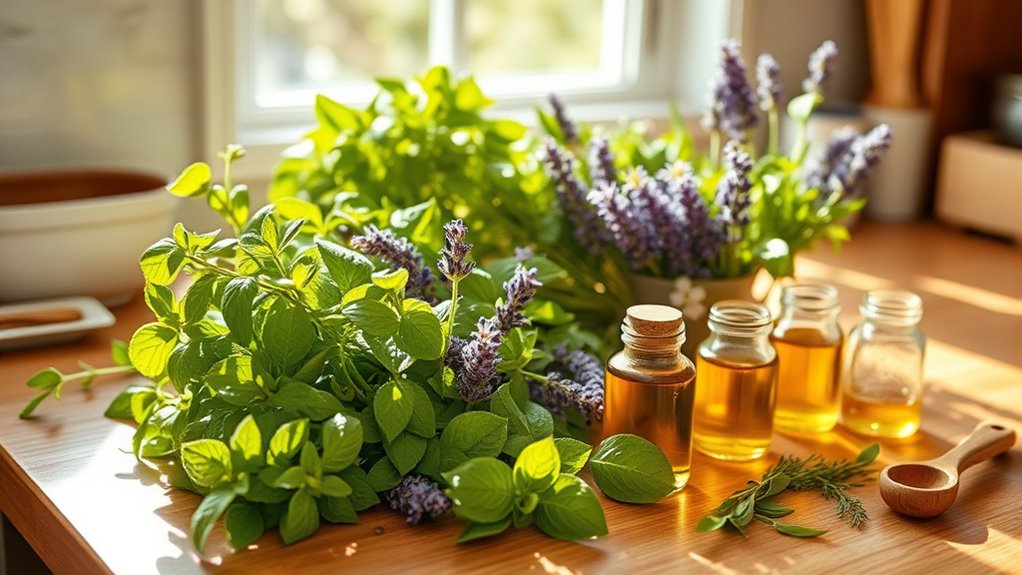
Creating your own herbal skincare and beauty products allows you to harness the natural power of herbs while customizing formulas to suit your skin type. You can craft cleansers, masks, and moisturizers with ingredients like chamomile for soothing, aloe for hydration, or tea tree for clarity. When making products, focus on quality herbs and proper measurements to guarantee safety and effectiveness. Experimenting at home empowers you to avoid chemicals and tailor treatments to your needs. Here’s a simple guide to herbal skincare benefits:
| Herb | Skin Benefit | Usage Tip |
|---|---|---|
| Chamomile | Calms irritation | Steep in oil or water |
| Aloe Vera | Hydrates deeply | Use gel directly on skin |
| Tea Tree | Fights bacteria | Add a few drops to recipes |
| Lavender | Soothes and relaxes | Use in masks or toners |
Exploring Traditional Herb Practices From Different Cultures
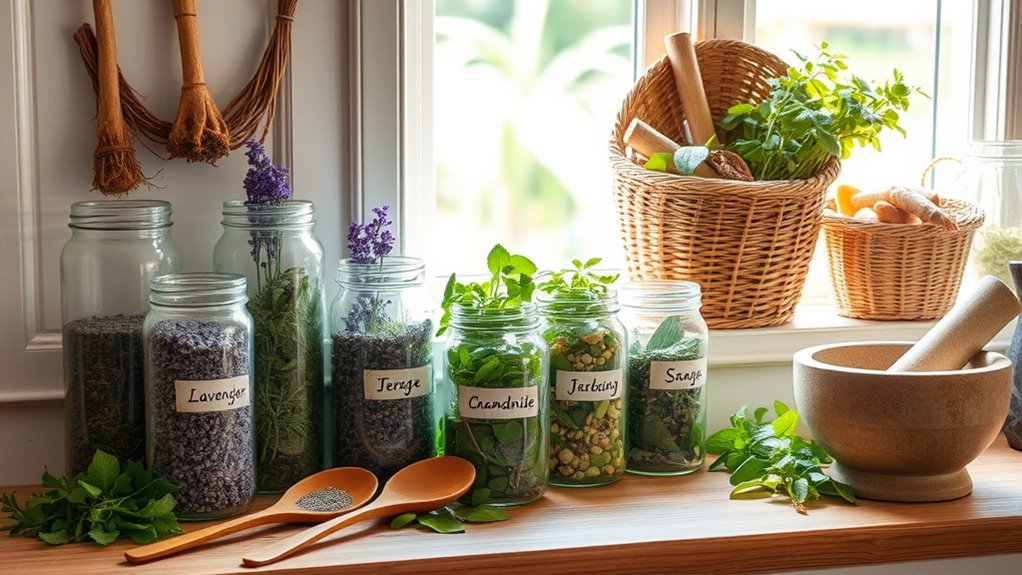
Exploring traditional herb practices from different cultures reveals a rich tapestry of knowledge passed down through generations. These practices offer unique insights into how herbs are used for healing, spiritual rituals, and daily wellness. To start, consider:
- Chinese Traditional Medicine: Uses herbs like ginseng and ginger to balance energy and boost immunity.
- Ayurveda (India): Incorporates turmeric and holy basil to promote longevity and mental clarity.
- Native American Practices: Employs herbs such as sage and cedar for purification and spiritual ceremonies.
Tips for Maintaining an Herbal Apothecary at Home

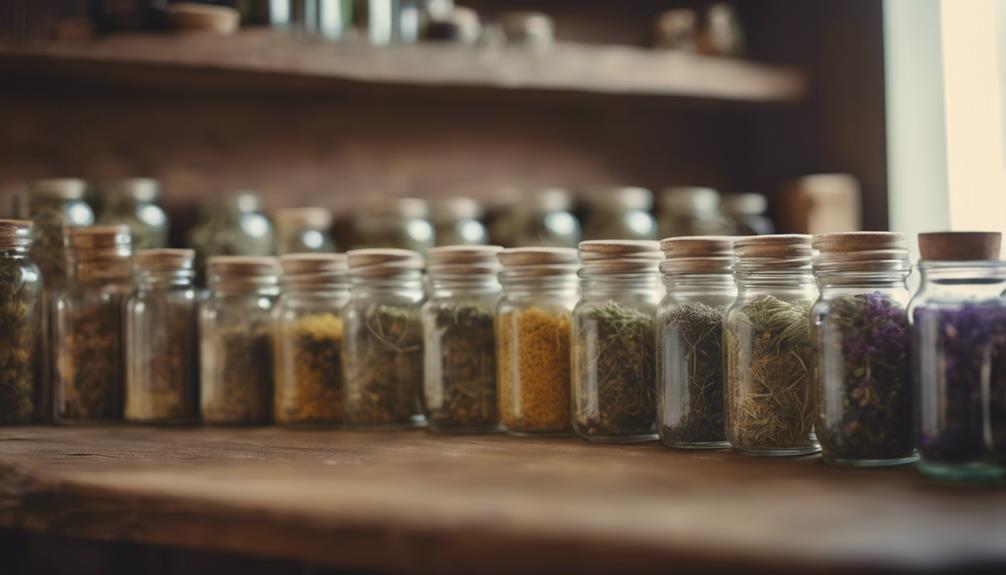
Maintaining an herbal apothecary at home requires organization and ongoing care to guarantee your herbs stay potent and effective. Start by storing herbs in airtight containers away from direct sunlight, heat, and moisture. Label each jar clearly with the herb’s name and harvest date to keep track of freshness. Regularly check your supplies for signs of spoilage or mold, discarding any compromised herbs. Keep dried herbs in a cool, dark place to preserve their potency longer. Use small batches for daily use to reduce waste, and rotate your stock so nothing sits unused for too long. Finally, stay consistent with your cleaning routine; a tidy space prevents contamination and helps you easily locate what you need. Proper maintenance ensures your herbs remain effective and safe for use.
Frequently Asked Questions
How Do I Identify Wild Herbs Safely in My Local Area?
To identify wild herbs safely, start by learning about them from reputable field guides or local expert foragers. Observe their leaves, flowers, and smells carefully, and compare these features with trusted images. Always test for edibility cautiously—try a small amount first and wait for any reactions. Never consume a plant unless you’re 100% sure of its identity, and consider taking a foraging course for hands-on guidance.
What Are Common Mistakes to Avoid When Drying Herbs at Home?
You might think drying herbs is a simple sunbathing session, but don’t let your herbs turn to dust. Avoid overcrowding your herbs, which traps moisture and invites mold. Don’t use high heat or direct sunlight, as they can strip essential oils and flavor. Instead, hang herbs in a warm, airy spot and check regularly. Patience preserves aroma and potency, turning your herbs into treasured, fragrant treasures.
How Can I Tell if an Herb Is Organic or Pesticide-Free?
You can tell if an herb is organic or pesticide-free by checking for certification labels like USDA Organic. Wash the herbs thoroughly to remove surface residues, and inspect for blemishes or unnatural coloring, which may indicate chemical use. Buying from trusted local farmers or farmers’ markets also helps guarantee quality. Additionally, ask the seller about their growing practices to confirm you’re getting pesticide-free, organic herbs.
Are There Herbs That Should Be Avoided During Pregnancy?
Yes, during pregnancy, you should avoid herbs like parsley (in large amounts), sage, rosemary, and basil, as they can stimulate uterine contractions or have other effects. Always consult your healthcare provider before using any herbs, especially during pregnancy. Some herbs are safe in small amounts, but others pose risks. It’s best to err on the side of caution and stick with herbs approved by your doctor.
How Do I Store Herbal Remedies to Maximize Their Shelf Life?
You should store herbal remedies in airtight containers, away from direct sunlight and heat, to maximize their shelf life. Use dark glass jars or opaque containers to protect against light degradation. Keep them in a cool, dry place, like a pantry or cabinet. Label each container clearly with the herb name and date. Regularly check for signs of spoilage, such as mold or loss of aroma, and discard expired remedies.
Conclusion
By exploring your own herb garden, you’re opening a door to a world as vibrant as a garden in full bloom. With a little effort, you can turn everyday kitchen herbs into powerful remedies and delightful creations. Embrace the journey with curiosity and care, knowing each step brings you closer to natural wellness right at home. Your herbology adventure is a rewarding path—like nurturing a tiny, thriving forest in your own space.