

Mythical herbs like mandrake, moly, belladonna, and wormwood have fascinated cultures for centuries with their legendary powers and dark allure. Mandrake’s human-shaped roots and deadly scream, alongside moly’s protective properties in Greek myth, showcase plants of both magic and danger. Belladonna and black lotus symbolize beauty and peril, while sage and wormwood hold sacred, protective meanings. Exploring their fascinating legends reveals the deep connections between nature, magic, and mythic history. Continue to uncover the secrets behind these legendary plants.
Key Takeaways
- Mandrake is renowned for its human-shaped roots, mythic associations with curses, magic, and deadly screams when uprooted.
- The Moly herb, from Greek mythology, protected Odysseus from Circe’s enchantments and symbolizes mystical power and protection.
- Plants like Belladonna and Black Lotus carry legends of beauty, danger, and magical enchantments, often linked to death and mystical rituals.
- Many legendary herbs, including Aconite and Wormwood, possess toxic or mystical properties used in dark rituals and spiritual practices.
- These mythic plants embody themes of power, danger, protection, and the mysterious forces believed to govern life and death.
Top picks for "mythical herb mandrake"
Open Amazon search results for this keyword.
As an affiliate, we earn on qualifying purchases.
The Enigmatic Mandrake: Roots of Legend and Folklore
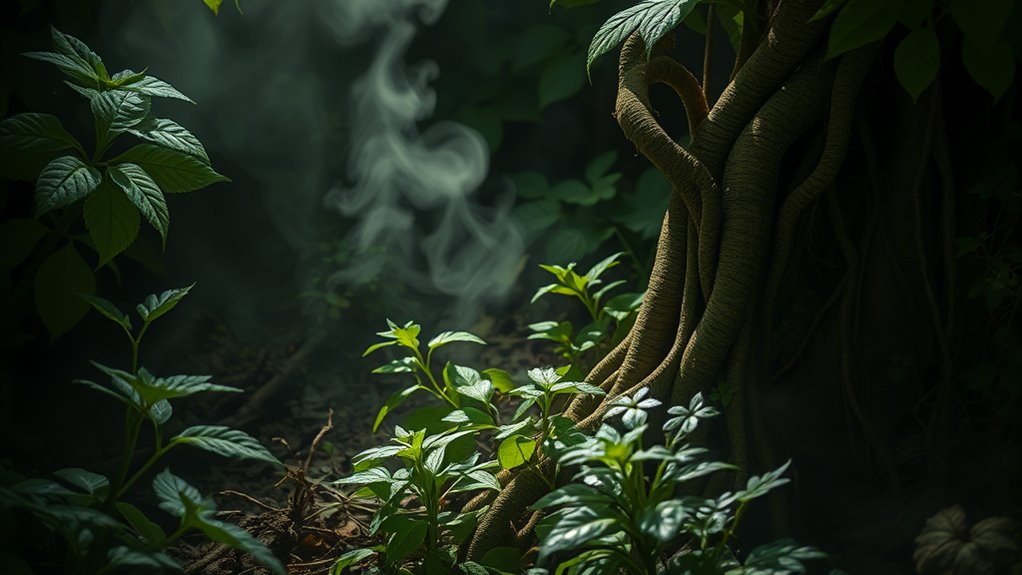
Have you ever wondered why the mandrake root has long captivated legends and folklore? Its striking appearance, resembling a human figure, sparks curiosity and fear alike. Ancient texts suggest that the root possesses powerful properties, often linked to magic, healing, and even curses. People believed it emitted a deadly scream when uprooted, capable of killing or driving mad anyone nearby. This fear led to secretive harvesting methods to avoid its deadly call. Its reputation as a mystical plant grew across cultures, symbolizing both danger and divine power. The mandrake’s allure lies in its mysterious origins and the stories that surround it, making it one of the most fascinating mythical herbs. Its legend endures, blending myth with the mystique of ancient herbal lore.
The Moly of Odysseus: A Herb of Protection and Power
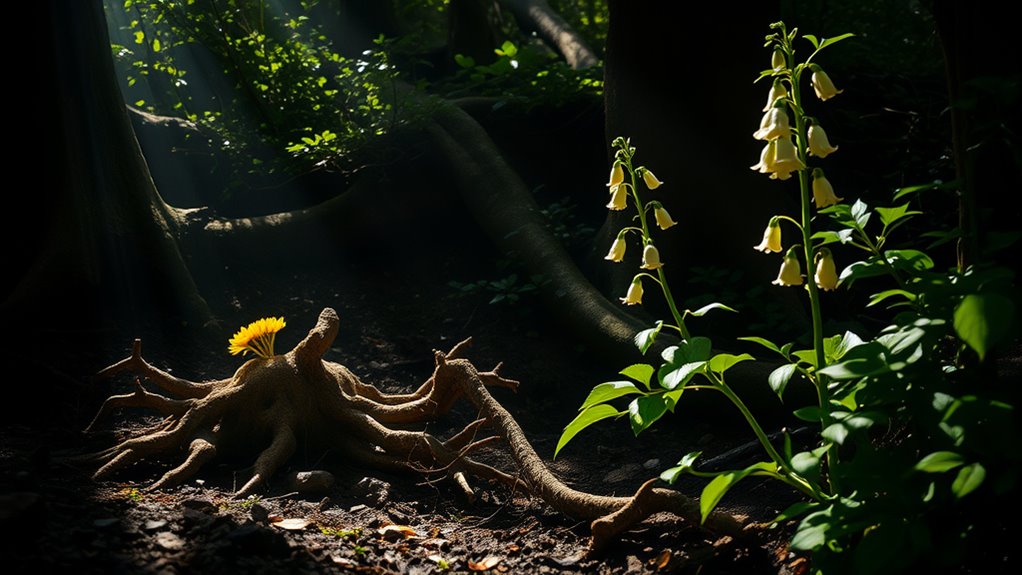
In the epic tale of Odysseus, the herb Moly emerges as a essential tool for protection against dark magic. This legendary plant helps you resist Circe’s spells and other enchantments, making it crucial for survival in mythic adventures. Moly’s roots are said to be white and black, with a black, smooth stem and a white blossom, symbolizing its power to ward off evil. Its magic lies in its ability to shield you from harmful enchantments and curses, giving you confidence and safety during perilous encounters. You can recognize Moly by its distinctive appearance and its role as a symbol of protection. Learning to identify and use Moly can turn the tide in dangerous situations, keeping you safe from supernatural threats.
Moly’s white blossom and black root protect you from dark magic and curses in mythic adventures.
- Recognized by its white flower and black root
- Used to counteract dark magic and curses
- Symbolizes protection and power in mythic lore
The Poisonous Allure of Deadly Nightshade (Belladonna)
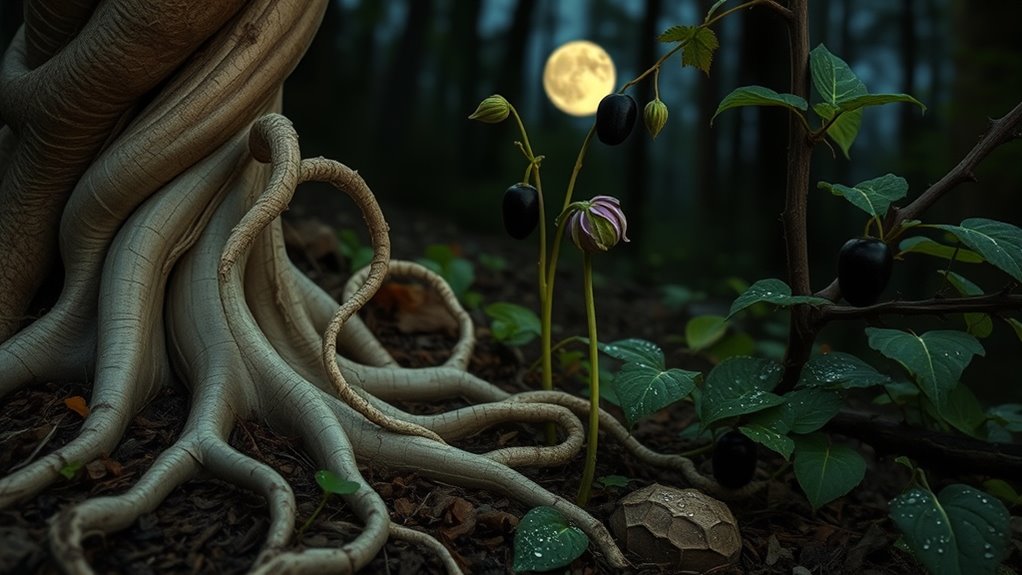
Did you know that Deadly Nightshade, also known as Belladonna, has captivated both myth and medicine with its seductive charm and lethal potency? Its dark berries and glossy leaves hide a powerful toxin called atropine, scopolamine, and hyoscyamine. Historically, it was used in small doses as a medicine, but miscalculations could be fatal. Its allure lies in its mysterious reputation—sometimes seen as a beauty potion, other times as a poison. The plant’s toxic properties made it a tool for assassins and witches alike. Despite its dangerous nature, scientists study Belladonna to develop medications for anesthesia and pain relief. Its dual nature, deadly yet medicinal, cements its place in legends and history as a symbol of both temptation and peril.
The Mystical Properties of Wormwood and Absinthe
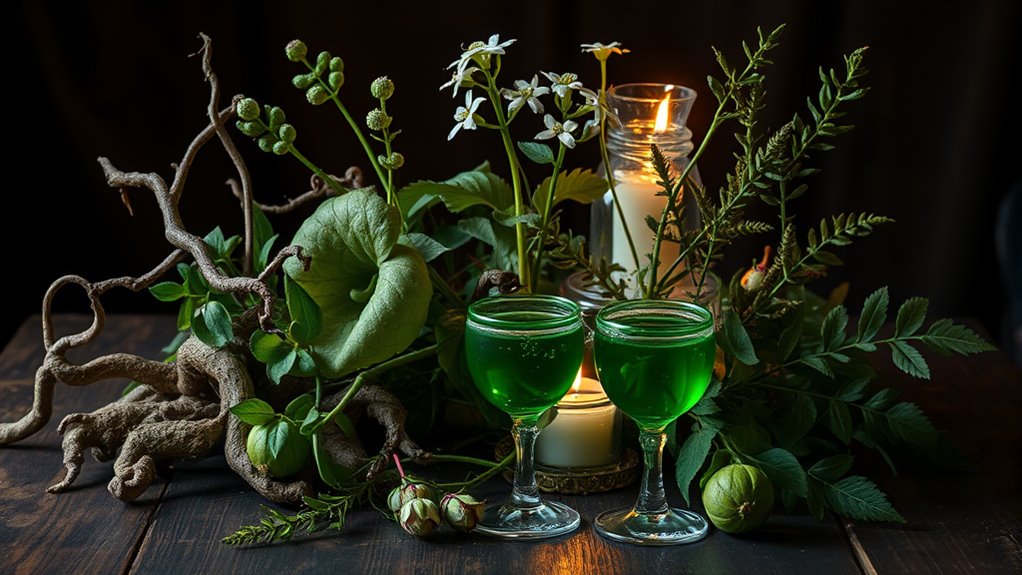
Wormwood has a rich history as a key ingredient in traditional medicines and ritual practices, shaping its mystical reputation. When combined with alcohol to make absinthe, it gained fame as both a revered beverage and a symbol of bohemian culture. However, you should also be aware of the psychoactive effects and potential risks associated with its use.
Historical Use and Significance
Throughout history, Wormwood has been revered not only for its medicinal properties but also for its mystical significance, especially in the creation of absinthe. People believed it held protective and spiritual powers, often used in rituals and healing practices. Its association with mysticism grew during the 19th and early 20th centuries when absinthe became popular among artists and bohemians. This herbal spirit was thought to inspire creativity and elevate consciousness. Its role extended beyond recreational use, symbolizing a connection to the divine and the supernatural. Wormwood’s significance was so profound that it influenced cultural beliefs and even legal regulations. Discover how this legendary herb shaped history and cultural perceptions of magic, healing, and mysticism in different societies.
- Used in ancient Egyptian and Greek medicines
- Central to European herbal traditions
- Symbolized protection against evil spirits
Psychoactive Effects and Risks
While wormwood has long been celebrated for its medicinal and mystical qualities, its psychoactive effects—particularly when used in absinthe—have sparked both fascination and concern. Historically, absinthe was believed to cause hallucinations and madness, mainly due to thujone, a compound in wormwood. Modern research shows that moderate consumption poses minimal risk, but high doses can lead to adverse effects like seizures, hallucinations, and kidney damage. Thujone acts on the brain’s GABA receptors, which can disrupt normal neural activity. Because of these risks, absinthe was banned in many countries for decades. Today, regulated formulations contain only trace amounts of thujone. Still, excessive use remains dangerous, so always consume such herbal preparations with caution and awareness of their potent effects.
The Sacred and Symbolic Herb: Sage Through Ages
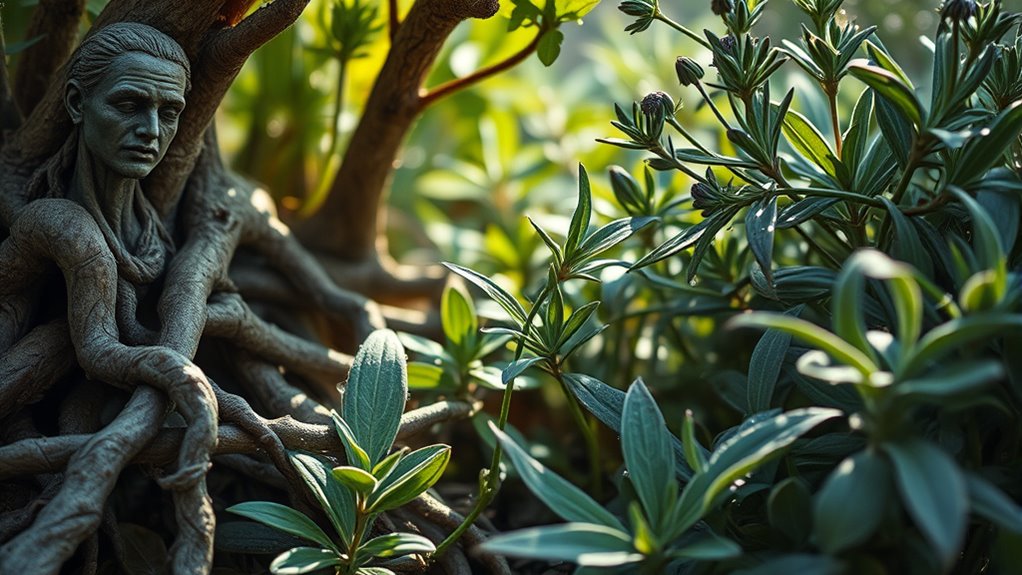
Sage has long held a special place in human history, revered not just for its culinary and medicinal uses but also for its symbolic significance. Throughout the ages, it has represented wisdom, protection, and purification. In ancient cultures, sage was burned in rituals to ward off evil spirits and cleanse spaces. Its name comes from the Latin “salvia,” meaning “to save” or “heal.” You’ll find sage intertwined with spiritual practices, from Native American ceremonies to European folklore. Its enduring symbolism highlights its importance beyond the physical.
- Used in sacred rituals for protection and cleansing
- Symbolizes wisdom and knowledge across cultures
- Featured in folklore and spiritual traditions worldwide
Plants of the Underworld: Mandrake, Aconite, and Beyond
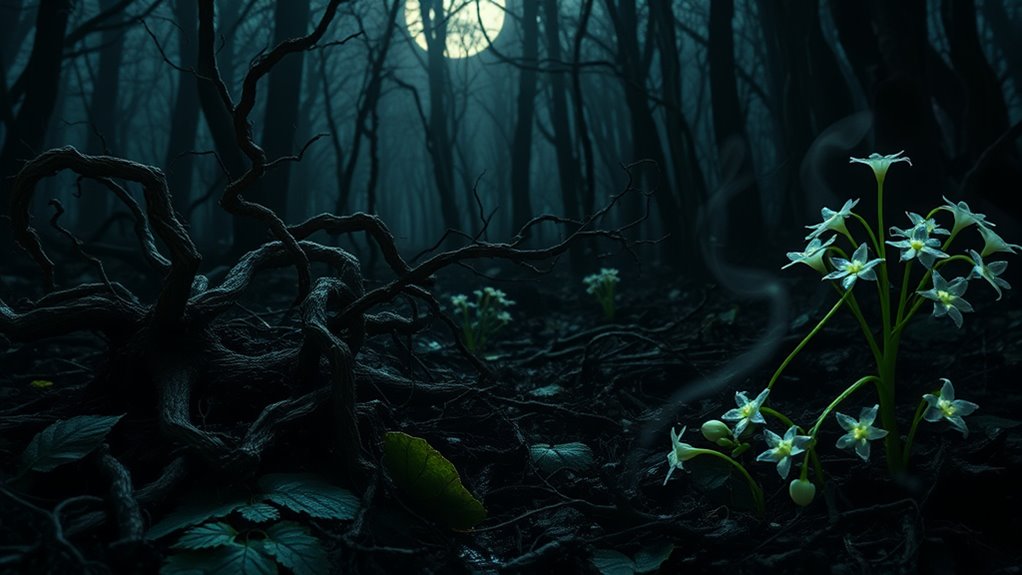
You’re about to explore the mysterious world of underworld plants like mandrake and aconite, whose roots and toxins have inspired countless legends. Mandrake’s mystical roots are said to possess powerful, even magical, properties, while aconite’s deadly history warns of nature’s darker side. These rare plants carry stories that blend myth and caution, revealing their deep roots in folklore and lore.
Mandrake’s Mystical Roots
Mandrake’s roots have long been shrouded in mystery and superstition, earning a reputation as a powerful and even dangerous plant. Throughout history, people believed its roots held magical properties, capable of healing or harming. The roots resemble human figures, fueling legends that they possess human-like powers.
Here are some fascinating facts about mandrake’s mystical roots:
- Legends claim the roots scream when pulled from the ground, causing madness or death.
- Ancient texts associate mandrake with protection against evil spirits and curses.
- Traditional uses include talismans and charms, believed to bring good luck or ward off harm.
You’ll find that mandrake’s roots continue to captivate, blending myth with the plant’s real botanical intrigue.
Aconite’s Deadly History
Aconite, often called the “wolf’s bane,” has a notorious reputation for its deadly potency throughout history. Its roots, leaves, and flowers contain powerful toxins that can cause paralysis, respiratory failure, and death if ingested or improperly handled. Ancient cultures used aconite as a poison for hunting and warfare, valuing its ability to quickly incapacitate enemies or prey. In medieval times, it was associated with assassinations and dark magic, fueling fears of its lethal potential. Despite its toxicity, some legends suggest ancient healers used tiny doses for medicinal purposes, though this was incredibly risky. Today, aconite remains a symbol of danger and death, a plant to be respected and avoided unless expertly prepared. Its deadly history reminds us of nature’s dual power—both healing and harm.
Lore of Rare Plants
Beneath the surface of myth and legend lie plants that thrive in the shadows, often associated with the underworld and its mysteries. These rare plants carry stories of power, danger, and enchantment. The mandrake’s human-like root sparks tales of magic and deadly allure, while aconite’s toxic reputation links it to dark rituals. Beyond these, others like the black lotus or belladonna hold secret histories and mystical uses, often shrouded in fear and reverence. Their lore is filled with warnings, spells, and legends passed down through centuries. Understanding these plants reveals a connection to ancient beliefs about life, death, and the unseen forces that govern both worlds.
- Mandrake’s mythic origins and symbolic power
- Aconite’s role in ancient rituals and curses
- Hidden stories of plants like belladonna and black lotus
Frequently Asked Questions
Are There Any Modern Medicinal Uses for These Legendary Herbs?
You won’t find direct modern medicinal uses for mandrake, moly, or other legendary herbs, as their mythic qualities often outweigh scientific validation. However, some compounds once thought to be in these plants have inspired research into pharmaceuticals, like alkaloids in mandrake that resemble modern anesthetics. Still, due to toxicity risks, these plants are not used in contemporary medicine, and their legendary status mainly influences herbal folklore today.
How Did Ancient Cultures Historically Identify and Differentiate These Mythical Plants?
You’d look for distinctive features, like mandrake’s human-shaped root or moly’s shiny black bulb, to identify these plants. Ancient cultures relied on observation, myths, and stories passed down through generations, often combining visual clues with symbolic meanings. They also used ritualistic or divinatory practices to differentiate them, trusting traditional knowledge rather than scientific methods. This blend of observation and legend helped distinguish these mythical plants in historical contexts.
What Are the Risks of Attempting to Cultivate These Rare Herbs Today?
You risk dangerous consequences when attempting to cultivate these rare herbs today. Imagining twisting roots like human limbs or mysterious, fragrant leaves, you might encounter toxic fumes or unsettling reactions. Handling them without knowledge can lead to poisoning or allergic reactions. Their elusive nature means you could waste time or harm yourself, so always approach with caution, respecting their legendary power and the myths that surround them.
Are There Any Known Cultural Taboos or Superstitions Associated With These Plants?
You should know that many cultures have superstitions or taboos around these plants, often viewing them as dangerous or cursed. Some believe disturbing or harvesting them brings bad luck or supernatural punishment. In certain traditions, these herbs are considered sacred or taboo to handle without specific rituals. Respect these beliefs, and approach any interaction with caution, understanding that such cultural views influence how these plants are perceived and treated.
Can These Herbs Be Safely Incorporated Into Contemporary Herbal Practices?
You can incorporate these herbs into contemporary practices, but you should do so with caution. While some believe they hold mystical properties, others warn of potential risks due to their toxic and unpredictable effects. Always research thoroughly, consult with knowledgeable herbalists, and respect cultural taboos and superstitions. Remember, even legend has limits—what’s safe in myth may not be safe in reality. Use these plants wisely and responsibly.
Conclusion
As you explore these legendary herbs, you embrace the whispers of ancient magic and hidden truths. These plants, cloaked in mystery and myth, invite you to see nature’s quiet power and timeless stories. Though their allure might seem delicate, their secrets run deep. By understanding their gentle symbolism, you connect with a world where nature’s quiet wisdom continues to enchant and inspire, softly guiding those who listen with open hearts.