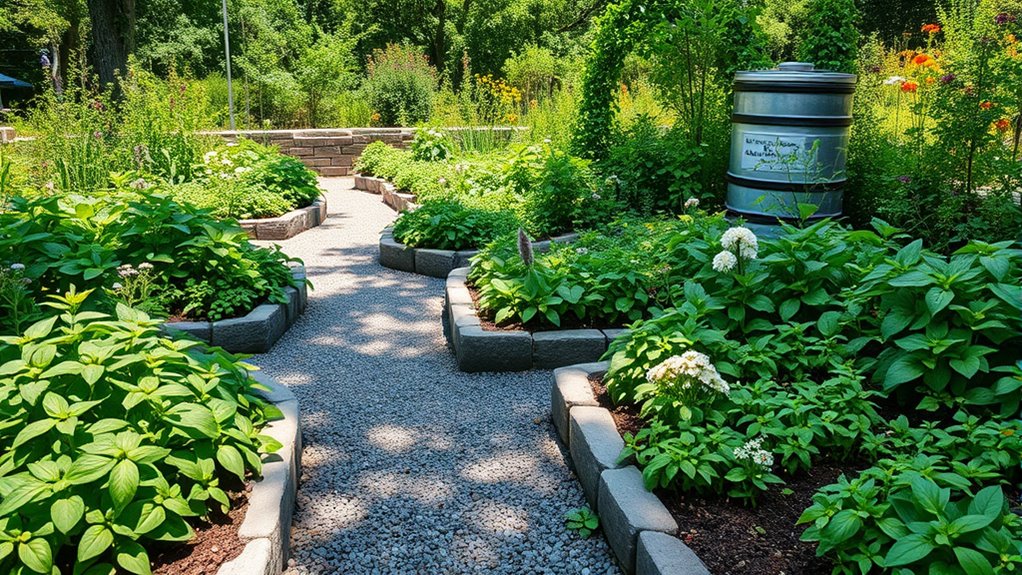

To design a medicinal garden ecosystem using permaculture herbology, focus on working with nature by selecting resilient, climate-adapted plants and arranging them in layered, diverse groupings. Incorporate companion planting to naturally control pests and improve growth. Manage water efficiently with rain harvesting and contouring, while enriching the soil with organic practices. Creating microclimates and supporting beneficial insects enhances plant health. Keep sustainability in mind, and explore further to build a thriving, self-sufficient herbal sanctuary.
Key Takeaways
- Observe site conditions to select and arrange resilient, diverse herbs in layered, microclimate-friendly layouts for optimal growth.
- Incorporate companion planting to enhance medicinal properties, deter pests, and promote beneficial plant interactions.
- Use natural water management techniques like swales and rain harvesting to sustain hydration and support ecosystem health.
- Harvest herbs at peak potency, then preserve through drying or infusions, sharing surplus to foster community and sustainable practices.
- Design a self-sustaining ecosystem that enhances plant resilience, reduces synthetic inputs, and aligns with permaculture principles.
Understanding Permaculture Principles for Herbal Gardens

Understanding permaculture principles is essential for creating sustainable and productive herbal gardens. These principles guide you to work with nature rather than against it, promoting resilience and efficiency. You’ll focus on observing your site’s unique conditions, including sunlight, water flow, and soil quality. This helps you make informed decisions about plant placement and design. Emphasize diversity, mixing different herbs to support pest control and soil health. Use renewable resources, conserve water, and minimize waste. By applying these principles, you create a self-sustaining ecosystem that reduces maintenance and enhances productivity. Permaculture encourages you to think long-term, designing gardens that adapt and thrive over time without excessive inputs. This approach ensures your herbal garden remains healthy, productive, and environmentally harmonious.
Selecting and Arranging Medicinal Plants for Resilience
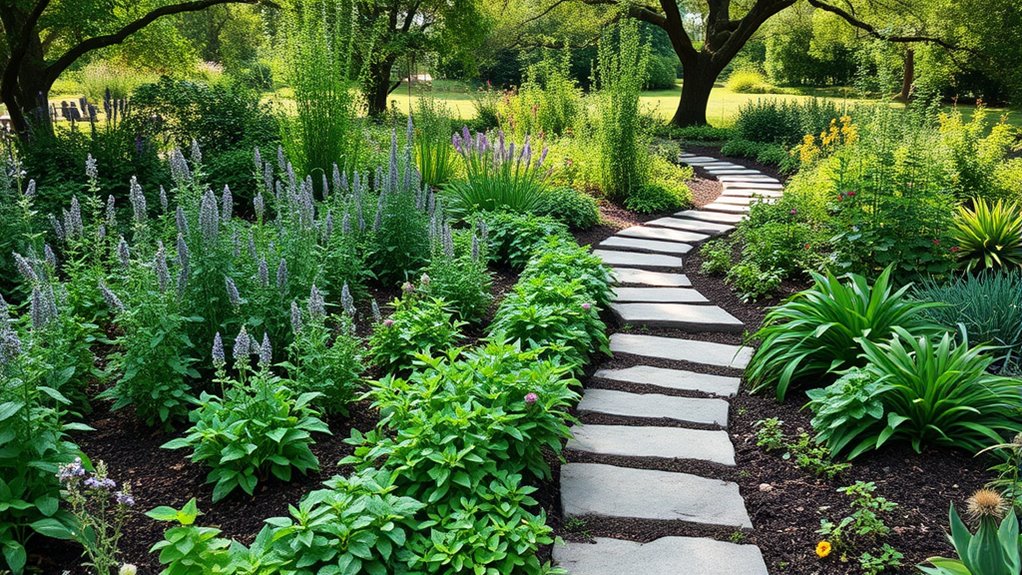
When selecting and arranging medicinal plants, prioritizing resilience guarantees your garden can withstand environmental stresses and pests while maintaining health and productivity. Choose hardy species suited to your climate, such as echinacea or yarrow, which thrive with minimal intervention. Mix plants with diverse root systems to improve soil stability and reduce disease spread. Incorporate plants with natural pest resistance, like lavender or thyme, to lower chemical reliance. Arrange plants in a layered design, combining tall, medium, and low-growing varieties to maximize space and create microclimates that protect delicate herbs.
- Select adaptable plants that tolerate drought and shade
- Use companion plants to naturally deter pests
- Rotate plant placement to prevent disease buildup
- Incorporate native species for stronger adaptability
Incorporating Companion Planting to Enhance Growth and Healing
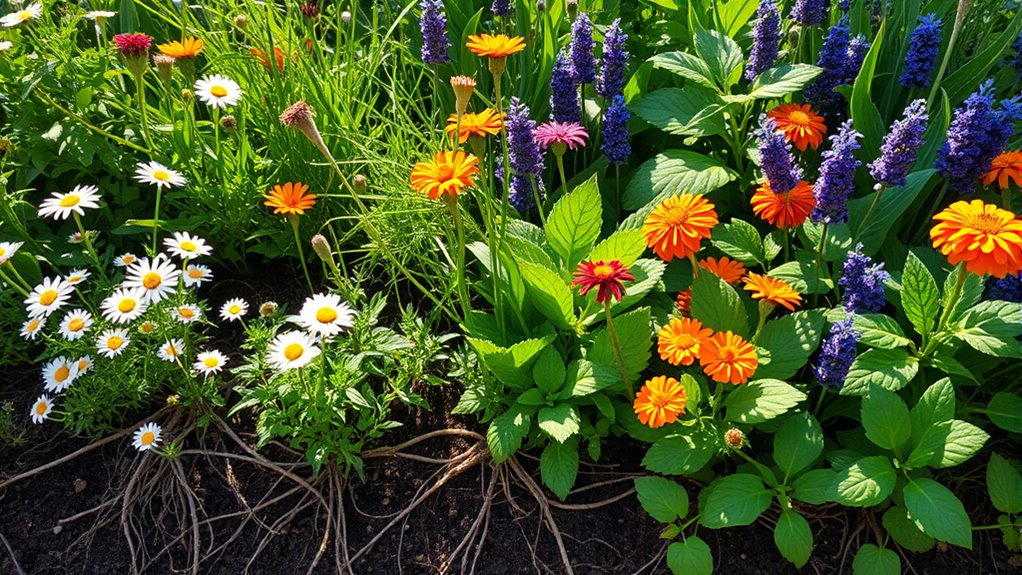
By pairing plants thoughtfully, you can boost their growth and healing properties through synergistic relationships. Certain combinations also naturally deter pests, reducing the need for chemicals. Exploring these companion plantings helps create a resilient, thriving herb garden.
Synergistic Plant Pairings
Pairing plants strategically in your garden can substantially boost their growth and healing properties. By understanding synergistic relationships, you can create a thriving, medicinal ecosystem. For example, pairing basil with tomatoes not only enhances flavor but also repels pests. Marigolds planted near herbs like chamomile improve soil health and deter harmful insects. Incorporating plant combinations such as yarrow and comfrey boosts nutrient uptake and accelerates healing. Additionally, planting lavender alongside rosemary can improve aromatic quality and promote mutual growth. These pairings maximize the benefits of each plant, creating a self-sustaining environment. Remember, choosing complementary plants that support each other’s health leads to a resilient, productive medicinal garden. Embrace these synergistic pairings to amplify growth, healing, and ecosystem balance.
Pest Deterrent Relationships
Incorporating companion planting into your garden naturally deters pests while supporting healthy plant growth and healing. By strategically pairing herbs and plants, you create a protective environment that confuses or repels common pests. For example, planting marigolds alongside your medicinal herbs keeps nematodes and beetles at bay, while basil can deter mosquitoes and flies. These relationships not only reduce the need for chemical controls but also promote a balanced ecosystem. You’ll find that pest deterrent companions improve overall plant vigor and resilience, making your garden more productive and healing-focused. Regularly observing pest activity and adjusting your plant pairings guarantees your garden remains a thriving, pest-resistant sanctuary. Embracing these natural relationships enhances your garden’s sustainability and medicinal potency.
Designing Water Management and Soil Fertility Strategies
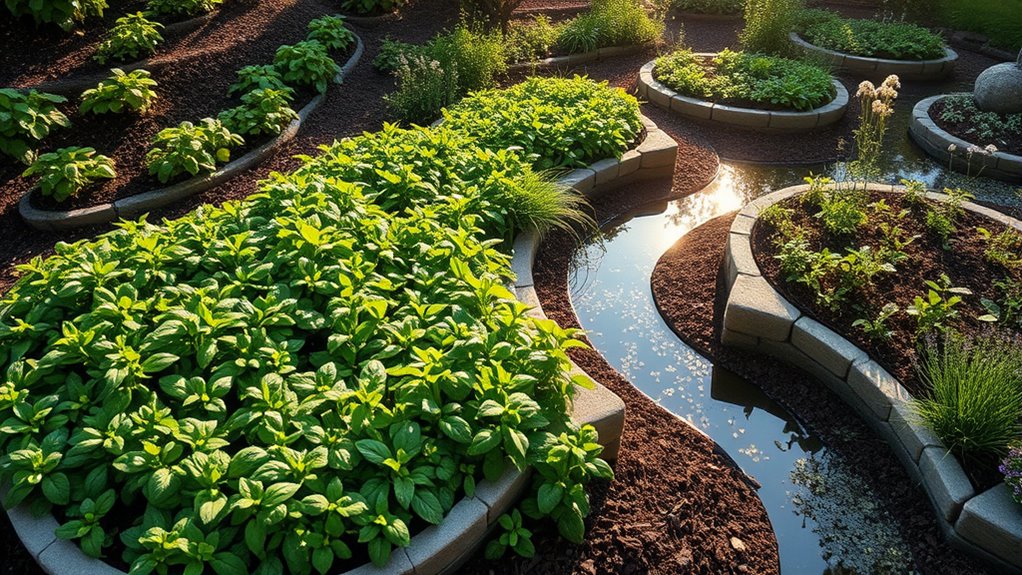
Effective water management and soil fertility strategies are essential for creating a resilient permaculture system. You want to maximize resource efficiency and maintain healthy plants. Start by harvesting rainwater with swales or rain barrels to reduce runoff and guarantee a steady water supply. Incorporate compost and organic mulches to enhance soil fertility naturally. Use plant guilds to improve nutrient cycling and boost soil health. Consider key practices like:
- Building contour beds to slow water flow and increase infiltration
- Creating ponds or water catchments for storage and wildlife habitat
- Incorporating nitrogen-fixing plants to enrich the soil
- Using sheet mulching to suppress weeds and maintain moisture
These strategies help establish a sustainable, productive ecosystem that supports your medicinal herbs effectively.
Creating Microclimates and Natural Pest Control Systems
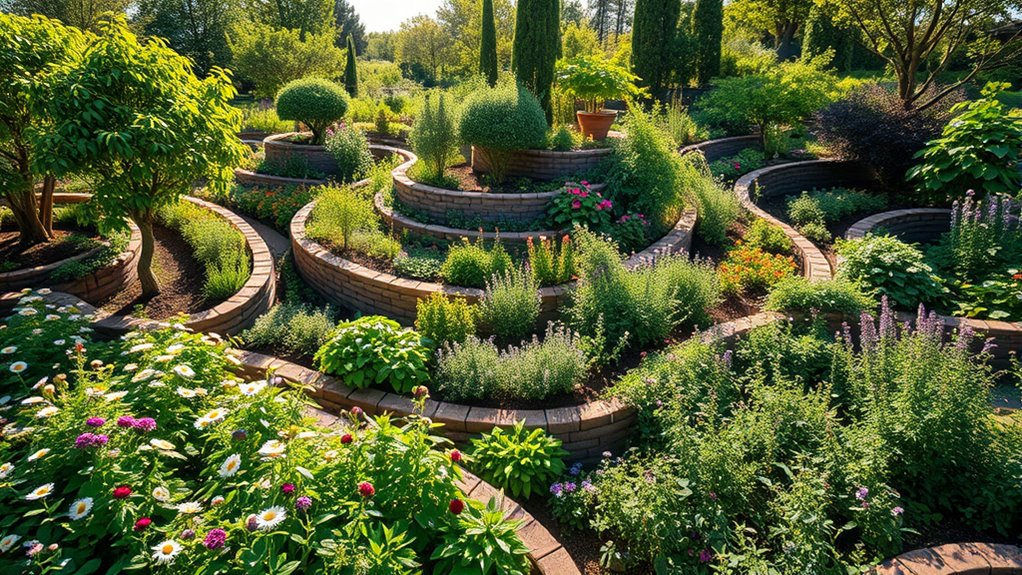
Creating microclimates and natural pest control systems is essential for enhancing your permaculture garden’s resilience. By shaping small-scale environments, you can protect sensitive herbs from harsh weather and temperature fluctuations. Planting windbreaks, such as shrubs or taller plants, reduces wind chill and creates warmer spots. Using stone walls or berms can increase sunlight and retain heat, perfect for heat-loving herbs. To naturally control pests, incorporate companion planting—pair herbs with pest-repelling plants like marigolds or basil. Attract beneficial insects by planting flowering species nearby, encouraging natural predators to thrive. Mulching helps maintain soil moisture and suppress weeds, reducing pest habitats. These strategies work together to create a balanced ecosystem, minimizing pests while promoting healthy, vigorous herbs.
Implementing Sustainable Maintenance Practices
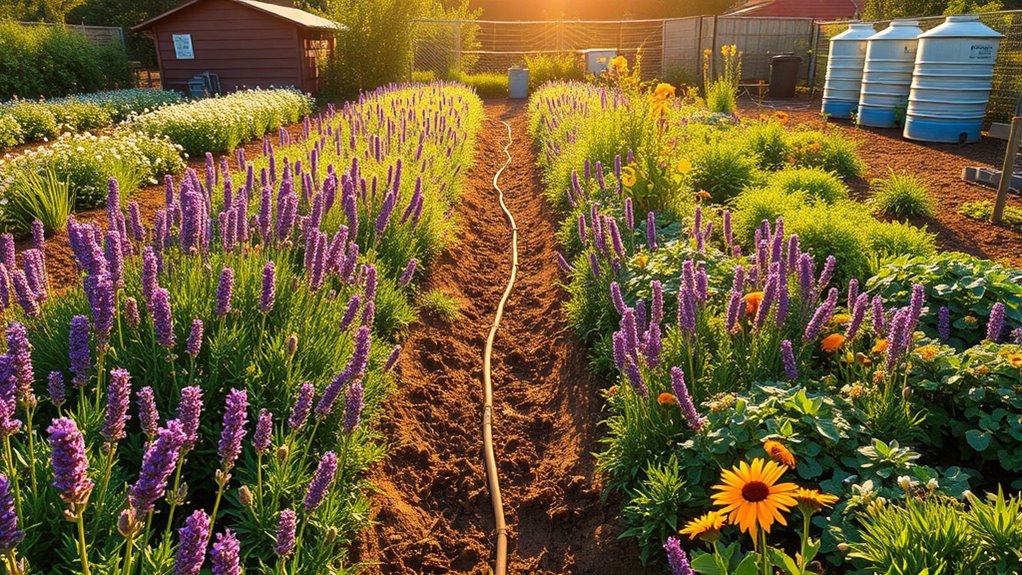
You can maintain your herb garden sustainably by applying organic mulching techniques that improve soil health and reduce weeds. Companion planting strategies also help create a balanced ecosystem, naturally deterring pests and supporting plant growth. Together, these practices guarantee your garden stays productive with minimal environmental impact.
Organic Mulching Techniques
Have you considered how organic mulching can enhance the sustainability of your garden? Mulching conserves moisture, suppresses weeds, and improves soil health naturally. To implement effective techniques, start by selecting materials like straw, wood chips, or leaf mold that decompose over time. Spread a 2-3 inch layer around your herbs, keeping it a few inches away from plant stems to prevent rot. Replenish the mulch annually or as needed to maintain its benefits. Organic mulching also encourages beneficial microbes and earthworms, enriching your soil ecosystem.
- Use locally sourced, biodegradable materials
- Keep mulch layers even and thick enough for weed suppression
- Avoid plastic or synthetic mulches that hinder soil health
- Regularly check and refresh mulch for ongoing benefits
Companion Planting Strategies
Implementing companion planting strategies can considerably boost your garden’s sustainability by naturally managing pests, enhancing soil fertility, and reducing the need for chemical interventions. By pairing plants thoughtfully, you create beneficial relationships that support your medicinal herbs’ growth and health. For example, planting basil near tomatoes can repel pests while attracting helpful insects. Marigolds can deter nematodes and aphids, protecting nearby plants. Legumes like clover or beans fix nitrogen in the soil, enriching it for neighboring herbs. You should observe plant interactions and adjust accordingly, ensuring each species benefits from its companions. Companion planting also minimizes the use of synthetic pesticides and fertilizers, fostering a healthier ecosystem. Embracing these strategies helps you cultivate a resilient, self-sustaining garden that aligns with permaculture principles.
Harvesting, Preserving, and Sharing Your Herbal Bounty
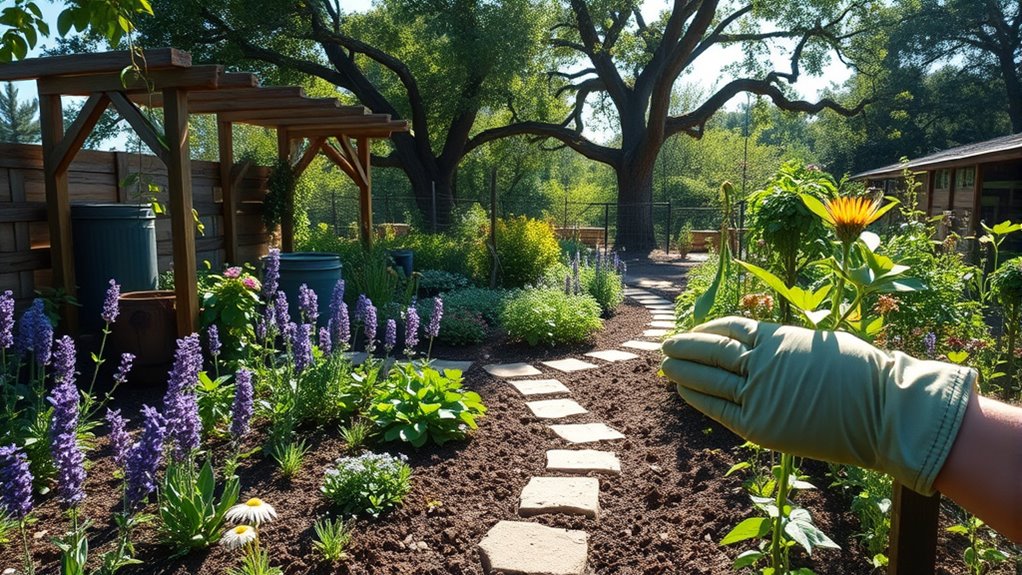
Harvesting the herbs at the right time guarantees maximum potency and flavor, so paying close attention to their growth stages is crucial. When herbs reach their peak, cut them carefully to preserve essential oils and nutrients. To preserve your bounty, consider drying herbs in a well-ventilated area or making tinctures and infusions for long-term use. Sharing your herbs with friends or community creates a sense of connection and spreads knowledge. Here are some tips to get started:
- Dry herbs properly in a dark, dry space to maintain potency
- Store preserved herbs in airtight containers away from sunlight
- Use fresh herbs promptly or preserve them for future use
- Share excess with neighbors or at local herb swaps
Practicing mindful harvesting, preserving, and sharing ensures your herbal garden thrives and benefits others.
Frequently Asked Questions
How Can I Adapt Permaculture Herbal Gardens to Urban Settings?
You can adapt permaculture herbal gardens to urban settings by utilizing small spaces creatively. Plant herbs in containers, window boxes, or vertical gardens to maximize limited areas. Focus on native and drought-tolerant species to reduce water use and maintenance. Incorporate companion planting to improve yields and pest control. Use rooftops, balconies, and community plots to establish your garden, creating a sustainable, medicinal oasis amid urban environments.
What Are Common Mistakes to Avoid When Designing a Herbal Ecosystem?
Don’t bite off more than you can chew when designing your herbal ecosystem. Avoid overcrowding plants, which can lead to competition and poor growth. Steer clear of ignoring sunlight, water needs, or soil conditions, as these are essential for healthy herbs. Also, don’t forget to plan for maintenance; neglecting it can turn your garden into a jungle. Keep things balanced, and your herbal ecosystem will thrive.
How Do I Prioritize Plant Selection for Medicinal Purposes?
You should prioritize plants based on your health needs and local climate. Start by identifying herbs that address your primary ailments and grow well in your area. Consider their growth habits, companion plants, and maintenance requirements. Select medicinal plants that are versatile and easy to harvest. This approach guarantees your garden remains functional, sustainable, and tailored to your specific health goals, making your herbal ecosystem both effective and manageable.
What Safety Considerations Are Essential for Harvesting Medicinal Herbs?
Think of it like walking a tightrope—you must stay balanced. Always wear gloves and wash herbs thoroughly to avoid contamination. Identify plants correctly to prevent poisonous varieties from sneaking in. Use clean tools, and avoid harvesting near busy roads or contaminated areas. Remember, even nature’s remedies can pose risks if mishandled, so respect the plants and safety protocols. Your care guarantees healing, not harm.
How Can I Ensure Year-Round Herbal Availability in My Garden?
To guarantee year-round herbal availability, you should plan a diverse garden with herbs that thrive in different seasons. Use succession planting to stagger harvest times, and incorporate cold-hardy varieties or protected microclimates like greenhouses or cold frames. Additionally, preserve herbs through drying or freezing for off-season use. Regularly assess your garden’s growth cycles and adapt your planting schedule to maintain a continuous supply of medicinal herbs.
Conclusion
As you bring your medicinal garden to life, every choice shapes its resilience and healing power. But the true magic lies in what you discover along the way—unexpected plant allies, natural pest defenses, and sustainable habits. Will your garden become a sanctuary of wellness or a thriving, self-sustaining ecosystem? The next step is yours—dive deeper, experiment, and access the full potential of your permaculture herbology journey. The possibilities are waiting to be revealed.