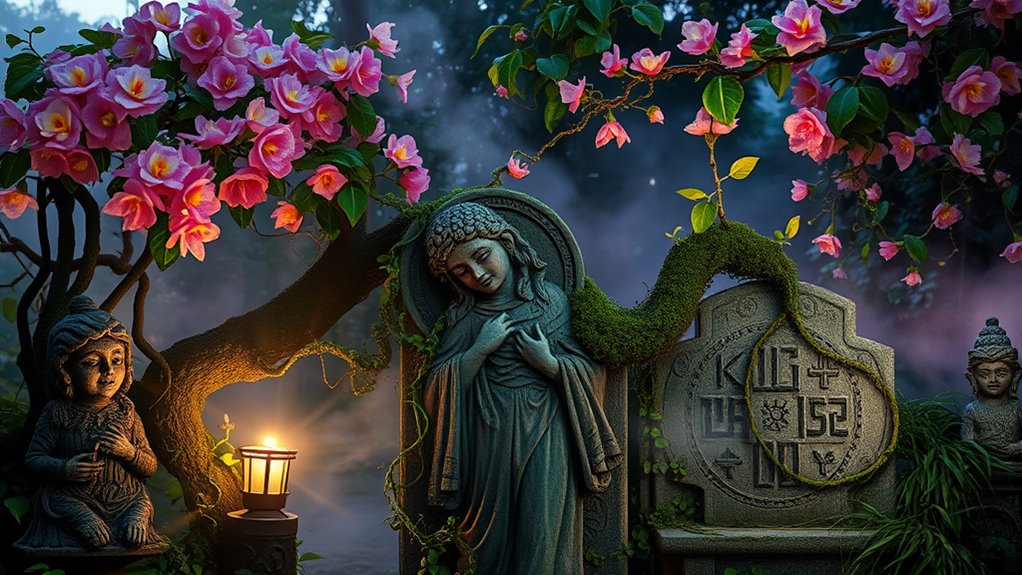

Plants play a essential role in mythology and magic worldwide, symbolizing divine power, cosmic order, and spiritual connection. They are used in rituals, healing practices, and creation stories, embodying deities, spirits, and mystical forces. Sacred trees, herbs, and mythical plants appear in legends across cultures, representing themes like rebirth, protection, and immortality. To explore how plants influence spiritual traditions and magical practices globally, uncover the fascinating stories and symbols tied to them.
Key Takeaways
- Sacred trees and plants symbolize divine connection, cosmic harmony, and spiritual authority across diverse cultures worldwide.
- Herbs like sage, frankincense, and mugwort play vital roles in rituals, healing, and spiritual cleansing in various mythologies.
- Specific plants, such as Yggdrasil or the lotus, serve as cosmological symbols, representing the universe’s structure and rebirth themes.
- Mythological legends often feature enchanted plants with magical powers, embodying protection, immortality, or divine wisdom.
- The cultural classification of plants reflects their spiritual significance, influencing rituals, folklore, and traditional practices globally.
Sacred Trees and Their Divine Significance

Have you ever wondered why trees hold such spiritual importance across different cultures? It’s because many societies practice tree worship, believing these majestic beings are divine or inhabited by spirits. Sacred groves, often set aside as natural temples, serve as places of worship and reverence. These groves symbolize life, fertility, and connection to the divine, making them central to rituals and ceremonies. In Hindu traditions, the Peepal and Banyan trees are sacred, while in Norse mythology, Yggdrasil connects different worlds. Across cultures, sacred trees embody the universe’s harmony and serve as a physical link to the divine sphere. This reverence underscores a universal recognition of trees as symbols of spiritual power and life’s eternal cycle. Additionally, sacred trees often represent the axis mundi—the world center—fostering a sense of unity between heaven, earth, and the underworld. Many cultures also believe that these trees possess protective qualities, which enhance their spiritual significance and connection to divine forces. These qualities contribute to the belief that sacred trees can serve as spiritual safeguards in various traditions. Such trees are often believed to possess healing properties, reinforcing their sacred status in various traditions. Moreover, some traditions interpret these trees as cosmic symbols, illustrating the interconnectedness of all existence.
Magical Herbs in Traditional Medicine and Rituals
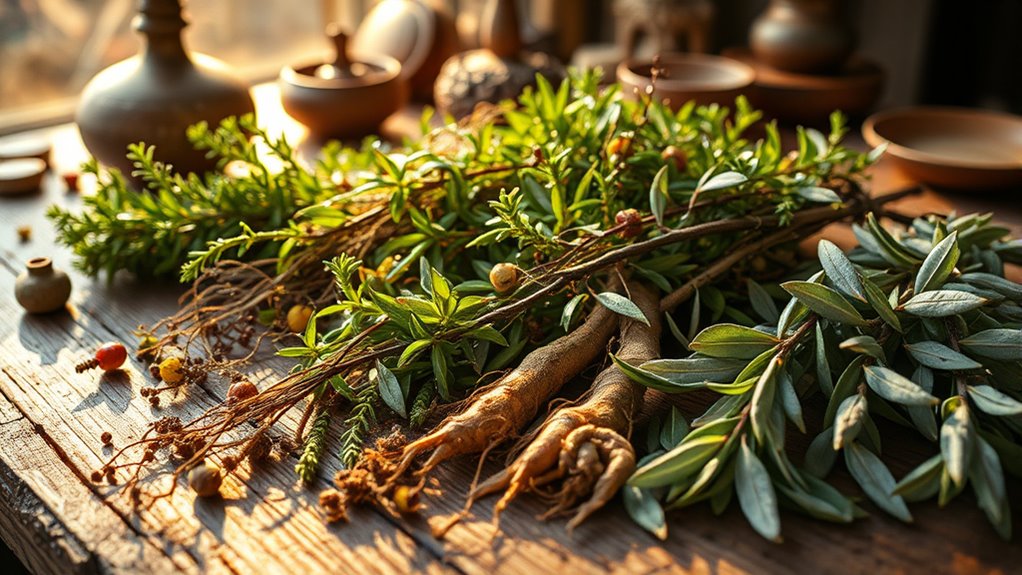
You’ll find that many sacred plants play a crucial role in rituals, believed to connect you with divine forces. The healing properties of herbs have been valued for centuries, offering natural remedies and spiritual cleansing. These botanicals hold deep cultural significance, shaping traditions and beliefs across different societies. Additionally, some herbs are used in traditional medicine practices worldwide, further illustrating their importance in health and spirituality. The regulations surrounding herbal use can also influence how these plants are integrated into cultural practices. Exploring herbal safety guidelines is essential for ensuring respectful and effective use of these sacred plants, especially considering the cultural adaptations observed in different regions.
Sacred Plants in Rituals
Throughout history, sacred plants have played a pivotal role in rituals and traditional medicine, serving as powerful symbols of spiritual connection and healing. When you use medicinal plants or ceremonial herbs, you tap into centuries of cultural significance. These plants often symbolize divine energy or protection during sacred ceremonies. For example, you might:
- Use *sage* for cleansing negative energies in spiritual rituals.
- Incorporate *cedar* or *mugwort* in offerings to honor ancestors.
- Burn *frankincense* or *myrrh* to create a sacred atmosphere during ceremonies.
- Recognize the Cultural symbolism of these plants and understanding of auditory feedback therapy can deepen your connection to traditional practices and enhance your spiritual experiences.
- Respecting environmental considerations ensures that these sacred plants continue to be available for future generations. Additionally, understanding the botanical properties of these herbs can enhance their effectiveness in rituals and healing practices.
These plants aren’t just tools—they embody the spiritual essence of the rituals they’re part of. Their use helps deepen your connection to tradition, fostering a sense of unity and reverence.
Healing Properties of Herbs
Many sacred plants used in rituals are also valued for their powerful healing properties. Throughout history, people have relied on these botanical allies to create herbal remedies that address various ailments. Their medicinal properties often include anti-inflammatory, antiseptic, and calming effects, making them essential in traditional medicine systems worldwide. For example, herbs like chamomile soothe nerves, while ginger aids digestion. By harnessing these plants’ natural healing qualities, you can incorporate them into your wellness routine or ritual practices. These herbs not only serve spiritual purposes but also provide tangible health benefits, bridging the gap between magic and medicine. Recognizing their healing properties deepens your understanding of the cultural significance and practical uses of sacred plants across different traditions, and understanding sound design techniques can help enhance the way these natural remedies are presented in media. Additionally, many of these herbs are included in traditional medicine systems that have been developed over centuries, reflecting diverse cultural approaches to health and healing. Moreover, scientific research continues to validate their medicinal properties, strengthening the connection between traditional knowledge and modern science.
Cultural Significance of Botanicals
Botanicals have long played an essential role in shaping cultural identities through their use in traditional medicine and rituals. Their significance often hinges on botanical classification, which helps identify and categorize plants for specific uses. As you explore different traditions, you’ll find that plant domestication has made certain herbs more accessible and potent for rituals. Here are three ways botanicals hold cultural importance:
- They serve as symbols of spiritual connection in rituals across cultures.
- Traditional medicine relies on specific plants, with classifications guiding their use.
- Plant domestication has transformed wild herbs into cultivated staples for healing and ceremonies. Additionally, the process of plant domestication has facilitated the development of cultivated herbs with enhanced properties for ritualistic practices.
- The categorization of plants often influences their cultural symbolism and perceived powers within communities. Additionally, understanding botanical classification aids in preserving traditional knowledge and practices.
Furthermore, the classification systems used to categorize plants often reflect deeper cultural values and beliefs about their roles in society. Understanding these aspects reveals how botanicals influence cultural practices and beliefs worldwide, highlighting their enduring magical and medicinal significance. A well-rounded understanding of botanical diversity can deepen appreciation for the spiritual and medicinal roles of plants across various cultures.
Plants as Symbols of Deity and Spiritual Power
Plants have long served as powerful symbols of deity and spiritual authority across cultures. You can see this in how plant symbolism plays a key role in many religious practices, where specific plants represent divine power or sacredness. Throughout history, communities have used plants in deity worship, believing they embody the essence of gods or spirits. For example, sacred trees or flowers often serve as direct links to the divine, symbolizing spiritual authority and divine presence. These plants aren’t just decorative; they carry deep spiritual meaning, reinforcing the connection between humans and higher powers. Additionally, the use of plants in rituals often involves specific sacred plants that are believed to possess divine qualities, further emphasizing their spiritual significance. By venerating certain plants, people acknowledge their role as symbols of divine energy and spiritual strength, making plants essential in rituals and religious ceremonies worldwide.
Mythical Plants in Folklore and Legends

Throughout history, many legends highlight enchanted plants believed to possess magical powers. You’ll find stories of sacred plants revered across different cultures, each with unique mystical qualities. Exploring these myths reveals how communities valued certain flora as symbols of divine influence or protection.
Enchanted Flora in Legends
Many legends feature enchanted flora that holds mystical powers or symbolic significance. These plants often embody flora symbolism and plant personifications, making them central to mythic stories. For example, you might encounter:
- The Mandrake root—believed to scream when pulled, symbolizing protection and danger.
- The Yew tree—linked to immortality and eternal life, often personified as a guardian spirit.
- The Lotus flower—representing rebirth and purity, frequently depicted as a divine entity.
These legendary plants serve as symbols of deeper truths and human emotions. Their mythic qualities highlight nature’s mystique and its connection to human spirituality, making enchanted flora timeless symbols across cultures.
Sacred Plants Across Cultures
Enchanted flora in legends reveal how different cultures regard certain plants as sacred or imbued with divine power. These sacred flora often feature prominently in medicinal rituals, believed to hold healing properties rooted in divine or mystical forces. For example, the ancient Egyptians revered the lotus, associating it with rebirth and spiritual awakening, while Native American traditions honor sage for purification and protection. Across Asia, ginseng symbolizes vitality and divine energy. These plants are more than mere herbs; they embody spiritual significance and are integral to rituals that connect humans with the divine. Recognizing their importance helps you appreciate how mythology elevates ordinary plants into symbols of sacred power, shaping cultural practices and spiritual beliefs worldwide.
Botanical Practices in Ritual Magic and Spells
Botanical practices play a pivotal role in ritual magic and spells, as practitioners believe certain plants possess unique energetic properties that can influence outcomes. You might use medicinal plants for their healing energies or incorporate them into ritual offerings to honor spirits or deities. To enhance your spells, consider these methods:
- Burning herbs like sage or palo santo to cleanse spaces and invoke protection.
- Creating herbal sachets with specific plants to attract love, abundance, or protection.
- Using plant-based tinctures or oils during spell work to amplify intentions and focus energy.
These practices tap into the natural power of plants, aligning your intentions with their energetic qualities. Incorporating medicinal plants and ritual offerings helps deepen your connection to the natural world and enhances the effectiveness of your magic.
Plants in Ancient Cosmologies and Creation Myths

Have plants ever served as cosmic symbols in ancient stories? Throughout history, cosmic flora and celestial botanics feature prominently in creation myths, embodying the universe’s origins. Many cultures viewed certain plants as bridges between the earthly and divine spheres, symbolizing the universe’s birth or structure. For example, some ancient cosmologies depict a primordial tree or plant as the axis of the world, connecting heavens, earth, and the underworld. These celestial botanics often represent the universe’s vitality and renewal, serving as visual metaphors for cosmic harmony. By integrating plant imagery into their creation stories, ancient peoples expressed their understanding of cosmic order and divine power. Such symbolism highlights the universal significance of plants in shaping humanity’s view of the cosmos.
Ritual Use of Plants in Shamanic Traditions
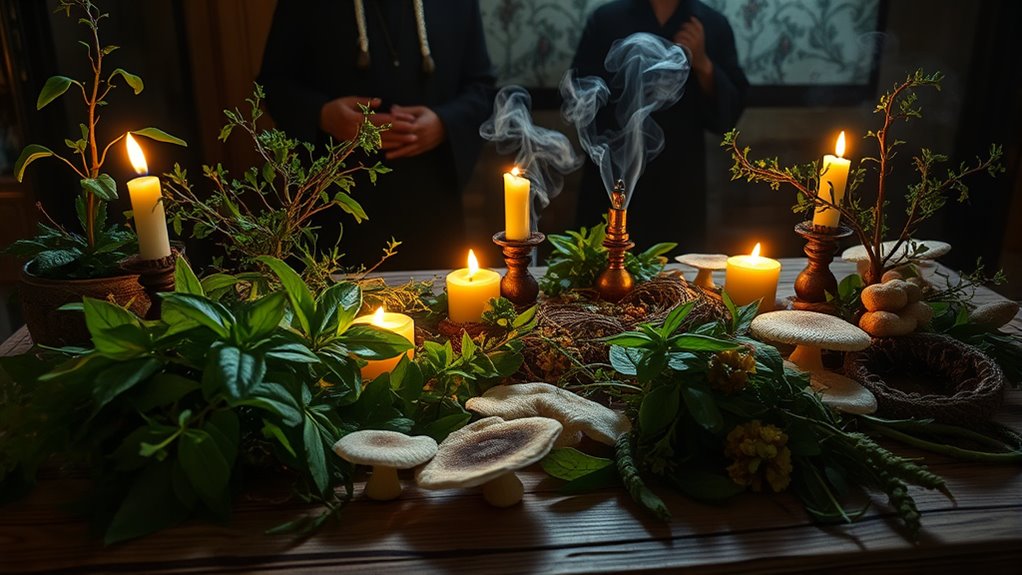
Plants play a central role in shamanic rituals, acting as sacred tools that facilitate communication with spirits and divine spheres. Through plant spirit communication, shamans enter altered states of consciousness to connect with the spiritual domain. During shamanic plant journeys, you consume or use plants like ayahuasca, peyote, or datura to access hidden knowledge. These plants help you:
- Enter trance states for divination and healing
- Receive guidance from spirits or ancestors
- Facilitate spiritual transformation and insight
The Role of Plants in Rituals of Passage and Celebrations
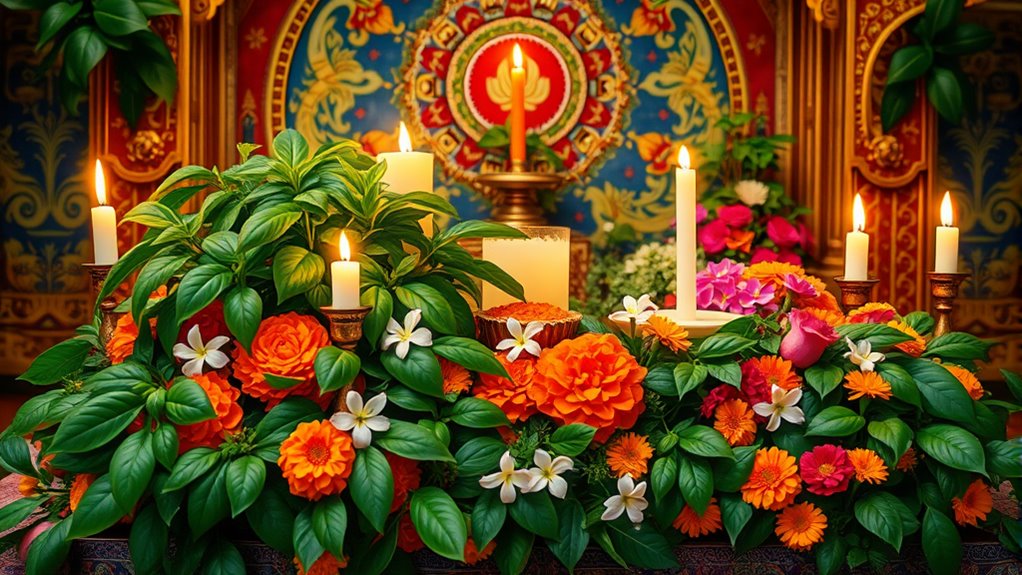
Throughout many cultures, rituals of passage and celebrations are deeply intertwined with the use of plants, which serve as symbolic and sacred elements marking significant life shifts. Seasonal plant symbolism plays an essential role, representing growth, renewal, and progression during key moments like births, marriages, and harvest festivals. For example, in some traditions, specific flowers or leaves are chosen to reflect the season’s meaning. Plant-based ceremonial attire also enhances these rites, with garments decorated with herbs, flowers, or foliage, emphasizing purity, fertility, or protection. These plant elements not only honor nature’s cycles but also connect individuals to their cultural roots. By integrating seasonal plants and plant-based attire, communities affirm collective identity and celebrate life’s continuous transformations.
Modern Interpretations of Plants in Spirituality and Healing
In modern spirituality and healing practices, people increasingly turn to plants as symbols of inner growth, balance, and well-being. You might explore plant-based divination methods, like reading plant patterns or using herbal omens to gain insight. Botanical symbolism also plays a key role, with specific plants representing qualities such as healing, protection, or enlightenment. Here are some ways you can incorporate these ideas:
- Use herbal teas or oils to promote emotional healing and spiritual clarity.
- Engage in plant-based divination, such as interpreting the growth patterns of houseplants or garden plants.
- Incorporate symbolic plants into meditation or ritual practices to deepen your connection to nature and your inner self.
These approaches blend ancient symbolism with modern wellness, emphasizing plants as pathways to spiritual growth.
Frequently Asked Questions
How Do Different Cultures Classify Sacred or Mystical Plants?
You see that different cultures classify sacred or mystical plants through plant classification systems rooted in their traditions and beliefs. They assign cultural plant symbolism to these plants, recognizing their spiritual significance. For example, some cultures see specific plants as divine or healing, while others link them to ancestors or gods. This classification reflects their unique worldview, shaping rituals and practices that honor the mystical qualities of these sacred plants.
Are There Plants Associated With Specific Deities in Lesser-Known Mythologies?
Have you ever wondered if lesser-known mythologies link plants to deities? They certainly do, through intricate deity plant associations and mythological flora symbolism. For example, in some African traditions, the marula tree is sacred to specific spirits, symbolizing fertility and protection. These lesser-known connections reveal how plants embody divine qualities, enriching cultural stories and spiritual practices. You can explore how mythological flora symbolism deepens your understanding of these unique spiritual landscapes.
What Are the Common Symbolic Meanings of Plants Across Various Traditions?
You’ll find that plants often symbolize growth, renewal, and life across many traditions. They represent fertility, protection, and spiritual connection, reflecting their cultural symbolism worldwide. Certain plants stand for peace, wisdom, or healing, depending on the context. These symbolic meanings are deeply rooted in cultural beliefs and stories, making plants powerful symbols that carry universal messages of hope, transformation, and harmony in various mythologies and magical practices.
How Have Myths Influenced the Conservation of Sacred Plants Historically?
Myths have played a key role in myth-based conservation, inspiring you to protect sacred plants through rituals and stories. These traditions often see sacred plants as divine or powerful, encouraging you to preserve them as part of cultural heritage. Sacred plant rituals reinforce respect and reverence, making communities more committed to conserving these plants. Your participation in these myths helps guarantee their survival for future generations.
Can Mythological Plants Be Cultivated for Modern Spiritual Practices?
You can cultivate mythic flora for modern spiritual practices by actively engaging in modern spiritual gardening. By selecting plants with mythological significance, you bring sacred symbolism into your space. Cultivating mythic flora allows you to connect deeply with spiritual traditions, enhance your rituals, and preserve cultural stories. This practice not only enriches your spiritual life but also helps keep these ancient symbols alive in contemporary contexts.
Conclusion
So, when you explore plants in mythology and magic, you unveil a universe more vibrant than any dream. These sacred trees, mystical herbs, and legendary blooms aren’t just stories—they’re the heartbeats of ancient worlds and modern spirits. You hold in your hands the power to connect with divine forces, uncover secrets of the universe, and transform your life. Embrace this botanical magic, and watch your reality burst into a kaleidoscope of wonder and possibility.