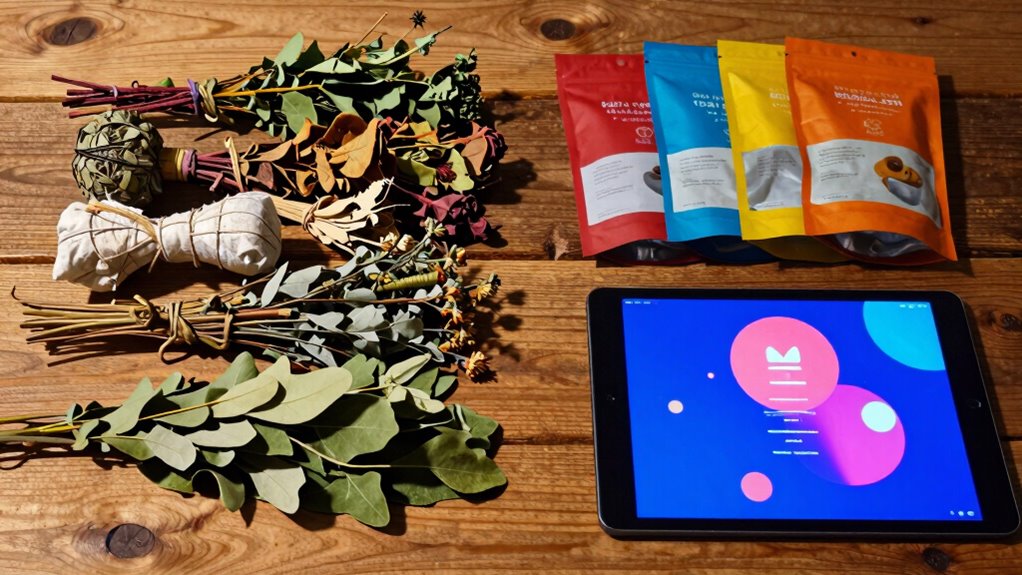

Traditional herbology relies on personal relationships, community trust, and proven natural remedies passed down through generations. It emphasizes authenticity, effectiveness, and tailored treatments based on individual needs. Modern marketing, on the other hand, uses data, branding, and digital tools like social media to reach larger audiences and influence perceptions. While traditional methods focus on trust and personal touch, modern strategies aim for broad appeal and persuasive storytelling. Discover how these approaches compare to make smarter choices.

Get oils, diffusers and self-care delivered free with Prime
- Fast, free delivery on millions of items
- Prime Video, Amazon Music and more included
- Member-only deals all year
Key Takeaways
- Traditional herbology relies on personal relationships, community trust, and direct knowledge transfer, while modern marketing uses data-driven campaigns and branding.
- Ancient remedies were promoted through word of mouth and local markets; modern strategies leverage social media, influencers, and online reviews.
- Traditional practices focus on authenticity and tangible effectiveness; modern marketing emphasizes storytelling, visual appeal, and psychological influence.
- Personal reputation and community trust were central in traditional herbology, whereas modern marketing builds credibility through branding and digital validation.
- Traditional herbology is inherently local and personalized; modern marketing seeks broad reach and scalability through targeted digital tools.

Have you ever wondered how ancient herbology methods compare to today’s marketing strategies? Back in the day, herbal remedies were passed down through generations, relying on tradition, personal experience, and a deep connection to nature. These remedies were often sold through word of mouth, community networks, or local markets, emphasizing trust and authenticity. Now, contrast that with modern marketing strategies, which operate in a digital landscape, driven by data, branding, and targeted advertising. While traditional herbology depended on the quality and efficacy of herbal remedies, today’s marketing strategies focus on creating appealing narratives, visual branding, and strategic reach to attract a broader audience.
Ancient herbology thrived on trust and tradition, while modern marketing emphasizes branding and broad reach.
In ancient times, the value of herbal remedies was rooted in the healer’s knowledge and the community’s trust. The emphasis was on genuine effectiveness, with herbalists often being respected figures. Their reputation spread through personal interactions, and their success depended on the tangible benefits of their remedies. In contrast, modern marketing strategies prioritize visibility and persuasion. Brands now craft compelling stories around herbal products, emphasizing benefits that appeal to consumers’ desires and emotions. They utilize social media, influencers, and online reviews to build credibility and influence purchasing decisions. Interestingly, this shift has also led to a greater emphasis on consumer perception, which plays a crucial role in modern marketing. Additionally, the widespread use of digital tools has transformed how herbal products are promoted and perceived. As digital platforms continue to evolve, they enable both traditional and modern methods to influence consumer choices in unique ways. Moreover, the metaphysical aspect of herbalism has increasingly been integrated into marketing narratives to appeal to consumers seeking spiritual or holistic benefits.
Traditional herbology was inherently local. It thrived on personal relationships and direct communication, making it a highly targeted approach. Herbal remedies were often tailored to individual needs, with practitioners adjusting formulas based on client feedback. Today, marketing strategies aim for scalability and mass appeal. Companies invest heavily in market research to identify target demographics and develop campaigns that resonate on a broad scale. They use analytics to track consumer behavior, refine messaging, and optimize engagement across multiple platforms. Interestingly, the rise of digital technology has also allowed for more precise targeting, bridging the gap between traditional intimacy and modern reach. This evolution underscores how both methods seek to build trust, albeit through different mechanisms. The integration of technological advancements has made it possible for modern marketers to mimic some of the personal touches once unique to traditional herbology.
Despite the differences, both approaches share a common goal: connecting people with herbal remedies. However, the methods have evolved considerably. Traditional herbology relies on authenticity, personal trust, and the natural efficacy of herbal remedies. Modern marketing strategies, meanwhile, leverage technology, branding, and psychological triggers to reach and influence consumers on a larger scale. As you explore herbal products today, it’s useful to recognize the roots of traditional practices and how they’ve been adapted into contemporary marketing techniques. Ultimately, understanding both perspectives helps you make more informed choices about the herbal remedies you trust and the way they’re promoted in our modern world.
Products Worth Considering

Levoit Core 600S-P Smart Air Purifier for Large Rooms

Hyperice Hypervolt 3 Percussion Massage Gun with Heated Head and Premium Carry Case

Philips Sonicare DiamondClean 9000 Electric Toothbrush Bundle, HX9912/72
As an affiliate, we earn on qualifying purchases.
Frequently Asked Questions
How Do Herbal Remedies Differ in Effectiveness From Marketed Herbal Products?
Herbal remedies often have higher herbal potency because they’re traditionally prepared and used with careful attention to dosage and quality, making them potentially more effective. Marketed herbal products, however, can vary in potency due to mass production and ingredient quality. You might face consumer skepticism because many marketed products don’t meet traditional standards. To guarantee effectiveness, research product labels, source from reputable suppliers, and consider traditional herbal practices.
What Historical Influences Shaped Traditional Herbology Practices?
Think of traditional herbology as a tapestry woven with ancient remedies and cultural roots. These practices are shaped by the wisdom of early civilizations like China, India, and Egypt, whose herbal knowledge was passed down through generations. These cultural influences act as the roots of a mighty oak, grounding herbal practices in history and tradition. They reveal a deep connection between nature and healing that’s stood the test of time.
How Does Modern Marketing Impact Consumer Trust in Herbal Products?
Modern marketing influences your trust in herbal products by shaping brand perception, which can enhance or undermine confidence. When marketing emphasizes quality and efficacy, you’re more likely to experience a placebo effect, believing in the product’s benefits. However, if marketing relies on exaggerated claims, your trust can diminish. Ultimately, your perception of a brand impacts your overall trust, influencing whether you genuinely feel the herbal product works or not.
Are There Regulatory Differences Between Traditional Herbology and Herbal Marketing?
You’ll find regulatory standards and certification processes differ markedly between traditional herbology and herbal marketing. Traditional herbology often relies on long-standing practices, cultural knowledge, and minimal formal regulation. In contrast, herbal marketing faces strict regulatory standards, requiring certifications to verify safety and efficacy. These certifications guarantee products meet legal requirements, provide consumer trust, and distinguish genuine herbal products from those making unsubstantiated claims, emphasizing the importance of compliance in modern herbal industries.
How Do Cultural Origins Influence Herbology Versus Marketing Strategies?
Cultural origins strongly influence herbology and marketing strategies through cultural symbolism and ritual significance. You’ll find that traditional herbology deeply embeds cultural symbolism and ritual practices, fostering trust and authenticity. In contrast, modern marketing often emphasizes universal appeal, sometimes overlooking cultural nuances. By understanding these influences, you can craft marketing messages that respect cultural symbolism, making herbal products more meaningful and appealing, while maintaining the integrity of traditional practices.
Conclusion
You see, traditional herbology focuses on healing and holistic well-being, rooted in centuries of experience. Meanwhile, modern marketing often emphasizes catchy campaigns and quick sales, sometimes at the expense of authenticity. Did you know that the herbal supplement market is projected to reach $9.3 billion by 2023? This shows how powerful marketing can influence perceptions, even when it might overshadow the genuine wisdom behind herbal practices. Harmonizing tradition with savvy marketing guarantees you make informed choices.