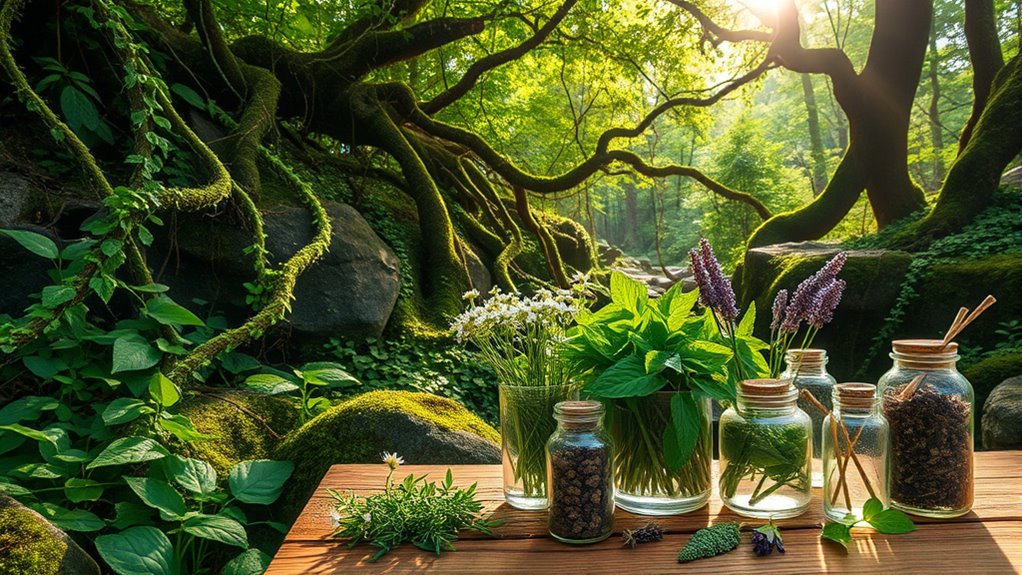
To turn wild herbs into medicine, you start by carefully harvesting plants at their peak, ensuring sustainable practices that keep the environment healthy. You then process them through methods like drying or steeping to preserve their healing properties. Traditional techniques guide extraction, creating remedies such as teas, tinctures, or powders. This blend of ancient knowledge and careful handling transforms herbs into potent medicines. If you keep exploring, you’ll uncover the full journey from forest to pharmacy.
Key Takeaways
- Wild herbs are carefully identified and harvested at peak potency, often just before flowering, respecting traditional and sustainable practices.
- Proper drying and processing techniques preserve the medicinal qualities of herbs for safe and effective use.
- Herbs are transformed into various medicinal forms such as teas, tinctures, or powders through traditional extraction methods.
- The process combines indigenous knowledge with scientific understanding to maximize healing properties and ensure safety.
- Final herbal products are used in modern medicine, bridging natural remedies with contemporary healthcare while conserving plant resources.
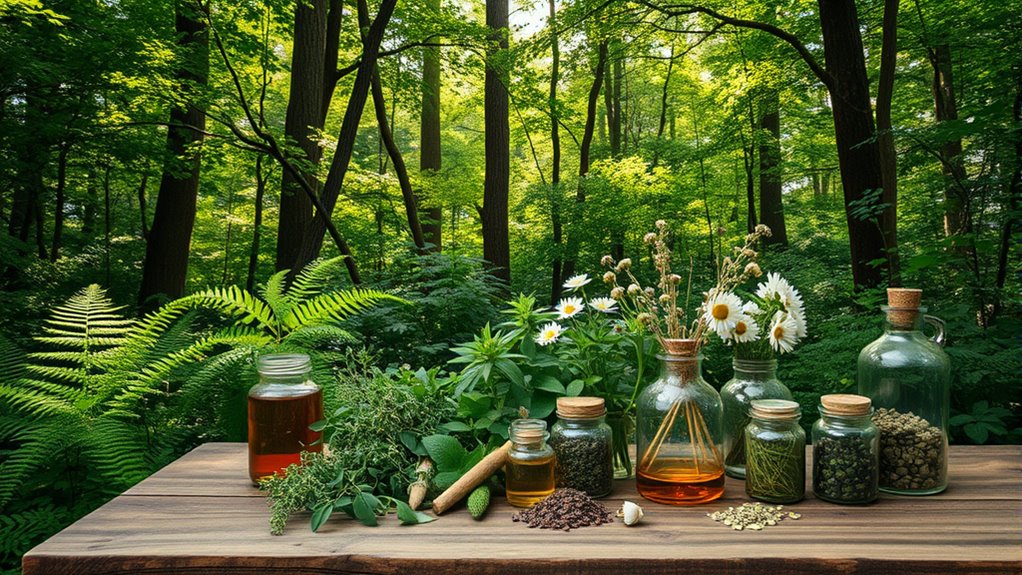
Have you ever wondered how wild herbs can be transformed into powerful medicines? The journey begins with herb harvesting, a skill passed down through generations and rooted in traditional remedies. When you venture into forests or wild landscapes, you learn to identify plants that have been used for centuries to treat a variety of ailments. This process isn’t just about picking herbs randomly; it involves understanding which plants are safe, how to recognize their growth stages, and the best times to harvest them to maximize their medicinal properties. Traditional remedies have relied on these herbs for centuries, making herb harvesting both an art and a science. You might be surprised to discover that many modern medicines trace their origins to these natural sources, and yet, the practice remains deeply connected to indigenous knowledge and cultural practices.
Once you’ve identified the right herbs, you carefully gather them, respecting sustainable practices that guarantee the plants continue to thrive for future generations. This step is essential because the potency of the herbs depends on how and when they’re harvested. For example, many herbs are best collected just before they flower, when their active compounds are at their peak. You learn to handle each plant with care, avoiding damage to roots or stems that could affect future growth. Traditional remedies often involve specific methods of herb harvesting, such as drying or preparing herbs in a way that preserves their medicinal qualities. This careful collection process is what transforms simple wild plants into valuable raw materials for medicine production. Additionally, understanding the importance of proper drying techniques can significantly influence the effectiveness of the final herbal remedy.
Carefully harvesting herbs at peak potency ensures sustainable use and preserves their medicinal qualities for future generations.
After harvesting, the next step involves processing these herbs into usable forms—whether as teas, tinctures, powders, or extracts. It’s here that traditional knowledge continues to play an essential role. Many cultures have developed their own techniques for preparing herbs, believing that the right method of extraction can reveal the full potential of the plant’s healing properties. During this stage, you may dry the herbs in the shade to preserve their active compounds or steep them in hot water to make infusions. Each step is deliberate and guided by tradition, guaranteeing that the final product retains the potency needed for medicinal use. This careful processing transforms nature’s raw bounty into effective remedies that can be used in modern health practices.
From the initial herb harvesting to the final preparation, the entire process reflects a deep respect for nature and its healing gifts. It’s a journey that honors traditional remedies while integrating scientific understanding, allowing wild herbs to be turned into potent medicines that serve many health needs today.
Frequently Asked Questions
How Do Wild Herbs Retain Their Medicinal Properties During Harvesting?
When you harvest wild herbs, you preserve their medicinal properties through proper herb preservation and careful harvesting techniques. You should pick herbs at their peak potency, usually early in the morning, and handle them gently to prevent damage. Quickly drying or using proper storage methods keeps active compounds intact. By following these practices, you guarantee the herbs retain their medicinal qualities from harvest to remedy.
What Are Common Safety Concerns When Using Wild Herbs Medicinally?
You might think wild herbs are safe, but beware of poisonous look-alikes that can cause serious harm. Always correctly identify herbs before use, as misidentification poses significant safety risks. Overdosing or incorrect dosage can lead to toxicity or adverse reactions. Trust your knowledge or consult experts to avoid these dangers. Remember, natural doesn’t always mean safe—caution is essential when using wild herbs medicinally.
Can Wild Herbs Be Organically Cultivated for Medicinal Use?
You can absolutely cultivate wild herbs organically for medicinal use by applying proper cultivation techniques that mimic their natural environment. Using organic certification guarantees your herbs are free from synthetic pesticides and fertilizers, making them safer for medicinal purposes. Focus on soil health, sustainable practices, and choosing native species to maintain their medicinal qualities. This way, you grow potent, natural herbs ethically and effectively.
How Do Traditional Preparations Differ From Modern Extraction Methods?
They say, “Old habits die hard,” and that’s true for traditional preparations versus modern extraction methods. Traditional herbal decoctions involve boiling herbs to release active compounds slowly, emphasizing flavor and ritual. Modern extraction methods, like cold or hot percolation, focus on extraction efficiency, using solvents to isolate specific ingredients quickly. While traditional methods honor history, modern techniques enhance consistency and potency, bridging past wisdom with scientific precision.
Are There Specific Seasons Best for Harvesting Medicinal Wild Herbs?
You should harvest medicinal wild herbs during specific seasons to guarantee maximum potency, aligning with plant growth and seasonal variations. Typically, late spring and early summer are ideal because plants are at their peak, full of active compounds. Avoid harvesting during dormancy or seed dispersal, as these periods reduce medicinal qualities. Timing your harvest carefully optimizes the plant’s natural chemistry, making your herbal preparations more effective.
Conclusion
Now that you know how wild herbs transform from forest treasures into healing medicines, you’re like a curious explorer uncovering nature’s secrets. With just a little knowledge and respect, you can appreciate their power and possibly even use them safely. Remember, these herbs are like hidden gems, waiting to be discovered. So, keep exploring, stay curious, and let nature’s pharmacy inspire you to harness its natural healing potential.