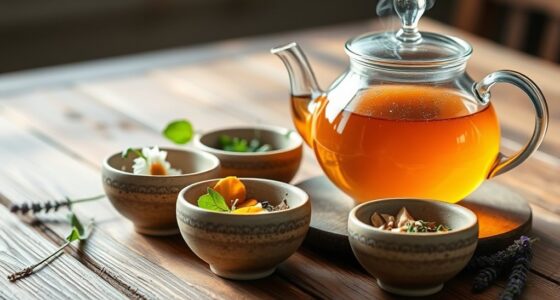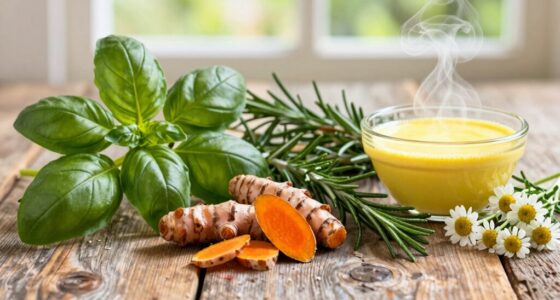
Incorporating herbs like turmeric, basil, ginger, rosemary, and thyme into your kitchen can naturally fight inflammation and boost your health. These common herbs not only add flavor but also provide powerful medicinal benefits when used regularly. Planting and harvesting them properly guarantees maximum potency. By including these anti-inflammatory herbs in your meals, you support your well-being with everyday ingredients. Keep exploring to discover more tips on growing and using these beneficial herbs in your kitchen.
Listen free for 30 days with Audible
Thousands of audiobooks and originals — cancel anytime.
As an affiliate, we earn on qualifying purchases.
Key Takeaways
- Many common kitchen herbs like turmeric, basil, ginger, rosemary, and thyme have potent anti-inflammatory properties.
- Growing these herbs at home ensures maximum potency and freshness for health benefits.
- Incorporating these herbs into daily meals enhances flavor and supports inflammation management.
- Proper cultivation, including adequate sunlight and well-drained soil, boosts their medicinal qualities.
- Harvesting herbs at optimal times preserves their anti-inflammatory compounds for maximum effectiveness.

Inflammation is a natural response your body uses to protect itself, but when it becomes chronic, it can lead to health issues. Fortunately, incorporating anti-inflammatory herbs into your kitchen can help manage this response while enhancing your meals. Many herbs with medicinal properties are also staples in everyday cooking, making it easy to enjoy their health benefits without extra effort. To get the most out of these herbs, it’s helpful to follow some herb cultivation tips—such as planting herbs in well-drained soil, providing ample sunlight, and harvesting at the right time. These practices ensure your herbs stay healthy and potent, maximizing their anti-inflammatory properties for culinary use.
Many herbs you might already be familiar with are powerful allies against inflammation. For example, turmeric is renowned for its active compound, curcumin, which has strong anti-inflammatory effects. You can add fresh or powdered turmeric to curries, rice dishes, or smoothies. Basil, particularly holy basil or tulsi, not only adds fresh flavor to salads and pastas but also offers anti-inflammatory benefits. Growing basil in your garden or windowsill is simple—just guarantee it gets plenty of sunlight and regular watering. When using basil, crush the leaves slightly to release more oils and enhance their medicinal qualities in your cooking.
Ginger is another versatile herb with notable anti-inflammatory effects. Fresh ginger can be grated into teas, stir-fries, or marinades, providing both flavor and health benefits. When cultivating ginger, remember it prefers warm, humid conditions, and should be planted in rich, loose soil. Its culinary uses are broad, ranging from teas to baked goods, making it an easy addition to your diet. Similarly, rosemary and thyme are herbs with anti-inflammatory properties that also flavor many dishes. These herbs thrive in well-drained soil and plenty of sunlight, and you can use fresh sprigs to garnish roasted vegetables, meat, or even soups.
As an affiliate, we earn on qualifying purchases.
Frequently Asked Questions
Can Anti-Inflammatory Herbs Be Used Alongside Medication Safely?
Yes, you can use anti-inflammatory herbs alongside medication, but it’s essential to take into account herb drug interactions and safety precautions. Some herbs may enhance or inhibit medication effects, leading to side effects or reduced efficacy. Always consult your healthcare provider before adding herbs like turmeric or ginger to your routine, especially if you’re on blood thinners or other medications. Staying informed guarantees you enjoy benefits safely without risking adverse reactions.
How Long Does It Take to Notice Benefits From These Herbs?
You might see incredible benefits from anti-inflammatory herbs within just a week! The potency of herbs and how you incorporate them into your diet makes all the difference. With consistent dietary integration, you’ll likely notice reduced inflammation and improved comfort faster than you expect. Keep in mind, individual responses vary, but patience and regular use can reveal these herbs’ powerful healing effects—sometimes almost overnight!
Are There Any Side Effects From Consuming These Herbs Regularly?
Yes, consuming these herbs regularly can cause side effects like herb toxicity or allergic reactions. You might experience stomach upset, skin rashes, or respiratory issues if you’re sensitive or take them in excess. Always start with small amounts and monitor how your body reacts. It’s a good idea to consult with a healthcare professional, especially if you’re pregnant, nursing, or on medication, to avoid potential herb toxicity or allergic responses.
Can Children or Pregnant Women Safely Consume These Herbs?
Think of herbs as delicate ingredients in a recipe—safe when used right, but risky if overdone. For children and pregnant women, herb safety varies; some herbs may cause adverse effects or interact with medications. Always consult a healthcare provider regarding child pregnancy concerns before adding herbs to diets. Moderation and professional guidance guarantee you enjoy herbs’ benefits without unintended risks, making your kitchen both flavorful and safe.
What Are the Best Ways to Incorporate These Herbs Into Daily Meals?
You can incorporate these anti-inflammatory herbs into your daily meals through clever herb pairing and flavor enhancement. Add fresh herbs like basil or oregano to salads, pasta dishes, or grilled vegetables for a burst of flavor. Stir dried herbs into soups, stews, or marinades to boost their health benefits. Incorporate herbs into smoothies or teas for a soothing, anti-inflammatory boost. Experimenting with herb pairing makes healthy eating both enjoyable and delicious.
herb garden kit for basil and thyme
As an affiliate, we earn on qualifying purchases.
As an affiliate, we earn on qualifying purchases.
Conclusion
By adding these anti-inflammatory herbs to your kitchen, you’re opening the door to better health with every meal. Don’t wait for trouble to knock before you start cooking smarter. Incorporate basil, turmeric, ginger, or cinnamon into your recipes and watch your wellness bloom. Remember, a stitch in time saves nine—starting now can make all the difference in keeping inflammation at bay. So, why not give these herbs a place in your daily routine?
As an affiliate, we earn on qualifying purchases.
anti-inflammatory herbs spice set
As an affiliate, we earn on qualifying purchases.
As an affiliate, we earn on qualifying purchases.
Flea & tick season Picks
flea and tick prevention
As an affiliate, we earn on qualifying purchases.