
Ginger’s active compounds, like gingerol, have powerful anti-inflammatory properties that help reduce exercise-induced muscle soreness and speed up recovery. By inhibiting inflammation and calming muscle swelling, ginger can lessen delayed onset muscle soreness (DOMS) and improve your overall muscle health after intense workouts. Including ginger in your diet through teas, meals, or supplements can support your recovery process. Keep exploring how to maximize these benefits for better muscle health.
Key Takeaways
- Ginger contains gingerols that inhibit inflammatory pathways, reducing muscle inflammation and soreness after exercise.
- Scientific studies show ginger supplementation decreases delayed onset muscle soreness (DOMS) and speeds muscle recovery.
- Its bioactive compounds block pain signals, helping to diminish muscle discomfort caused by intense physical activity.
- Regular intake of ginger through foods or supplements supports overall muscle health and reduces exercise-induced pain.
- Ginger’s anti-inflammatory effects may also lower oxidative stress, aiding quicker muscle repair post-exercise.
Understanding Exercise-Induced Muscle Soreness
Exercise-induced muscle soreness (DOMS) typically occurs after unfamiliar or intense physical activity, signaling your muscles are recovering and adapting. When you push your limits, muscle fatigue sets in, causing microscopic tears in muscle fibers. This damage triggers soreness as your body works to repair and strengthen those muscles. While DOMS can be uncomfortable, it’s a normal part of workout recovery, indicating your muscles are responding to the stress. Rest and proper nutrition are essential to support this process. Understanding that soreness reflects muscle adaptation helps you avoid overtraining. Instead of rushing through recovery, listen to your body and allow time for muscles to heal. This approach ensures effective progress and reduces the risk of injury.
The Anti-Inflammatory Properties of Ginger

Ginger has long been recognized for its powerful anti-inflammatory properties, making it a popular natural remedy for muscle pain and soreness. It contains compounds like gingerol, which help reduce inflammation by inhibiting certain enzymes and cytokines. Additionally, incorporating essential oils such as peppermint oil can enhance recovery due to their soothing and anti-inflammatory effects. Some studies suggest that consuming ginger regularly may also support immune health, further aiding recovery from physical stress. Moreover, understanding the benefits of natural remedies can help individuals make informed choices for their health. However, before adding ginger to your routine, be aware of ginger allergies, as some people may experience allergic reactions. Proper ginger storage is essential to maintain its freshness and potency; keep fresh ginger in a cool, dry place or in the refrigerator wrapped in a paper towel. Using ginger regularly can help alleviate inflammation and support recovery, but always start with small amounts to monitor your body’s response. If you have allergies or sensitivities, consult a healthcare professional before incorporating ginger into your regimen.
Scientific Studies on Ginger and Muscle Recovery

Numerous scientific studies have investigated how ginger influences muscle recovery after intense activity. Research shows that ginger supplementation can reduce delayed onset muscle soreness (DOMS) and improve recovery times. In one study, participants who took ginger supplements experienced less muscle pain and had quicker improvements in strength compared to those who didn’t. The active compounds in ginger help modulate inflammation, which is vital during the recovery process. Additionally, natural anti-inflammatory agents like ginger may help reduce oxidative stress caused by strenuous exercise. These studies suggest that incorporating ginger into your post-exercise routine may support faster muscle repair and reduce soreness. Additionally, sound healing science indicates that natural anti-inflammatory agents like ginger may enhance cellular regeneration and overall health. While more research is needed to determine ideal dosages, current evidence indicates that ginger supplementation could be a natural way to enhance muscle recovery after vigorous workouts. Moreover, understanding the biochemical mechanisms behind ginger’s anti-inflammatory effects could lead to more targeted recovery strategies. Furthermore, cytokine modulation by ginger may play a crucial role in reducing inflammation and promoting tissue repair. Recognizing the role of inflammation in muscle recovery can help optimize post-workout interventions.
How Ginger May Reduce Muscle Pain

Ginger may help reduce muscle pain by lowering inflammation in your body. Its anti-inflammatory effects can calm swelling and soreness after exercise. Understanding how ginger interacts with pain relief mechanisms can show you why it’s a natural option for recovery.
Anti-inflammatory Effects
Because of its powerful compounds, ginger can help reduce muscle pain by fighting inflammation in the body. Its active ingredients, like gingerols and shogaols, have been shown to inhibit inflammatory pathways. If you have ginger allergies, it’s important to avoid it, as reactions can worsen inflammation. Ginger cultivation varies worldwide, influencing the potency and availability of fresh or dried ginger. Consuming ginger regularly may help lower markers of inflammation, easing muscle soreness after exercise. The anti-inflammatory effects are supported by research indicating that ginger reduces swelling and pain linked to inflammation. Incorporating ginger into your diet or supplements can be a natural way to manage muscle pain, especially if you’re mindful of potential allergies and the quality of ginger derived from different cultivation sources.
Pain Relief Mechanisms
The active compounds in ginger, such as gingerols and shogaols, play a direct role in reducing muscle pain by targeting pain signaling pathways. When you consume ginger or enjoy its distinct ginger aroma, these compounds help block pain signals sent to your brain, diminishing discomfort. Additionally, the process of ginger cultivation influences the concentration of these bioactive compounds, impacting its effectiveness. The aroma itself may have a calming effect, reducing the perception of pain. As ginger is cultivated, factors like soil quality and harvesting time can enhance its potency. Interestingly, AI safety measures are being developed to ensure the safe deployment of AI technologies that could help in advancing agricultural practices, including the cultivation of medicinal plants like ginger. Understanding how cultivation methods affect ginger’s potency can help optimize its pain-relief benefits. Furthermore, the extraction techniques used during processing can influence the levels of active compounds, making processing methods an important consideration for maximizing ginger’s therapeutic effects. Additionally, agricultural practices play a significant role in determining the final quality and efficacy of ginger used for medicinal purposes.
Ways to Incorporate Ginger Into Your Routine

You can easily add fresh ginger to your daily meals by experimenting with new recipes, like stir-fries or smoothies. Brewing ginger tea infusions is another simple way to enjoy its benefits throughout the day. Incorporating these methods helps you seamlessly include ginger into your routine for muscle pain relief. For optimal results, consider consistent use of ginger to maximize its anti-inflammatory properties. Additionally, integrating ginger with Vetted electric bike conversion kits can support an active lifestyle that complements its anti-inflammatory effects, promoting overall muscle health. Regularly preparing fresh juice from ginger and other fruits can also boost your intake of beneficial nutrients. Monitoring celebrity transformations can inspire new ways to stay motivated in your health journey. Detecting passive voice in your writing can help improve clarity and engagement.
Fresh Ginger Recipes
Adding fresh ginger to your meals is an easy way to enjoy its health benefits while boosting flavor. When selecting ginger, consider how it’s been cultivated — look for fresh, firm roots from trusted sources. You can incorporate ginger into your recipes by grating it into stir-fries, smoothies, or salads. Proper ginger packaging helps preserve its freshness, ensuring you get the most out of your purchase. Try adding minced ginger to marinades or making quick pickled ginger for snacks. Fresh ginger can also be sliced thin and used as a garnish. Its versatility makes it simple to include in your daily routine, whether in savory dishes or even baked goods. Incorporating ginger this way allows you to enjoy its anti-inflammatory properties while enhancing your meals. Additionally, understanding farmhouse bedroom design principles can inspire creative ways to display fresh herbs like ginger in your kitchen, blending aesthetics with functionality. To maximize its benefits, store ginger in a cool, dry place or in the refrigerator to maintain its freshness and potency, which can be further supported by using proper storage techniques. Incorporating traditional knowledge about Aboriginal health practices can also offer insights into natural remedies and dietary choices that complement ginger’s benefits. For added health benefits, consider exploring crochet styles for locs to craft protective accessories that can hold fresh herbs or spices for easy access during cooking.
Ginger Tea Infusions
Incorporating ginger into your daily routine is simple with ginger tea infusions, which offer a soothing way to enjoy its health benefits. You can easily prepare ginger tea by steeping fresh or dried ginger slices in hot water, creating a flavorful herbal infusion. This method allows you to harness ginger’s anti-inflammatory properties conveniently. Drinking ginger tea before or after exercise may help reduce muscle soreness and promote recovery. For variety, add a dash of honey or a squeeze of lemon to enhance the flavor. Herbal infusions like ginger tea are a comforting, natural approach to supporting muscle health. Incorporating natural remedies such as ginger tea can enhance your recovery experience. Incorporate this simple routine into your day to enjoy ongoing benefits and a calming moment with every cup.
Potential Dosages and Forms of Ginger

To experience the potential benefits of ginger for muscle pain, selecting the right dosage and form is essential. Typically, ginger supplement dosages range from 1 to 3 grams daily, depending on individual needs. Ginger extract forms vary, including capsules, powders, and liquids, offering flexibility for different preferences. Capsules provide convenience and consistent dosing, while powders can be added to foods or drinks. Liquid extracts are quickly absorbed and easy to dose accurately. Here’s a quick overview:
| Ginger Supplement Dosages | Ginger Extract Forms |
|---|---|
| 1-3 grams daily | Capsules |
| 500 mg – 1 gram per dose | Powdered ginger |
| Adjust based on response | Liquid ginger extracts |
Choose the form that best fits your routine to optimize benefits.
Comparing Ginger to Other Natural Remedies

While ginger is popular for its anti-inflammatory properties, it’s not the only natural remedy that may help alleviate muscle pain. You should consider alternatives like turmeric, tart cherry juice, and omega-3 fatty acids, which also have anti-inflammatory benefits. When comparing these remedies, it’s important to look at ginger’s bioavailability, which affects how well your body absorbs its active compounds, and how this influences ginger supplement efficacy. For example, turmeric contains curcumin, but its absorption can be enhanced with black pepper. Tart cherry juice offers antioxidants that reduce soreness, while omega-3s support overall inflammation control. Each remedy varies in potency, absorption, and ease of use, so choosing the right option depends on your individual needs and preferences.
Precautions and Possible Side Effects

Although ginger is generally safe when used appropriately, it can cause side effects or interact with certain medications, so it’s important to exercise caution. Some people may experience allergic reactions, such as skin rashes or breathing issues, especially if they have sensitivities. Ginger can also interact with blood-thinning medications, increasing bleeding risk. Be aware of these potential concerns before adding it to your routine. To help visualize, here’s a quick overview:
| Side Effects | Interactions | Recommendations |
|---|---|---|
| Allergic reactions | Blood-thinning drugs | Consult your doctor before use |
| Heartburn or upset stomach | Diabetes medications | Use in moderation |
| Skin irritation | Anticoagulants | Monitor for adverse effects |
| Dizziness | Antiplatelet drugs | Discontinue if side effects occur |
Tips for Maximizing the Benefits of Ginger
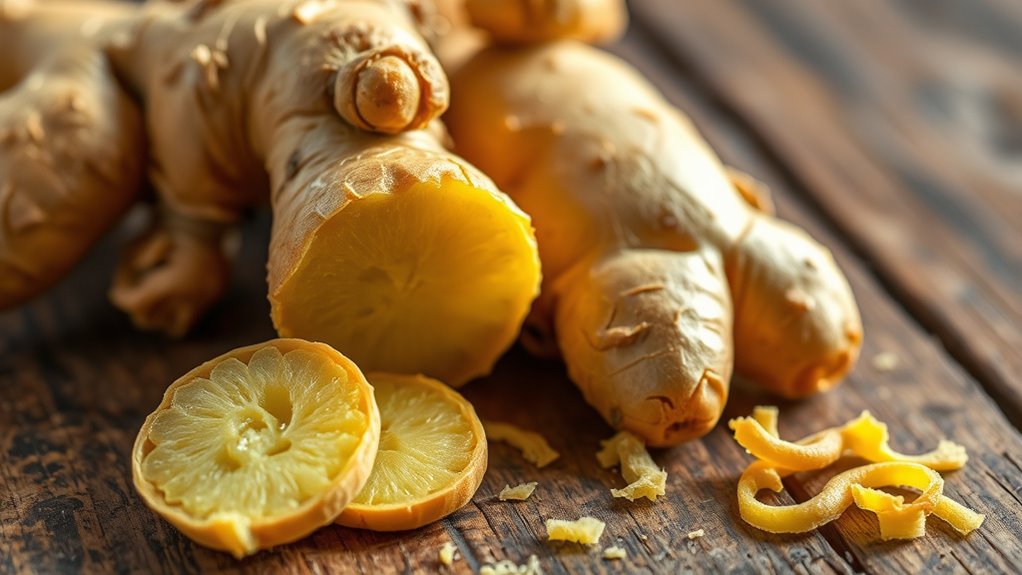
Maximizing the benefits of ginger involves incorporating it thoughtfully into your routine. To do so, focus on understanding ginger cultivation and harvesting methods to select high-quality roots. Fresh ginger contains more potent compounds, so timely ginger harvesting ensures maximum potency. Proper storage is also essential; keep ginger in a cool, dry place or refrigerate to maintain freshness. Consider adding ginger to your meals or brewing it as tea for consistent intake. Using ground ginger or supplements can be effective but check for purity and dosage. Be mindful of your body’s response and adjust consumption accordingly for ideal muscle recovery and pain reduction.
- Choose fresh ginger during ginger harvesting for higher potency
- Store ginger properly to preserve its active compounds
- Incorporate ginger regularly into your diet or routine
Frequently Asked Questions
Can Ginger Prevent Muscle Soreness Before Exercise?
Yes, ginger can help prevent muscle soreness before exercise. Its natural anti-inflammatory properties make it a useful dietary integration to reduce inflammation and soreness. Consuming ginger in teas, smoothies, or meals before your workout might lower the risk of muscle pain afterward. By including ginger in your diet, you actively support your muscles and enhance your recovery, making your exercise routine more comfortable and effective.
Are There Any Long-Term Benefits of Using Ginger Post-Workout?
Using ginger post-workout can offer long-term benefits like reducing chronic inflammation and supporting your immune system. Regular consumption may help manage prolonged inflammation caused by intense exercise, potentially speeding recovery and lowering injury risk. Additionally, ginger’s immune-boosting properties can keep you healthier over time, making it easier to maintain a consistent workout routine. Incorporate ginger into your diet to enjoy these lasting benefits and support overall wellness.
How Does Ginger Compare to Pharmaceutical Pain Relievers?
Ginger can be a natural alternative to pharmaceutical pain relievers, but it works differently—mainly reducing inflammation rather than blocking pain signals. You might take about 1-3 grams daily, but be mindful of side effects like heartburn or stomach upset. Unlike drugs, ginger generally has fewer side effects, making it safer for long-term use. However, always consult your healthcare provider before replacing medications with ginger.
Is Fresh Ginger More Effective Than Supplements for Muscle Recovery?
Like a seasoned chef, fresh ginger often packs a punch with higher ginger potency, making it potentially more effective than supplements for muscle recovery. You absorb its beneficial compounds better when fresh, enhancing its anti-inflammatory effects. While supplements offer convenience, fresh ginger’s natural compounds are more readily available, giving you a more potent and quicker response to reduce muscle pain. Choose fresh for a more powerful, holistic approach.
Can Ginger Help With Chronic Muscle Pain Conditions?
Yes, ginger can help with chronic muscle pain because its anti-inflammatory properties target inflammation that causes persistent discomfort. When you include ginger in your diet or take supplements, it may reduce muscle pain over time by calming inflammation and improving circulation. You should consider incorporating ginger regularly to potentially experience long-term relief from chronic muscle pain, as its natural anti-inflammatory effects support overall muscle health.
Conclusion
Imagine your muscles healing like a gentle stream flowing smoothly after a tough workout, ginger acting as a calming breeze guiding the way. By embracing ginger’s natural anti-inflammatory powers, you can ease soreness and get back to your active life faster. Incorporate it into your routine, and let its warm, spicy touch be your ally in recovery. With each dose, picture your muscles relaxing, ready for the next challenge, pain-free and invigorated.