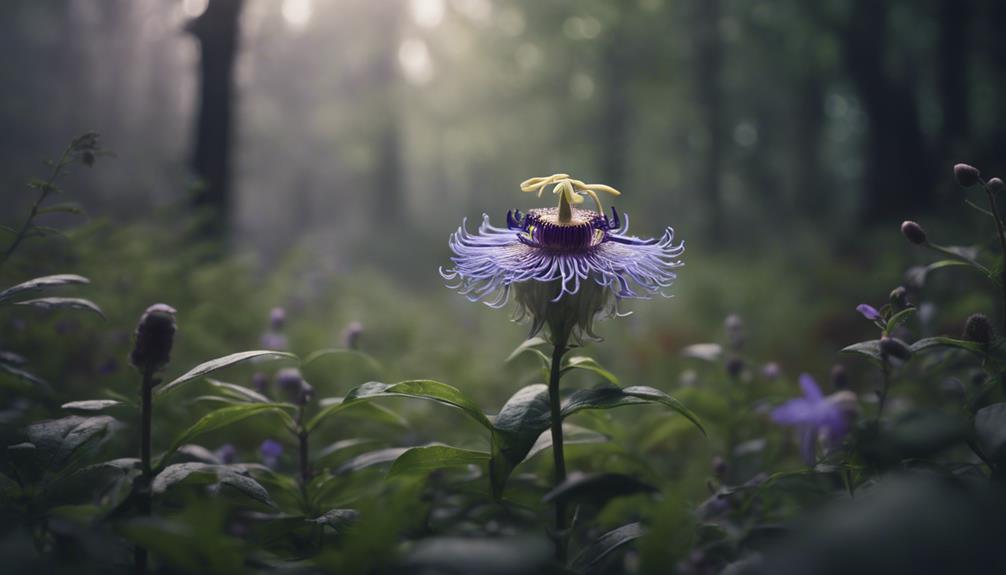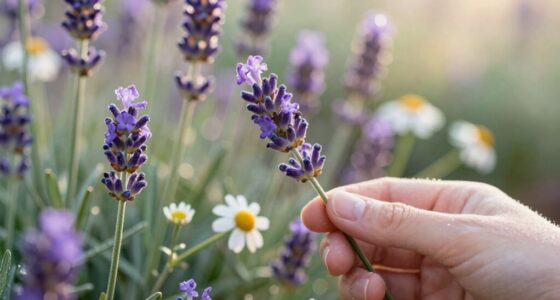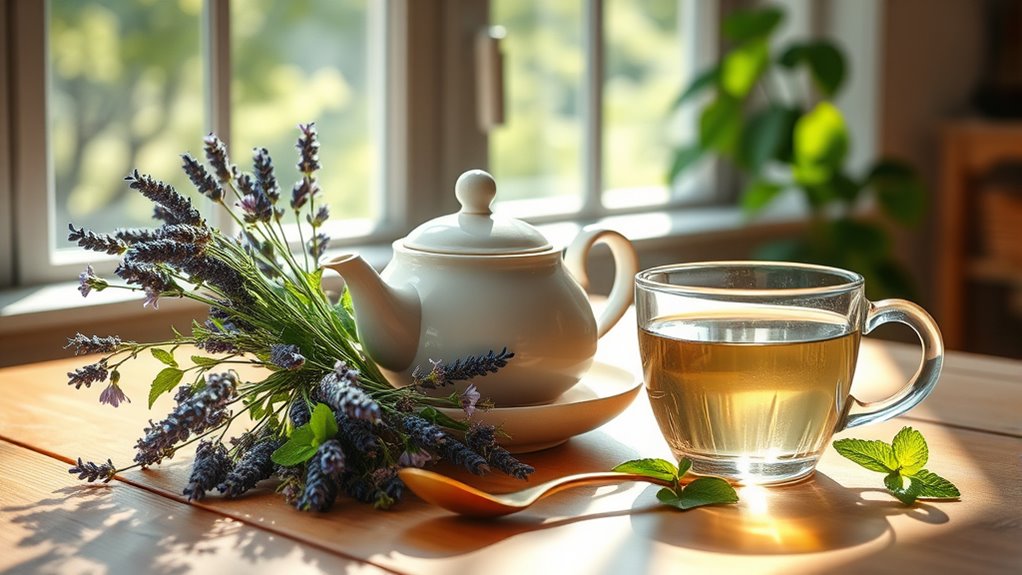

Herbal relaxants like valerian root, passionflower, lavender, and lemon balm can naturally soothe overthinking minds by calming your nervous system and reducing anxiety. They work by increasing calming neurotransmitters like GABA and easing mental tension, helping you feel more centered and peaceful. Incorporating herbal teas or tinctures into your daily routine can support emotional balance and mental clarity over time. If you want to discover more ways to harness these herbal benefits, stay tuned.

Get oils, diffusers and self-care delivered free with Prime
- Fast, free delivery on millions of items
- Prime Video, Amazon Music and more included
- Member-only deals all year
Key Takeaways
- Herbal remedies like valerian root and passionflower naturally increase GABA levels to calm overactive nerves.
- Aromatic herbs such as lavender and lemon balm promote relaxation and reduce mental clutter through sensory and chemical effects.
- Incorporating herbal teas or supplements into daily routines supports emotional balance and diminishes racing thoughts over time.
- Combining herbs with relaxation techniques like mindfulness and proper sleep enhances overall mental clarity.
- Always consult healthcare professionals before using herbal relaxants, especially during pregnancy or medication use.
The Science Behind Herbal Calmness
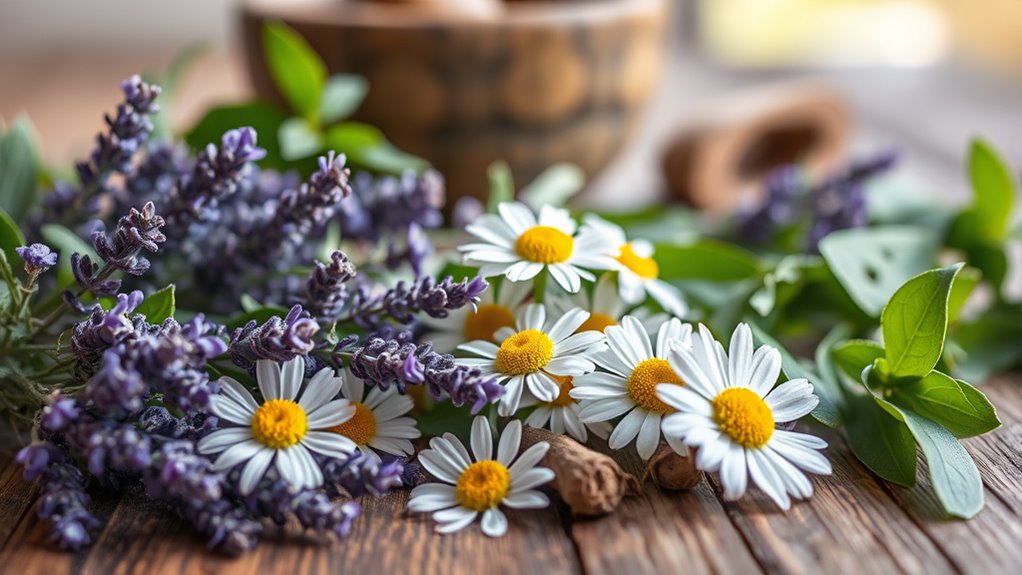
Herbal relaxants work by targeting your nervous system to promote a sense of calm. They often influence neurotransmitters, the chemicals that relay signals in your brain. For example, many herbs increase gamma-aminobutyric acid (GABA) levels, which helps reduce overactivity in your neural pathways. This calming effect can help soothe anxiety and ease overthinking. Active compounds like flavonoids and terpenes interact with receptors, moderating stress responses. Scientific studies have shown that certain herbs, such as valerian root and passionflower, can enhance GABA activity naturally. By stabilizing your nervous system, these herbs help diminish the physiological symptoms of stress, like rapid heartbeat or tense muscles. Understanding this science clarifies how herbal remedies can gently support your mental calmness without harsh chemicals.
Top Herbs for Easing Overactive Thoughts

When your mind races with overactive thoughts, certain herbs can help calm your mental chatter and promote clarity. Valerian root is a powerful option, known for its calming effects that soothe restless minds. Passionflower helps reduce anxiety and quietens racing thoughts, making it easier to focus. Lavender, with its soothing aroma and calming properties, can ease mental tension and promote relaxation. Lemon balm also offers gentle relief, helping to calm nerves and improve mood. Ashwagandha, an adaptogen, balances stress hormones, reducing overthinking caused by anxiety. These herbs work differently but effectively help slow down an overactive mind, making it easier to find peace and mental clarity throughout your day. Incorporating them can be a natural way to manage persistent overthinking.
How to Incorporate Herbal Relaxants Into Your Routine

Integrating herbal relaxants into your daily routine can be simple and effective with a few strategic steps. First, choose a consistent time each day, like morning or evening, to incorporate herbs such as chamomile or lemon balm. You can brew a tea, add herbs to your meals, or use tinctures. Keep herbs accessible so they become part of your habit. To help you visualize options, here’s a quick guide:
| Method | Example |
|---|---|
| Tea | Chamomile tea before bed |
| Tinctures | Lemon balm drops in water |
| Culinary Use | Add herbs to smoothies |
Consistency is key—over time, these small routines support relaxation and mental clarity.
Safety Tips and Considerations When Using Herbal Remedies
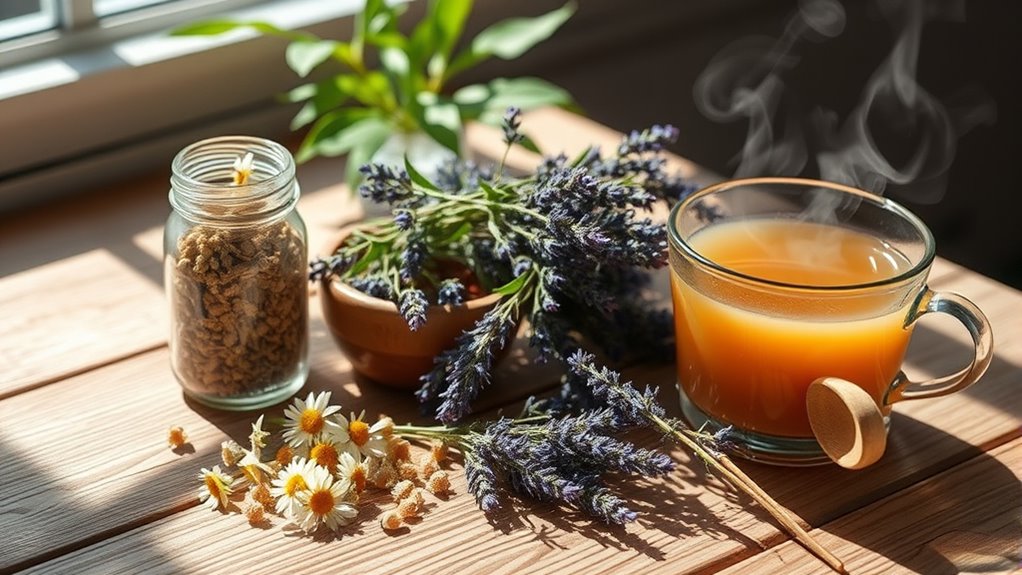
Although herbal remedies can be beneficial, it’s important to prioritize safety and be aware of potential risks. First, always consult a healthcare professional before starting any new herbal supplement, especially if you’re on medication or have existing health conditions. Second, follow the recommended dosages carefully—more isn’t better and can lead to adverse effects. Third, be cautious of allergies; test a small amount first to check for reactions. Fourth, avoid using herbs during pregnancy or breastfeeding unless approved by your doctor. Remember, natural doesn’t always mean safe. Staying informed and vigilant helps ensure that herbal relaxants support your wellbeing without unintended harm. Prioritize safety to fully enjoy their calming benefits with peace of mind.
Combining Herbal Relaxants With Lifestyle Changes

To maximize the calming effects of herbal relaxants, combining them with healthy lifestyle changes can be highly effective. Incorporate regular exercise into your routine, as physical activity releases endorphins that help reduce stress and anxiety. Prioritize quality sleep by establishing a consistent bedtime and creating a relaxing environment, which enhances your body’s natural relaxation processes. Practice mindfulness or meditation daily to complement the calming properties of herbs, helping to quiet an overthinking mind. Maintain a balanced diet rich in nutrients that support mental health, such as omega-3 fatty acids and B vitamins. Limiting caffeine and alcohol intake also prevents overstimulation and dehydration, which can worsen anxiety. By aligning herbal remedies with these lifestyle adjustments, you create a holistic approach to calming your mind.
Potential Side Effects and When to Seek Medical Advice

You should watch for any unusual reactions after using herbal relaxants, such as dizziness or allergic symptoms. If you notice these signs, it’s important to consult a healthcare professional promptly. Recognizing adverse effects early can help prevent more serious health issues.
Recognizing Adverse Reactions
Recognizing adverse reactions to herbal relaxants is essential for your safety, as some side effects can signal serious health issues. You should watch for signs like:
- Sudden dizziness or fainting, which could lead to falls or injuries.
- Severe allergic reactions such as swelling, rash, or difficulty breathing.
- Persistent nausea or vomiting that won’t go away.
- Unusual heart palpitations or chest pain, indicating cardiovascular distress.
If you notice any of these symptoms, stop using the herbal relaxant immediately. Don’t ignore warning signs—they can escalate quickly. Trust your instincts; if something feels wrong, seek medical attention promptly. Your health and safety come first, so stay vigilant and informed about how your body responds.
Consulting Healthcare Professionals
Consulting healthcare professionals is vital whenever you experience side effects or have concerns about herbal relaxants. If you notice symptoms like dizziness, nausea, allergic reactions, or unusual fatigue, seek medical advice promptly. Some herbs may interact with prescription medications or underlying health conditions, so professional guidance guarantees safe use. Don’t ignore warning signs or assume that herbal remedies are risk-free; what works for others might not suit your body. It’s essential to discuss your overall health, current medications, and specific symptoms with a healthcare provider. They can help determine whether the relaxant is appropriate for you or suggest alternative options. Always follow their recommendations and report any adverse effects immediately to prevent complications. Your health should always come first when exploring herbal solutions.
Personal Experiences and Success Stories
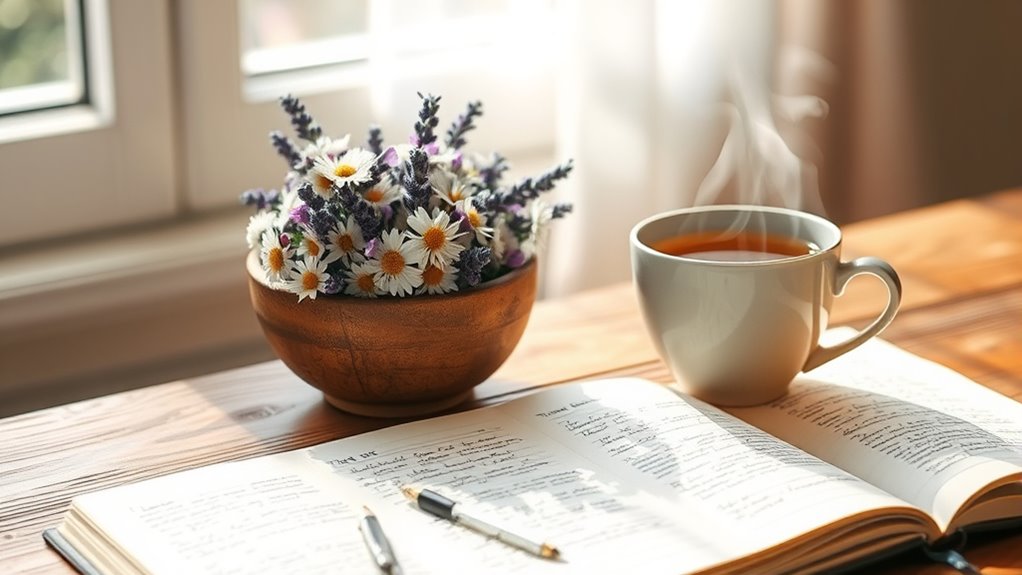
Many people find that herbal relaxants help them overcome anxiety naturally and restore their inner calm. You might be surprised by how effective these remedies can be in improving your daily life. Hearing others’ success stories can inspire you to try herbal options for your own relaxation journey.
Overcoming Anxiety Naturally
If you’re seeking natural ways to overcome anxiety, personal stories can be truly inspiring. Many have found relief through herbal remedies and lifestyle changes. Their journeys highlight powerful moments:
- Discovering a calming tea blend that eased their racing mind.
- Incorporating daily meditation combined with herbal supplements.
- Breaking free from panic attacks after consistent use of adaptogenic herbs.
- Reclaiming confidence by trusting in natural solutions over pharmaceuticals.
These experiences show that overcoming anxiety naturally isn’t just possible—it’s achievable with perseverance. Hearing others’ successes can motivate you to start your own journey, reminding you that peace is within reach. Every story reinforces that, with patience and the right herbs, you can manage anxiety and restore calm to your life.
Restoring Inner Calm
Have you ever experienced a moment when your mind finally feels at peace after weeks of unrest? That’s the power of herbal relaxants working to restore your inner calm. Many people share stories of how natural remedies like chamomile, valerian root, or lavender tea helped quiet their racing thoughts. You might notice your anxiety easing, sleep improving, and a renewed sense of balance. One person told me how incorporating herbal teas into their nightly routine transformed their stress into serenity. Another found that a daily dose of herbal supplements reduced their mental clutter markedly. These personal successes show that, with patience and consistency, herbal relaxants can genuinely help you find that peaceful, centered state you’ve been longing for.
Frequently Asked Questions
Can Herbal Relaxants Replace Prescribed Medication for Anxiety?
Herbal relaxants can’t fully replace prescribed medication for anxiety, especially if your condition is severe. While they may help reduce stress and promote relaxation, they often lack the potency and consistency of prescribed treatments. You should talk to your healthcare provider before making any changes. Combining herbal remedies with professional guidance might improve your overall well-being, but never stop or alter your medication without medical advice.
Are There Any Herbal Remedies Suitable for Children or Pregnant Women?
You should be cautious, as only a few herbal remedies are considered safe for children and pregnant women. Studies show that chamomile and ginger are generally safe when used properly, but always consult your healthcare provider first. Avoid herbs like ginseng or St. John’s Wort, which can cause complications. Your best move is to seek professional advice to guarantee safety, as dosage and individual reactions vary.
How Long Does It Typically Take to Notice Benefits From Herbal Relaxants?
You’ll usually notice benefits from herbal relaxants within a few days to a couple of weeks, depending on the herb and your body’s response. Consistency is key, so take them as directed and give your body time to adjust. Some herbs, like valerian or chamomile, may work faster, while others, like lavender or lemon balm, might take a bit longer. Patience helps maximize their calming effects.
Can Herbal Relaxants Be Used Alongside Traditional Psychiatric Treatments?
Yes, you can often use herbal relaxants alongside traditional psychiatric treatments, but it’s important to proceed with caution. Always consult your healthcare provider before combining them, as interactions may occur. While herbal remedies can complement your treatment, they shouldn’t replace prescribed medications without professional guidance. Stay informed and monitor your reactions closely—sometimes, the right balance can unleash new levels of calm you’ve been seeking.
Are There Any Known Interactions Between Herbal Relaxants and Common Supplements?
Yes, there are known interactions between herbal relaxants and common supplements. You should be cautious because combining herbs like valerian or kava with supplements such as antidepressants or sedatives can increase side effects or cause adverse reactions. Always check with your healthcare provider before mixing herbal relaxants with other supplements. Being informed helps you avoid unwanted interactions and ensures your safety while managing overthinking or anxiety.
Conclusion
By exploring herbal relaxants, you’re opening the door to a calmer mind, like gently dimming a bright light. When you blend these natural remedies with healthy habits, you create a soothing sanctuary for your thoughts. Remember, always listen to your body and seek guidance when needed. With patience and care, you can tame the overthinking storm and enjoy a peaceful, clearer mind—your personal oasis waiting to be discovered.
Fall Picks
fall essentials
As an affiliate, we earn on qualifying purchases.