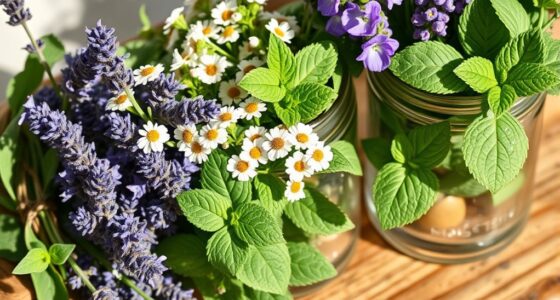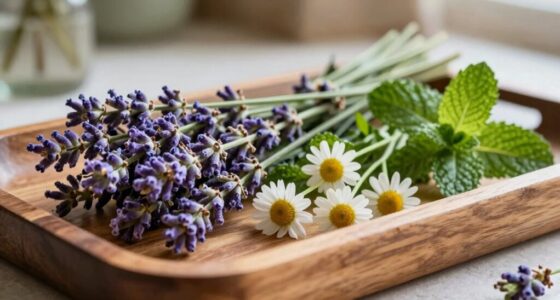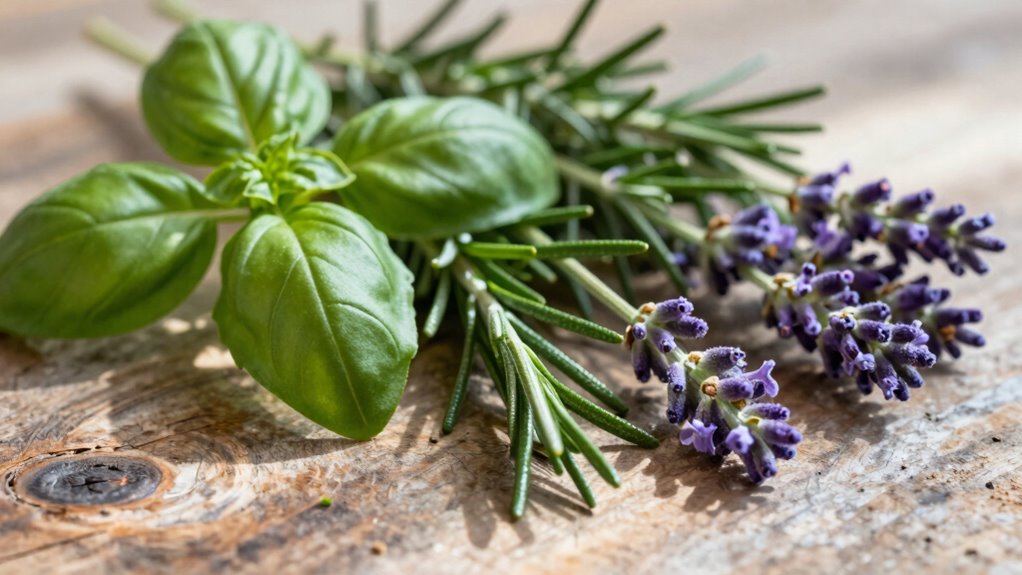

If you’re looking to create emotional breathing space, herbs like chamomile and lavender can help relax your mind and ground your thoughts. Lemon balm lifts your mood and boosts mental clarity, while valerian root promotes better sleep and eases tension. Aromatic herbs such as rosemary and basil enhance focus and calm emotional turbulence. Incorporating these herbs into your routine can support calming moments, making it easier to find emotional balance. Keep exploring to discover more ways these herbs can support your well-being.

Get oils, diffusers and self-care delivered free — and shop member deals
- Fast, free delivery on millions of items
- Access to Prime Big Deal Days deals on October 6–7
- Prime Video, Amazon Music and more included
Key Takeaways
- Chamomile and lavender promote relaxation and mental clarity, helping to slow racing thoughts and create emotional breathing space.
- Herbal teas infused with calming herbs support mindfulness, deep breathing, and meditation practices.
- Valerian root aids sleep and reduces tension, easing emotional strain and enhancing relaxation.
- Lemon balm lifts mood and improves mental focus, fostering emotional stability during stressful times.
- Aromatic herbs like rosemary and basil boost concentration and calm emotional turbulence during meditation or daily routines.
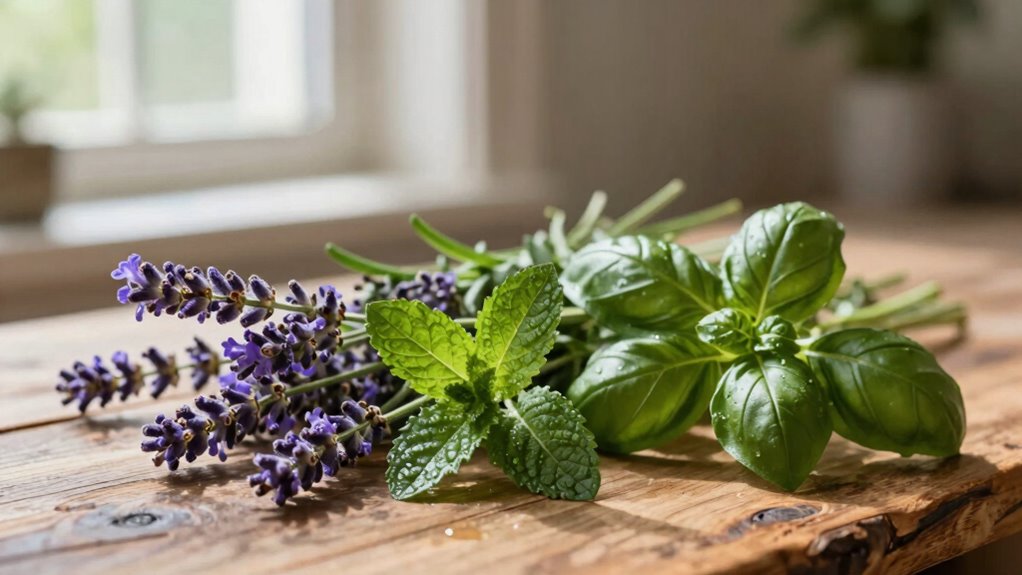
When life feels overwhelming, turning to certain herbs can provide a much-needed emotional breathing room. These herbs can complement your mindfulness techniques and stress reduction methods, helping you find calm amidst chaos. You might already practice deep breathing or meditation, but adding specific herbs to your routine can enhance your emotional resilience. For example, herbs like chamomile and lavender are known for their calming properties, making them perfect allies when your mind races or anxiety takes hold. Sipping herbal teas infused with these plants can slow your thoughts and ground you, giving you a moment to reset amid a hectic day.
Herbs that promote emotional balance often work by gently influencing your nervous system, helping to reduce cortisol levels and ease tension. Valerian root, for instance, is traditionally used for its sedative effects, supporting better sleep and reducing feelings of restlessness. Incorporating it into your evening routine might help you unwind more effectively, allowing your mind to settle and your body to relax fully. Similarly, lemon balm has a soothing aroma that lifts mood and promotes mental clarity. When you combine these herbs with mindfulness practices like focused breathing or body scans, you create a powerful combo that deepens your emotional breathing space.
Stress reduction methods become even more effective when paired with herbal remedies. For example, inhaling the scent of herbs like rosemary or basil during meditation sessions can improve concentration and elevate your mood. These herbs are known to stimulate mental alertness while calming emotional turbulence. If you prefer a more tangible approach, herbal tinctures or capsules can provide consistent support, especially during particularly stressful periods. The key is to be intentional about integrating these herbs into your daily routine, knowing they’re tools to bolster your inner calm. Incorporating biodiversity into your herbal choices can also ensure a richer array of plant properties, enhancing their effectiveness and supporting sustainable living practices. Additionally, selecting herbs from a variety of sources can improve the overall herbal efficacy, ensuring you derive the maximum benefit from their properties. Exploring medicinal plant diversity can further optimize the healing potential of your herbal selections and promote environmental sustainability. Building awareness of herbal cultivation practices can also help you choose sustainably sourced herbs that are both effective and environmentally friendly.
herbal calming tea for stress relief
As an affiliate, we earn on qualifying purchases.
As an affiliate, we earn on qualifying purchases.
Frequently Asked Questions
Can Herbs Replace Professional Mental Health Treatment?
Herbs can’t substitute professional mental health treatment, especially if you’re dealing with serious issues. While natural remedies and herb interactions might ease mild stress or anxiety, they aren’t substitutes for therapy or medication prescribed by a healthcare professional. Always consult a mental health expert before relying solely on herbs, as they can provide the right guidance and ensure safe, effective treatment tailored to your needs.
Are There Any Side Effects From These Herbs?
Herb interactions and dosage considerations matter, and yes, these herbs can have side effects. You might experience drowsiness, digestive upset, or allergic reactions if taken improperly. Always check for interactions with medications you’re on and follow recommended dosages. Like gentle waves crashing softly, monitoring your body’s response helps you enjoy the calming benefits without adverse effects. Stay informed, start low, and listen closely to your body’s signals.
How Long Does It Take to Feel the Benefits?
It typically takes a few days to a few weeks to feel the benefits, depending on your herbal preparation methods, dosage, and administration. If you take herbs consistently, like teas or tinctures, you’ll notice effects sooner. Start with the recommended dosage, and adjust gradually if needed. Patience is key, as some herbs might take longer to influence your emotional breathing room, but consistent use generally yields positive results.
Can These Herbs Be Combined With Medications?
Sure, you can mix herbs with medications, but don’t assume it’s risk-free. Herb dosage and herbal interactions vary widely; some herbs may amplify or diminish medication effects. It’s ironic how natural remedies seem harmless, yet they can interfere with prescribed drugs. Always consult your healthcare provider before combining herbs with medications. They’ll help you navigate potential interactions and guarantee safe, effective use of both, avoiding unintended consequences.
Are These Herbs Safe for Children and Pregnant Women?
Herbal safety varies, especially for children and pregnant women. You should be cautious, as some herbs can cause adverse effects or interact with medications. Child pregnancy considerations are essential; always consult a healthcare professional before use. Many herbs are not recommended for pregnant women or children due to potential risks. Prioritize safety by researching each herb thoroughly and seeking expert guidance to prevent any harm during sensitive periods.
lavender and chamomile herbal tea
As an affiliate, we earn on qualifying purchases.
As an affiliate, we earn on qualifying purchases.
Conclusion
Just like a soothing herb can calm your senses, taking time to nurture your emotional well-being creates space to breathe. Imagine a busy gardener gently trimming overgrown branches, revealing a clearer view of the sun. That’s what these herbs do for your mind—they prune away stress and tension, making room for peace and clarity. When you give yourself that moment of calm, you’re cultivating a garden within that blooms with resilience and serenity.
valerian root capsules for sleep
As an affiliate, we earn on qualifying purchases.
As an affiliate, we earn on qualifying purchases.
As an affiliate, we earn on qualifying purchases.
Halloween Picks
halloween
As an affiliate, we earn on qualifying purchases.