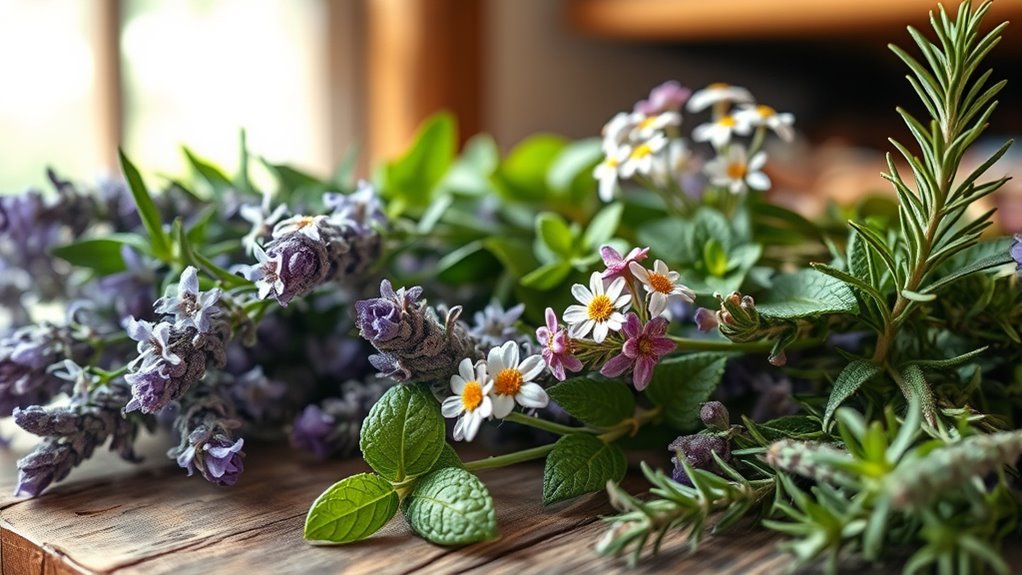
If you’re seeking herbs for grief and emotional healing, try lavender for calming relaxation, lemon balm to ease anxiety and promote restful sleep, and chamomile to soothe your mind and find inner peace. St. John’s Wort can support emotional balance and uplift your mood, while valerian root helps relieve stress and improve sleep quality. Incorporating these herbs might offer gentle comfort during tough times—exploring these options further can uncover ways to nurture your emotional well-being.
Key Takeaways
- Lavender promotes calmness and emotional serenity, easing grief-related stress and supporting emotional healing.
- Chamomile provides gentle relief, soothing the mind and encouraging inner peace during emotional distress.
- Lemon balm helps reduce anxiety and racing thoughts, fostering restful sleep and emotional resilience.
- St. John’s Wort supports mood stabilization and positive emotions, aiding in emotional recovery from grief.
- Valerian root relaxes nerves and improves sleep quality, helping manage stress and anxiety associated with grief.
Lavender: A Gentle Herb for Calm and Relaxation

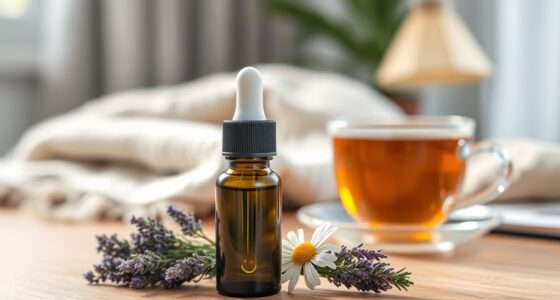
Lavender is a soothing herb renowned for its calming properties, making it a popular choice for those healing from grief. When you incorporate lavender into your routine, you may notice a sense of tranquility spreading through your mind and body. Whether you use it as an essential oil, tea, or in a diffuser, lavender helps reduce feelings of anxiety and stress. Its gentle aroma can create a peaceful environment, encouraging relaxation during difficult times. You might find yourself more centered and better able to manage overwhelming emotions. Lavender’s natural ability to promote calmness makes it a valuable tool in your healing journey, helping you find moments of serenity amid emotional upheaval. Its soothing presence offers comfort when you need it most.
Lemon Balm: Easing Anxiety and Promoting Restful Sleep
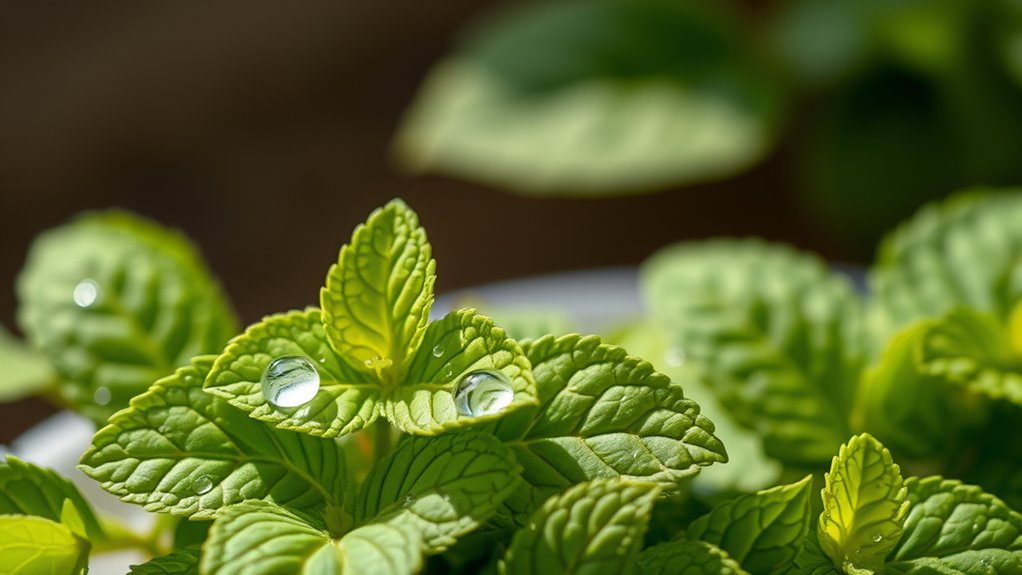
When you’re dealing with grief, anxiety can often become overwhelming, making it hard to find restful sleep. Lemon balm is a soothing herb that helps calm your nerves and ease tension. Its gentle properties can reduce feelings of worry and promote relaxation before bed. You might find it helpful to brew lemon balm tea in the evening or use it in tinctures to support restful sleep. The herb’s natural compounds work to slow racing thoughts and create a sense of calm. Incorporating lemon balm into your routine can improve sleep quality and help you face each day with less stress. Remember, consistency is key to experiencing its full benefits.
- Enjoy a cup of lemon balm tea before bed
- Add fresh lemon balm leaves to salads or desserts
- Use tinctures for quick relaxation
- Combine with other calming herbs for enhanced effect
Chamomile: Soothe Your Mind and Find Inner Peace
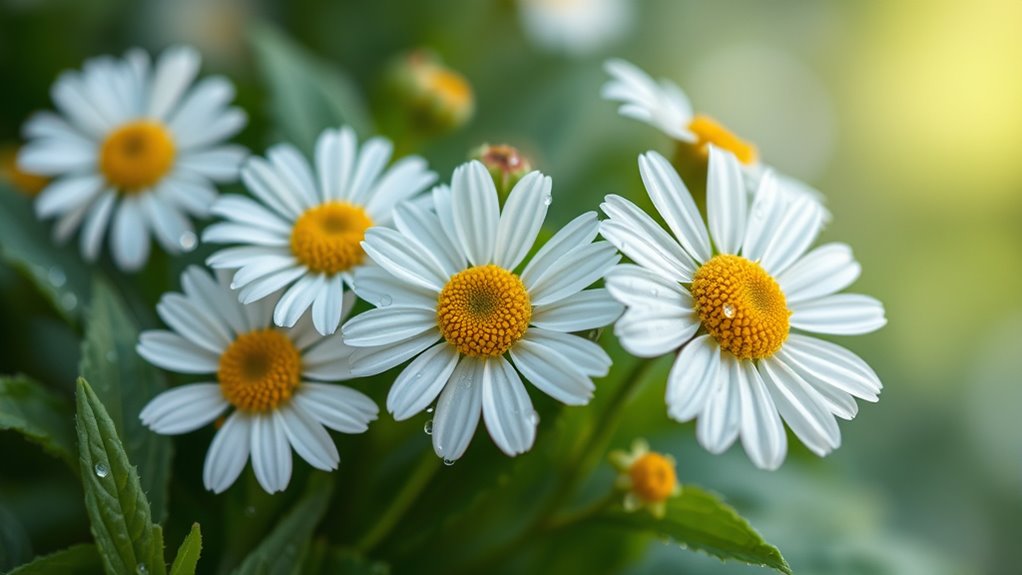
If you’re seeking calm amid emotional turmoil, chamomile offers gentle relief to soothe your mind and promote inner peace. This calming herb has natural properties that help ease tension and quiet racing thoughts. You can enjoy a warm cup of chamomile tea when feelings of stress or sadness become overwhelming. Its soothing effects encourage relaxation, making it easier to let go of worries and find emotional stability. Chamomile’s gentle nature also helps improve sleep quality, supporting your healing process. Incorporate this herb into your daily routine to create a peaceful moment for yourself. Whether used as an infusion or in other forms, chamomile can be a comforting companion during difficult times, helping you reconnect with a sense of calm and inner balance.
St. John’s Wort: Supporting Emotional Balance and Mood
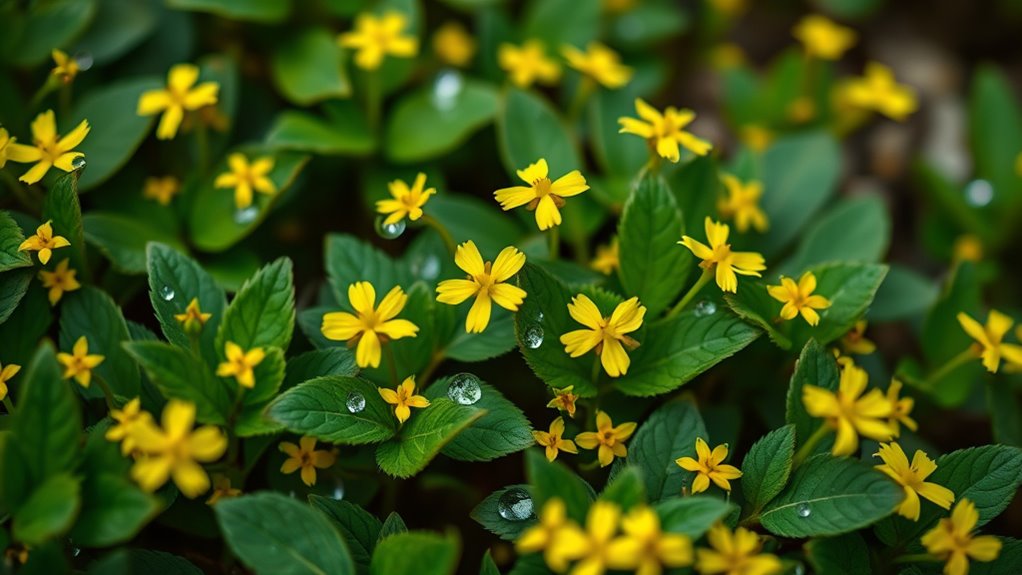
St. John’s Wort is a natural herb known for supporting emotional balance and improving mood. It works by increasing the availability of serotonin and other neurotransmitters, which can help lift feelings of sadness and anxiety. Many people turn to this herb during difficult times to promote a more positive outlook. Keep in mind, it’s important to consult with a healthcare provider before starting, especially if you’re on medication. St. John’s Wort can be effective for mild to moderate depression and emotional distress. Incorporate it into your routine as a tea, capsule, or tincture to harness its benefits. Remember, consistency is key to experiencing its full effect. With patience, this herb can become a helpful part of your emotional healing journey.
- Supports positive mood and emotional stability
- Enhances serotonin levels naturally
- Can be used as tea, capsule, or tincture
- Consult your doctor before use
Valerian Root: Natural Relief From Stress and Restlessness

Valerian root has long been valued for its calming properties and natural ability to ease stress and restlessness. When anxiety or sleeplessness take hold, this herb can be a gentle, effective remedy. It works by increasing GABA levels in your brain, promoting relaxation without drowsiness. You might find it helpful to incorporate valerian root into your nightly routine or during stressful days. Here’s a quick comparison:
| Benefit | How It Helps |
|---|---|
| Reduces Anxiety | Calms nerves and promotes peace |
| Improves Sleep Quality | Eases insomnia and restlessness |
| Natural and Non-Habit Forming | Safe alternative to medication |
| Short-Term Relief | Ideal for acute stress moments |
| Easy to Use | Available as tea, capsules, or tinctures |
Frequently Asked Questions
Are There Any Side Effects Associated With These Herbs?
Yes, some herbs for grief and emotional healing can have side effects. You might experience allergic reactions, stomach upset, or drowsiness. For example, St. John’s Wort can cause photosensitivity or interact with medications. Always talk to your healthcare provider before using herbal remedies, especially if you’re on medication or have existing health conditions. Use herbs carefully and follow recommended dosages to minimize risks.
Can These Herbs Be Used Alongside Conventional Medications?
You can absolutely use these herbs alongside conventional medications, but it’s crucial to proceed with caution. Herbs are powerful, like a tidal wave of emotion, and can interact unexpectedly with your meds. Always consult your healthcare provider before combining them, especially if you’re on prescription drugs. They can help ensure safe integration, preventing any adverse effects and making your healing journey both safe and effective.
How Long Does It Take to Notice Emotional Improvements?
You might start noticing emotional improvements within a few days to a couple of weeks, but it varies depending on your individual situation and the herbs used. Consistency is key, so take them regularly as recommended. Keep in mind, herbs support your healing process, but patience is vital. If you don’t see progress after a few weeks, consider consulting a healthcare professional to ensure you’re on the right track.
Are These Herbs Safe for Children or Pregnant Women?
You should be cautious with herbs around children and pregnant women, as some can cause adverse effects. Always consult a healthcare professional before use, especially for minors or pregnant individuals. Many herbs safe for adults may not be suitable for children or during pregnancy. It’s best to err on the side of caution and follow expert guidance to guarantee safety and avoid any potential risks.
What Is the Recommended Dosage for Emotional Healing?
Remember, “less is more.” For emotional healing, start with small doses—typically a cup of herbal tea made from your chosen herb twice daily, or follow the specific dosage instructions on the supplement label. Adjust gradually based on how you feel, and always consult a healthcare professional before increasing your dose. Consistency and patience are key; healing takes time, and gentle care fosters true recovery.
Conclusion
Think of these herbs as gentle anchors, helping you steady yourself through turbulent emotional waters. Whether you need calm, comfort, or balance, each one offers a natural way to soothe your soul. Embrace their healing power and let them be your guiding stars on your journey to emotional well-being. With patience and care, you’ll find your way back to peace, feeling more grounded and resilient each day.