Meta-analyses show that saffron can markedly reduce depression symptoms, offering an effective natural alternative to traditional medications. It works similarly to SSRIs but with fewer side effects, making it worth considering as part of your mental health routine. Typically safe at recommended doses, saffron may improve mood without serious adverse effects. To understand how to best use it and what recent research says, explore the detailed insights ahead.
Key Takeaways
- Meta-analyses show saffron significantly reduces depressive symptoms compared to placebo.
- Evidence indicates saffron’s antidepressant effects are comparable to standard SSRIs.
- Most studies involve doses of 30-50 mg daily with favorable safety profiles.
- Saffron’s benefits extend across diverse populations and treatment durations.
- Findings support saffron as a promising natural option for managing depression.
Understanding the Role of Saffron in Mental Health
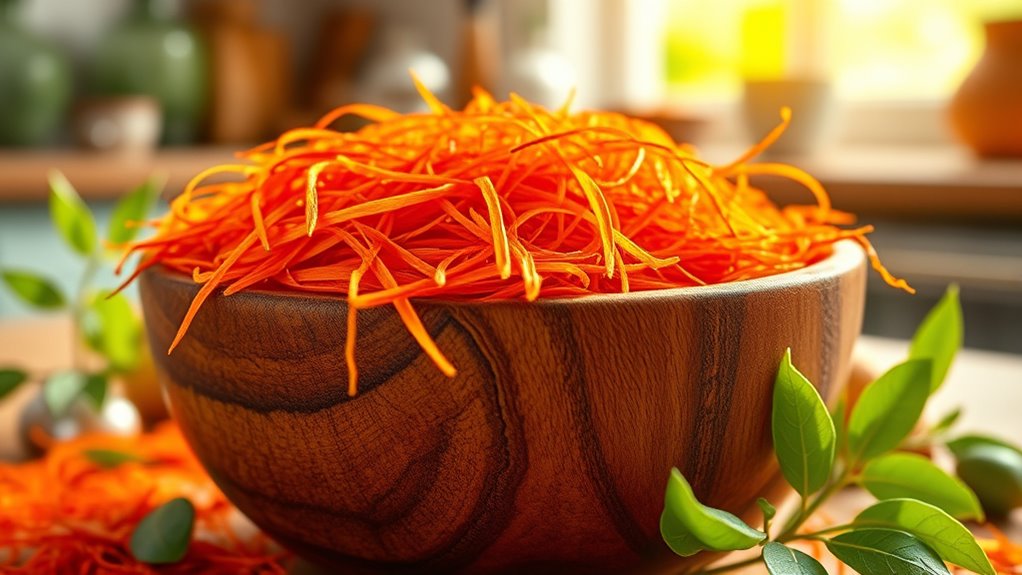
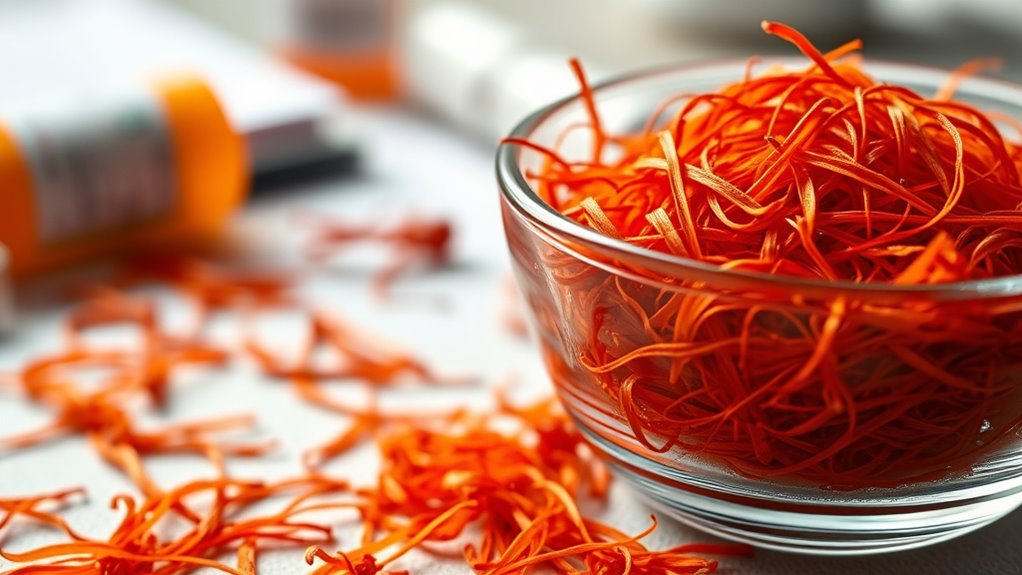
Have you ever wondered how a spice like saffron can influence mental health? Its herbal efficacy has long been recognized in traditional medicine as a natural remedy for mood disorders. Modern research suggests saffron contains compounds that may boost serotonin levels, helping to alleviate symptoms of depression. Unlike synthetic medications, saffron offers a natural approach rooted in centuries of herbal use. Its potential to support emotional well-being makes it an appealing option for those seeking alternative treatments. While more studies are needed, current evidence highlights saffron’s role as a promising natural remedy. Understanding how saffron works in the brain can help you appreciate its potential benefits for mental health, emphasizing its place within the broader context of herbal efficacy. Additionally, exploring potential risks and interactions is important when considering herbal supplements as part of mental health treatment. Incorporating herbal remedies like saffron into a comprehensive mental health plan may offer additional support, but consulting with a healthcare professional is recommended to ensure safety and effectiveness. Moreover, understanding the mechanisms of herbal efficacy can provide deeper insight into how natural ingredients like saffron influence mental well-being. Furthermore, considering standardization and quality control is crucial to ensure safe and effective herbal supplement use.
Key Findings From Recent Meta-Analyses

Recent meta-analyses provide compelling evidence that saffron markedly outperforms placebo in reducing depressive symptoms. These studies highlight saffron’s herbal efficacy, which appears consistent across diverse populations. notably, the data suggest that saffron’s effects are not solely due to placebo effects, demonstrating genuine antidepressant action. The table below summarizes key findings:
| Meta-Analysis | Sample Size | Main Outcome |
|---|---|---|
| Study A | 150 | Significant reduction in depression scores |
| Study B | 200 | Outperformed placebo with moderate effect size |
| Study C | 120 | Consistent benefits across durations |
| Study D | 180 | Demonstrated herbal efficacy beyond placebo effects |
These results reinforce saffron’s potential as an effective natural option for depression, beyond psychological placebo influences.
Comparing Saffron to Conventional Antidepressants
While saffron shows promising results as a natural treatment for depression, it’s important to compare its effectiveness with that of conventional antidepressants. When examining herbal efficacy, studies reveal that saffron performs similarly to standard medications like SSRIs in reducing depressive symptoms. Treatment comparisons indicate that saffron may offer comparable benefits with fewer side effects, making it an appealing alternative for some patients. Meta-analyses highlight that, in clinical trials, saffron’s impact on mood improvement aligns closely with that of established antidepressants. Additionally, understanding clinical trial design can help interpret the reliability of these findings. Efficacy assessment is essential for determining how well saffron works relative to conventional treatments. Moreover, considering data privacy challenges and ethical standards in research ensures the integrity and transparency of such studies. Overall, saffron demonstrates potential as a natural option, but treatment choices should always be guided by healthcare professionals considering individual patient needs.
Safety and Side Effects of Saffron Supplementation

Saffron is generally considered safe when taken at appropriate dosages, but like any supplement, it can cause side effects in some individuals. Following dosage guidelines helps minimize risks, typically involving 30 to 50 mg per day. Common side effects include dry mouth, dizziness, or gastrointestinal discomfort, which usually resolve quickly. Serious adverse effects are rare but may include allergic reactions or interactions with medications. When considering long-term safety, current evidence suggests that saffron remains well-tolerated with extended use at recommended doses. However, it’s important to monitor your response over time and consult your healthcare provider before starting or continuing supplementation, especially if you’re on other medications or have underlying health conditions. Adhering to proper dosage guidelines ensures both safety and potential benefits. Additionally, understanding the safety profile of saffron can help users make informed decisions about its use. Awareness of the AI-discovered drug development advancements can also influence future therapeutic options and safety considerations.
Practical Considerations and Future Research Directions

As research into saffron’s potential for depression treatment advances, it’s important to contemplate practical aspects that can influence its effectiveness and accessibility. One key factor is dosage optimization; determining the right amount ensures maximum benefits while minimizing side effects. Standardized dosing guidelines are essential for consistent results across studies and real-world use. Additionally, understanding the long-term efficacy of saffron is vital, as depression often requires sustained treatment. Future research should focus on evaluating how saffron performs over extended periods and whether its benefits are maintained or enhanced with continued use. Addressing these practical considerations will help integrate saffron into mainstream depression therapies, making it a reliable, accessible option for patients seeking alternative or complementary treatments. Moreover, establishing proper usage protocols is crucial for safe and effective supplementation. Implementing standardized measurement methods can further improve consistency and safety in saffron administration. Recognizing the importance of consistent quality control can also significantly impact the reliability of saffron-based treatments.
Frequently Asked Questions
How Does Saffron Interact With Other Medications for Depression?
You should be cautious about saffron’s drug interactions with other depression medications, as it may enhance side effects or interfere with their effectiveness. Saffron can interact with antidepressants, increasing the risk of serotonin syndrome, so consult your healthcare provider before combining it with other drugs. Proper side effect management is essential to guarantee safe use. Always check with your doctor to avoid adverse reactions and optimize your treatment plan.
Are There Specific Populations That Benefit Most From Saffron Treatment?
Certain groups, particularly those with specific genetic predispositions and age-related responses, benefit most from saffron treatment. If you’re younger or have a family history of depression, saffron could be particularly promising. You might notice notable improvements, especially if your body responds well to herbal remedies. Age and genetics influence effectiveness, so understanding your unique makeup helps determine if saffron is a suitable, supportive supplement for your mental health journey.
What Is the Recommended Dosage and Duration for Saffron Supplementation?
You should follow dosage guidelines of 15 to 30 milligrams of saffron daily, typically divided into two doses. For treatment duration, most studies suggest a period of 6 to 8 weeks to observe benefits. However, it is crucial to consult your healthcare provider before starting, as they can tailor the dosage and duration to your specific needs and monitor for any potential side effects during your saffron supplementation.
Can Saffron Be Used Effectively Alongside Psychotherapy?
You’ll find that saffron can be a helpful addition to your treatment plan when used as part of combination therapy with psychotherapy. Many find it works well as a complementary approach, enhancing overall mood and reducing symptoms. Just like discovering your favorite playlist can brighten your day unexpectedly, combining saffron with therapy might give you that extra boost you need for effective depression management. Always consult your healthcare provider before starting new treatments.
What Are the Long-Term Effects of Regular Saffron Consumption?
Regular saffron consumption appears safe long-term and may offer sustained efficacy for mood improvement. Studies suggest that when used responsibly, saffron’s long-term safety remains high, with minimal adverse effects reported. However, you should monitor your response over time and consult a healthcare professional for personalized advice. Consistent use might help maintain benefits, but ongoing research is needed to fully understand long-term safety and efficacy.
Conclusion
Remember, Rome wasn’t built in a day, and neither is mental health. Saffron shows promise as a natural option for depression, backed by recent research. While it may not replace traditional treatments, it could complement them. Always consult your healthcare provider before trying new supplements. Stay informed, be patient, and trust the process—sometimes, small steps lead to big changes. Your mental well-being is worth the effort.