
CBD is often promoted as a natural way to ease chronic pain, but scientific evidence varies. Studies suggest it can reduce inflammation and help with nerve or inflammatory pain, and many users report relief. However, research is still limited, with small or uncontrolled studies, so it’s not a guaranteed solution. To understand how CBD might work for you and what to weigh, explore the detailed insights ahead.
Key Takeaways
- Scientific evidence suggests CBD may reduce inflammation and nerve pain, but studies are limited and often inconclusive.
- CBD interacts with the body’s endocannabinoid system indirectly, providing potential pain relief without significant psychoactive effects.
- While many personal testimonials report pain reduction, anecdotal evidence lacks scientific validation and varies among individuals.
- Compared to traditional medications, CBD offers a safer profile with fewer side effects, but its effectiveness is generally milder.
- More large-scale, controlled research is needed to confirm CBD’s true efficacy for chronic pain management.
Understanding Chronic Pain and Its Impact

Chronic pain is a persistent condition that affects millions of people worldwide, often interfering with daily life and overall well-being. It can stem from injuries, illnesses, or unknown causes, making it difficult to manage. When you experience chronic pain, simple tasks like walking, sleeping, or even focusing become challenging. This ongoing discomfort can lead to emotional issues such as frustration, anxiety, and depression. You might find yourself constantly adjusting routines or avoiding activities you once enjoyed. Over time, this can impact your relationships and work life. Recognizing the profound impact of chronic pain helps you understand why finding effective management strategies is essential. It’s not just about physical discomfort—you’re dealing with a complex condition affecting your entire quality of life.
How CBD Interacts With the Body’s Endocannabinoid System

Your body has an endocannabinoid system that helps regulate pain, mood, and inflammation. When you take CBD, it interacts with specific receptors in this system to produce effects. Understanding how CBD binds to these receptors can clarify how it may help manage chronic pain.
Endocannabinoid System Basics
The body’s endocannabinoid system (ECS) plays a crucial role in maintaining balance, or homeostasis, by regulating functions like pain, mood, and inflammation. It consists of naturally occurring compounds called endocannabinoids, receptors, and enzymes that break down these molecules. Your ECS constantly monitors and adjusts your body’s responses to internal and external changes. When functioning properly, it helps reduce pain and inflammation, support mood stability, and regulate immune responses. Endocannabinoids are produced on demand, acting locally to influence cell activity. Receptors, mainly CB1 and CB2, are found throughout your body, including your brain, immune cells, and tissues. This system forms the foundation for how cannabinoids like CBD interact with your body, influencing various physiological processes.
CBD’s Receptor Interactions
CBD interacts with the endocannabinoid system primarily by binding to its receptors, particularly CB1 and CB2, but it does so in a unique way. Unlike THC, CBD doesn’t directly activate these receptors. Instead, it influences them indirectly, modulating their activity and enhancing the body’s natural endocannabinoids. CBD also interacts with other receptors, such as serotonin and vanilloid receptors, which can contribute to its pain-relieving and anti-inflammatory effects. This multifaceted interaction helps regulate pain, reduce inflammation, and improve mood. Because CBD doesn’t strongly bind to CB1 receptors, it produces minimal psychoactive effects. Your body’s response depends on how CBD alters receptor activity, supporting its potential benefits for managing chronic pain without the high associated with THC.
Reviewing Scientific Studies on CBD’s Pain-Relieving Properties
Numerous scientific studies have investigated how CBD can help alleviate chronic pain, providing valuable insights into its potential as a natural remedy. Many of these studies suggest that CBD interacts with the body’s endocannabinoid system, reducing inflammation and modulating pain signals. For instance, animal research demonstrates CBD’s ability to decrease nerve pain and joint inflammation. Human trials are more limited but show promising results, with participants reporting reduced pain and improved quality of life. However, research varies in quality, with some studies lacking rigorous controls or large sample sizes. While evidence points toward CBD’s potential benefits, it’s essential to interpret the results cautiously. Overall, scientific studies support some pain-relieving effects of CBD, but more thorough research is needed to confirm its efficacy and best usage.
Types of Chronic Pain That Might Respond to CBD
Scientific evidence suggests that certain types of chronic pain may respond more favorably to CBD treatment. You might find relief from conditions like neuropathic pain, which results from nerve damage and often resists traditional medications. Inflammation-related pain, such as arthritis, could also benefit, as CBD’s anti-inflammatory properties may reduce swelling and discomfort. Additionally, some individuals with fibromyalgia report reduced pain and improved sleep after using CBD. Chronic pain linked to muscle spasms or tension might respond as well, since CBD can help relax muscles and decrease spasms. While research is ongoing, these specific pain types show the most promise for CBD’s potential benefits. Keep in mind, results can vary, and consulting with a healthcare professional is always recommended before starting CBD.
Comparing CBD to Traditional Pain Medications

While traditional pain medications like opioids and NSAIDs have long been the go-to options for managing chronic pain, they often come with significant side effects and risks, such as addiction, stomach issues, and tolerance. CBD, on the other hand, is gaining attention for its potential to provide relief with fewer adverse effects. Unlike opioids, which can be highly addictive, CBD is generally considered non-intoxicating and has a different mechanism of action. NSAIDs can cause stomach ulcers and kidney problems with prolonged use, while CBD doesn’t share these risks. However, the evidence supporting CBD’s effectiveness varies, and it’s often less potent than traditional medications. Your choice depends on your specific condition, risk tolerance, and consultation with a healthcare provider.
Potential Side Effects and Risks of Using CBD
Although CBD is generally considered safe, it can cause side effects and pose certain risks. You might experience dry mouth, dizziness, or fatigue after using CBD. Some people report changes in appetite or gastrointestinal discomfort. CBD can also interact with certain medications, especially blood thinners and anticonvulsants, potentially altering their effectiveness. High doses may lead to liver enzyme elevations, indicating stress on your liver. While severe side effects are rare, you should be cautious if you have existing health conditions or are pregnant or breastfeeding. Always start with a low dose to see how your body reacts. Monitoring your response and consulting with a healthcare professional can help minimize risks and ensure safe use of CBD for your pain management.
Legal and Quality Considerations When Choosing CBD Products
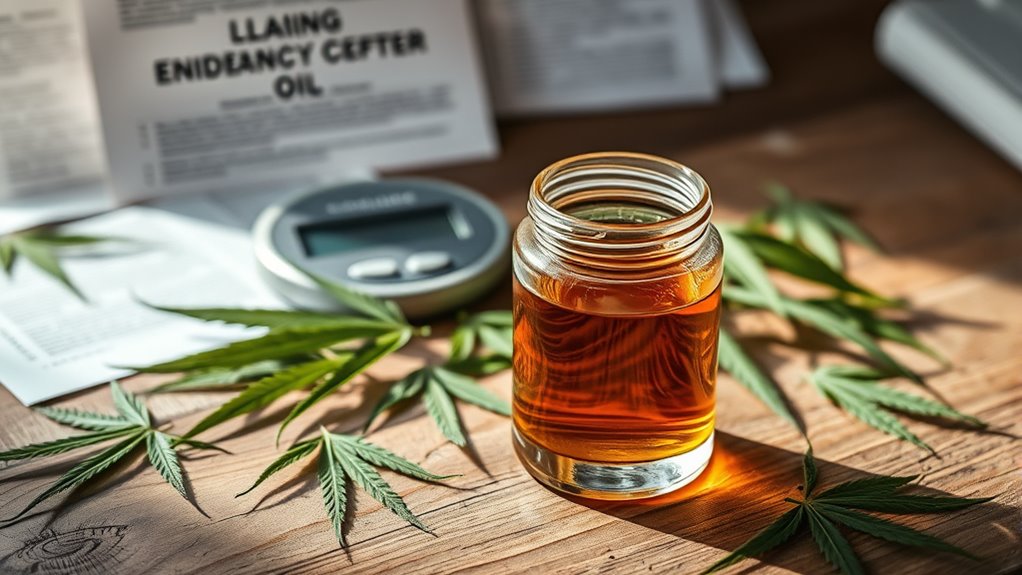
When selecting CBD products for managing chronic pain, understanding their legal status and ensuring quality are key steps. Legality varies by region, so verify local laws before purchasing. Quality is equally important; look for products tested by third-party labs to confirm potency and purity. Avoid products with artificial additives or unclear ingredients. Check labels for THC content, especially if you need to avoid psychoactive effects. Here’s a quick guide:
| Aspect | What to Look For | Why It Matters |
|---|---|---|
| Legal Status | Regional laws and regulations | Prevent legal issues |
| Lab Testing | Certificates of Analysis (COA) | Confirm potency and purity |
| THC Content | Less than 0.3% (or legal limit) | Avoid psychoactive effects |
| Label Transparency | Clear ingredient list and source | Ensure product quality |
| Additives | Minimal or no artificial ingredients | Reduce risk of adverse effects |
Anecdotal Evidence and Patient Testimonials

Many people share personal stories about how CBD has helped manage their chronic pain, offering hope to others. These testimonials often highlight perceived improvements in comfort and daily functioning. While individual experiences vary, they can provide valuable insights into CBD’s potential benefits.
Personal Healing Stories
Have you ever wondered how CBD has helped real people manage their chronic pain? Many individuals share personal stories about finding relief when other treatments failed. Some describe how daily CBD use reduced their pain intensity, allowing them to enjoy activities they once avoided. Others mention improved sleep and decreased reliance on prescription medications. These testimonials often highlight a sense of hope and renewed quality of life. While these stories are powerful and inspiring, remember they are subjective experiences. Personal healing tales can offer motivation, but they don’t replace scientific evidence. Still, hearing how CBD has positively impacted someone’s life can help you decide whether to explore it further for your own chronic pain management.
Perceived Effectiveness
Could CBD’s perceived effectiveness be enough to influence your decision to try it for chronic pain? Many people share their personal stories, claiming CBD helps reduce their discomfort and improve daily function. These testimonials often highlight quick relief or fewer side effects compared to traditional medications. However, keep in mind that these are subjective experiences, not scientific proof. What works wonders for one person might not work for another. While anecdotal evidence can be compelling, it’s essential to approach these stories with caution. Your response to CBD might be different, and its true effectiveness remains under scientific investigation. Still, if you’re curious, trying CBD could be worth exploring, especially if conventional treatments haven’t provided relief. Just remember to consult your healthcare provider first.
The Current Gaps in Research and Future Directions

Despite growing interest in CBD as a treatment for chronic pain, significant gaps remain in the research that hinder definitive conclusions. Many studies are small, lack control groups, or have inconsistent methodologies. You can’t yet fully trust that CBD works for everyone or understand ideal dosages and formulations. Future research needs standardized protocols, larger sample sizes, and long-term data to evaluate safety and effectiveness thoroughly. To help you navigate this evolving landscape, consider the following:
| Gap Area | Future Direction |
|---|---|
| Limited clinical trials | Conduct large, well-designed studies |
| Inconsistent dosing data | Establish standardized dosing guidelines |
| Long-term safety | Perform long-term safety assessments |
| Variability in products | Improve product quality control |
Making an Informed Decision About CBD for Chronic Pain

How can you make an informed decision about using CBD for chronic pain when research is still evolving? It’s essential to gather reliable information, consult healthcare professionals, and listen to your body’s responses. Be cautious of hype and unverified claims that promise quick fixes. Your journey should prioritize safety, patience, and realistic expectations. Remember, what works for someone else might not work for you. Stay vigilant about product quality, dosage, and potential interactions with medications. Empower yourself with knowledge, but also trust medical advice. Your health deserves careful consideration, not just marketing promises.
- Feel confident in your choices, knowing you’re making informed decisions.
- Protect yourself from false claims and misleading products.
- Take control of your health with research-backed info.
- Trust your intuition and body’s signals.
- Seek support from professionals who understand your unique needs.
Frequently Asked Questions
Can CBD Replace Prescribed Pain Medications Safely?
CBD isn’t a guaranteed safe replacement for prescribed pain medications. While some people find relief, it may not address severe pain effectively, and interactions with other medicines are possible. You should talk to your healthcare provider before making any changes. Don’t stop your prescribed meds without guidance, and remember that CBD’s safety and efficacy still need more research. Always prioritize professional advice for managing pain safely.
How Long Does It Typically Take for CBD to Relieve Chronic Pain?
You want instant relief? Sorry, CBD isn’t your magic wand. Usually, it takes anywhere from 30 minutes to two hours after your first dose to notice a difference, if it works at all. Factors like your body weight, the dose, and how you take it all play a part. So, don’t hold your breath for quick fixes—patience and realistic expectations are key with CBD.
Are There Specific CBD Formulations More Effective for Pain Relief?
You’ll find that full-spectrum CBD oils often work better for pain relief because they contain multiple cannabinoids that may work synergistically, known as the entourage effect. Topicals can target localized pain quickly, while capsules provide longer-lasting relief. Pay attention to formulations with higher CBD concentrations or added ingredients like menthol or arnica. Always choose products from reputable brands that provide third-party testing to guarantee quality and potency.
How Do Dosage and Frequency Impact Cbd’s Effectiveness?
You should start with a low dose of CBD and gradually increase it to see how your body responds. Taking it consistently at regular intervals enhances its effectiveness, as steady levels help manage pain better. Pay attention to how often you take it; more frequent doses might provide better relief, but avoid exceeding recommended limits. Consult a healthcare provider to tailor the dosage and frequency to your specific needs.
What Are the Signs of Adverse Reactions to CBD Use?
About 1 in 10 people report adverse reactions to CBD. You might notice symptoms like dry mouth, dizziness, or fatigue, which are common side effects. Some individuals experience changes in appetite or diarrhea. If you see these signs, reduce your dose or stop using CBD altogether. Always consult your healthcare provider if adverse reactions persist or worsen, to guarantee safe use tailored to your needs.
Conclusion
Just like the pioneers who braved uncharted waters, you stand at a crossroads with CBD and chronic pain. While science offers glimpses of hope, the journey isn’t over. Trust your instincts, but also seek knowledge and guidance. Remember, the path to relief is personal—crafted by your choices. As the horizon of research expands, stay hopeful and cautious, knowing that your pursuit of comfort echoes the resilience of those who dared to explore the unknown.