
Herbal synergy boosts chronic pain relief by combining different plants that target multiple pain pathways at once. When herbs like turmeric, willow bark, and capsaicin work together, they enhance anti-inflammatory and analgesic effects, allowing you to spend less on higher doses. Plus, strategic blends can make treatment safer by reducing side effects. To maximize benefits and avoid risks, understanding these interactions helps. Keep exploring to learn how to craft effective herbal combinations tailored to your needs.
Key Takeaways
- Herbal synergy involves combining plants to enhance pain-relief effects through multiple mechanisms.
- Pairing anti-inflammatory herbs like turmeric and ginger amplifies pain reduction for chronic conditions.
- Combining herbs allows lower doses, minimizing side effects and increasing safety in pain management.
- Understanding herb interactions helps optimize formulations and avoid adverse reactions.
- Strategic herbal blends target various pain pathways, providing comprehensive and effective relief.
The Science Behind Herbal Synergy in Pain Management

Have you ever wondered how certain herbal combinations work together to relieve pain more effectively? It’s because of herbal synergy—the way different plants interact to enhance each other’s effects. When herbs are combined, they can target multiple pain pathways simultaneously, providing more all-encompassing relief. This synergy occurs through various mechanisms, such as boosting absorption, stabilizing active compounds, or amplifying anti-inflammatory responses. Scientific studies show that combining herbs can produce a greater effect than using them individually, thanks to these interactions. By understanding how these natural compounds work together, you can optimize herbal formulations for better pain management. This scientific insight helps explain why some herbal blends outperform single herbs, making them a potent option for those seeking natural pain relief.
Key Herbs Known for Their Pain-Relieving Properties
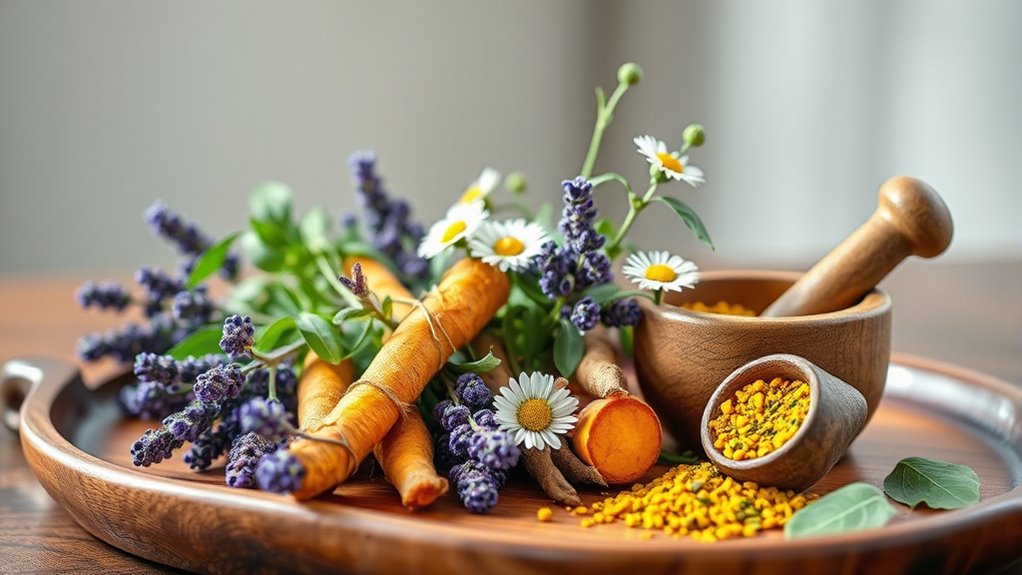
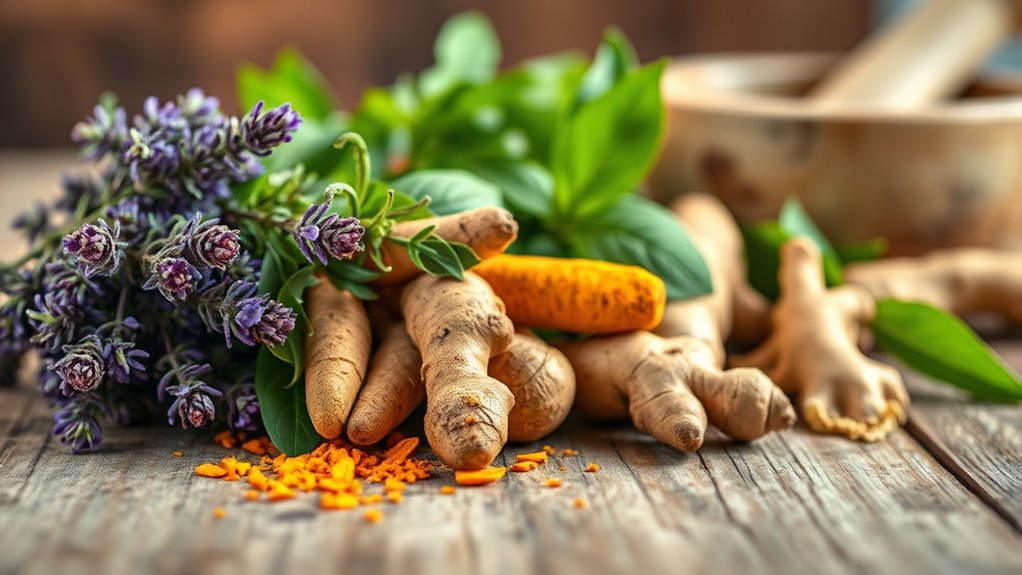
Herbal combinations work best when they include plants with well-established pain-relieving properties. You should consider herbs like turmeric, which contains curcumin and has strong anti-inflammatory effects that help reduce pain. Willow bark is another powerful herb, containing salicin, a natural compound similar to aspirin, providing effective relief for joint and muscle pain. Capsaicin, found in chili peppers, works by desensitizing nerve receptors, easing chronic pain sensations. Ginger offers anti-inflammatory benefits that can help with arthritis discomfort. Boswellia, or frankincense, reduces inflammation and supports joint health. These herbs have a proven track record for alleviating pain and can be incorporated into your routine either as supplements or teas to enhance your pain management strategy.
How Combining Herbs Enhances Effectiveness and Safety

Combining herbs can considerably boost their pain-relieving effects while minimizing potential side effects. When you blend herbs thoughtfully, they work together synergistically, amplifying each other’s benefits. For example, pairing anti-inflammatory herbs with analgesic ones can target pain from multiple angles, making relief more effective. Additionally, combining herbs allows you to use lower doses of each, reducing the risk of adverse reactions. Herbs that support liver function can also help your body process pain-relief compounds more efficiently, enhancing safety. This strategic approach not only improves overall effectiveness but also helps prevent overstimulation of your system. By understanding how herbs interact, you can create balanced blends that maximize relief while maintaining safety, leading to a more sustainable, gentle approach to managing chronic pain.
Practical Tips for Creating Herbal Blends for Chronic Pain

Creating effective herbal blends for chronic pain requires careful selection and balance. Begin by identifying herbs that target your specific pain symptoms, like turmeric for inflammation or willow bark for pain relief. Use quality, dried herbs from reputable sources to guarantee potency. When combining herbs, start with small amounts to test how your body responds. Incorporate a mix of anti-inflammatory, analgesic, and calming herbs for a thorough approach. Pay attention to flavor and aroma, which can improve your experience and compliance. Keep detailed notes on each blend’s ingredients and effects to refine your formula over time. Remember, simplicity often works best—avoid overcomplicating your blend with too many herbs. Consistency is key, so prepare your mixture regularly and adjust as needed for maximum relief.
Potential Risks and Considerations When Using Herbal Combinations

While herbal combinations can offer relief, they also carry potential risks if not used carefully. Mixing herbs without proper guidance can lead to adverse reactions or interactions with medications you’re already taking. Some herbs may intensify blood thinning, cause stomach upset, or trigger allergic responses. Overuse or incorrect dosing can also result in toxicity. Additionally, certain herbs might affect liver or kidney function over time. It’s essential to research each herb’s properties and consult a healthcare professional before combining them, especially if you have existing health conditions or are on medication. Be aware of possible side effects and start with small doses to monitor your body’s response. Always prioritize safety, and don’t assume that natural remedies are risk-free. Proper knowledge minimizes dangers and helps you harness herbal synergy effectively.
Frequently Asked Questions
Can Herbal Remedies Replace Conventional Pain Medications Entirely?
Herbal remedies can’t fully replace conventional pain medications for everyone. While they can effectively manage mild to moderate pain and reduce reliance on pharmaceuticals, some conditions require stronger, targeted treatments that only prescription drugs can provide. You should consult your healthcare provider before making any changes, especially if your pain is severe or persistent. Combining herbal remedies with conventional treatments might offer a balanced approach, but professional guidance is essential.
How Long Does It Typically Take to Notice Effects From Herbal Blends?
You might start noticing effects from herbal blends within a few days to a couple of weeks. Keep in mind, everyone’s different—some feel relief sooner, while others need more time. Think of it like planting a garden; patience helps the herbs grow stronger, and their benefits become clearer over time. Consistency is key, so stick with your routine and observe how your body responds.
Are There Specific Herbs That Are More Effective for Certain Types of Pain?
Yes, certain herbs work better for specific pain types. For example, turmeric and ginger are great for inflammation-related pain, while willow bark and capsaicin target nerve pain. You should choose herbs based on your pain’s source and consult with a healthcare professional for personalized advice. Combining herbs with complementary effects can enhance relief, but always be cautious of potential interactions and proper dosages.
Can Herbal Synergy Be Used Alongside Other Complementary Therapies?
Yes, you can definitely use herbal synergy alongside other complementary therapies. Combining herbs with practices like acupuncture, massage, or physical therapy often enhances pain relief. Just make sure to consult with your healthcare provider before starting any new treatment. This approach allows you to create a personalized pain management plan, boosting effectiveness while ensuring safety and minimizing potential interactions between herbs and other therapies.
How Do Individual Differences Affect Herbal Treatment Outcomes?
You might notice how herbal treatments work differently for you due to individual differences. Your age, genetics, health status, and lifestyle all influence how herbs interact with your body. These factors can make the same remedy more effective for someone else but less so for you. It’s like a coincidence—sometimes, a herbal remedy hits just right, and other times, adjustments are needed for maximum relief.
Conclusion
By blending herbs thoughtfully, you craft a symphony of natural relief that works in harmony with your body. Think of it as tuning an instrument—you optimize each note for a more soothing, powerful melody against pain. Just remember to listen closely to your body’s whispers and consult wisely. When you combine herbs with care, you create a gentle yet resilient shield, turning your herbal garden into a sanctuary of comfort and healing.