
When starting with red light panels, focus on models with a wavelength range of 600-700 nm for skin health and collagen, and near-infrared light of 800-900 nm for deeper tissue benefits. Check the panel size, power output, and LED placement for even coverage. Prioritize safety by reading guidelines, wearing eye protection, and limiting sessions to 10-20 minutes. Understanding these specs helps you select the right device and guarantee safe, effective use — there’s more to learn ahead.

Get oils, diffusers and self-care delivered free with Prime
- Fast, free delivery on millions of items
- Prime Video, Amazon Music and more included
- Member-only deals all year
Key Takeaways
- Understand the essential wavelength ranges (600-700 nm and near-infrared 800-900 nm) for effective skin and tissue treatment.
- Choose devices with appropriate panel size and power output for your specific treatment areas and goals.
- Prioritize safety features, proper construction, and manufacturer guidelines to ensure safe use and durability.
- Follow recommended session durations (10-20 minutes) and avoid overuse to prevent skin irritation or discomfort.
- Compare device specifications and safety features to select a reliable, effective red light panel suited to beginners.
Are you curious about how red light panels can boost your health and wellness routine? If so, you’re about to explore one of the most accessible and effective tools for improving your overall well-being. Before diving into the world of red light therapy, it’s vital to understand some basics about device specifications and safety precautions. Knowing what to look for in a device helps guarantee you get the benefits you seek while minimizing any risks.
Discover how red light panels can enhance your health and wellness safely and effectively.
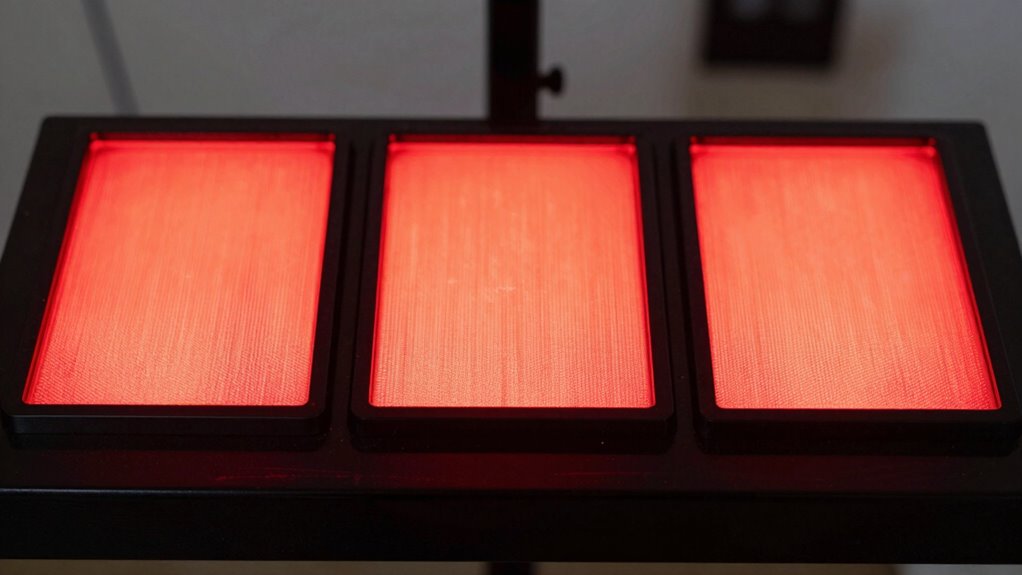
When examining device specifications, pay attention to the wavelength of the light emitted. Most beginner-friendly red light panels operate within the 600-700 nanometers range, which is ideal for skin health, collagen production, and inflammation reduction. Some devices also combine near-infrared light, typically around 800-900 nanometers, which penetrates deeper into tissues for joint and muscle relief. The size of the panel matters too; a larger surface area allows you to treat more skin or body parts simultaneously, making your sessions more efficient. Power output, usually measured in milliwatts per square centimeter (mW/cm²), indicates how intense the light is—higher power means shorter, more effective sessions. Additionally, check the number of LEDs and their placement, as more evenly distributed lights ensure thorough coverage. Proper device quality and construction are essential to ensure safety, durability, and consistent performance.
Safety precautions are just as critical as understanding device specs. Before starting your sessions, read the manufacturer’s guidelines carefully. Most red light panels are safe for home use, but eye protection is essential—wear goggles designed for red light therapy or keep your eyes closed during treatment. Never stare directly into the LEDs, especially at high intensities, as prolonged exposure can cause discomfort or damage. Limit your session durations according to the manufacturer’s recommendations—typically between 10 to 20 minutes—and avoid overuse, which doesn’t lead to faster results and may cause skin irritation. If you’re pregnant, have a skin condition, or are taking photosensitive medications, consult your healthcare provider before use. Keep the device clean and in a dry, cool place to prevent damage and ensure safe operation. Familiarizing yourself with the device specifications can help you select a panel that offers the right combination of features and safety for your needs.
Starting with these fundamentals ensures your experience with red light panels is both safe and effective. By understanding device specifications, you’ll choose a panel that suits your needs, and by adhering to safety precautions, you protect yourself while enjoying the potential health benefits. Once you’re comfortable with these basics, you’ll be better equipped to compare different models and find the perfect fit for your wellness journey.
red light therapy panels for skin
As an affiliate, we earn on qualifying purchases.
As an affiliate, we earn on qualifying purchases.
Frequently Asked Questions
Are Red Light Panels Safe for All Skin Types?
Red light panels are generally safe for all skin types, but you should consider your skin pigmentation and sensitivity concerns. If you have darker skin tones, make sure the device uses appropriate wavelengths to prevent pigmentation changes. For sensitive skin, start with shorter sessions and observe how your skin reacts. Always follow manufacturer instructions and consult a dermatologist if you have specific concerns, especially regarding pigmentation or sensitivity issues.
How Often Should Beginners Use Red Light Therapy?
Think of your red light therapy routine as tending a garden—you don’t overwater, or your plants suffer. For beginners, start with 3-4 sessions per week, about 10-20 minutes each. As you become more familiar, you can adjust. Remember, device maintenance keeps your panel working well, and cost considerations matter—don’t overdo it. Consistency is key, and listening to your body helps you find the right rhythm.
Can Red Light Panels Replace Traditional Skincare Routines?
Red light panels can’t fully replace traditional skincare routines, but they can complement them. They work by using specific light wavelengths to penetrate your skin deeply, promoting healing and collagen production. Skin penetration varies with wavelength, so choosing the right panel matters. While they boost your skincare efforts, don’t abandon cleansing or moisturizing. Use red light therapy as a supplement, not a substitute, for all-encompassing skin health.
Are There Any Side Effects From Red Light Therapy?
About 10-15% of users report mild side effects from red light therapy, mainly skin sensitivity and eye discomfort. You might notice redness or irritation if your skin is sensitive, so start with shorter sessions. Eye safety is essential; always wear protective goggles to prevent potential damage. Generally, red light therapy is safe when used properly, but monitoring your body’s response helps prevent any adverse effects.
What Is the Ideal Distance to Use Red Light Panels?
You should place the red light panel about 6 to 12 inches from your skin for effective Panel Placement. Maintain a Usage Duration of around 10 to 20 minutes per session, depending on your goals. Keep the panel steady and avoid moving it during treatment. Adjust the distance if you feel any discomfort or heat, but generally, this range ensures maximum benefits without overexposure.
near-infrared light therapy device
As an affiliate, we earn on qualifying purchases.
As an affiliate, we earn on qualifying purchases.
Conclusion
Now that you’ve learned the basics, you’re ready to explore red light panels. Did you know that over 70% of users notice improved skin health within just a few weeks? Imagine waking up each morning feeling more refreshed and confident, all thanks to a simple, non-invasive treatment. Starting here means you’re taking the first step toward a healthier, more vibrant you. So, go ahead—dive in and discover the benefits waiting for you!
As an affiliate, we earn on qualifying purchases.
As an affiliate, we earn on qualifying purchases.
Fall Picks
fall essentials
As an affiliate, we earn on qualifying purchases.