
TL;DR

Get oils, diffusers and self-care delivered free with Prime
- Fast, free delivery on millions of items
- Prime Video, Amazon Music and more included
- Member-only deals all year
A Fit&Well report describes a writer’s routine of holding child’s pose and a standing forward fold for about a minute each after daily walks. Physiotherapist Helen O’Leary says the positions can stretch lower-back soft tissues and may ease post-walk stiffness, though the article does not report clinical testing of this personal routine.
Fit&Well has published a first-person account of two stretches its writer does after daily walks: child’s pose and a standing forward fold. The writer says the short routine helps them feel less stiff after walking in a hilly area, while physiotherapist Helen O’Leary explains how the positions may stretch tissues around the lower back.
The writer says walking is their only daily form of exercise and that walks generally last no longer than an hour. After moving to a hilly area, they began noticing stiffness in their legs, hips and back, despite viewing walking as low-impact. They started holding each of the two poses for about a minute after a walk and report feeling less stiff for the rest of the day. That is a personal account, not a measured outcome from a study.
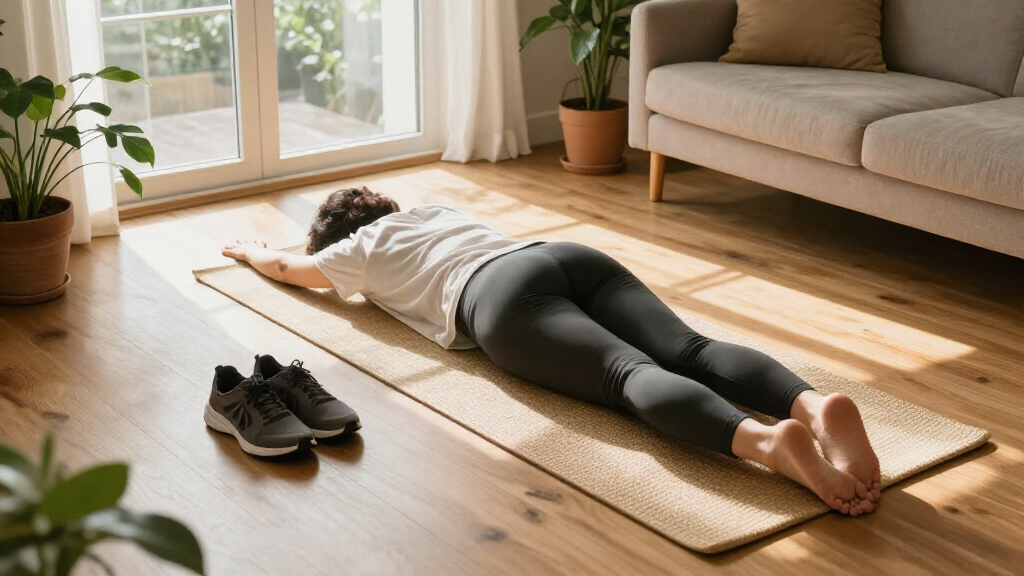
For child’s pose, the instructions are to kneel with the knees wider than hip-width, reach the arms forward and sit the hips back toward the heels, then hold a comfortable position. For a standing forward fold, stand with feet about hip-width apart, lower the arms toward the feet and keep the knees bent. The writer’s guidance is to stop at a comfortable stretch in the hamstrings rather than force the movement.
O’Leary, identified in the report as a physiotherapist at Complete Pilates, says these poses put the spine into flexion and stretch soft tissues in the lower back. She also suggests making the child’s pose more targeted by walking the hands to one side while sitting back into the opposite hip, then repeating on the other side. The source does not provide clinical evidence that this routine relieves pain or is appropriate for everyone.
A Short Routine After Hilly Walks
The report’s practical point is that low-impact exercise can still leave someone feeling stiff, particularly after regular walks on hilly terrain, according to the writer’s experience. The suggested routine takes only a few minutes and links stretching to an existing daily activity, an approach the article calls habit stacking. That may make it easier for some people to remember a mobility routine, but the report does not establish that it will prevent stiffness or produce the same result for other walkers.
The distinction matters: O’Leary offers a physiotherapist’s explanation of how the positions may stretch the lower back, while the claim of feeling better comes from the writer. Readers can treat the stretches as options for gentle movement, not as a guaranteed remedy for persistent pain, injury or restricted mobility.
Products Worth Considering

Withings Sleep Under-Mattress Sleep Tracking Pad

Theragun Mini 3rd Generation Massage Gun – Travel Essential (Black)

Garmin Forerunner 55 GPS Running Smartwatch, Black
As an affiliate, we earn on qualifying purchases.
Why the Writer Added Stretches
The writer had assumed that walking required no specific recovery because it was low-impact and did not cause them to sweat. After moving somewhere hilly, they noticed stiffness following walks and reconsidered that assumption. Their chosen movements focus on the legs and hips while also moving the back, which they describe as their stiffest area.
O’Leary’s explanation in the report focuses on spinal position. She says that while standing, the lower back is neutral or slightly extended, and that this can load small joints in the area. In her account, child’s pose and a forward fold move the spine into flexion and stretch lower-back soft tissues. This is an expert’s explanation of the poses, not a diagnosis of the writer’s stiffness.
““It is quite common to feel a bit stiff or achy after walking, particularly following a long walk, and certain stretches can alleviate that discomfort.””
— Helen O’Leary, physiotherapist at Complete Pilates, as quoted by Fit&Well
Limits of the Personal Account
The report does not give a publication date in the supplied material, nor does it describe a study, comparison group or objective measurement of stiffness. The claimed improvement is the writer’s own experience, and it is unclear how consistent the effect was or whether the same routine would help other people. The article also does not say whether the writer had an underlying condition or received an individual assessment.
It is also unclear whether the stretches suit people with particular back, hip or knee problems. The instructions do not set out alternatives for limited mobility or explain how to distinguish a comfortable stretch from pain. People should avoid forcing a position; those with ongoing or worsening symptoms, an injury or a relevant health condition can ask a qualified health professional for individualized advice.
How to Try the Positions
The report describes a simple sequence rather than a scheduled program: after walking, hold child’s pose and a standing forward fold for about a minute each, staying within a comfortable range. Anyone trying the side-bend variation can do it on both sides, as O’Leary advises. The article gives no follow-up data or timeline for evaluating results, so readers should not assume that relief is assured.
For people whose discomfort persists, worsens or affects daily activities, the next step is not to rely on a stretch alone; a physiotherapist or other qualified clinician can assess the cause and advise on suitable movement. The source reports no planned research or further update on the writer’s routine.
Key Questions
Which two stretches does the report describe?
It describes child’s pose and a standing forward fold, each held for about a minute in the writer’s routine.
How does the report say to do a standing forward fold?
Stand with feet about hip-width apart, lower the arms toward the feet and keep the knees bent. Stop when you feel a comfortable stretch in the hamstrings; do not force the reach.
What does the physiotherapist say these poses may do?
Helen O’Leary says both positions flex the spine and stretch soft tissues in the lower back. This is an explanation of their possible effect, not evidence that they treat a condition or work for everyone.
Can everyone safely use these stretches for pain?
The report does not establish that the routine is suitable for everyone or that it treats pain. Avoid movements that cause pain, and seek advice from a qualified health professional if symptoms persist, worsen, follow an injury or relate to a pre-existing condition.
Source: rss