Herbs feel warming, cooling, or soothing mainly because of their chemical makeup and how these compounds interact with your body. Warming herbs contain oils like gingerol that stimulate circulation and generate heat, while cooling herbs such as mint have anti-inflammatory molecules that reduce heat and inflammation. Soothing herbs tend to relax and calm nerves through various calming compounds. To understand how these effects work and how to use herbs effectively, keep exploring these natural properties further.

Get oils, diffusers and self-care delivered free with Prime
- Fast, free delivery on millions of items
- Prime Video, Amazon Music and more included
- Member-only deals all year
Key Takeaways
- The chemical compounds in herbs, such as volatile oils or anti-inflammatory molecules, determine their warming, cooling, or soothing sensations.
- Herbs cultivated in specific climates or soil conditions develop properties that influence their warming or cooling effects.
- Warming herbs often contain compounds like gingerol that stimulate circulation and generate heat in the body.
- Cooling herbs typically have molecules that act as anti-inflammatories or vasoconstrictors, soothing heat and inflammation.
- Traditional uses and cultural practices align with the herb’s chemical makeup and cultivation, guiding their application for specific effects.
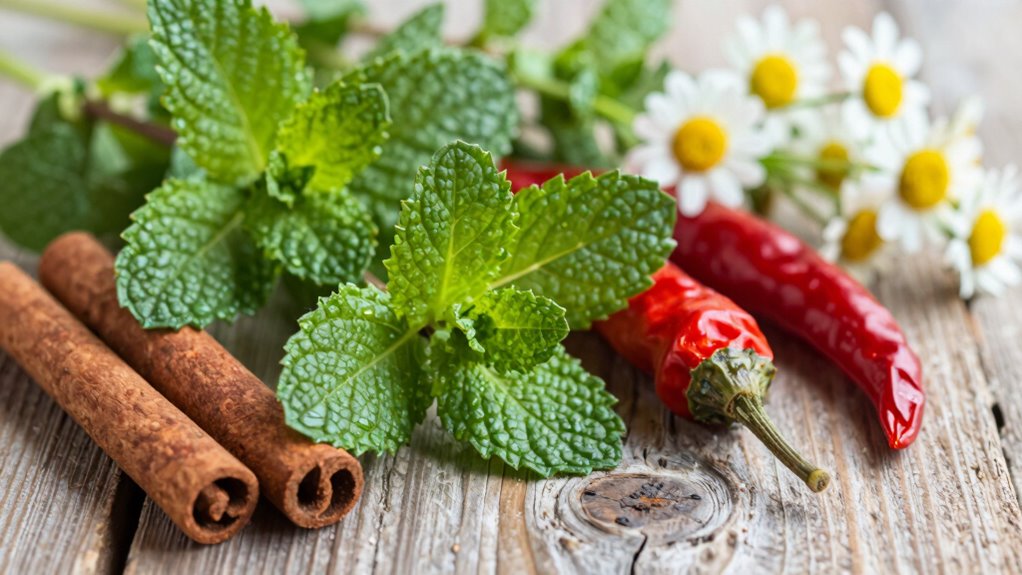
Herbs have long been valued for their ability to influence the body’s balance, providing warmth, cooling relief, or soothing comfort depending on their properties. This influence largely stems from their chemical makeup, which interacts with your body’s systems in specific ways. When you consider herb cultivation, you’ll notice that many herbs are grown in particular climates or soil conditions that enhance their natural qualities. For example, some herbs thrive in hot, dry environments, which can intensify their warming effects, while others flourish in cooler, damp conditions, boosting their cooling properties. Traditional uses of these herbs often reflect this understanding, with certain plants historically applied to promote circulation or generate heat, such as ginger, or to reduce inflammation and promote cooling, like peppermint.
The key to understanding what makes an herb feel warming, cooling, or soothing lies in its bioactive compounds. Warming herbs typically contain volatile oils or compounds that stimulate blood flow, creating a sensation of heat or increased warmth in the body. Ginger, for example, has compounds like gingerol that promote circulation and generate a warming feeling. These herbs have been used traditionally to support digestion, increase vitality, or treat cold-related ailments. On the other hand, cooling herbs often contain molecules that act as natural anti-inflammatories or vasoconstrictors, helping to reduce heat, inflammation, or swelling. Mint and chamomile are classic examples, with their cooling effects often used to soothe headaches, reduce fever, or calm irritated tissues. Their traditional uses date back centuries, where they were employed in teas or poultices to bring relief during hot months or to calm the nervous system. Recognizing how chemical makeup influences these effects can help you select herbs more effectively for your specific needs.
Additionally, understanding the traditional uses of herbs can provide insight into their most effective applications based on historical knowledge and cultural practices. Exploring the cultivation conditions of herbs can also reveal why certain varieties possess specific properties, which can guide your growing choices for desired effects. Furthermore, being aware of herb chemistry can deepen your understanding of how these plants produce their distinctive effects, aiding in more precise herbal use. Knowing the bioactive compounds in herbs can also help you appreciate the complexity of their effects, as different combinations of chemicals may work synergistically to enhance or modify their properties.
Understanding what makes an herb feel warming, cooling, or soothing allows you to choose the right plant based on your needs. Whether you’re cultivating herbs in your garden or exploring their traditional uses, recognizing these properties helps you harness their benefits safely and effectively. The natural chemistry of each herb, shaped by its cultivation and history of use, guides their application—warming herbs energize and invigorate, cooling herbs calm and reduce heat, and soothing herbs relax and comfort.
As an affiliate, we earn on qualifying purchases.
Frequently Asked Questions
How Do Individual Body Chemistries Affect Herb Sensations?
Your individual body chemistry considerably influences how you perceive herb sensations. Metabolic variations mean that some people process herbs differently, leading to personalized responses. For instance, your unique metabolic rate and balance of body elements can make an herb feel more warming, cooling, or soothing to you. Recognizing these differences helps you tailor herbal use, ensuring you experience the intended effects and avoid adverse reactions based on your body’s specific chemistry.
Can Herbs Change Their Effects Over Long-Term Use?
Herbs are like musical instruments that can change tune over time. With long-term use, their effects might shift due to changes in herbal potency or your body’s response, influenced by traditional knowledge. You might find an herb that once soothed now feels less effective, or even acts differently. Staying aware through moderation and understanding these natural fluctuations helps you harness herbs’ benefits safely and effectively over the long haul.
Are There Any Risks Combining Warming and Cooling Herbs?
Yes, combining warming and cooling herbs can pose risks if you’re not careful. Herb compatibility is essential; some herbs may counteract or intensify each other’s effects. Always consider dosage to avoid adverse reactions or imbalances. For safety, consult a knowledgeable herbalist before mixing these herbs, especially if you have underlying health conditions or are on medication. Proper guidance ensures you enjoy their benefits without risking any unintended side effects.
How Do Preparation Methods Influence Herb Sensations?
They say “the proof is in the pudding,” and your herb’s preparation truly influences its sensation. Heating methods like boiling or roasting intensify herb temperature, enhancing warming effects through sensory perception. Conversely, cold infusions or raw preparations preserve cooling qualities. How you prepare herbs shapes their impact on your body, making each method a deliberate choice to evoke soothing, warming, or cooling sensations.
Do Cultural Beliefs Influence Perceived Herb Effects?
Yes, cultural beliefs profoundly influence how you perceive herb effects. Herbal folklore and traditional uses shape your expectations, often aligning with the herb’s perceived properties. If a culture views a herb as warming, you might experience comforting sensations, while cooling herbs could feel more invigorating. These beliefs influence your mind-body response, making the perceived effects feel stronger or more authentic, even if the herb’s actual physical properties are neutral.
As an affiliate, we earn on qualifying purchases.
Conclusion
Now that you understand how herbs can feel warming, cooling, or soothing, you might wonder how to incorporate them into your daily routine. Whether you’re seeking comfort or refreshment, choosing the right herb can make all the difference. Isn’t it fascinating how natural remedies can influence your body’s sensations? By understanding these qualities, you empower yourself to craft personalized healing experiences—so why not explore the herbs that resonate with your needs and embrace their natural benefits?
chamomile calming herbal supplement
As an affiliate, we earn on qualifying purchases.
As an affiliate, we earn on qualifying purchases.
herbal poultice for inflammation
As an affiliate, we earn on qualifying purchases.
As an affiliate, we earn on qualifying purchases.
Fall Picks
fall essentials
As an affiliate, we earn on qualifying purchases.