

To reduce stress and boost your focus, try practicing mindfulness through simple techniques like breathing exercises and meditation. Focus on your breath, inhaling deeply through your nose and exhaling slowly, whenever you feel overwhelmed. Regularly dedicating a few minutes to quiet, attentive awareness helps you stay present and calm. Small daily efforts can create significant benefits over time. Keep exploring these practices, and you’ll discover even more ways to feel centered and focused.
Key Takeaways
- Practice mindfulness meditation regularly to cultivate present-moment awareness and reduce stress.
- Use breathing exercises, such as deep inhaling and exhaling, to calm the nervous system and enhance focus.
- Dedicate short, daily sessions in a quiet space to build consistency and mental resilience.
- Focus on sensations, thoughts, and breath without judgment to improve emotional regulation and clarity.
- Combine meditation with breathing techniques for a powerful way to manage stress and sharpen attention over time.
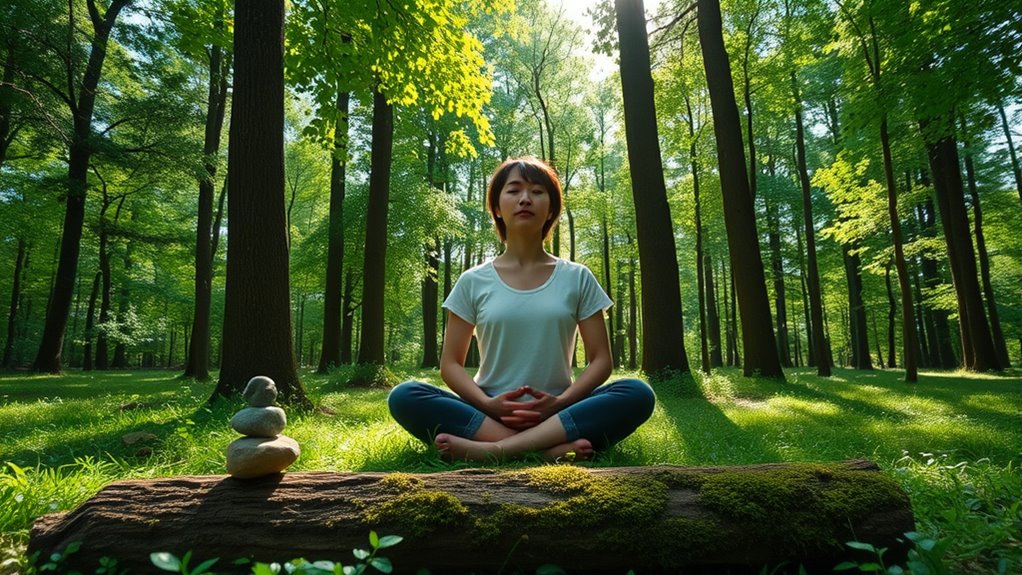
Have you ever wondered how to reduce stress and improve your overall well-being? If so, practicing mindfulness can be a game-changer. Mindfulness meditation is a simple yet powerful way to center yourself amid life’s chaos. It involves paying close attention to your breath, sensations, and thoughts without judgment. By regularly engaging in mindfulness meditation, you train your mind to stay present, which decreases anxiety and helps you manage stress more effectively. It’s not about emptying your mind but rather observing your experiences with gentle awareness. This practice can be done anywhere, anytime, making it accessible to fit into even the busiest schedules.
Practicing mindfulness meditation helps reduce stress and promotes overall well-being anywhere, anytime.
Breathing exercises are another cornerstone of mindfulness practices that can considerably reduce stress. When you focus on your breath, you activate your parasympathetic nervous system, which promotes relaxation and calmness. Deep breathing techniques, such as inhaling slowly through your nose for a count of four, holding your breath briefly, then exhaling gently through your mouth for a count of six, help slow your heart rate and clear your mind. These exercises are straightforward, require no special equipment, and can be practiced during moments of acute stress or as part of a daily routine. Incorporating breathing exercises into your day encourages a state of mindfulness, grounding you in the present moment and preventing your worries from spiraling out of control.
To make the most of these practices, set aside a few minutes each day. Find a quiet space, sit comfortably, and focus on your breath. As your mind wanders—inevitably it will—gently bring your attention back to your breath without self-criticism. Over time, you’ll notice that your ability to stay present improves, and stress feels more manageable. Incorporating mindfulness practices like meditation and breathing exercises can also support your physical health by reducing stress-related symptoms. Combining mindfulness meditation with breathing exercises creates a powerful synergy; meditation helps cultivate a sense of awareness, while breathing exercises anchor you in the present. This dual approach not only reduces stress but also sharpens your focus, allowing you to approach tasks with clarity and confidence.
Incorporating these mindfulness practices into your daily life can transform how you handle stress and maintain focus. The key is consistency—regular practice builds resilience and deepens your sense of calm. Remember, you don’t need hours to experience the benefits; even a few minutes of mindful breathing or meditation can make a substantial difference. With patience and persistence, you’ll find yourself feeling more centered, less overwhelmed, and better equipped to navigate life’s challenges.
Frequently Asked Questions
Can Mindfulness Practices Be Integrated Into Daily Routines Effectively?
Yes, you can integrate mindfulness practices into your daily routine effectively through mindful scheduling. By setting aside specific times for short meditation sessions or mindful breathing, you create routine integration that becomes second nature. Consistency is key, so start small and gradually increase your practice. Incorporate mindfulness into everyday activities like eating, walking, or even brushing your teeth to make it a seamless part of your daily life.
What Are Common Challenges Beginners Face With Mindfulness Exercises?
As a beginner, you might struggle with mindfulness misconceptions, like expecting instant calm, making it hard to stay committed. For example, Sarah found it difficult to silence her mind during meditation, thinking she was doing it wrong. Common beginner obstacles include impatience and difficulty focusing, but remember, mindfulness isn’t about perfection. Stay patient, practice regularly, and understand that these obstacles are natural parts of the learning process.
How Long Does It Typically Take to See Results From Mindfulness?
You can start noticing results from mindfulness within a few weeks, but timing expectations vary. Some people experience measurable outcomes like reduced stress or improved focus after just 10 days of consistent practice, while others may take longer. Stay patient and committed, as regular practice enhances your chances of seeing meaningful changes over time. The key is consistency, and you’ll likely see gradual improvements in your overall well-being.
Are There Specific Mindfulness Techniques Suited for High-Stress Environments?
Yes, in high-stress environments, you should focus on quick, effective techniques like breathing exercises and body scans. These methods help you stay grounded and calm amidst chaos. You can do breathing exercises to regulate your breath and pause for a body scan to release tension. Incorporate these practices into your routine to improve focus and reduce stress on the spot, making it easier to handle demanding situations.
Can Mindfulness Practices Complement Other Stress-Reduction Methods?
Yes, mindfulness practices can effectively complement other stress-reduction methods, enhancing your holistic health and emotional resilience. By integrating mindfulness with techniques like exercise, deep breathing, or therapy, you create a thorough approach to managing stress. This synergy helps you stay grounded, improve emotional strength, and maintain balance in challenging situations. Combining these strategies empowers you to foster long-term well-being and resilience in both personal and professional aspects of your life.
Conclusion
By incorporating mindfulness practices into your daily routine, you can cultivate a calm center amid life’s chaos. Think of mindfulness as a lighthouse guiding you through stormy waters, helping you stay grounded and focused. With consistent effort, you’ll notice stress melting away like snow in spring and your concentration sharpening like a well-honed blade. Embrace these simple yet powerful tools, and watch your mind blossom into a peaceful, focused sanctuary amid life’s turbulence.