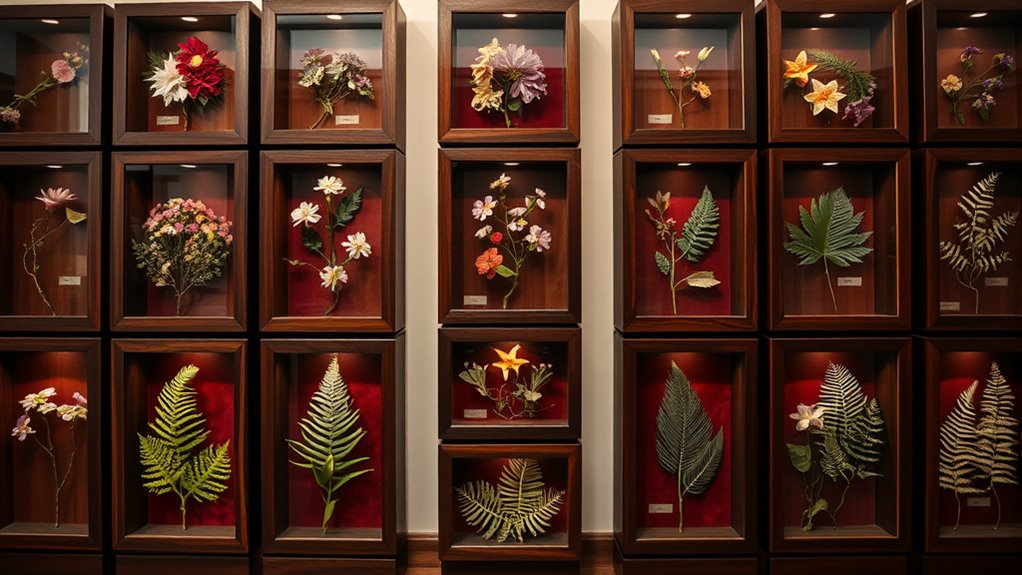

Choosing a botanical specimen display case comes down to what needs the most protection and attention: a slim, two-sided presentation or more room around the specimens. I rank the A3 Wooden Dried Flower Display Frame first for its 5 cm depth and larger display format, which better suits arrangements that need space in front of the backing. The A4 Double Glass Floating Frame is my pick for compact pressed botanicals and a see-through presentation that can be viewed from either side.

Get oils, diffusers and self-care delivered free with Prime
- Fast, free delivery on millions of items
- Prime Video, Amazon Music and more included
- Member-only deals all year
The tradeoff is practical. The A3 frame offers greater depth, but its listed dimensions are unusually large and it has an acrylic front, not double-sided glass. The A4 frame is more clearly specified as an A4 display with glass on both sides, but it has less room for dimensional specimens and requires careful handling. I’d choose based on the plant material, intended placement, and how much display space is available.
Key Takeaways
- The A3 frame is the better fit for specimens that benefit from its stated 5 cm depth, but confirm its listed dimensions before planning a wall or tabletop installation.
- The A4 walnut frame has double-sided glass, making it the clearer choice when viewers should see a botanical arrangement from both sides.
- The A3 front panel is acrylic, which may be more practical around busy spaces than glass, but its rear construction and protective features are not specified.
- For small pressed leaves and flat compositions, the A4 frame gives a defined A4-sized viewing area without requiring a larger display footprint.
- Neither listing specifies UV protection or humidity control, so I would keep valuable dried specimens away from direct sun and damp rooms.
| A3 Wooden Dried Flower Display Frame, 5cm Deep Shadow Box for Specimens |  | Best Overall for Dimensional Specimens | Material: Wood with acrylic front panel | Depth: 5 cm | Listed dimensions: 17.24 × 17.24 × 17.24 inches | VIEW ON AMAZON | See Our Full Breakdown |
| Wooden Dried Flower Shadow Box Frame, A4 Size (8.3×11.7 Inches), Double Glass Floating Display, Walnut |  | Best for Pressed Botanicals and Two-Sided Viewing | Material: Composite wood | Inner size: 21 × 29.7 cm (A4) | Frame size: 8.3 × 11.7 inches | VIEW ON AMAZON | See Our Full Breakdown |
| botanical specimen display case | Material | Depth | Listed dimensions | Weight |
|---|---|---|---|---|
| A3 Wooden Dried Flower Display | Wood with acrylic front panel | 5 cm | 17.24 × 17.24 × 17.24 inches | 2.3 pounds |
| Wooden Dried Flower Shadow Box | Composite wood | — | — | — |
More Details on Our Top Picks
A3 Wooden Dried Flower Display Frame, 5cm Deep Shadow Box for Specimens
I rank this frame first for botanical displays that need more breathing room than a flat frame can provide. Its stated 5 cm depth gives stems, layered petals, and small arrangements a more dimensional setting than the A4 floating frame, whose description emphasizes double-sided viewing rather than interior depth. For a specimen that should read as an object rather than a pressed image, that extra space is the main reason to choose this model.
The acrylic front panel is a meaningful difference from the A4 frame’s glass on both sides. Acrylic avoids putting glass at the front, but the listing does not describe scratch resistance, UV filtering, or how the back closes. I would treat it as a display frame, not a sealed preservation case. The walnut finish lends a warm frame to delicate plant material, while the stated 2.3-pound weight may help when planning placement, although mounting hardware is not specified.
There is one fit question I would resolve before ordering: the listing calls this A3 while giving dimensions of 17.24 inches on every side. That does not read like a typical A3 format, so buyers should confirm the usable opening and overall footprint. Compared with the A4 option, this is the more spacious and sculptural choice, but it is less reassuring for exact sizing and viewing from both sides. I would pick it for a prominent botanical arrangement only after confirming measurements; I’d skip it for a small wall or a specimen that must be displayed through both faces.
Pros:- 5 cm depth gives dimensional specimens more room than the A4 floating frame.
- Acrylic front panel avoids the double-glass construction used by the smaller option.
- Walnut finish provides a warm, restrained backdrop for dried botanicals.
- Listed as easy to assemble for home or office display.
Cons:- The stated 17.24-inch dimensions on all sides are unusual for an A3 frame; verify the usable opening and footprint.
- No UV protection, sealing details, or other specimen-preservation features are specified.
- Mounting hardware is not listed, so wall installation may require separate parts.
Best for: Buyers displaying dimensional dried flowers or layered specimens who want a deeper shadow-box profile and can verify the actual frame measurements.
Not ideal for: People with limited wall or tabletop space, anyone needing a clearly stated A3 opening, or buyers who want double-sided visibility and confirmed mounting hardware.
- Material:Wood with acrylic front panel
- Depth:5 cm
- Listed dimensions:17.24 × 17.24 × 17.24 inches
- Weight:2.3 pounds
- Finish:Walnut
- Front panel:Acrylic
- Assembly:Described as easy to assemble
- Mounting hardware:Not specified
Our verdict“I’d choose this as the more versatile botanical shadow box for dimensional specimens, provided its unusual listed measurements work for the display space.”
Wooden Dried Flower Shadow Box Frame, A4 Size (8.3×11.7 Inches), Double Glass Floating Display, Walnut
This is the more straightforward choice when the botanical composition is flat, compact, and meant to be seen from more than one side. Its specified A4 inner size gives a useful boundary for pressed leaves, small flowers, and carefully arranged stems, while the double-sided glass creates a floating effect rather than hiding the reverse behind an opaque backing. Compared with the deeper A3 shadow box, it favors lightness and visibility over room for bulky material.
The walnut-finished composite wood frame is suited to buyers who want the specimen to sit comfortably among home decor, and the listing says its contents are easy to change. That flexibility helps when rotating seasonal botanicals or refining a layout. The same glass that makes both sides visible also calls for more careful handling than the acrylic front on the A3 option. The listing gives no UV protection or moisture barrier, so I would not treat the frame as a preservation enclosure for especially fragile or valuable specimens.
Its main limitation is size. At 21 × 29.7 cm inside, it cannot match the broader presentation implied by the A3 model, and deeper blooms may press against the panels. I’d choose this frame for a small, pressed arrangement displayed on a tabletop or where both faces can be seen. Buyers who need substantial depth, a single-sided wall presentation, or a larger botanical centerpiece should look at the A3 frame instead, after checking that model’s unusual dimension listing.
Pros:- Double-sided glass allows a floating presentation visible from either side.
- A4 inner dimensions provide a clear fit reference for compact botanical layouts.
- Walnut finish works as a warm, neutral frame for plant material.
- Contents are described as easy to assemble and change.
Cons:- A4 size limits the scale of specimens and arrangements.
- Glass panels need careful handling and may be less forgiving than an acrylic front.
- Moisture resistance and UV protection are not specified.
Best for: People framing pressed leaves, flat dried flowers, or small botanical compositions who want a defined A4 opening and visibility through both sides.
Not ideal for: Anyone displaying bulky or long-stemmed specimens, needing a larger presentation, or seeking a frame with specified UV or humidity protection.
- Material:Composite wood
- Inner size:21 × 29.7 cm (A4)
- Frame size:8.3 × 11.7 inches
- Glass:Double-sided high-transparency glass
- Color:Walnut
- Display style:Floating display
- Placement:Wall or tabletop
- Content changes:Described as easy to change
Our verdict“I’d choose this for compact pressed botanicals where two-sided visibility matters more than depth or a larger display area.”

How We Picked
I ranked these options by how well their stated construction serves a botanical specimen display, not by general decor appeal. The first comparison is depth: the A3 frame specifies a 5 cm profile, a useful distinction for arranging flowers that sit proud of the backing. The A4 model is described as a floating frame, so its value lies in presentation through double-sided glass, rather than extra interior room.
I also weighed fit and placement. The A4 inner size is listed as 21 × 29.7 cm, a clear reference for matching pressed plants and small compositions. The A3 listing provides a much larger format, but its stated 17.24-inch measurements on all sides are unusual for an A3 frame; I would verify the actual display opening before buying. Material matters too: one uses glass panels, while the other lists an acrylic front. Each has a different handling tradeoff, and neither description confirms UV filtering, airtight sealing, or included mounting hardware.
Finally, I considered how easy each frame appears to adapt for home display and specimen changes. Both are described as easy to assemble, but neither product description gives complete hanging or preservation details. The ranking favors the A3 for the broader range of dimensional botanical arrangements, while the A4 remains the more dependable choice for buyers prioritizing a known A4 inner size and visibility from both sides.
| botanical specimen display case | Material |
|---|---|
| A3 Wooden Dried Flower Display | Wood with acrylic front panel |
| Wooden Dried Flower Shadow Box | Composite wood |
Factors to Consider When Choosing Botanical Specimen Display Case
I’d decide between these two frames by matching the structure to the plant material first, then checking the installation details. A shadow box can present a specimen attractively without necessarily protecting it from light or moisture, so I separate display needs from preservation needs.
Choose depth for the specimen, not just the frame style
Flat pressed leaves and flowers generally suit the A4 double-glass frame, where the visible area is clearly listed and the floating effect keeps the composition open. Thicker flowers, layered stems, or small botanical groupings benefit more from the A3 model’s stated 5 cm depth. Before buying that frame, confirm how much of that depth is usable and whether its actual opening matches your specimen. Extra depth only helps if the plant fits without touching the front panel.
Treat viewing direction as a design decision
The A4 model is the only option here explicitly described with glass on both sides. That makes it a natural fit for a tabletop display or a position where people can walk around the piece. The A3 frame’s acrylic front is suited to a more conventional, single-facing shadow-box presentation; the listing does not describe a transparent rear. If the back of a pressed arrangement matters as much as its front, I would favor the A4 option.
Check dimensions and mounting before committing
The A4 product gives an inner measurement of 21 × 29.7 cm, which makes planning relatively simple. The A3 listing’s repeated 17.24-inch dimensions are less clear for a product labeled A3, so I would ask the seller to confirm the external size and usable display opening before selecting a wall location. Neither description specifies included mounting hardware. For wall display, check the frame’s hanging method and the wall surface rather than assuming assembly instructions include everything needed.
Account for preservation limits
Neither frame listing confirms UV-filtering panels, airtight sealing, or humidity control. Dried plants can fade in direct sunlight and may be affected by damp conditions, so I would place either frame away from bright windows, bathrooms, and kitchens. If the specimen has substantial monetary or sentimental value, look for a conservation-oriented enclosure with documented protective materials rather than relying on these decor frames to preserve it.
Choose glass or acrylic with handling in mind
The A4 option uses double-sided glass, giving a clear, floating look but calling for more careful carrying and placement. The A3 model lists an acrylic front, which avoids a glass front panel, though its scratch resistance is not provided. If the frame will be handled often or placed in a busy area, weigh that panel difference alongside display depth. Keep cleaning gentle and follow the seller’s care guidance, especially for the acrylic surface.
Frequently Asked Questions
Which of these frames is better for pressed flowers?
I’d choose the A4 double-glass frame for most pressed flowers because its inner size is specified and its floating construction makes flat botanicals visible from both sides. The A3 frame is a better match when the arrangement is thicker or needs the stated 5 cm depth, but its usable opening should be confirmed before purchase.
Can either frame preserve dried specimens?
Both are described as display frames, and neither listing confirms UV protection, an airtight seal, or humidity control. They can present dried specimens, but I would not treat either as a conservation case. Keep botanicals out of direct sun and damp rooms, and choose a purpose-built preservation enclosure if protection is the primary goal.
Is the A3 frame actually larger than the A4 frame?
The A3 product is presented as the larger option and is described for specimens, but its listed dimensions of 17.24 inches on all sides are unusual for an A3 format. I would verify both the external measurements and the usable opening with the seller. The A4 product gives a clearer inner measurement of 21 × 29.7 cm.
Which frame works better for a display that can be seen from both sides?
The A4 model is the clear choice because its product description specifies double-sided high-transparency glass and a floating display. The A3 model lists an acrylic front panel but does not state that the rear is transparent, so I would not select it for a two-sided presentation without confirming its construction.
Do either of the frames include mounting hardware?
The product details provided do not specify included mounting hardware for either frame. The A4 model is described for wall or tabletop display, while the A3 description does not give a specific hanging method. If wall mounting matters, check the package contents and mounting points before ordering rather than assuming hardware is included.
Conclusion
I’d pick the A3 Wooden Dried Flower Display Frame for dimensional arrangements and a more pronounced shadow-box effect, after verifying its listed measurements and mounting details. For pressed leaves, small flat compositions, or a display viewed from both sides, the A4 Double Glass Floating Frame is the more precise fit. Buyers chiefly concerned with long-term specimen preservation should choose neither on appearance alone: these listings do not specify UV or humidity protection, so placement and conservation requirements should guide that decision.
Halloween Picks
halloween
As an affiliate, we earn on qualifying purchases.