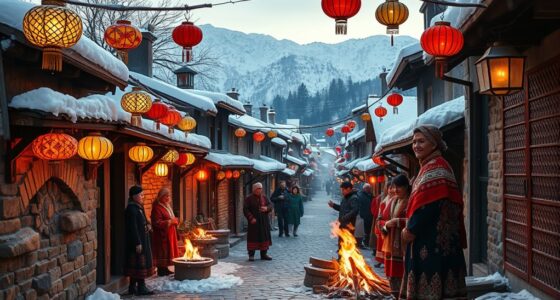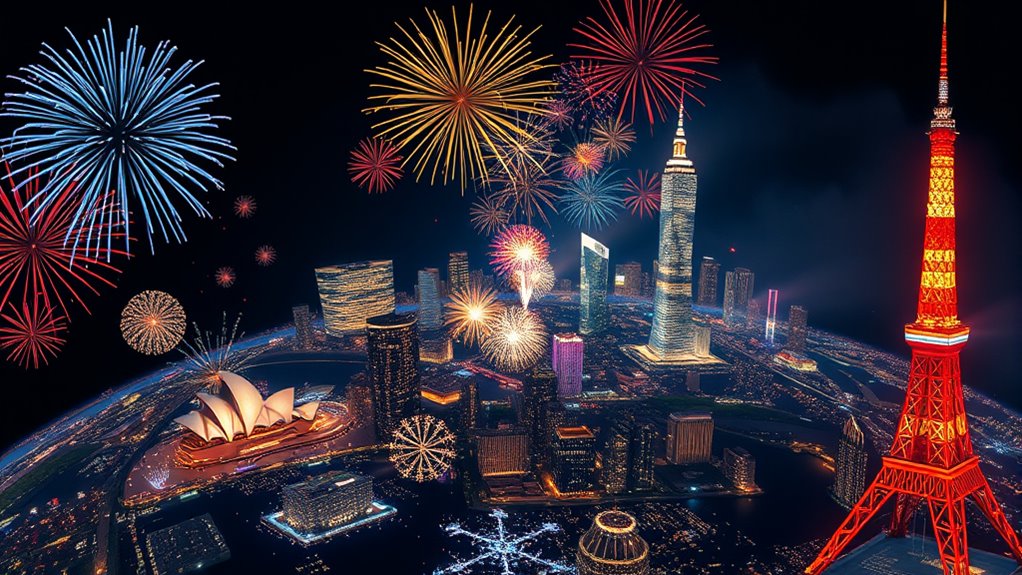

Around the world, people celebrate New Year’s Day with colorful traditions that bring joy and hope. In Sydney, spectacular fireworks over the harbor dazzle crowds, while in Spain, eating twelve grapes at midnight brings good luck. Others wear bright clothes in Latin America or participate in ancient rituals like bell ringing in Japan. Each culture’s customs reflect their history and beliefs, helping everyone start the year fresh. Keep exploring to learn more about these vibrant celebrations.
Key Takeaways
- Countries worldwide celebrate New Year’s with fireworks, countdowns, and iconic traditions, fostering unity and hope for the future.
- Cultural customs like eating grapes in Spain or ringing bells in Japan symbolize luck, cleansing, and renewal.
- Festive attire and community activities, such as dancing or torchlight processions, strengthen cultural identity and shared joy.
- Lunar New Year festivals in China and Korea feature traditional rituals, decorations, and family gatherings to attract good fortune.
- Many cultures practice decluttering and symbolic rituals to mark new beginnings and foster positivity for the year ahead.
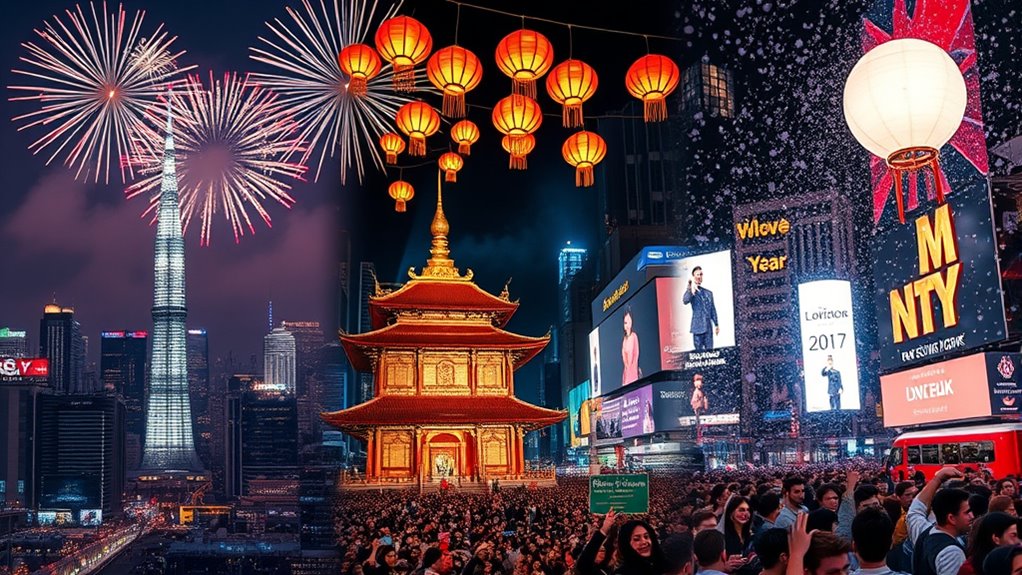
Have you ever wondered how different cultures celebrate the arrival of the new year? Every country, community, and family brings its unique touch to this universal occasion, making each celebration a vibrant expression of cultural traditions and celebratory customs. As you explore these diverse ways of ringing in the new year, you’ll see how history, beliefs, and local practices shape each event, creating a colorful tapestry of festivities around the globe.
In many places, the new year kicks off with fireworks lighting up the night sky. For example, in Sydney, Australia, massive fireworks displays over the harbor create a spectacular start, symbolizing hope and renewal. Similarly, in the United States, cities like New York host iconic ball drops, where crowds gather to count down and welcome the fresh year with cheers. These traditions serve to unite communities and mark a fresh beginning with excitement and optimism.
Across different cultures, you’ll find unique celebratory customs rooted in history and symbolism. In Spain, it’s customary to eat twelve grapes at midnight—one with each chime of the clock—believed to bring good luck for the months ahead. Meanwhile, in Japan, ringing a bell 108 times during the New Year’s Eve temple visits helps dispel worldly sins and purify the mind. Such rituals highlight how cultural traditions are intertwined with spiritual beliefs, helping communities reflect and renew as they step into a new chapter.
In many Latin American countries, people dress in bright, often red, clothing for good luck and prosperity. In Brazil, families and friends gather to share meals and dance, embracing a lively, communal spirit. In Scotland, the Hogmanay celebrations feature torchlight processions and singing traditional songs, emphasizing the importance of community bonds and shared joy. These customs reinforce the idea that welcoming the new year is more than just a date—it’s a collective event that strengthens cultural identity.
In some Asian countries, like China and Korea, lunar calendar-based festivities are also significant. Though the Gregorian New Year is celebrated widely, traditional lunar New Year festivals often take precedence, involving elaborate feasts, ancestral offerings, and symbolic decorations to attract luck and ward off bad fortune. These practices reveal how cultural traditions adapt and coexist, blending old and new ways of celebrating.
Additionally, many cultures incorporate mindful decluttering practices into their New Year celebrations, symbolizing fresh starts and the shedding of unnecessary burdens.

ASAKUKI Essential Oils, Well-Being Diffuser Oils Gift Set, 6x10ml
Essential Oil Blends: Introduce the long-lasting, pleasant, and relaxing aroma to your home with our Well-being aromatherapy diffuser...
As an affiliate, we earn on qualifying purchases.
Frequently Asked Questions
How Do Different Cultures Celebrate New Year’s Eve?
You celebrate New Year’s Eve through vibrant cultural rituals and wearing festive attire that reflect your traditions. Whether you dance around bonfires, watch fireworks, or partake in special ceremonies, these customs mark the new beginning. You might also enjoy sharing traditional foods, exchanging gifts, or singing special songs, all while embracing your cultural identity. These festivities create a lively, meaningful way to welcome the new year with joy and unity.
What Are Unique Traditional Foods for New Year’s Celebrations Worldwide?
Imagine biting into a giant, bubbling pot of Korean tteokguk, symbolizing longevity, or savoring Spain’s twelve grapes at midnight, each representing a month of fortune. Classic traditional dishes like Italy’s lentil stew for prosperity or Japan’s osechi-ryori loaded with symbolic ingredients make your mouth water. These festive recipes aren’t just food; they’re edible spells for luck, health, and happiness as you toast the New Year.
Are There Specific Superstitions Associated With New Year’s in Various Countries?
You’ll find that many countries have unique New Year superstitions and cultural rituals. For example, in Spain, you eat twelve grapes at midnight for good luck, while in Japan, ringing bells symbolizes releasing bad luck. These traditions reflect deep cultural beliefs, encouraging positive energy and prosperity. Embracing these superstitions can make your New Year’s celebration more meaningful, connecting you to centuries of customs designed to bring luck and happiness in the year ahead.
How Have New Year’s Customs Evolved Over Time Globally?
You’ll find that New Year’s customs have significantly evolved, reflecting cultural evolution worldwide. Interestingly, over 70% of countries now incorporate modern elements like fireworks and social media in their celebrations, blending tradition with innovation. As traditions adapt, you see a richer diversity in customs, from ancient rituals to contemporary practices. This shift highlights how global influences shape New Year’s celebrations, creating a dynamic mix of old and new that unites people worldwide.
What Are Some Lesser-Known New Year’s Traditions Globally?
You might find it fascinating that some lesser-known New Year’s traditions include fertility rituals in parts of Africa and Asia, where people perform dances or offerings to promote prosperity. Additionally, lantern festivals in countries like Thailand and Taiwan mark the New Year with beautiful lantern displays, symbolizing hopes for the future. These unique customs reflect local cultures’ ways of celebrating new beginnings and embracing renewal beyond common practices.

PURA D'OR Organic Perfect10 Essential Oils Set - 10x 10mL Wood Box Aromatherapy Gift Set - 100% Pure Therapeutic Grade for Relaxation and Wellness (Lavender, Peppermint, Eucalyptus, Tea Tree & More)
ESSENTIAL OILS WOOD GIFT BOX SET: 100% Pure, Natural, and Organic essential oils for your home diffuser. Our...
As an affiliate, we earn on qualifying purchases.
Conclusion
As the clock strikes midnight, you witness fireworks bursting in vibrant colors, symbolizing hope and new beginnings. Meanwhile, across the globe, families gather quietly in their traditions, welcoming the year in their own unique ways. The world’s diverse celebrations remind you that, despite different customs, everyone shares a common desire for happiness and renewal. This beautiful contrast shows that no matter where you are, the start of a new year connects us all in hope.

Cliganic Organic Aromatherapy Essential Oils Gift Set (Top 8 - The Iconics), 100% Pure - Peppermint, Lavender, Eucalyptus, Tea Tree, Lemongrass, Rosemary, Frankincense & Orange
Included in this Gift Set: peppermint, lavender, eucalyptus, tea tree, lemongrass, rosemary, frankincense and orange.
As an affiliate, we earn on qualifying purchases.

Lagunamoon Essential Oils Aromatherapy Set - 6 Oils for Diffusers, Home Care, Candle Making Scents, Fragrance, Humidifiers, Gifts - Peppermint, Tea Tree, Lavender, Eucalyptus, Orange (10mL)
Top selling essential oils set: We create our essential oils using rigorously tested ingredients. Top blends, make pampering...
As an affiliate, we earn on qualifying purchases.