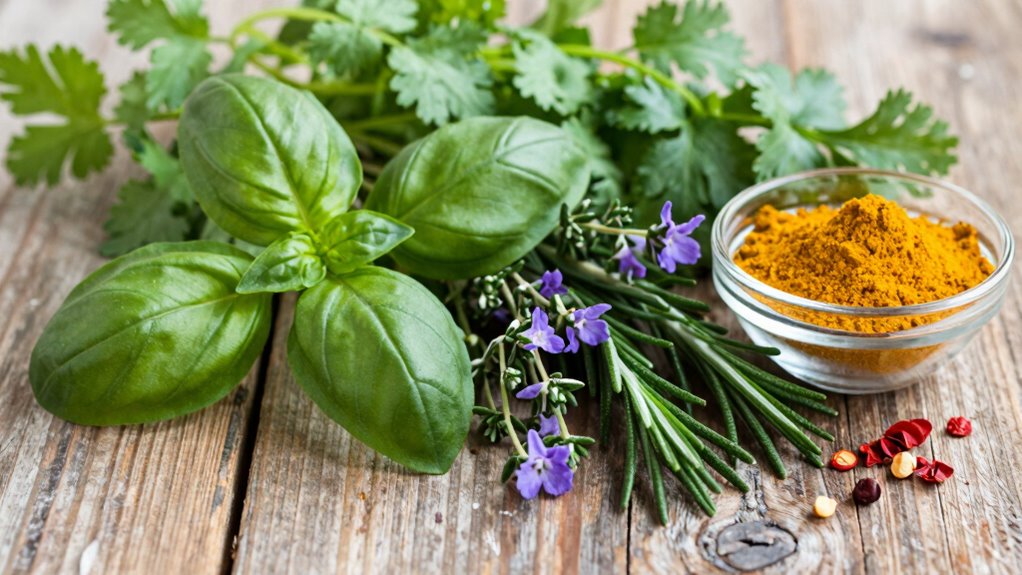

You can enhance your anti-inflammatory meals by pairing herbs like turmeric, ginger, basil, and oregano, which not only add flavor but also boost health benefits. Use fresh herbs in salads, soups, or stir-fries, adding them toward the end of cooking to retain their active compounds. Combining these herbs creates flavorful, health-boosting dishes. If you keep exploring, you’ll discover more tips on maximizing their benefits and incorporating them into your daily routine.
Open a free Amazon Business account
Business pricing, bulk buying and tax-exempt orders.
As an affiliate, we earn on qualifying purchases.
Key Takeaways
- Fresh basil and oregano add vibrant flavor and antioxidant properties to anti-inflammatory dishes like salads and pasta.
- Mint and parsley complement herbal teas and salads, providing additional anti-inflammatory and digestive benefits.
- Cilantro pairs well with turmeric and ginger in soups and stir-fries to enhance flavor and health effects.
- Lemongrass and thyme can be used in broths and marinades to boost anti-inflammatory ingredients.
- Spices like black pepper and cinnamon enhance the absorption and effectiveness of turmeric and ginger in meals.
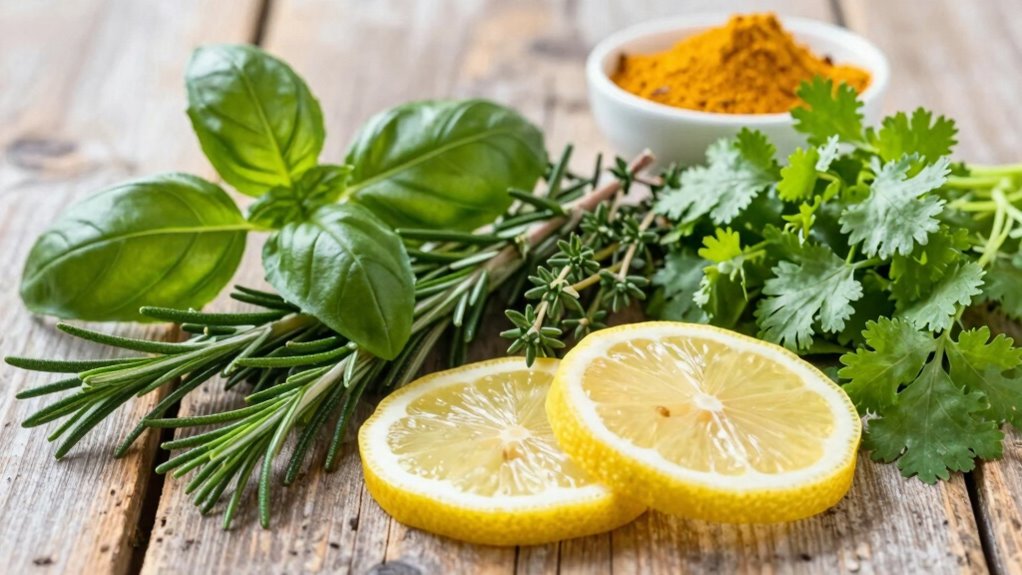
When it comes to enhancing the health benefits of anti-inflammatory meals, herbs can play a vital role. They not only add flavor but also bring powerful anti-inflammatory properties to your dishes. To get the most out of these herbs, it’s helpful to understand herb cultivation tips, ensuring your plants thrive and deliver maximum benefits. Most culinary herb varieties, like turmeric, ginger, basil, and oregano, are relatively easy to grow at home. You can start herbs in containers or garden beds, making sure they receive adequate sunlight—at least six hours a day—and well-drained soil. Regular watering and occasional fertilizing help keep your herbs healthy and potent. As you cultivate these herbs, you’ll find fresh leaves offer the highest concentration of beneficial compounds, so harvest them appropriately, snipping just above the new growth.
Herbs like turmeric, ginger, basil, and oregano are easy to grow at home for maximum health benefits.
When selecting culinary herb varieties for anti-inflammatory purposes, focus on those known for their medicinal properties. For example, turmeric is renowned for curcumin, a compound with strong anti-inflammatory effects. Ginger, often used fresh or dried, contains gingerol, which reduces inflammation and pain. Basil, especially holy basil or tulsi, has compounds that combat inflammation and stress. Oregano, rich in antioxidants like rosmarinic acid, also helps decrease inflammation. These herbs are versatile in the kitchen, merging well with salads, soups, teas, and stir-fries. Incorporating them into your daily meals is an effective way to harness their health benefits naturally. Additionally, understanding the herb cultivation process can help you maximize the potency of your homegrown herbs. Cultivating herbs with proper techniques also ensures that you preserve their active compounds, making each harvest more beneficial. Paying attention to harvest timing can further enhance the concentration of beneficial phytochemicals in your herbs.
Using herbs in your anti-inflammatory meals isn’t just about flavor; it’s about creating a holistic approach to wellness. When you cook, think about adding fresh herbs toward the end of the process to preserve their active compounds. Dried herbs can also be beneficial, but they tend to lose some potency over time. Experiment with different culinary herb varieties, blending them to develop unique flavors that keep your meals exciting while supporting your health. For example, a simple turmeric and ginger tea with a dash of black pepper can significantly enhance absorption and anti-inflammatory effects.
As an affiliate, we earn on qualifying purchases.
Frequently Asked Questions
Can Herbs Reduce Inflammation Naturally?
Yes, herbs can help reduce inflammation naturally. Drinking herbal teas like turmeric, ginger, or chamomile offers anti-inflammatory benefits. Additionally, using fresh herbs like parsley, basil, and cilantro in your meals boosts your intake of antioxidants and nutrients that combat inflammation. Incorporating these herbs into your diet not only enhances flavor but also supports your body’s natural healing processes, making them a simple, effective way to fight inflammation daily.
Are There Any Herbs to Avoid With Anti-Inflammatory Diets?
Like Pandora’s box, some herbs can cause more harm than good if you’re not careful. You should avoid herbs that trigger allergies or interact negatively with herbal supplements, such as echinacea or ginseng. These can exacerbate inflammation or interfere with medications. Always check for potential herb allergies and consult your healthcare provider before adding new herbs to your anti-inflammatory diet, ensuring you don’t unintentionally open a can of worms.
How Much Herbal Seasoning Is Safe per Meal?
You should generally follow herbal dosage guidelines, which recommend about 1 to 2 teaspoons of fresh herbs or 1/2 to 1 teaspoon of dried herbs per meal. This amount enhances flavor without overpowering your dish or causing adverse effects. Use herbs for flavor enhancement, but avoid excessive amounts, especially with potent herbs. If you’re unsure, start with small quantities and adjust gradually for a safe, tasty addition.
Do Herbal Remedies Interfere With Medications?
Herbal remedies can interfere with medications through herbal supplement interactions, so it’s crucial you consult your doctor before use. Some herbal teas may cause side effects like allergies or digestive issues, especially if combined with prescription drugs. Always check for potential herbal supplement interactions and be aware of herbal tea side effects. Monitoring your reactions and discussing herbal use with your healthcare provider helps prevent adverse effects and guarantees safety.
Which Herbs Have the Strongest Anti-Inflammatory Properties?
You’ll be interested to know turmeric tops the list with its powerful anti-inflammatory effects, supported by over 6,000 studies. Ginger and garlic also pack strong anti-inflammatory properties. When exploring herbal combinations, these herbs are versatile in culinary herb uses, blending well in dishes to reduce inflammation naturally. Incorporating turmeric, ginger, and garlic into your meals can enhance flavor while helping fight inflammation effectively.
ginger root for anti-inflammatory meals
As an affiliate, we earn on qualifying purchases.
As an affiliate, we earn on qualifying purchases.
Conclusion
Incorporating these herbs into your meals not only boosts flavor but also supports your anti-inflammatory goals. Imagine turning everyday dishes into healing, vibrant creations with just a sprinkle of herbs like turmeric, ginger, or basil. Why settle for bland when you can elevate your health and taste buds simultaneously? Next time you cook, ask yourself: aren’t you worth the extra effort to nourish your body with every bite? Start experimenting and enjoy the delicious benefits!
As an affiliate, we earn on qualifying purchases.
culinary herbs for health benefits
As an affiliate, we earn on qualifying purchases.
As an affiliate, we earn on qualifying purchases.
Back to school Picks
back to school
As an affiliate, we earn on qualifying purchases.