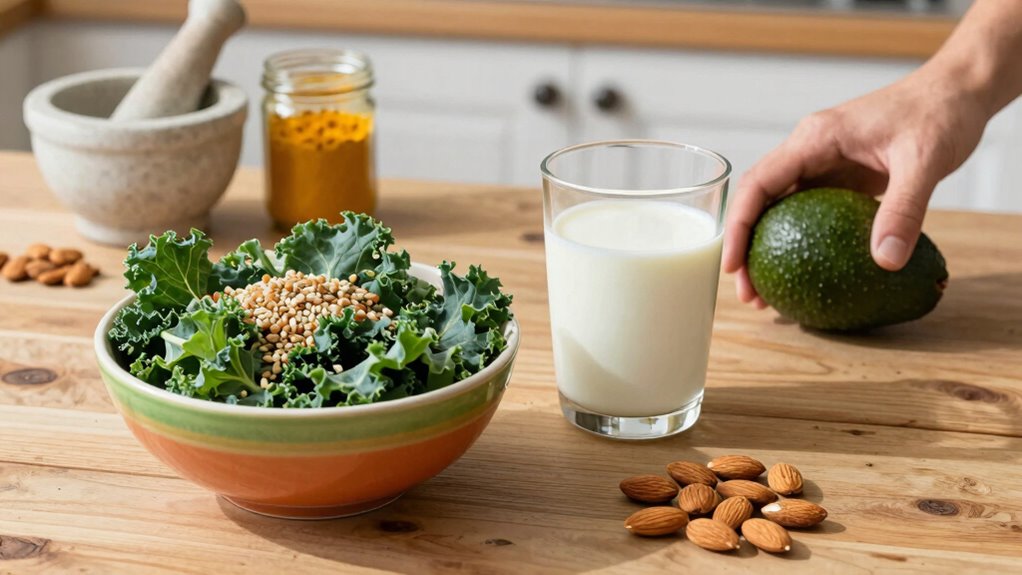

A bone-supportive lifestyle means eating plenty of calcium and vitamin D-rich foods like dairy and leafy greens, while avoiding processed foods and excess sugar. You should stay active with weight-bearing and resistance exercises that boost bone density and improve balance. Good habits like avoiding smoking, limiting alcohol, and getting enough sleep also help preserve your bones. Consistently making these choices can considerably enhance your skeletal health—continue exploring to discover more ways to build stronger bones.

Get oils, diffusers and self-care delivered free with Prime
- Fast, free delivery on millions of items
- Prime Video, Amazon Music and more included
- Member-only deals all year
Key Takeaways
- Consume a nutrient-dense diet rich in calcium, vitamin D, fruits, and vegetables while avoiding processed foods and excess sugar.
- Engage in regular weight-bearing and resistance exercises to stimulate bone growth and improve density.
- Avoid smoking, limit alcohol, and maintain a healthy weight to support optimal bone health.
- Prioritize adequate sleep, stress management, and proper recovery for bone repair and hormonal balance.
- Monitor bone health through regular check-ups and take proactive steps to prevent osteoporosis and fractures.

A bone-supportive lifestyle is fundamental for maintaining strong, healthy bones as you age. You can achieve this by making intentional choices every day that promote bone strength. One of the most effective ways is by maintaining a nutrient-rich diet. Focus on foods high in calcium and vitamin D, such as dairy products, leafy greens, and fortified foods, which are essential for bone mineralization. Incorporate plenty of fruits and vegetables to provide antioxidants and other nutrients that support overall bone health. Avoid excessive processed foods and sugar, as they can lead to inflammation and weaken bones over time. Staying well-hydrated also plays a role, as water helps transport nutrients to your bones and tissues, keeping them nourished and resilient.
Prioritize nutrient-rich foods like dairy, greens, and fruits to support strong, healthy bones as you age.
Along with your diet, engaging in weight-bearing exercise is critical. These activities stimulate bone growth by applying mechanical stress, encouraging your bones to become denser and stronger. Walking, jogging, dancing, or hiking are excellent options that can be easily integrated into your routine. Resistance training, like lifting weights or using resistance bands, also promotes bone density, especially in areas prone to osteoporosis. Consistency is key—regular exercise not only strengthens your bones but also improves balance and coordination, reducing the risk of falls and fractures. Remember, starting gradually and increasing intensity over time will help prevent injury and make your workout sustainable. Including weight-bearing activities in your routine is essential because they directly influence bone density and strength. Incorporating proper recovery and rest days is equally important to allow your bones and muscles to rebuild and adapt to the stress.
Beyond diet and exercise, other lifestyle habits contribute to bone health. Avoid smoking and limit alcohol consumption, as both can interfere with bone formation and increase fracture risk. Maintaining a healthy weight is also important; being underweight can lead to decreased bone mass, while excess weight puts unnecessary stress on your bones and joints. Ensuring you get enough sleep allows your body to repair and rebuild bone tissue effectively. Managing stress through relaxation techniques can help prevent hormonal imbalances that may negatively impact your bones. Incorporating adequate nutrient intake into your daily routine is essential for supporting optimal bone health. Additionally, understanding the importance of bone density monitoring can help you take proactive steps in preserving your skeletal health and preventing issues like osteoporosis.
calcium and vitamin D supplements for bone health
As an affiliate, we earn on qualifying purchases.
As an affiliate, we earn on qualifying purchases.
Frequently Asked Questions
Can Bone Health Be Improved at Any Age?
Yes, you can improve bone health at any age. While genetic factors and dietary influences play roles, adopting a bone-supportive lifestyle makes a difference. You should focus on consuming calcium and vitamin D-rich foods, engaging in weight-bearing exercises, and avoiding smoking or excessive alcohol. These steps help strengthen bones, boost density, and reduce fracture risk, regardless of your age. Consistency is key to maintaining and improving your bone health over time.
Are Supplements Necessary for Strong Bones?
Supplements are like a backup plan; they aren’t always necessary for strong bones. You can maintain your bone health through proper calcium intake and healthy vitamin D levels, which naturally support calcium absorption. If your diet is lacking or you have absorption issues, supplements can help fill the gap. However, it’s best to get nutrients from food first and consult your doctor before adding supplements to your routine.
How Does Alcohol Affect Bone Strength?
Alcohol consumption can weaken your bones by interfering with calcium absorption and hormone production, which are crucial for bone strength. It accelerates bone deterioration, making your bones more fragile and increasing fracture risk. Drinking excessively hampers your body’s ability to rebuild bone tissue, leading to long-term damage. To maintain strong bones, it’s best to limit alcohol intake and focus on a nutrient-rich diet, regular exercise, and proper calcium and vitamin D intake.
What Are Common Signs of Weak Bones?
Imagine you’re in a medieval castle, and your bones are the fortress walls. Common signs of weak bones include frequent fractures, back pain, and stooped posture. You might notice decreased height over time or easy bruising. To avoid this, guarantee adequate calcium intake and support proper bone mineralization. Recognizing these signs early helps you take action to strengthen your bones and prevent serious issues later.
Does Exercise Impact Bone Density Immediately?
Exercise doesn’t instantly boost your bone density, but it does impact calcium absorption and muscle strengthening right away. When you engage in weight-bearing activities, your bones respond by becoming stronger over time. Regular exercise stimulates your bones to absorb more calcium, which helps maintain density. Plus, muscle strengthening exercises support your bones, reducing fracture risk. Stay consistent, and you’ll gradually notice improvements in your bone health and overall strength.
resistance bands for strength training
As an affiliate, we earn on qualifying purchases.
As an affiliate, we earn on qualifying purchases.
Conclusion
Living a bone-supportive lifestyle isn’t just about calcium intake; it’s a holistic approach that includes regular weight-bearing exercise, balanced nutrition, and avoiding harmful habits like smoking. While some believe supplements alone can strengthen bones, research suggests lifestyle choices play a more essential role. By consistently making these healthy decisions, you’re not only supporting your bones now but also reducing future fracture risk. Ultimately, evidence shows that a proactive, well-rounded approach truly makes a difference.
weight-bearing exercise equipment
As an affiliate, we earn on qualifying purchases.
As an affiliate, we earn on qualifying purchases.
osteoporosis prevention supplements
As an affiliate, we earn on qualifying purchases.
As an affiliate, we earn on qualifying purchases.
Halloween Picks
halloween
As an affiliate, we earn on qualifying purchases.