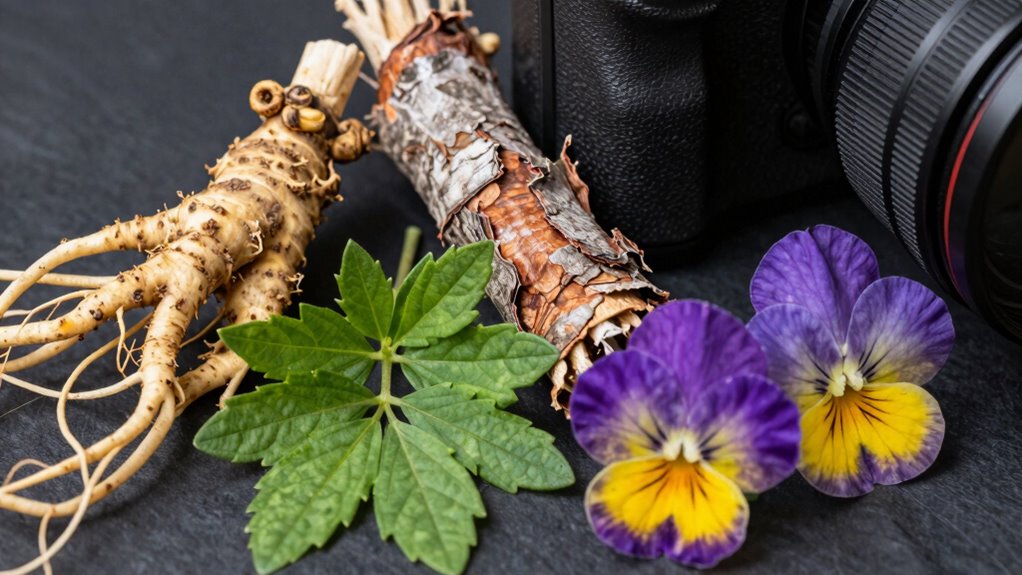

In herbology, roots symbolize grounding and stability, often representing nourishment and strength. Bark is seen as protective, safeguarding the body from external influences, while leaves are associated with renewal and detoxification. Flowers carry symbolic meaning related to harmony, emotional balance, and spiritual clarity, often used to promote mood and spiritual growth. Understanding these classifications deepens your connection with plants and enhances your herbal practices—if you continue exploring, you’ll discover even more about their powerful meanings.
Key Takeaways
- Roots symbolize grounding, stability, and nourishment, representing strength and support in herbal symbolism.
- Bark signifies protection and resilience, often used for its defensive and safeguarding properties.
- Leaves represent renewal, cleansing, and detoxification, embodying vitality and freshness.
- Flowers symbolize harmony, emotional balance, and spiritual connection, often associated with beauty and spiritual upliftment.
- The classification of plant parts guides their traditional and medicinal uses, reflecting cultural and symbolic meanings.
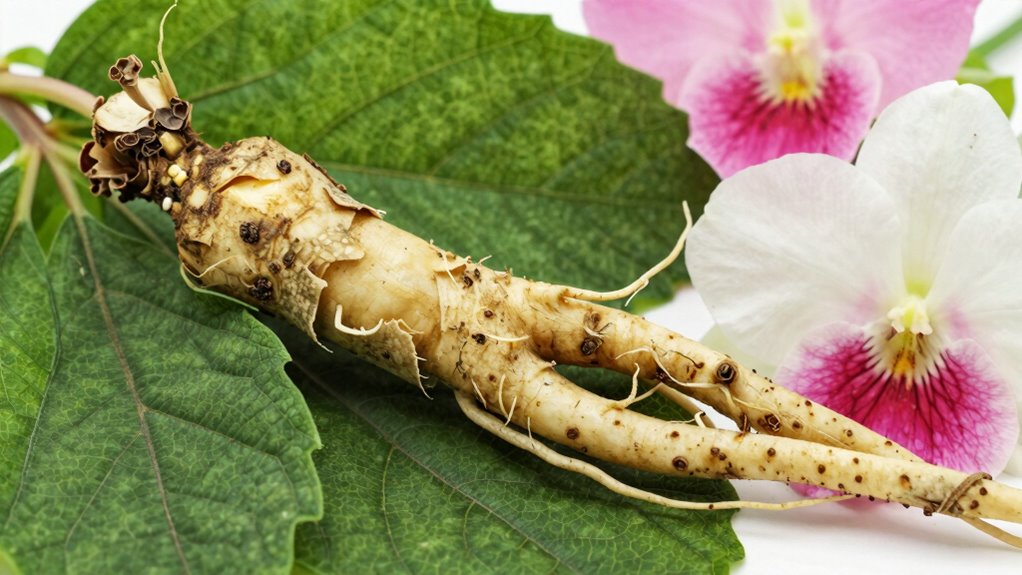
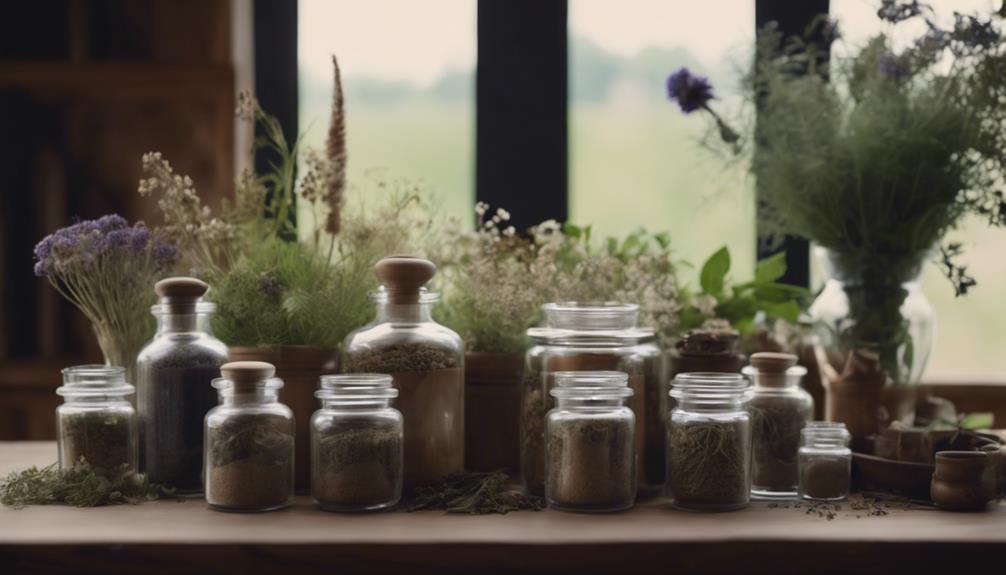
Herbology, the study of plants used for medicinal and spiritual purposes, reveals that every part of a plant—roots, bark, leaves, and flowers—has unique properties and uses. Understanding these distinctions is essential for applying herbal remedies effectively. When exploring herbal extraction techniques, you learn that each plant part requires specific methods to maximize its healing potential. Roots, often rich in concentrated compounds, may need cold or warm maceration to extract their active ingredients fully. Bark, containing protective compounds and bitter substances, is typically harvested in strips and processed carefully to preserve its potency. Leaves, being highly versatile, lend themselves to steam distillation or infusion, capturing essential oils and active constituents. Flowers, celebrated for their aromatic and spiritual qualities, are commonly used in tinctures, teas, or essential oils, highlighting their delicate yet potent nature. Additionally, understanding the plant part classification helps deepen your knowledge of their traditional uses and symbolic meanings. Recognizing the importance of traditional herb classifications can also guide you in selecting the appropriate plant parts for specific ailments or purposes.
Traditional herb classifications further deepen your understanding of plant parts. Roots are often categorized as grounding and nourishing, symbolizing stability and strength in herbal traditions. Bark might be classified under protective herbs, valued for their ability to shield the body from external influences. Leaves are frequently associated with cleansing and detoxification, embodying renewal within herbal systems. Flowers are typically linked to harmony and emotional balance, used in remedies that promote mood and spiritual clarity. These classifications help you choose the right plant parts for specific purposes, whether you’re seeking physical healing, emotional relief, or spiritual growth. Moreover, knowing the herbal extraction methods associated with each part can improve the effectiveness of your preparations. Developing an awareness of plant part preservation techniques further enhances the potency of your herbal extracts and remedies.
Knowing the significance of each plant part guides your approach to herbal medicine. For instance, using roots in herbal infusions taps into their deep, nourishing qualities, while employing bark in poultices provides a protective barrier. Leaf-based preparations like teas and tinctures can support detox and energy, and flower remedies are excellent for emotional well-being. Recognizing the traditional classifications also helps in understanding the cultural and symbolic meanings behind each part, enriching your practice with historical context. This integrative approach combines modern herbal extraction techniques with traditional wisdom, creating remedies that are both effective and meaningful.
In essence, grasping the meaning of root, bark, leaf, and flower in herbology empowers you to harness nature’s full medicinal potential. It encourages a respectful, informed approach to plant medicine, combining scientific methods with ancient traditions. Whether you’re crafting herbal teas, tinctures, or topical applications, your awareness of each part’s unique role ensures your remedies are balanced, potent, and aligned with the healing properties intrinsic to the plant. This holistic perspective enriches your herbal practice and deepens your connection to the natural world.
herbal extraction kit for roots and bark
As an affiliate, we earn on qualifying purchases.
As an affiliate, we earn on qualifying purchases.
Frequently Asked Questions
How Do Roots Absorb Nutrients From the Soil?
You see, roots absorb nutrients from the soil through a process called soil nutrient uptake. Their structure, especially root hairs, increases surface area, enhancing absorption efficiency. As you observe, roots penetrate the soil, accessing water and minerals. This active process relies on both diffusion and active transport, allowing roots to transfer essential nutrients into the plant’s vascular system, supporting overall growth and health.
What Are the Traditional Uses of Bark in Herbal Medicine?
You might think bark is just tree armor, but traditionally, herbal bark preparations have been prized for their medicinal powers. From calming inflammation to boosting immunity, traditional bark remedies have a long history. Herbal bark preparations are used to treat everything from fevers to digestive issues. So, beneath that rough exterior lies a treasure trove of healing properties, proving that sometimes, what’s on the outside truly matters.
How Do Leaf Compounds Vary Between Plant Species?
You’ll notice that leaf compounds vary greatly between plant species due to chemical diversity and photosynthetic differences. Different species produce unique secondary metabolites for defense or attraction, influenced by their environment and evolutionary history. These variations affect the medicinal properties and chemical makeup of leaves, making each species distinct. By understanding these differences, you can better identify and utilize plants for specific herbal remedies or research.
Can Flowers Be Used Medicinally in All Seasons?
Yes, flowers can be used medicinally in all seasons, but their availability depends on seasonal flowering patterns and cultivation methods. Some flowers bloom year-round or are grown indoors, ensuring continuous medicinal use. Additionally, their cultural significance often influences their use throughout the year. So, with proper care and selection, you can harness the medicinal properties of flowers regardless of the season, making herbal remedies accessible anytime.
How Do Herb Parts Affect Toxicity Levels?
Toxicity levels tend to vary with herb parts, so you should scrutinize safety before use. Roots, barks, leaves, and flowers each pose unique risks, impacting toxicity assessment differently. For example, roots may harbor potent compounds, while leaves might contain milder substances. By understanding herb part safety, you guarantee safer, more effective herbal healing. Always approach herbal use cautiously, considering how each part influences toxicity and your health.
essential oils from herbal flowers
As an affiliate, we earn on qualifying purchases.
As an affiliate, we earn on qualifying purchases.
Conclusion
Understanding the roles of root, bark, leaf, and flower helps you harness nature’s remedies effectively. Imagine using echinacea’s flower to boost immunity or willow bark for pain relief—these parts hold powerful healing properties. By recognizing each component’s significance, you can make informed choices in herbal healing. So, next time you explore herbs, remember that every part has a story and a purpose—unlocking nature’s full potential for your well-being.
herbal tea with leaves and flowers
As an affiliate, we earn on qualifying purchases.
As an affiliate, we earn on qualifying purchases.
herbal remedy tinctures for emotional balance
As an affiliate, we earn on qualifying purchases.
As an affiliate, we earn on qualifying purchases.