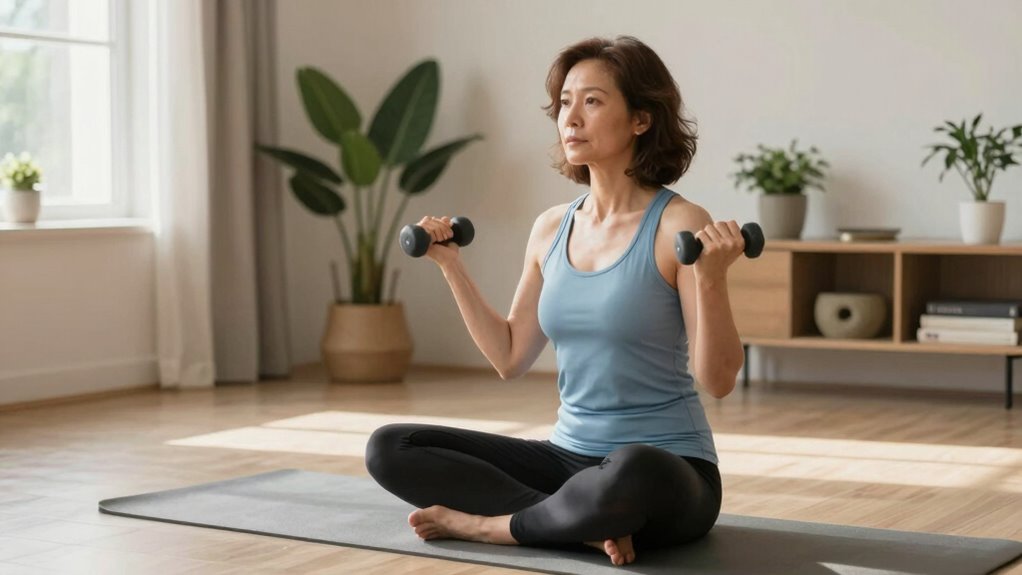

To support your bones in midlife, prioritize calcium-rich foods like dairy and leafy greens, and consider supplements if needed. Incorporate weight-bearing exercises such as walking, dancing, or hiking at least 3-5 times weekly to stimulate bone growth. Make sure you get enough vitamin D through sunlight, diet, or supplements to help calcium absorption. Avoid smoking, excess alcohol, and limit caffeine. Maintaining these habits now builds lasting skeletal strength—you’ll discover more tips if you continue exploring.
Listen free for 30 days with Audible
Thousands of audiobooks and originals — cancel anytime.
As an affiliate, we earn on qualifying purchases.
Key Takeaways
- Ensure adequate calcium intake through diet and supplements if needed to support bone density.
- Engage in weight-bearing exercises like walking or dancing 3-5 times weekly to stimulate bone growth.
- Maintain sufficient vitamin D levels via sunlight, diet, or supplements for optimal calcium absorption.
- Avoid smoking, excessive alcohol, and limit caffeine to protect bone health.
- Regularly monitor bone density and adopt healthy lifestyle habits proactively for long-term skeletal resilience.
As women enter midlife, maintaining strong bones becomes increasingly important to prevent osteoporosis and fractures. Your bone health depends heavily on your daily habits, especially your calcium intake and physical activity. Ensuring you consume enough calcium is essential because this mineral is the primary building block of bone tissue. You can get calcium from dairy products like milk, yogurt, and cheese, as well as leafy green vegetables such as kale and collards. If you find it challenging to meet your calcium needs through diet alone, consider talking to your healthcare provider about supplements. Adequate calcium intake supports the maintenance of bone density, which naturally declines with age, making it critical to prioritize it now.
Prioritize calcium intake now to support bone density and prevent osteoporosis as you age.
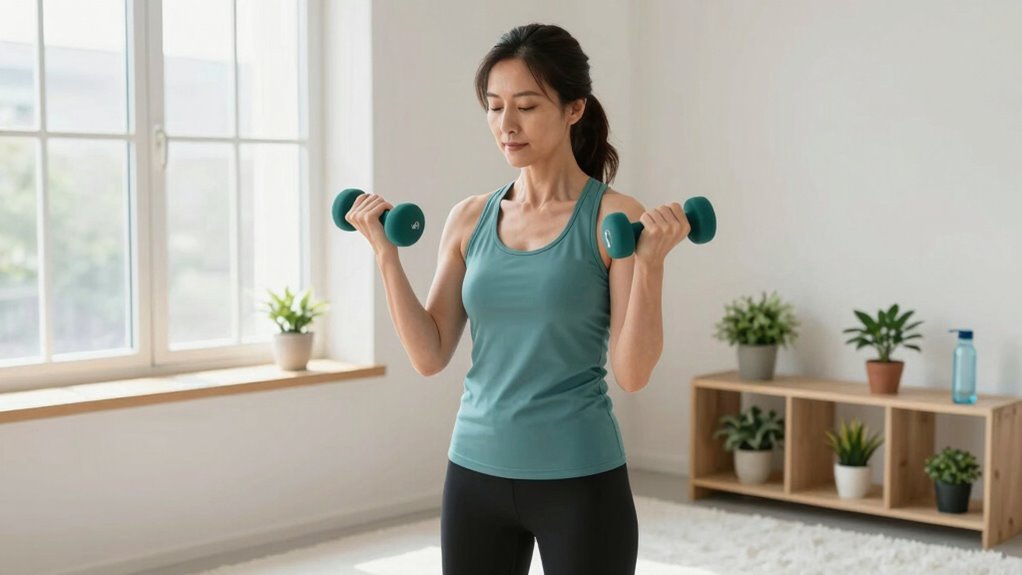
Alongside dietary considerations, engaging in weight-bearing exercises markedly boosts your bone strength. These activities force your bones to work against gravity, stimulating new bone growth and helping preserve existing density. You don’t need to join a gym or run marathons; simple activities like walking, jogging, dancing, or hiking can make a big difference. Incorporating weight-bearing exercises into your routine three to five times a week can help slow down bone loss and improve overall skeletal health. As you get older, focus on consistency and gradually increase the intensity or duration of your workouts to continue challenging your bones without risking injury. Supporting bone health through proper exercise can significantly enhance your skeletal resilience. Additionally, understanding the role of nutrition in bone health emphasizes the importance of a balanced diet for optimal calcium and vitamin D absorption. Maintaining adequate vitamin D levels is crucial because it enhances calcium absorption and promotes bone mineralization. Regularly monitoring your bone density through medical checkups can help you track your progress and adjust habits as needed.
You should also pay attention to other lifestyle factors that influence bone health. Smoking and excessive alcohol consumption weaken bones, so cutting back on these habits benefits your skeletal system. Maintaining a balanced diet rich in nutrients like vitamin D is equally important, as vitamin D helps your body absorb calcium more effectively. Sunlight exposure, fortified foods, and supplements can help you meet your vitamin D needs. Additionally, avoid excessive caffeine, which can interfere with calcium absorption and accelerate bone loss.
Incorporating these habits into your daily routine creates an all-encompassing approach to bone health. Prioritize your calcium intake, stay active with weight-bearing exercises, and adopt healthy lifestyle choices. These steps empower you to preserve your bone density and reduce the risk of osteoporosis as you age. Remember, the choices you make now have a lasting impact on your skeletal health, so take proactive steps today to support your bones for years to come.

Nature's Bounty Calcium 1200mg with 1000 IU Vitamin D3, 120 Count
- Supports Bone and Neuromuscular Health: Provides 1200 mg Calcium per serving
- Enhances Calcium Absorption: Includes 1000 IU Vitamin D3
- Gluten, Dairy, and Wheat Free: Suitable for various dietary needs
As an affiliate, we earn on qualifying purchases.
As an affiliate, we earn on qualifying purchases.
Frequently Asked Questions
What Are the Early Signs of Declining Bone Density?
You might notice early signs of declining bone density through subtle symptoms like frequent fractures or bone pain. If your calcium intake isn’t enough or your bone mineral density is decreasing, these signs could appear. You may also experience a loss of height or develop a stooped posture. Keep an eye on these indicators and consult your healthcare provider for bone density scans to catch issues early and maintain strong bones.
How Does Menopause Specifically Affect Bone Health?
Menopause causes hormonal fluctuations that considerably impact your bone health. These changes reduce estrogen levels, which normally help maintain bone density, leading to increased bone loss. Additionally, menopause can impair calcium absorption in your body, making it harder to build and preserve strong bones. As a result, you become more vulnerable to osteoporosis and fractures. To counteract this, focus on a calcium-rich diet, weight-bearing exercises, and regular check-ups to support your bone strength.
Are There Any Natural Supplements That Effectively Support Bones?
Yes, natural supplements like herbal remedies and dietary sources can support your bone health. You can try herbal remedies such as red clover, black cohosh, or horsetail, which may help improve bone density. Incorporate dietary sources like calcium-rich foods—dairy, leafy greens, and fortified plant milks—and vitamin D from sunlight or supplements. These options work together to strengthen bones, boost your confidence, and enhance your overall well-being.
How Often Should Women Get Bone Density Tests?
You should get a bone density test every 1 to 2 years if you’re at risk for osteoporosis or have other health concerns. Many women believe bone health myths, but sticking to calcium intake guidelines and regular testing helps guarantee your bones stay strong. If you’re in midlife, talk with your healthcare provider about your risk factors and the best testing schedule for maintaining ideal bone health.
Can Exercise Alone Prevent Osteoporosis?
Exercise alone can’t fully prevent osteoporosis, but it plays a crucial role. You should combine bone strengthening exercises with adequate dietary calcium intake to support bone health. Weight-bearing activities like walking or strength training stimulate bone growth, while calcium helps maintain bone density. Remember, a balanced approach, including proper nutrition and regular exercise, markedly reduces your risk of developing osteoporosis as you age.

Weight bearing exercise for seniors with osteoporosis: The Essential Guide to Safe and Effective Strength Training for Osteoporosis Using Low-Impact Weight Bearing Workouts to Reduce Fracture Risk
As an affiliate, we earn on qualifying purchases.
As an affiliate, we earn on qualifying purchases.
Conclusion
By adopting these bone support habits, you can markedly reduce your risk of osteoporosis and fractures as you reach midlife. Remember, women lose up to 20% of their bone density in the five to seven years after menopause, making proactive steps vital. Staying active, maintaining a calcium-rich diet, and avoiding smoking aren’t just good ideas—they’re fundamental for your long-term health. Take charge now to strengthen your bones and enjoy a vibrant, active future.

New Chapter Bone Strength Take Care Supplement, 120 Slim Tablets
- Plant-Based Calcium: Derived from organic red marine algae
- Supports Bone Health: Includes calcium, K2, and D3 for strength
- Enhanced Absorption: Vitamin D3 and K2 improve calcium uptake
As an affiliate, we earn on qualifying purchases.
As an affiliate, we earn on qualifying purchases.
![NatureWise Calcium Citrate 500mg Capsules - Supplement for Bone Health - Easy to Digest & Absorb - Vegan, Non-GMO, Gluten-Free - 90 Count[30-Day Supply]](https://m.media-amazon.com/images/I/41Vw+Hdvp6L._SL500_.jpg)
NatureWise Calcium Citrate 500mg Capsules – Supplement for Bone Health – Easy to Digest & Absorb – Vegan, Non-GMO, Gluten-Free – 90 Count[30-Day Supply]
- Supports Bone Strength: Promotes healthy bone density and mineralization
- High Potency Dose: Contains 500mg of calcium per capsule
- Easy to Digest: Gentle on stomach and easily absorbed
As an affiliate, we earn on qualifying purchases.
As an affiliate, we earn on qualifying purchases.
Back to school Picks
back to school
As an affiliate, we earn on qualifying purchases.