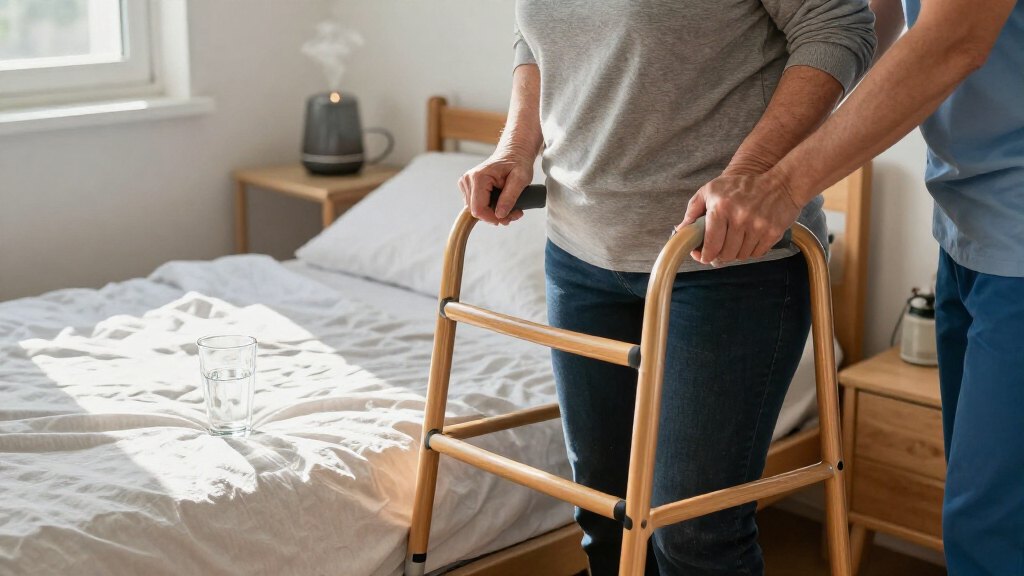

TL;DR
A doctoral thesis from Umeå University reports that health conditions, physical functioning and psychological well-being are associated with hip-fracture risk, mortality and recovery among adults aged 85 and older. Nearly half of the oldest participants died within a year of fracture, according to the report; the findings point to differing needs, not a single outcome determined by age alone.
A doctoral thesis from Umeå University finds that hip-fracture risk, survival and recovery among people aged 85 and older are associated with physical health, medical conditions and psychological well-being—not chronological age alone. The report says nearly half of the oldest adults in the study died within a year of a fracture, underscoring the need to understand each person’s circumstances when planning care and support.

Get oils, diffusers and self-care delivered free with Prime
- Fast, free delivery on millions of items
- Prime Video, Amazon Music and more included
- Member-only deals all year
Researcher Erika Olofsson, a doctoral student in the university’s Department of Nursing, examined factors associated with fractures and mortality in people aged 85 and older. Her thesis also drew on repeated interviews with older adults during the first year after a fracture to explore how they experienced recovery. The report does not provide the number of participants or detailed study methods.
The findings describe different associations across outcomes. The risk of fracture at very advanced age was roughly similar for women and men, while associated risk factors differed. Among women, greater independence in daily activities was associated with a higher fracture risk. Olofsson suggested that more activity may mean greater exposure to situations in which falls can occur; this is an interpretation of the finding, not proof of its cause.
After a fracture, mortality was associated with underlying illness and vulnerability. The thesis linked depression, previous stroke and subtrochanteric fracture with increased mortality. In a separate analysis over the first three years, dementia—alone or alongside depressive symptoms—was associated with higher mortality at all follow-up points. Depression alone did not have a statistically significant association with mortality in that analysis. Interviewees described recovery as uneven, with progress sometimes followed by setbacks, and cited daily activities, fear of another fall, family support and independence as important concerns. Some reported difficulties a year later.
Care Must Reflect Individual Risk
The findings challenge a one-size-fits-all view of hip fracture in very old age. Age alone does not capture a person’s physical function, illnesses, mental health, support network or ability to recover. Those factors can shape both the risks associated with a fracture and the support someone may need afterward.
The report says hip fractures affect about 17,000 people each year in Sweden, primarily older adults, and can lead to lasting functional impairment, loss of independence and increased risk of death. The thesis does not test a particular care model, but its findings support considering medical and psychological circumstances alongside the injury itself. For patients and families, the recovery account also signals that needs may change over time rather than follow a steady, predictable course.
Products Worth Considering

BowFlex Results Series 552 SelectTech Adjustable Dumbbells (Pair)

BowFlex Results Series SelectTech Adjustable Dumbbells, Pair

Bowflex SelectTech 840 Adjustable Kettlebell
As an affiliate, we earn on qualifying purchases.
A Study of Adults Aged 85 Plus
Olofsson’s thesis, titled Hip Fracture—Associated Factors, Mortality, and Experience of Recovery, focused on people aged 85 years and older. It considered three related questions: who experienced a fracture, which factors were associated with death afterward, and how people described recovery. The report was published by Medical Xpress on October 23, 2026.
The study’s findings concern associations, not necessarily causes. For example, the link between greater independence and fracture risk among women does not establish that independence itself causes fractures. Likewise, associations involving dementia or other conditions do not establish that those conditions alone determine an individual’s outcome. The report’s account of the findings emphasizes variation among older adults and the limits of using age as a stand-in for overall vulnerability.
“An important and striking finding was the high mortality rate among the oldest old adults following a hip fracture. I also found that dementia in combination with depressive symptoms was associated with increased mortality.”
— Erika Olofsson, doctoral student at Umeå University’s Department of Nursing
Study Details Still Missing
The Medical Xpress report does not state the study sample sizes, recruitment methods, exact statistical estimates or confidence intervals. Without those details, readers cannot judge the size or precision of each reported association from the article alone. It also does not provide the precise number of oldest participants who died within a year or define the comparison group behind the phrase “nearly half.”
The findings do not show that the associated conditions caused deaths or fractures, and they cannot predict an individual’s outcome. The reported lack of a statistically significant association between depression alone and mortality is not evidence that depression has no effect; it means the analysis did not establish a statistically significant link. The report also does not describe whether the results have been published in a peer-reviewed journal or how they might translate into specific care recommendations.
Full Thesis and Care Implications
The next step for readers seeking methodological detail is the full thesis, Hip Fracture—Associated Factors, Mortality, and Experience of Recovery, by Erika Olofsson. Its methods and complete results would clarify how the analyses were conducted and how broadly the findings may apply. The report does not announce a new trial, policy change or clinical guideline.
For now, the findings raise practical questions for clinicians and care teams about how to account for medical conditions, mental health, everyday function and personal goals during recovery planning. Whether a particular approach improves outcomes was not tested in the thesis account. Further studies and detailed review of the full work would be needed to establish which care changes are effective.
Key Questions
What did the Umeå University thesis study?
It examined factors associated with hip fractures and mortality among people aged 85 and older, and explored recovery through repeated interviews during the first year after injury.
What did the report say about mortality?
It reported that nearly half of the oldest adults died within one year of a hip fracture. It also described associations between mortality and conditions or factors including dementia, previous stroke and subtrochanteric fracture. The report does not give the sample size or exact death count.
Was depression associated with higher mortality?
The thesis reported that depression alone was not statistically significantly associated with mortality in one analysis. Dementia, both alone and combined with depressive symptoms, was associated with increased mortality at all reported follow-up points.
Does the study show that age does not matter?
No. It reports that health, functioning and psychological well-being are relevant alongside age. The findings do not show that age is irrelevant or establish causes for the reported associations.
What did older adults say about recovery?
Interviewees described recovery as uneven, with possible progress and setbacks. Managing daily activities, fear of falling again, family support and maintaining independence were among the concerns they raised.
Source: rss