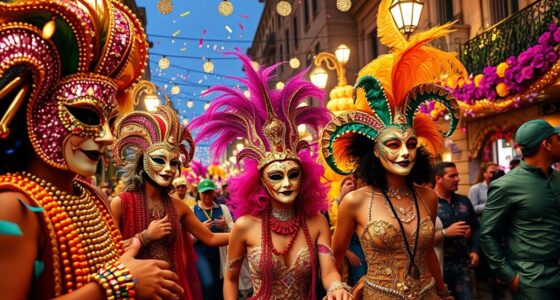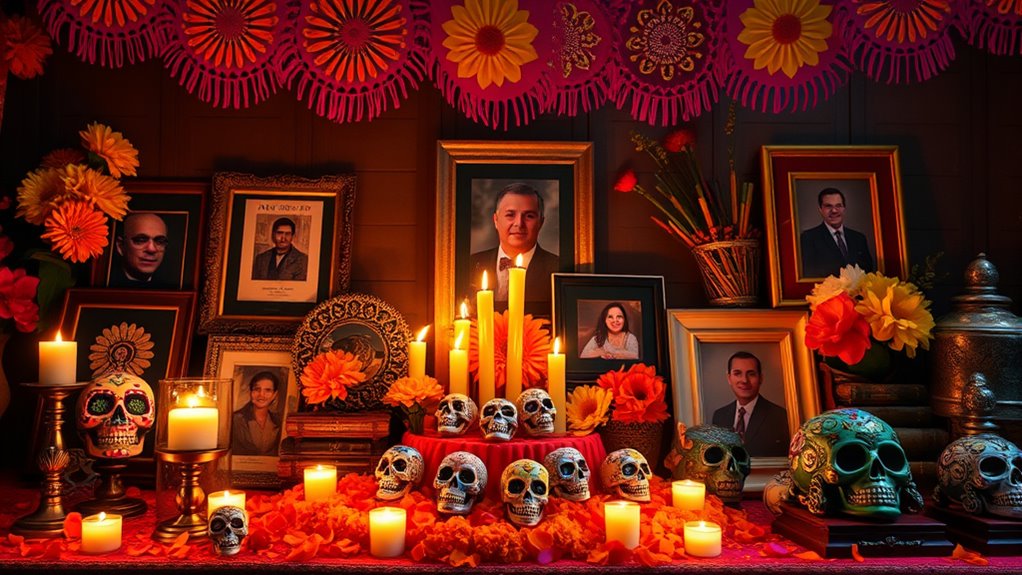

The Day of the Dead is a joyful Mexican tradition that honors loved ones who have passed away. You celebrate by creating colorful altars with photos, marigolds, candles, and favorite foods. Offerings like sugar skulls, and personal mementos welcome spirits back home. Respect involves understanding the symbolism behind each element and participating with reverence, celebrating life and memory. If you’re curious about how to honor this vibrant tradition, there’s more to explore below.
Key Takeaways
- The Day of the Dead honors loved ones through colorful altars, offerings, and traditional foods, celebrating life and memory.
- Respectful celebration involves understanding the significance of symbols like marigolds, candles, and sugar skulls.
- Creating or visiting altars with personal items, photos, and favorite foods welcomes spirits and honors their memory.
- Participating with genuine reverence, storytelling, and sharing traditional foods fosters cultural appreciation.
- The holiday blends joyful celebration with remembrance, emphasizing family, love, and cultural heritage.
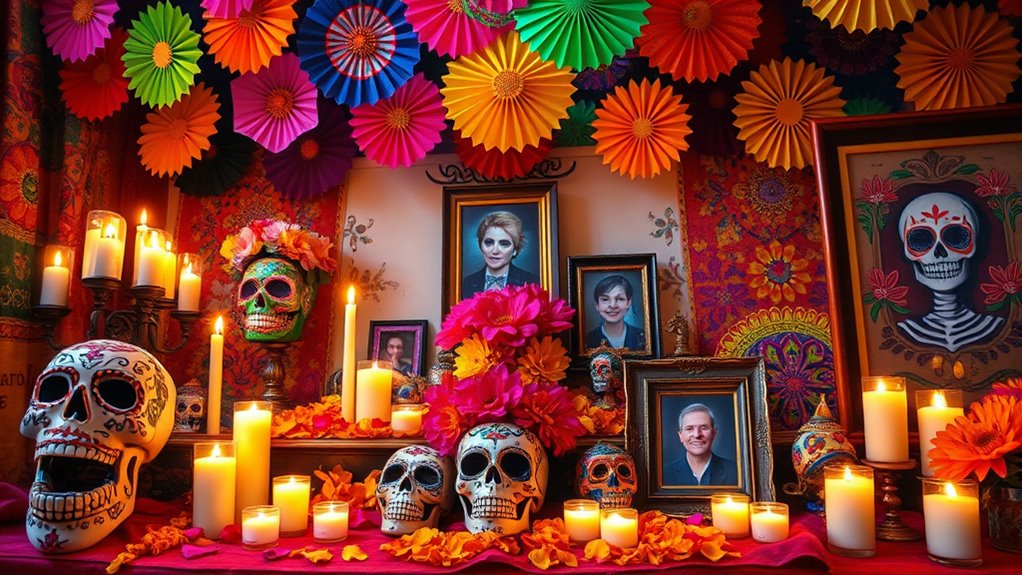
Have you ever wondered how families honor their loved ones who have passed away? During the Day of the Dead, families create vibrant altars and offerings to celebrate and remember those who have left this world. These altars are central to the tradition, often decorated with colorful papel picado, candles, photos, and personal mementos. You’ll see that each element on the altar has a specific purpose: the photos remind everyone of the loved ones, while the candles symbolize light guiding their spirits back home. Bright marigold flowers, or cempasúchil, are also a staple—they’re believed to attract the spirits with their strong scent. People place offerings like favorite foods, drinks, and personal items on the altars to welcome the spirits and make them feel at home. Traditional foods play a crucial role, and families often prepare dishes that their loved ones enjoyed in life. These include tamales, pan de muerto (a special bread baked for the occasion), and sugar skull candies, which are decorated with colorful icing. Sharing these foods symbolizes the ongoing connection between the living and the dead, turning the altar into a feast that celebrates life and memory.
As you take part in the celebration, you’ll notice that each element on the altar is thoughtfully chosen. The offerings aren’t just symbolic—they’re a way to honor loved ones and keep their spirits close. These offerings can include personal items or things that held special meaning to the departed, creating a sense of intimacy and remembrance. When families gather around the altar, they often tell stories, sing songs, and reminisce about their loved ones, strengthening bonds across generations. It’s a joyful, heartfelt way to keep memories alive, blending reverence with celebration. Respectful participation means understanding the significance behind each element and approaching it with genuine reverence. Whether you’re helping prepare traditional foods, arranging flowers, or simply observing, it’s important to honor the purpose behind these customs. The Day of the Dead isn’t just about remembering those who have passed; it’s a vibrant affirmation of life, family, and cultural heritage. By understanding and respecting its traditions, you become part of a meaningful practice that celebrates love and memory in a colorful, heartfelt way.
Frequently Asked Questions
Can Non-Mexican Communities Participate in Day of the Dead Celebrations?
Yes, non-Mexican communities can participate in Day of the Dead celebrations, but it’s important to approach it with cultural appreciation and respect. Engage with the traditions thoughtfully, learn about their significance, and include community inclusion by supporting local events or educational activities. Avoid cultural appropriation by understanding the meaning behind the customs, and always honor the origins of the celebration to guarantee it’s a respectful and meaningful experience.
Are There Specific Foods Traditionally Associated With Day of the Dead?
Traditional foods, altar offerings, and sweet treats symbolize the spirit of the celebration. You’ll find vibrant sugar skulls, pan de muerto (a special bread), and favorite family dishes as altar offerings. These foods honor loved ones and add a festive flavor to the festivities. Embracing these traditional foods helps you connect with the cultural customs, creating a meaningful, memorable, and mouthwatering moment during the Day of the Dead.
How Do I Respectfully Incorporate Cultural Elements Into My Celebrations?
You show respect by practicing cultural sensitivity and seeking authentic representation. Educate yourself about the traditions, symbols, and history behind Day of the Dead, and avoid stereotypes. Incorporate elements like marigold flowers, sugar skulls, and traditional foods thoughtfully, giving credit to their cultural significance. Engage with Mexican communities or resources to verify your celebrations honor the tradition accurately and respectfully, fostering genuine appreciation without cultural appropriation.
Is Day of the Dead a Religious or Secular Holiday?
You might wonder if Day of the Dead is religious or secular. It’s rooted in cultural origins and holds deep historical significance, blending indigenous traditions with Catholic influences. While many observe it spiritually, it’s also celebrated as a secular holiday of remembrance. You can honor loved ones through altars and traditions, embracing both reverence and cultural expression, making it a meaningful way to connect with history and community.
What Are Common Symbols Used During Day of the Dead Festivities?
During Day of the Dead festivities, you’ll notice common symbols like colorful sugar skulls, which represent loved ones and their spirits. Marigold flowers are also prominent, guiding spirits with their vibrant scent and color. You might see altars decorated with candles, photographs, and personal mementos. These symbols help honor ancestors, creating a lively, respectful celebration that blends tradition, spirituality, and cultural pride.
Conclusion
As you honor the Day of the Dead, remember you’re weaving a vibrant tapestry of memory and tradition. Think of it as lighting candles in the dark, illuminating the path back to those who shaped your story. By celebrating with respect and love, you breathe life into their spirits, keeping their essence forever alive. So, embrace this beautiful dance of remembrance, letting your heart be the bridge that connects the past and present in a symphony of reverence.