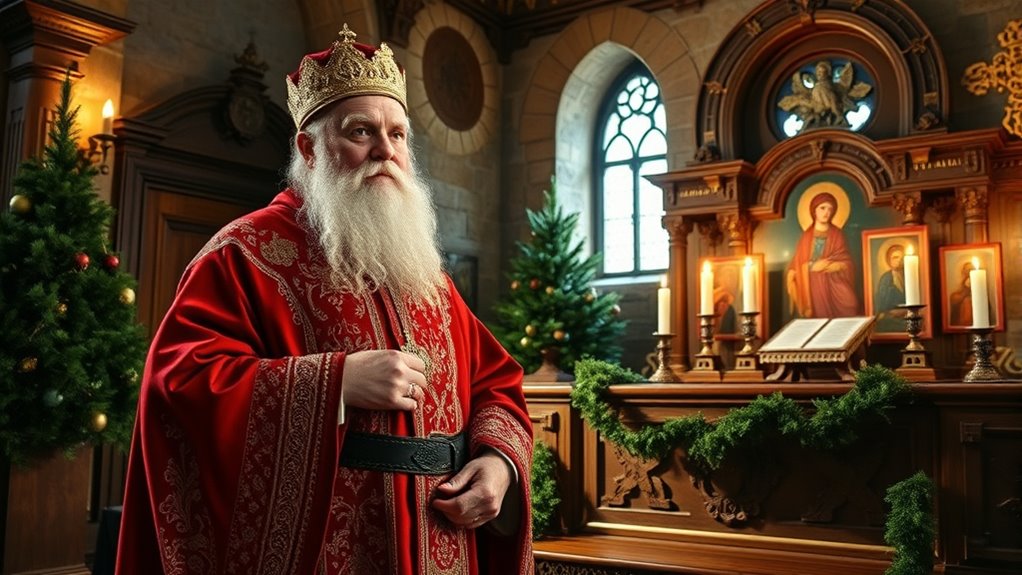

The origin of Santa Claus begins with Saint Nicholas, a 4th-century bishop known for his kindness and miracles. Over centuries, his story spread across Europe, blending with local customs and legends into different gift-bringing figures like Sinterklaas and Christkind. In the 18th and 19th centuries, artists and writers shaped Santa’s modern image—jolly, red-suited, with a white beard. If you continue, you’ll discover how these traditions transformed into the beloved Santa we recognize today.
Key Takeaways
- Santa Claus originates from Saint Nicholas, a 4th-century Christian bishop known for charity and miracles.
- Legends and local customs across Europe merged to shape the gift-bringer tradition.
- Variations like Sinterklaas and Christkind reflect regional cultural influences.
- The modern image of Santa was popularized in America through 19th-century literature and art.
- Santa symbolizes generosity and holiday joy, rooted in European folklore and evolving over centuries.

Have you ever wondered where Santa Claus really comes from? The story of Santa is a fascinating blend of history, myth, and tradition that has traveled across centuries and cultures. To understand its origins, you need to look into European folklore and the Christmas traditions that have shaped this beloved figure. Long before Santa became the jolly man in the red suit, he was inspired by a real person—Saint Nicholas, a Christian bishop from the 4th century. Known for his generosity and kindness, Saint Nicholas was famous for secretly giving gifts to the poor and performing miracles. His reputation for charity spread across Europe, becoming a symbol of giving and compassion deeply embedded in Christmas traditions.
Santa’s origins trace back to Saint Nicholas, a generous 4th-century bishop known for gift-giving and miracles.
As stories about Saint Nicholas evolved, they merged with local customs and legends, giving rise to various interpretations across European folklore. In some regions, he was depicted as a stern figure who rewarded good children and punished the naughty. In others, he was accompanied by mythical creatures or helpers who assisted in delivering gifts. These stories helped embed the idea of a gift-bringer into Christmas celebrations. Over time, the figure of Saint Nicholas was adapted and transformed, blending religious reverence with festive cheer. His feast day on December 6th became a day of gift-giving and celebration, laying the groundwork for the modern Santa Claus.
Throughout the centuries, different European countries added their own twists to the story. In the Netherlands, for example, Sinterklaas became a prominent figure, celebrated with parades and gift exchanges. In Germany, the Christkind and Weihnachtsmann took on roles similar to Santa, further enriching the mythology. These regional variations contributed to the evolving image of Santa as a cheerful, generous figure who spreads joy during the Christmas season. The influence of European folklore is still evident today in the traditions of leaving out cookies and milk or hanging stockings, which trace back to these older customs.
As the story traveled to America in the 18th and 19th centuries, it continued to evolve. Writers and artists helped shape Santa’s image into the jovial, rotund character we know today, complete with a red suit, white beard, and sleigh. This transformation was heavily influenced by Christmas traditions that combined folklore, religious stories, and popular culture. An understanding of somatic therapy techniques reveals how the body plays a role in emotional healing, much like how the story of Santa has been shaped by various cultural influences over time. Today, Santa Claus remains a symbol of generosity and festive spirit, with roots firmly planted in European folklore and Christmas traditions. So, next time you see Santa in decorations or movies, remember that his story has traveled through centuries, carrying the essence of kindness and sharing from ancient Europe to the modern world.
Frequently Asked Questions
How Did Santa’s Red Suit Become the Standard Color?
You might not realize it, but Santa’s red suit became the standard color largely due to the influence of commercial advertising. The bright red symbolizes warmth, excitement, and generosity, aligning with holiday cheer. Coca-Cola’s 1930s ads popularized this image, making Santa’s red suit iconic worldwide. This combination of symbolism and advertising helped solidify the red suit as Santa’s classic, recognizable look, connecting tradition with modern marketing influence.
What Are Some Regional Variations of Santa Claus Worldwide?
Imagine strolling through a winter market and meeting Santa figures from around the world. You notice cultural adaptations and local legends shape each version: in Italy, La Befana offers gifts; in the Netherlands, Sinterklaas arrives on a steamboat; in Russia, Ded Moroz delivers presents with granddaughter Snegurochka. These regional variations reflect diverse traditions, blending folklore with festive spirit, making Santa a truly global symbol with unique local flavors.
When Did Santa Start Delivering Presents on Christmas Eve?
You’ll find that Santa started delivering presents on Christmas Eve in the 19th century, as part of the evolving holiday folklore shaped by the history of Christmas traditions. This shift happened when writers and artists, like Clement Clarke Moore and Thomas Nast, popularized the modern image of Santa, reinforcing the idea that he brings gifts during the night. This tradition has become a central part of holiday celebrations worldwide.
How Did Santa’s Image Evolve in Popular Culture?
Santa’s image evolves through cultural symbolism and media portrayal, transforming him from a humble gift-giver to a jolly icon of holiday cheer. You see him in red, a symbol of warmth and generosity, often smiling in lively advertisements. Media shapes his personality—kind, playful, and magical—creating a universal figure that embodies the spirit of giving. This ongoing portrayal continues to reinforce Santa’s place in modern festive tradition.
Are There Any Historical Figures Similar to Santa Claus?
You’ll find that some mythical legends and cultural influences have similarities to Santa Claus, like Odin from Norse mythology who rode an eight-legged horse, or Father Frost in Eastern European traditions, both embodying winter spirits and gift-giving. These figures reflect different cultural influences and beliefs about generosity, winter, and magic. Their stories reveal how various societies created legendary figures that share Santa’s joyful, giving spirit, blending myth and tradition.
Conclusion
So, here you are, celebrating Santa’s jolly spirit, forgetting he started as a humble saint. Ironically, the man who once cared for the poor now sits atop a mountain of presents, all while you enthusiastically await his arrival. It’s funny how a figure with such noble roots transformed into a commercial icon. But hey, at least it keeps the magic alive—who knew that a saint’s kindness would turn into holiday capitalism?